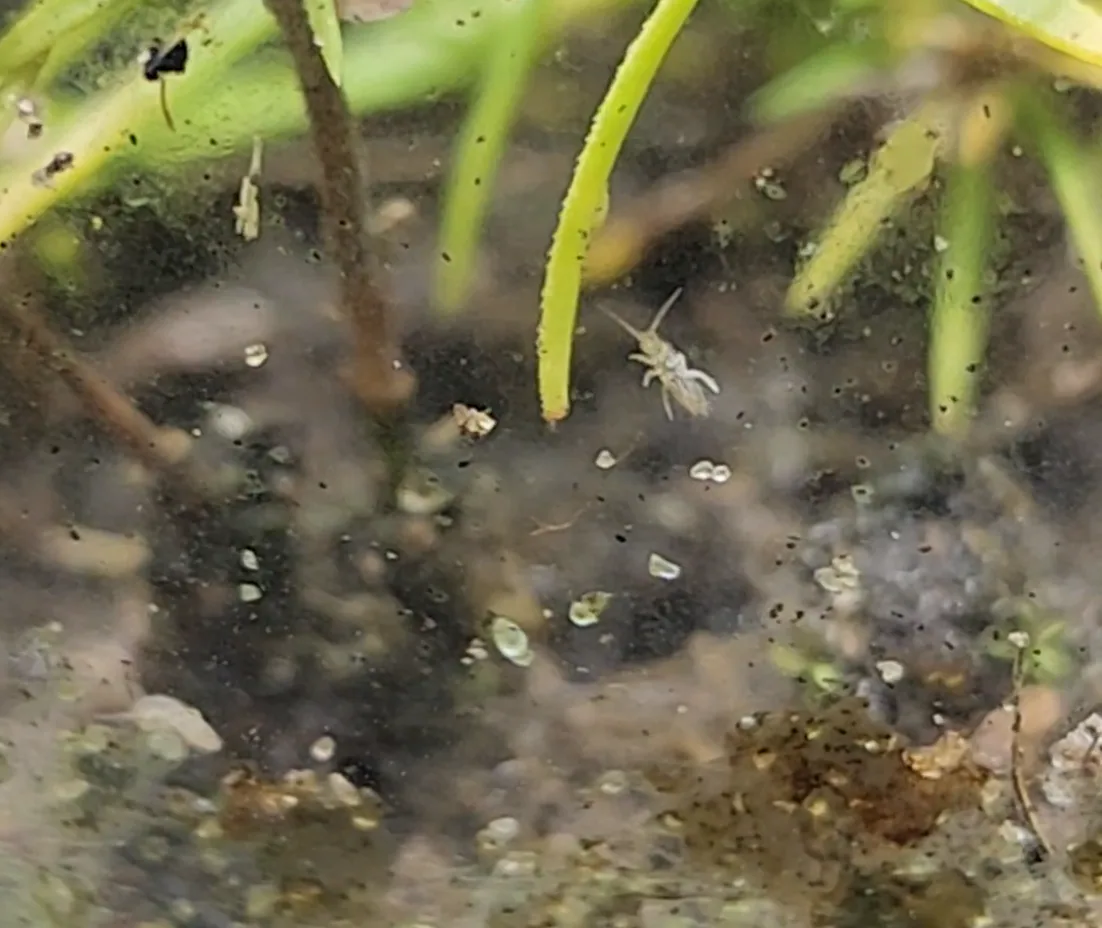
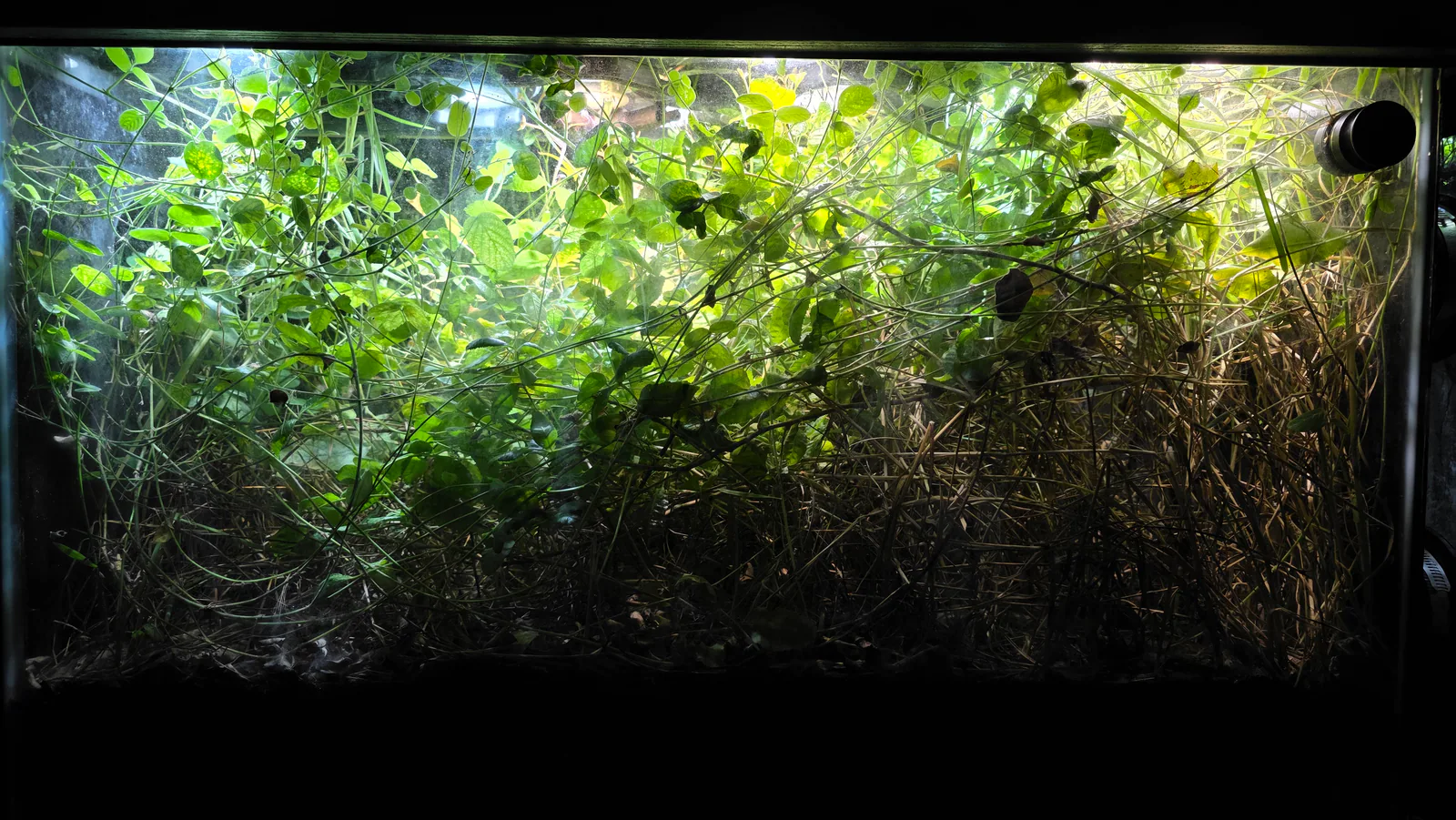
Collembola are a class of soil-dwelling hexapods, related to but distinct from true insects. They are among the most numerically abundant terrestrial arthropods in the world; a single square meter of healthy forest soil can contain hundreds of thousands of individuals. They are found in virtually every terrestrial habitat globally, from tropical soils to Arctic snowfields (the "snow flea" common name comes from species such as Hypogastrura nivicola, visible on snow in winter). In Florida, Collembola are present year-round in most terrestrial habitats with any organic soil component.
The defining feature of most springtails is the furcula, a forked appendage folded under the abdomen and held under tension by a small clasp structure called the retinaculum. When the retinaculum releases, the furcula snaps downward, launching the animal several centimeters into the air, many times its own body length. This escape mechanism is the origin of both "springtail" and "bounce bug" as common names. Some groups of Collembola lack the furcula entirely and do not jump.
Collembola feed primarily on fungal hyphae, bacterial biofilms, decaying plant matter, algae, and other microbes in the soil and litter layer. They are major regulators of soil fungal populations: their selective grazing on fungal hyphae influences which fungi dominate the soil food web and controls fungal biomass. Through their feeding and fecal output, they accelerate decomposition and nutrient cycling in the soil layer. Collembola are themselves prey to soil mites (Oribatida, Mesostigmata), predatory beetles, centipedes, pseudoscorpions, and spiders.
Collembola are divided into four main orders: Poduromorpha (typically globular-bodied, often surface-active), Entomobryomorpha (elongate, often with scales; very common in Florida habitats), Symphypleona (globular, highly jumping), and Neelipleona (minute, interstitial). Florida hosts species from all major groups in soils, leaf litter, and decaying wood.