
A living biosphere · Built by hand
A living world, close enough to watch how everything connects.
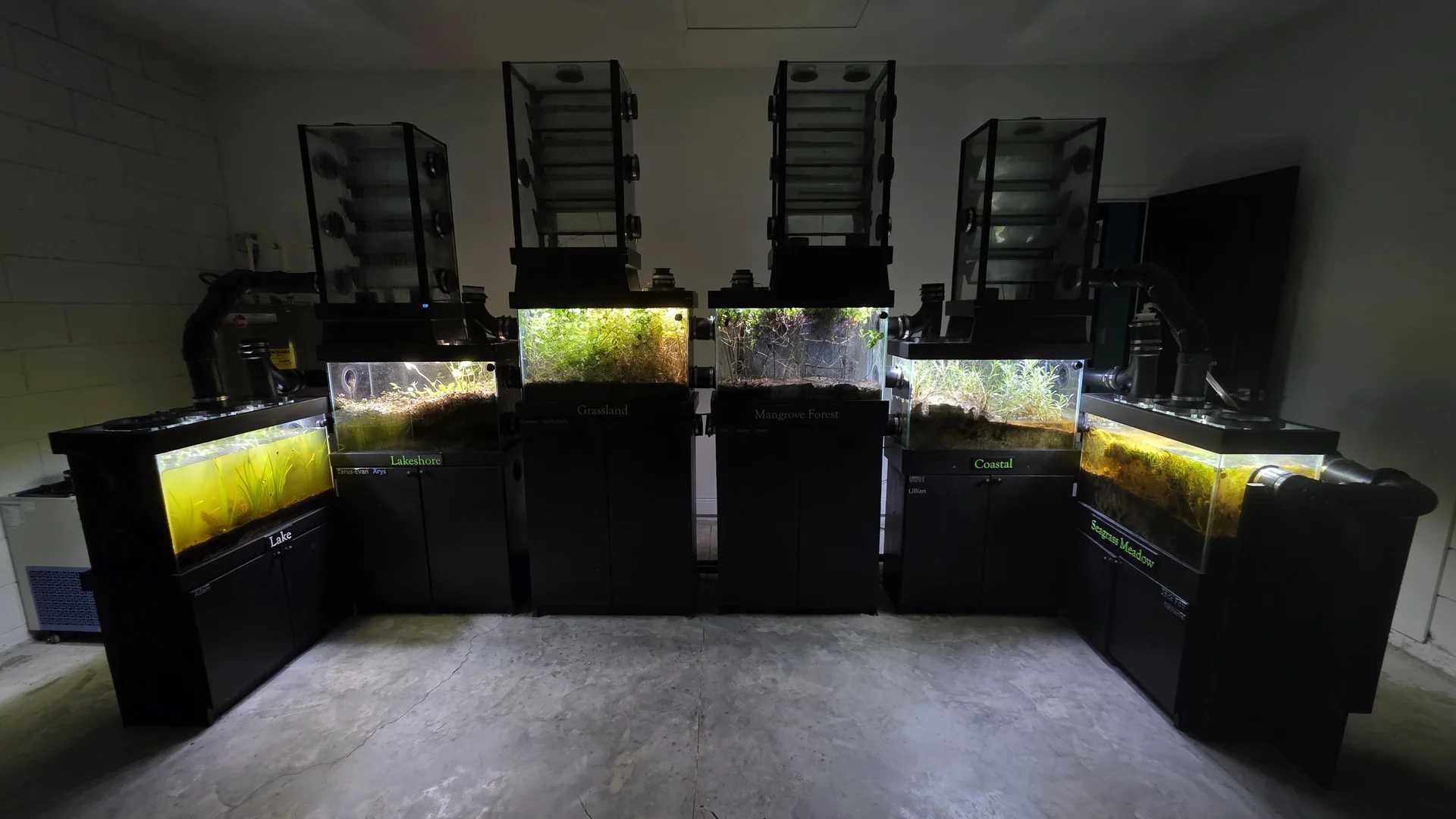
Inside the enclosure, six living habitats share the same air, weather, and seasonal rhythms. By bringing freshwater, land, and coastal ecosystems into one space, you can watch how soil builds, how water cleans itself, and how life balances out as the system grows.
Enter the field recordThe complete six-chamber enclosure · studio view
A small world that makes relationships visible.
Six biomes across three realms house real organisms inside a system engineered largely from scratch.
The habitats connect in specific ways. They share atmosphere, humidity, and overhead light. Organisms and organic matter cross boundaries. Rain moves down the terrestrial slope through the Lakeshore into the Freshwater Lake. The saltwater side circulates separately and never mixes with the fresh.
Those are the kinds of links that hold a landscape together. This one is small enough to watch them work.
From the living system
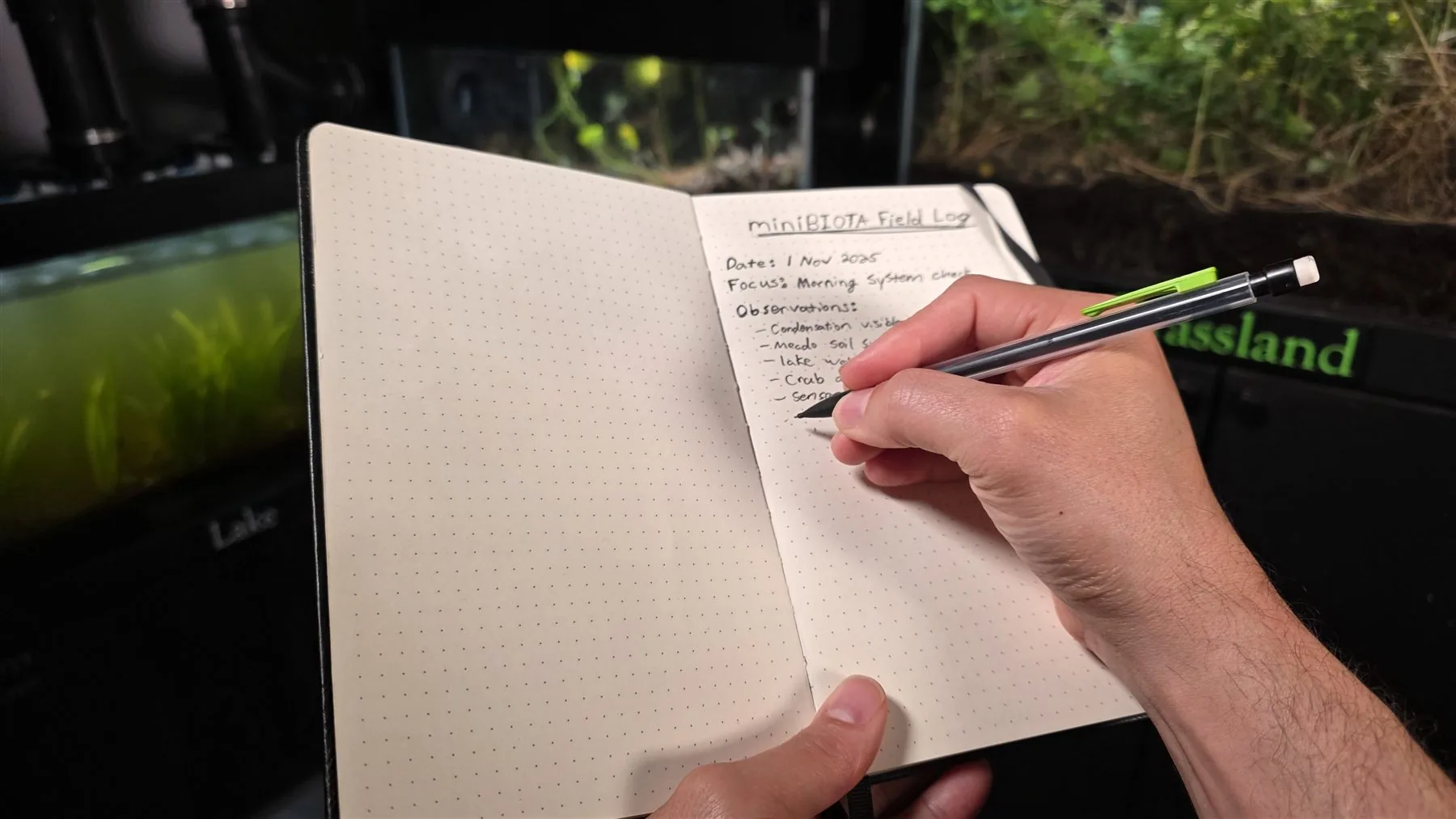
A Bigger Batch of Hornwort Goes Into the Lake
After a small piece of hornwort added June 30, 2026 was grazed down quickly by the Slough Crayfish, Josue introduced a substantially larger amount from a multi-gallon culture on July 4, 2026, betting the larger standing…
- 01 Hornwort
- 02 Slough Crayfish
- 03 Ghost Shrimp
The system behind the habitats
Look closely at the machinery behind the weather.
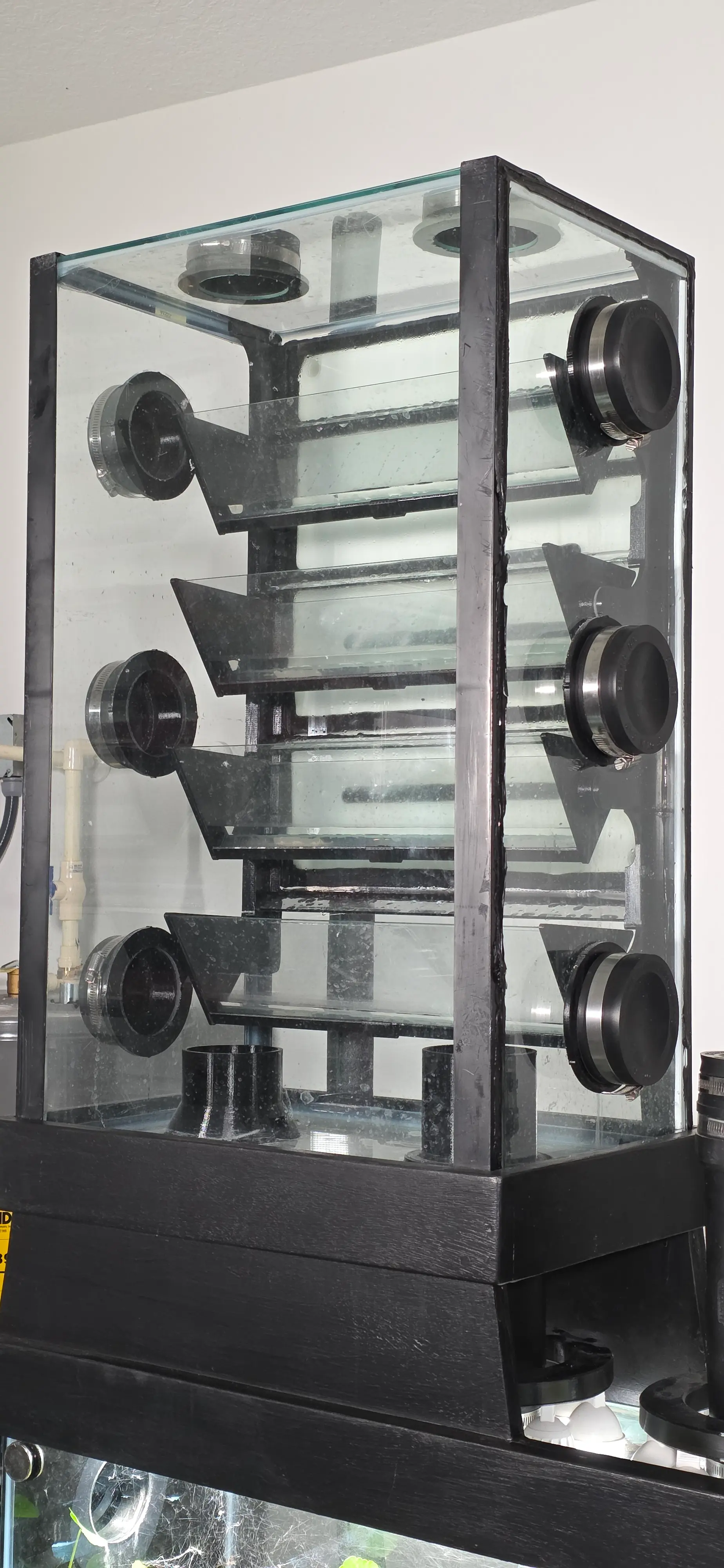
Four vertical atmosphere processors were built to condense rising moisture against cooled surfaces and return it to the habitats as rain.
- 01
The stacked internal shelves give moist air repeated surfaces for condensation during active cooling.
- 02
During active cooling runs, condensate collecting on the chilled rear glass demonstrated the enclosure's closed rain cycle.
Watch it change
Each of miniBIOTA’s six biomes is photographed straight on every day, building a visual record that stretches back years.
Loading the visual archive…
Quiet signals from the enclosure
Weather across the six biomes.
Live temperature and humidity readings reveal the different microclimates taking shape across the monitored biomes.
Not currently monitored
24.2°C · 100.0% RH
24.1°C · 91.8% RH
24.1°C · 87.0% RH
24.0°C · 77.9% RH
Not currently monitored
Go deeper