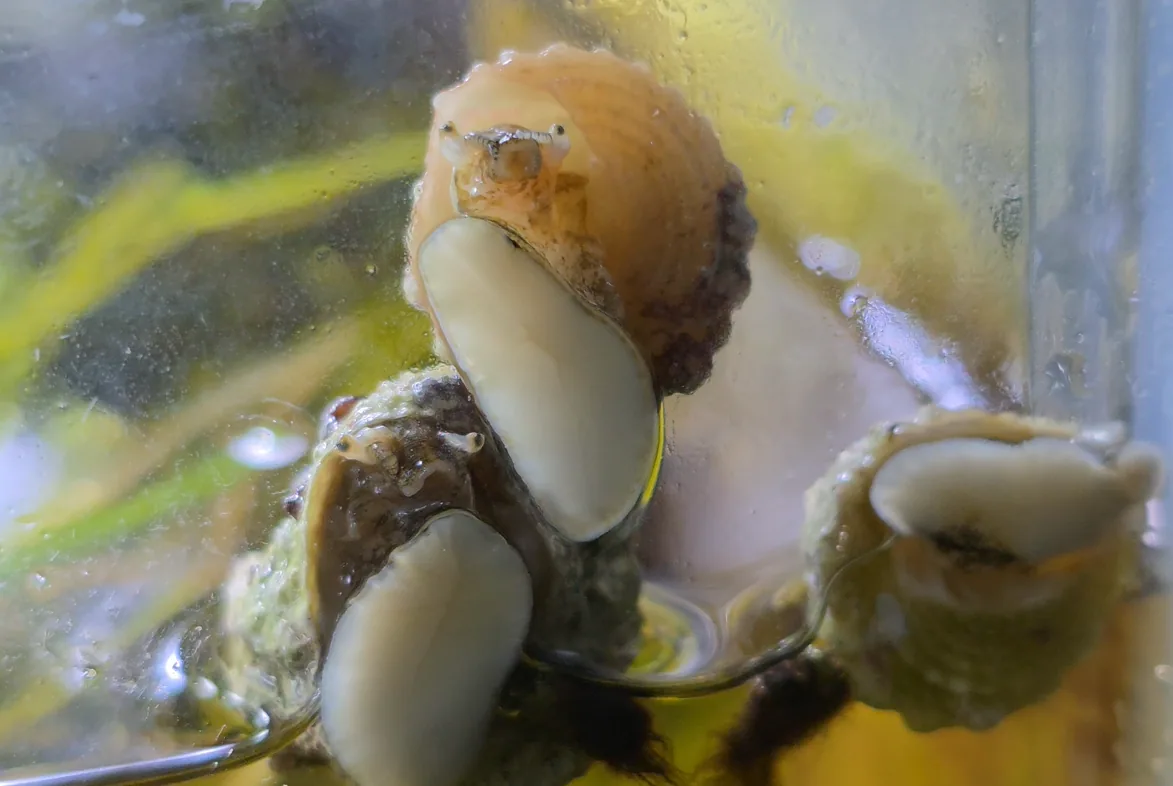
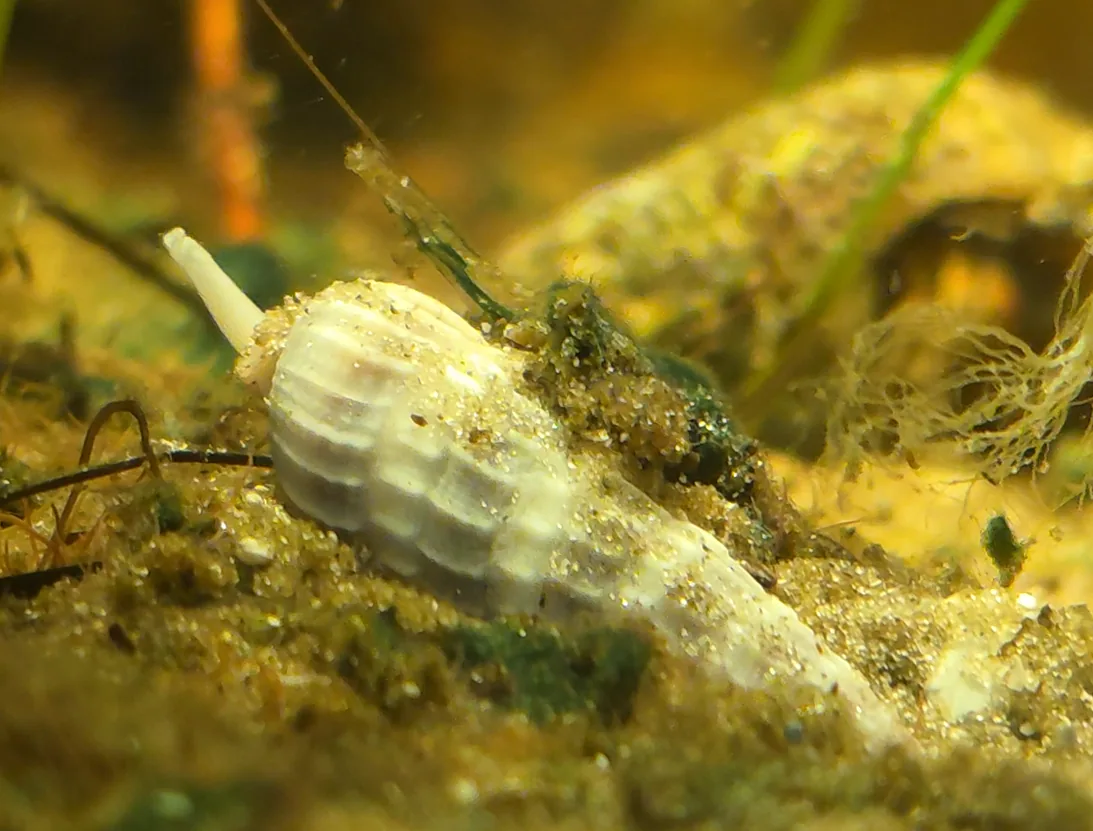
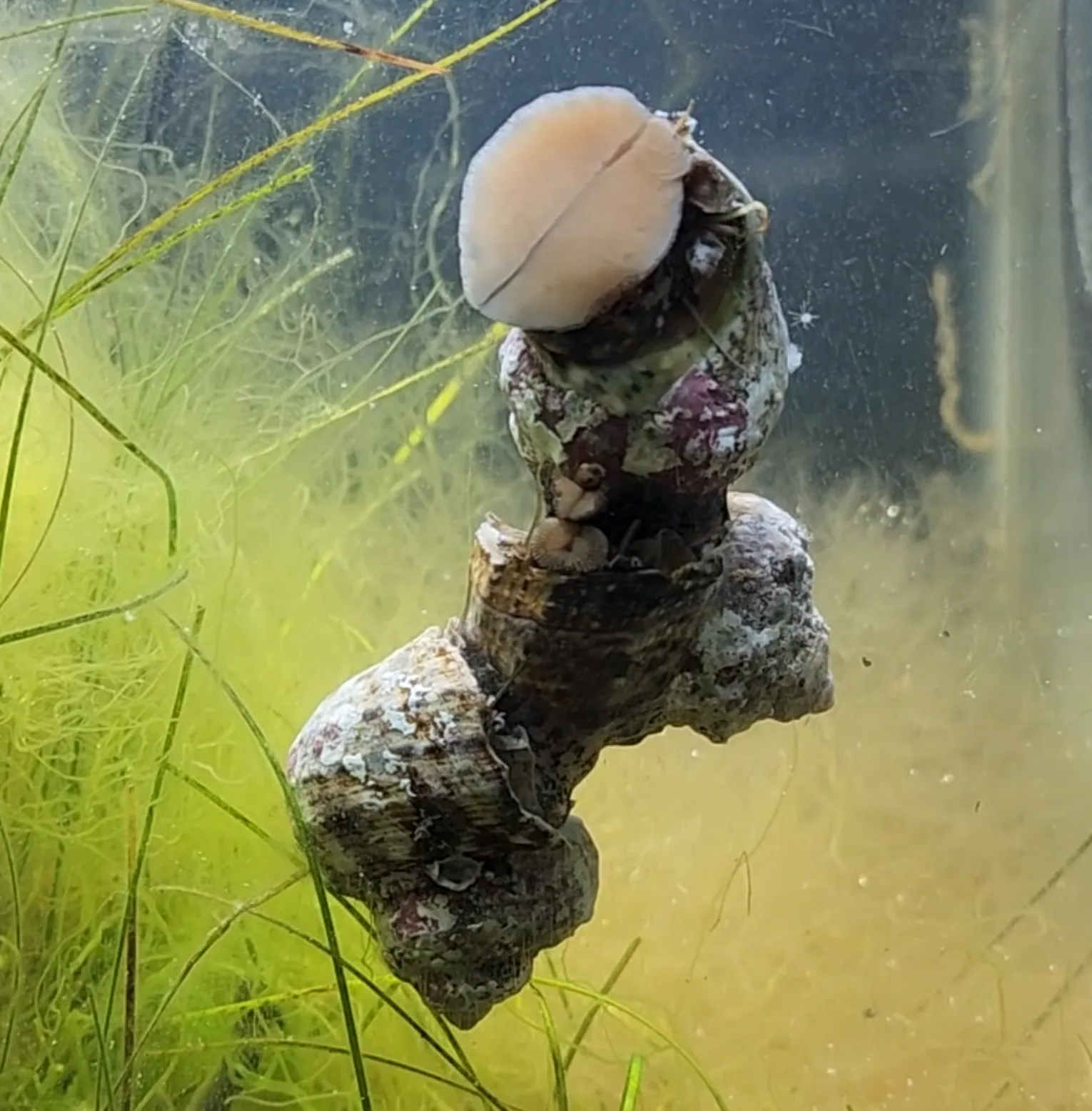
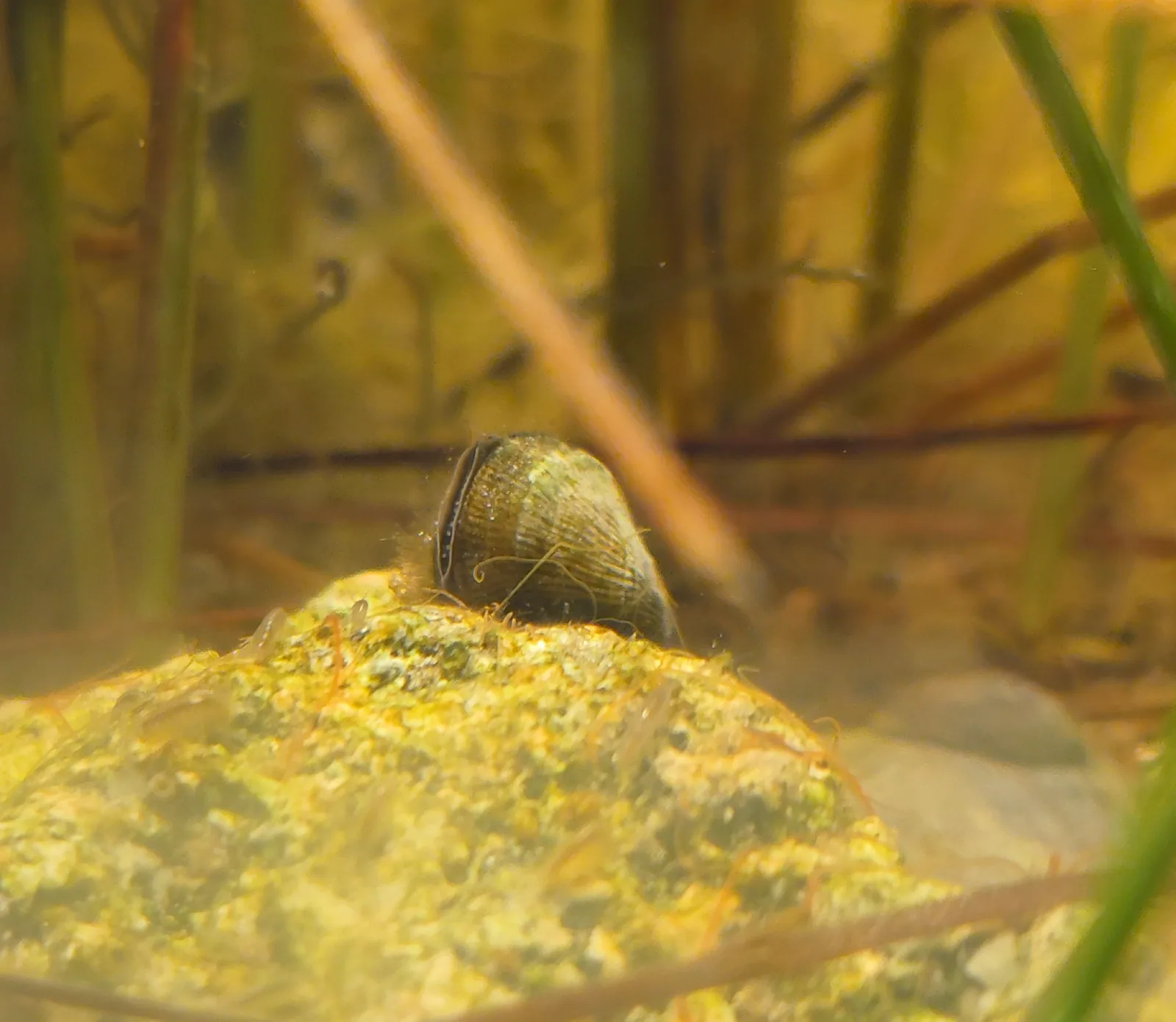
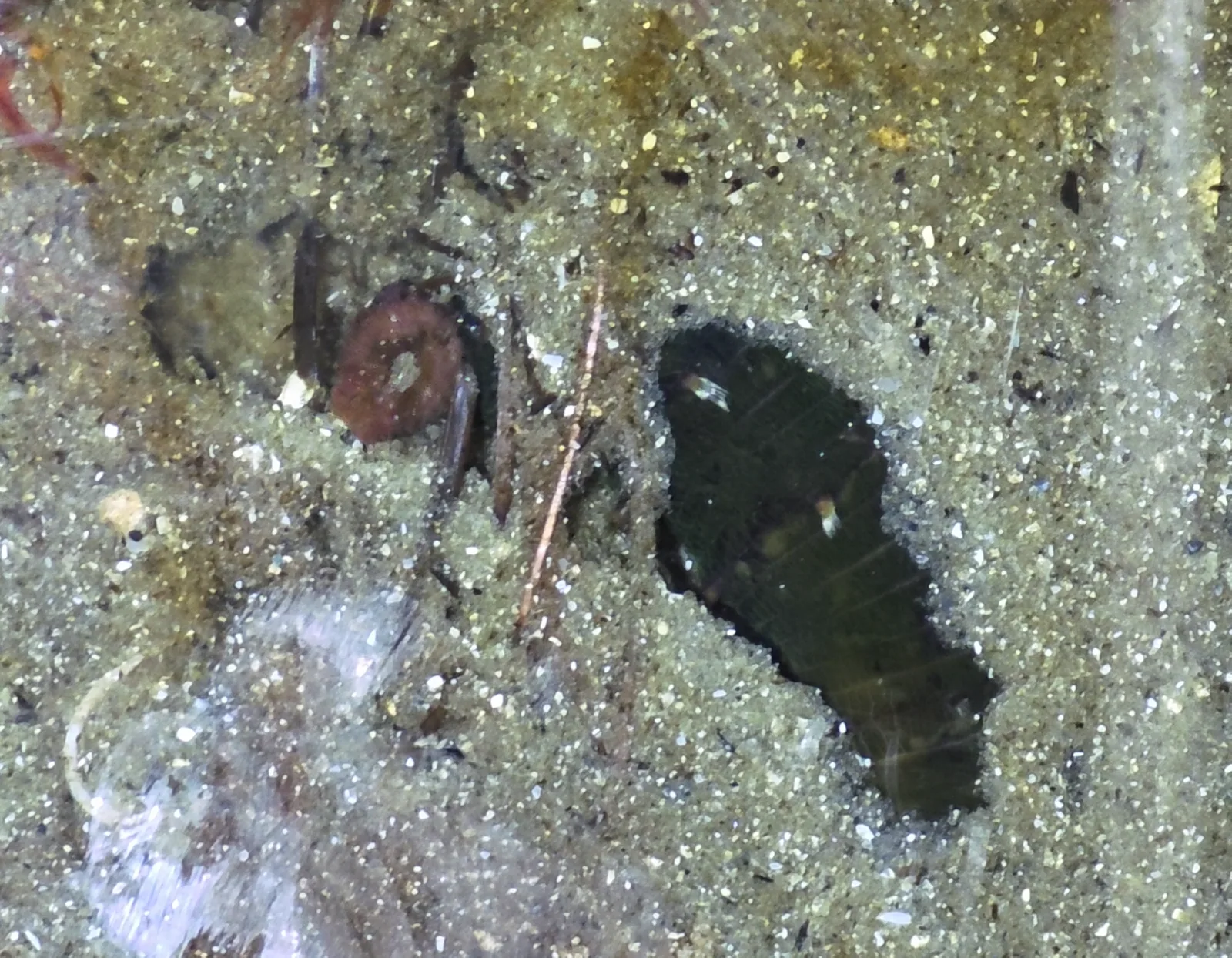
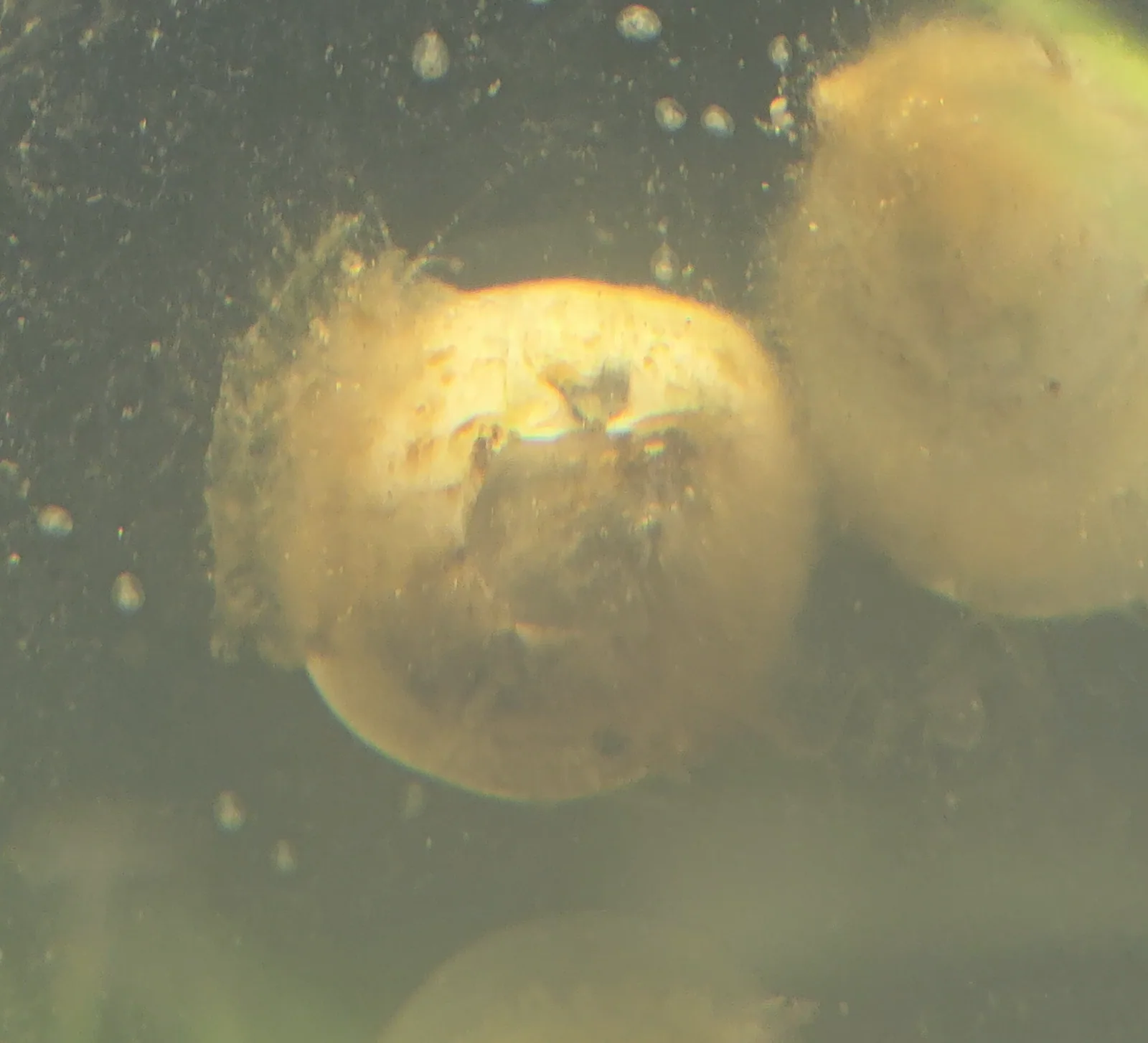
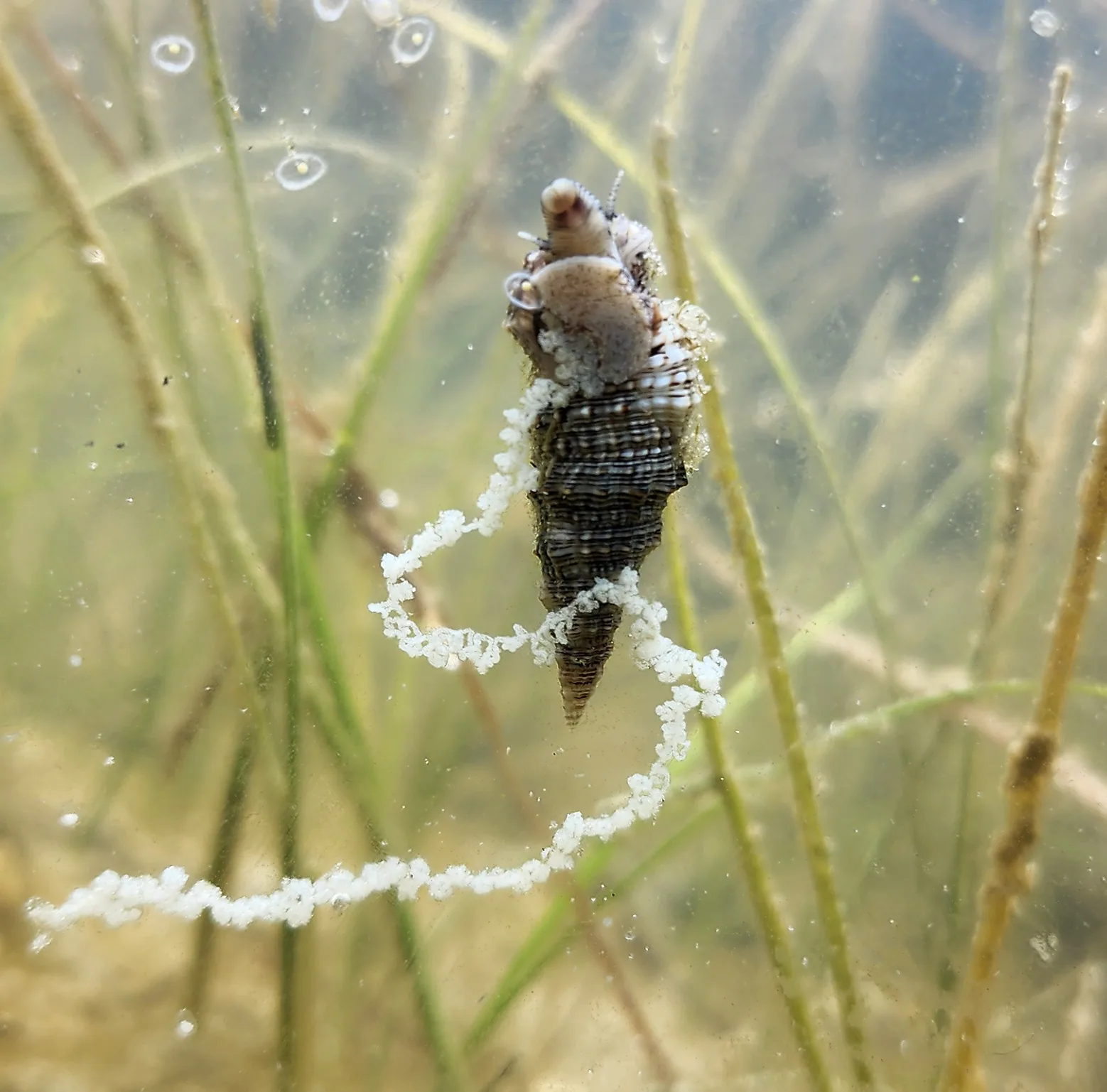
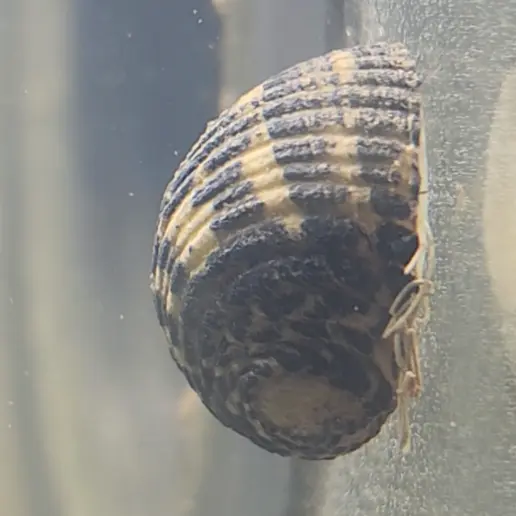
Chestnut Turban Snail status (September 20, 2026): One of two introduced individuals was confirmed dead August 10. Prolonged non-detection of the second led Josue to treat the species as extirpated from miniBIOTA on September 20. The second death was not confirmed, and the snail's intended hard-surface grazing effect was not evaluated.
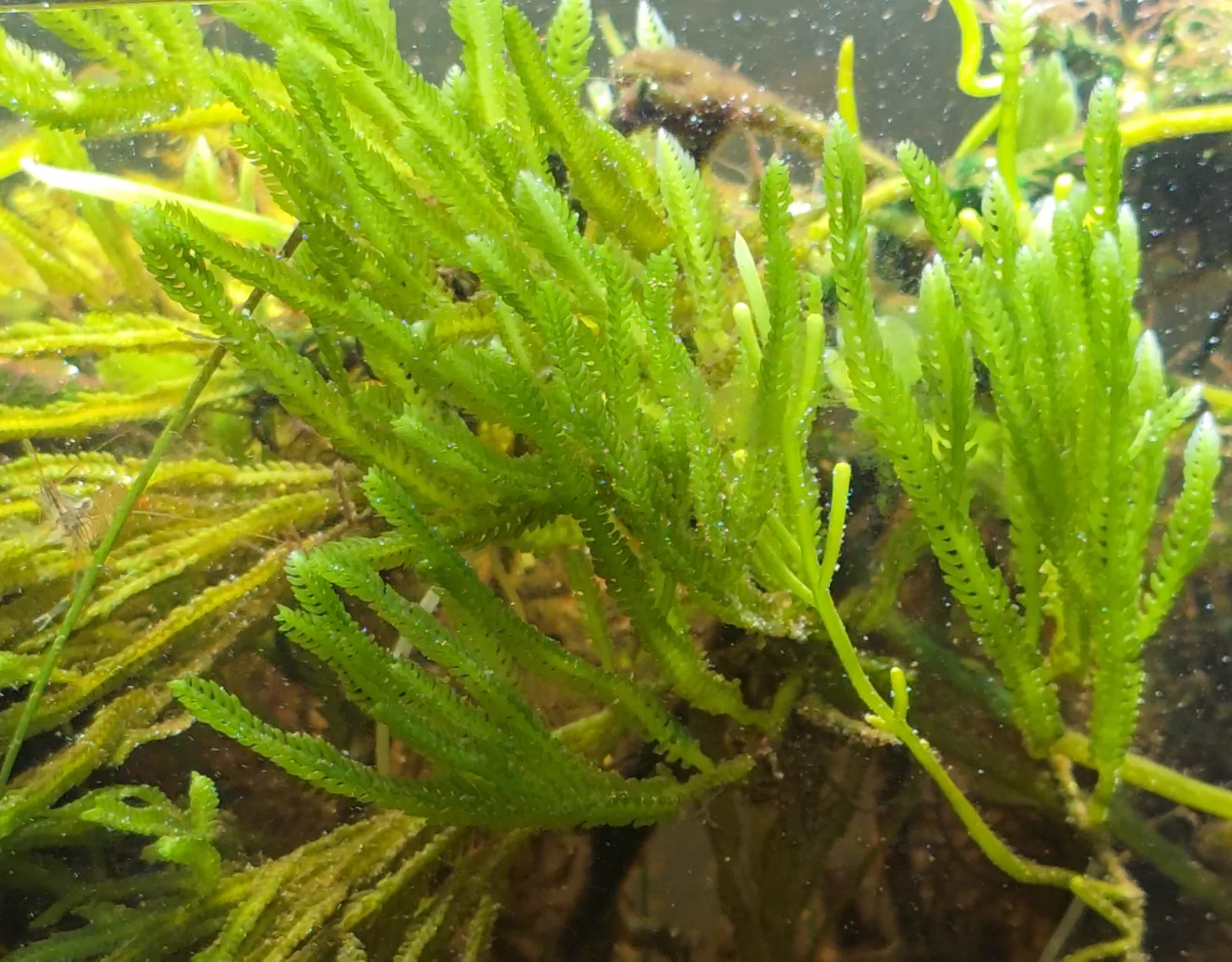
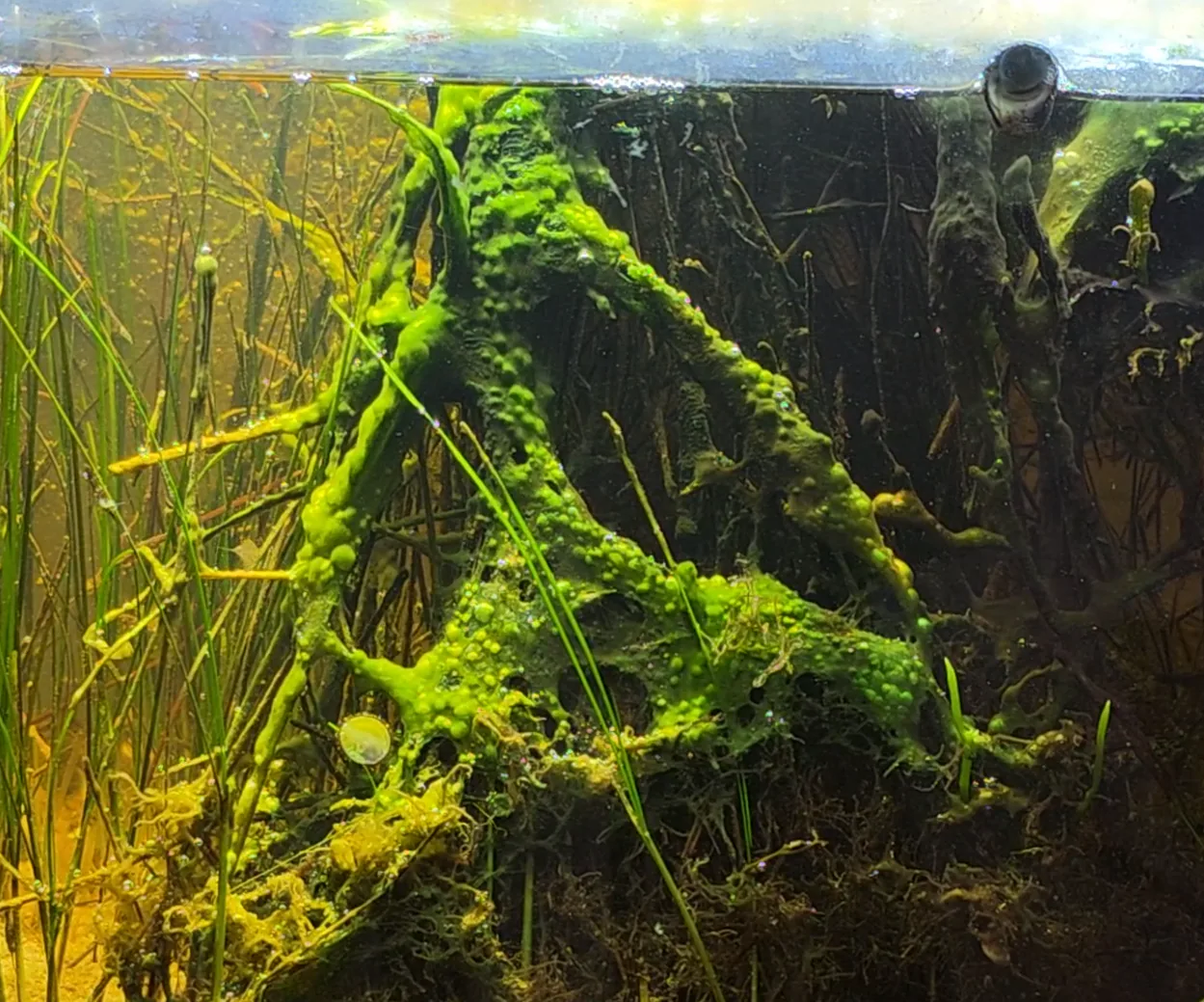
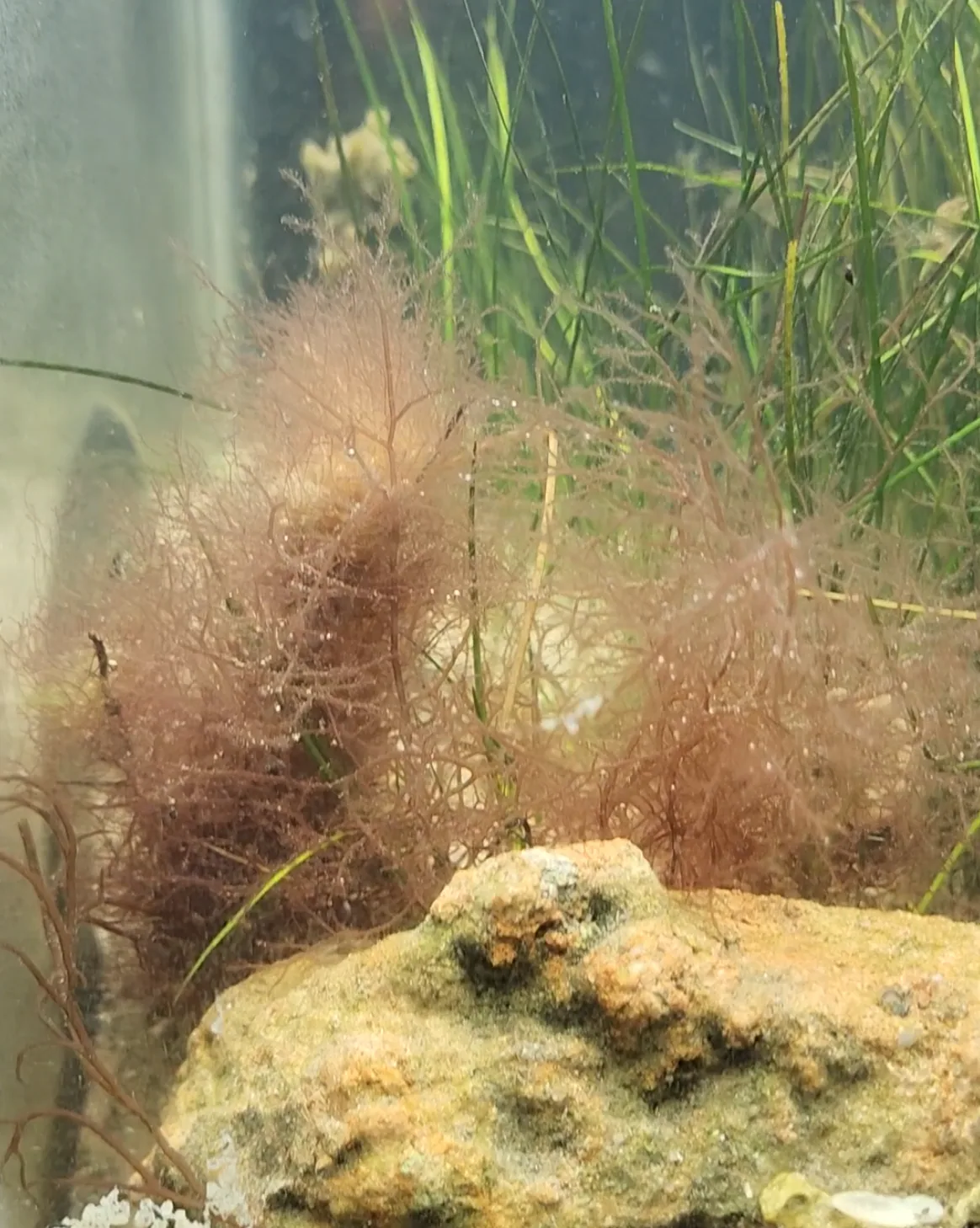
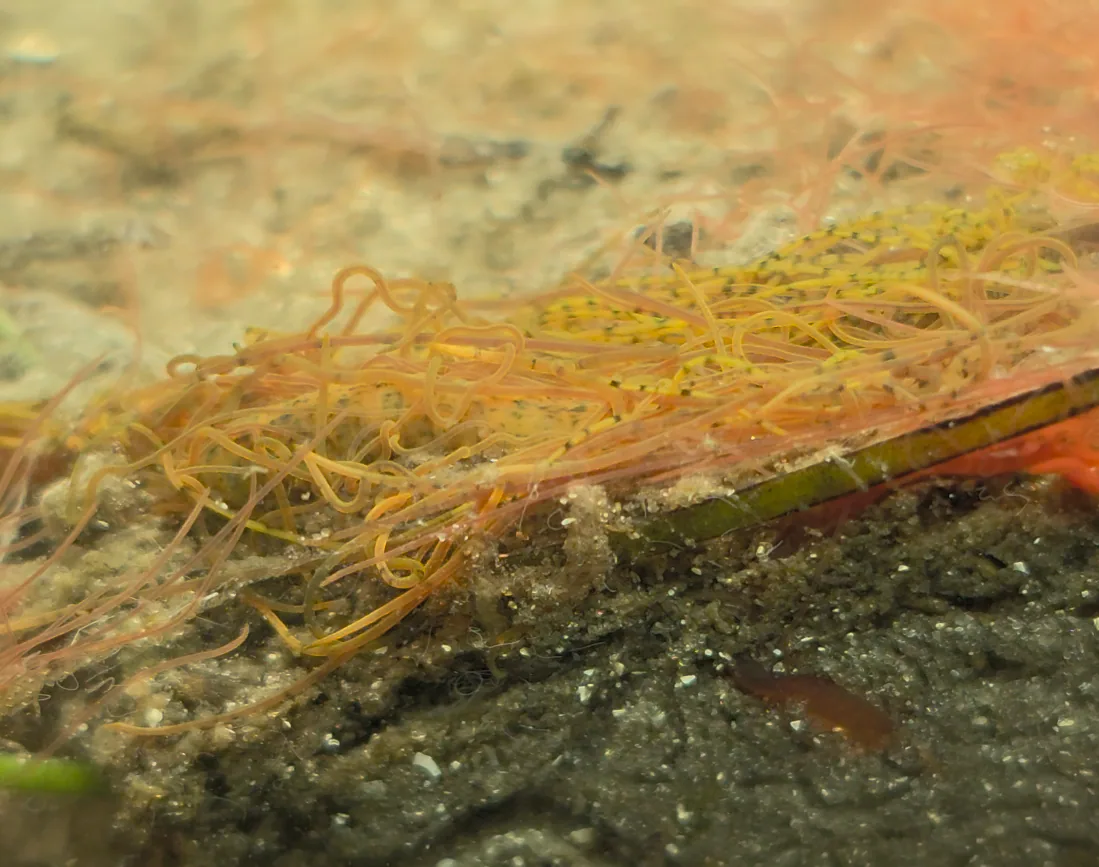
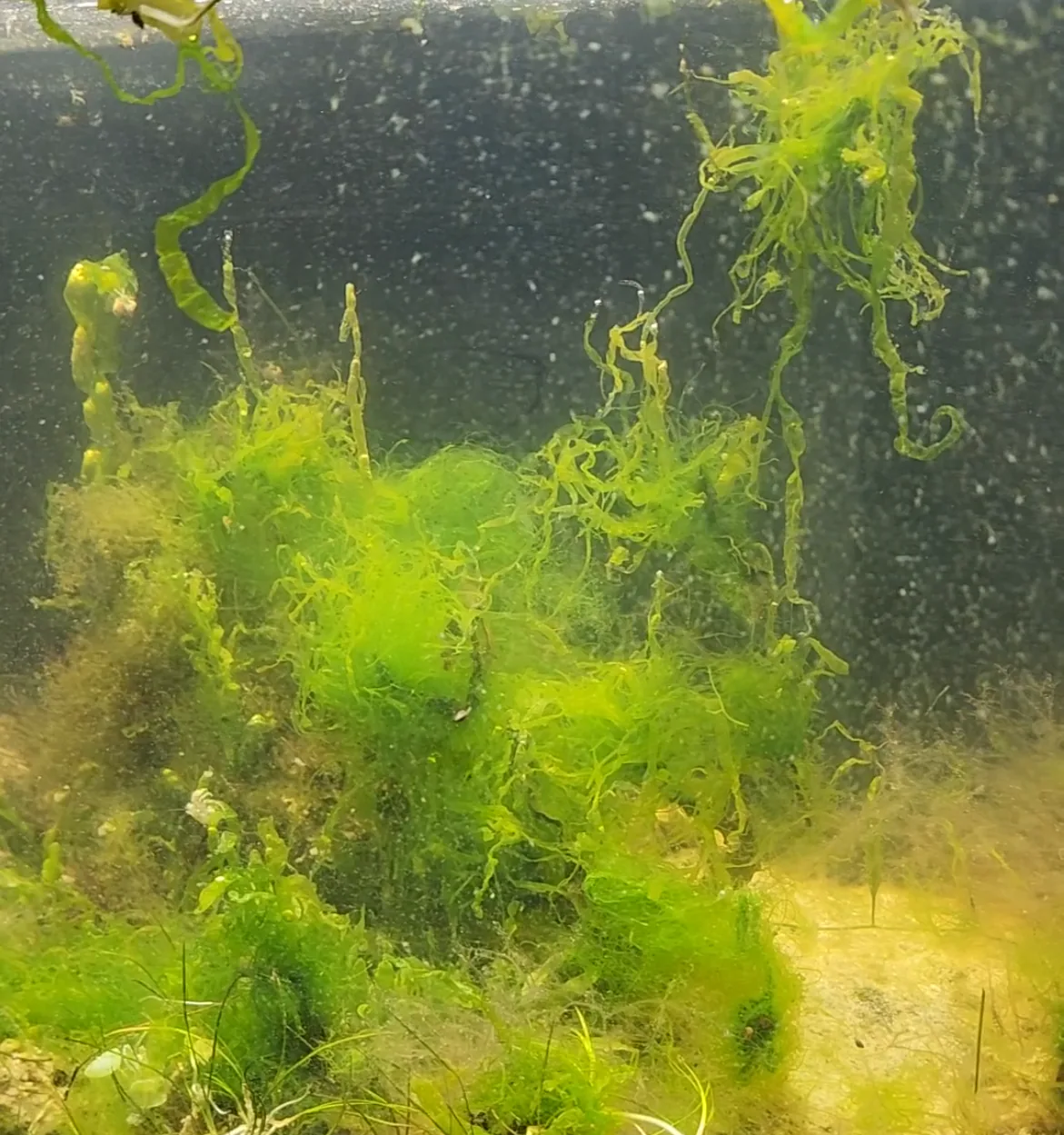
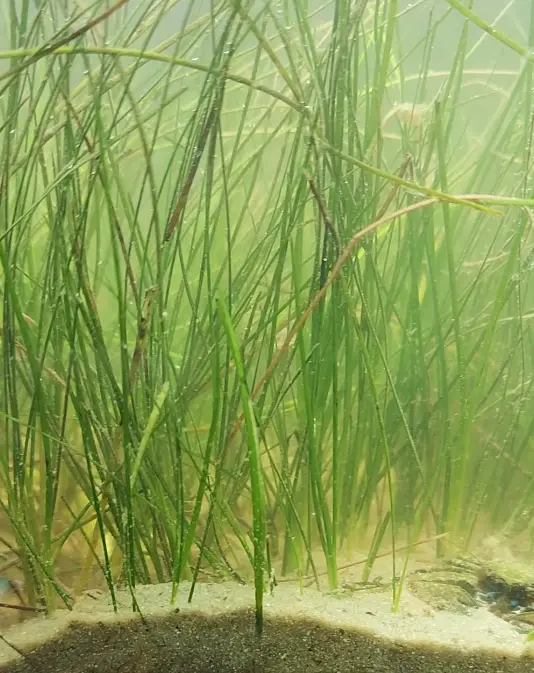
Producer succession (Caulerpa spatial dominance, Graceful Redweed recession, and seagrass compression): The two intermeshed Caulerpa species occupied approximately seven-eighths of Seagrass Meadow substrate length on September 14, 2026. Graceful Redweed remained alive on September 24 as a clump approximately the area of two hands, while the mixed Caulerpa mass visually dominated much of the water column and appeared more anchored near the remaining seagrasses. The three seagrasses were confined to the remaining open area at the last species-specific assessment, but this observation did not establish improved or worsening condition for any one of them. Nutrient competition, self-shading, grazing, and changing light access remain possible drivers of redweed decline; no contribution was measured.
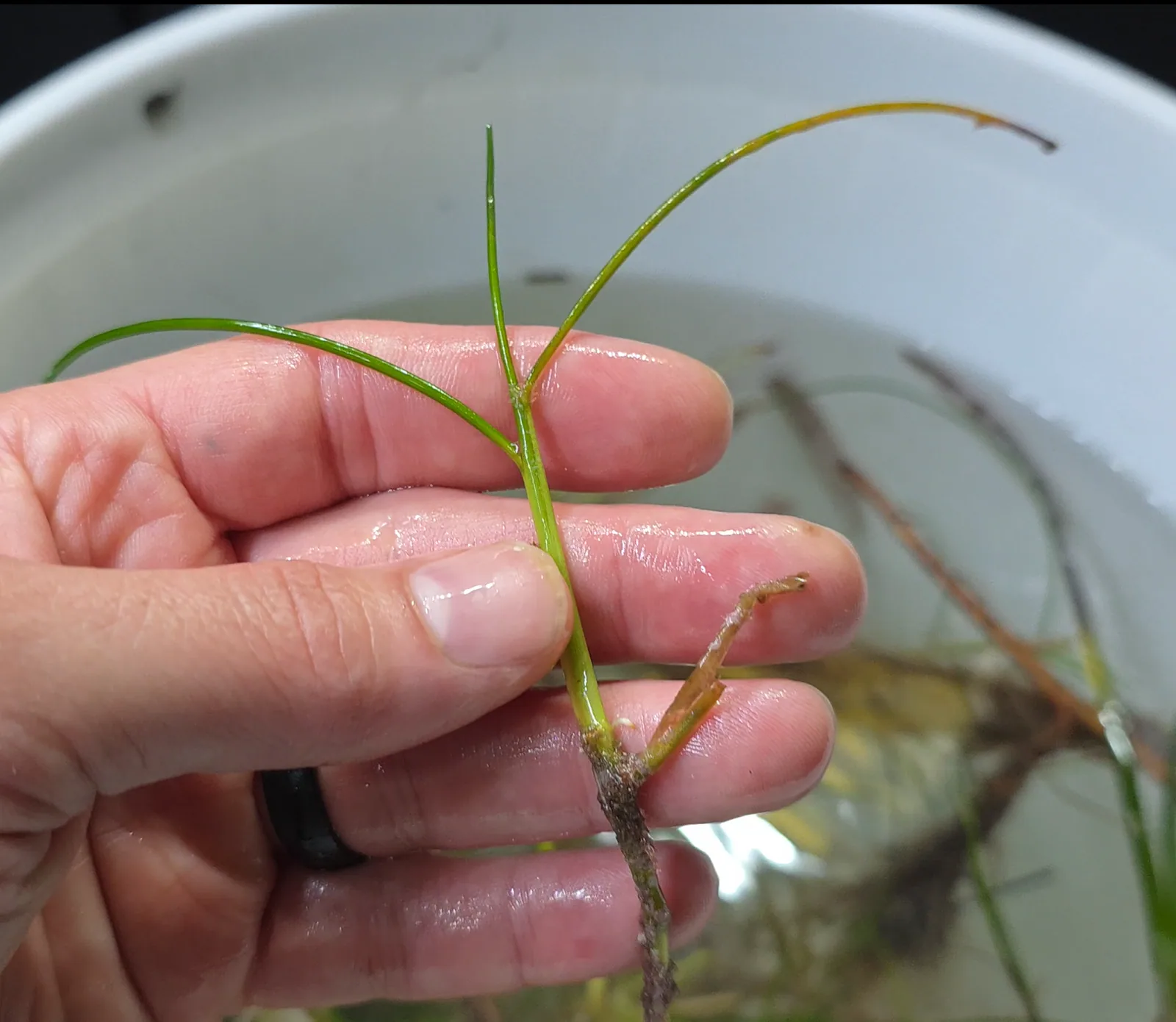
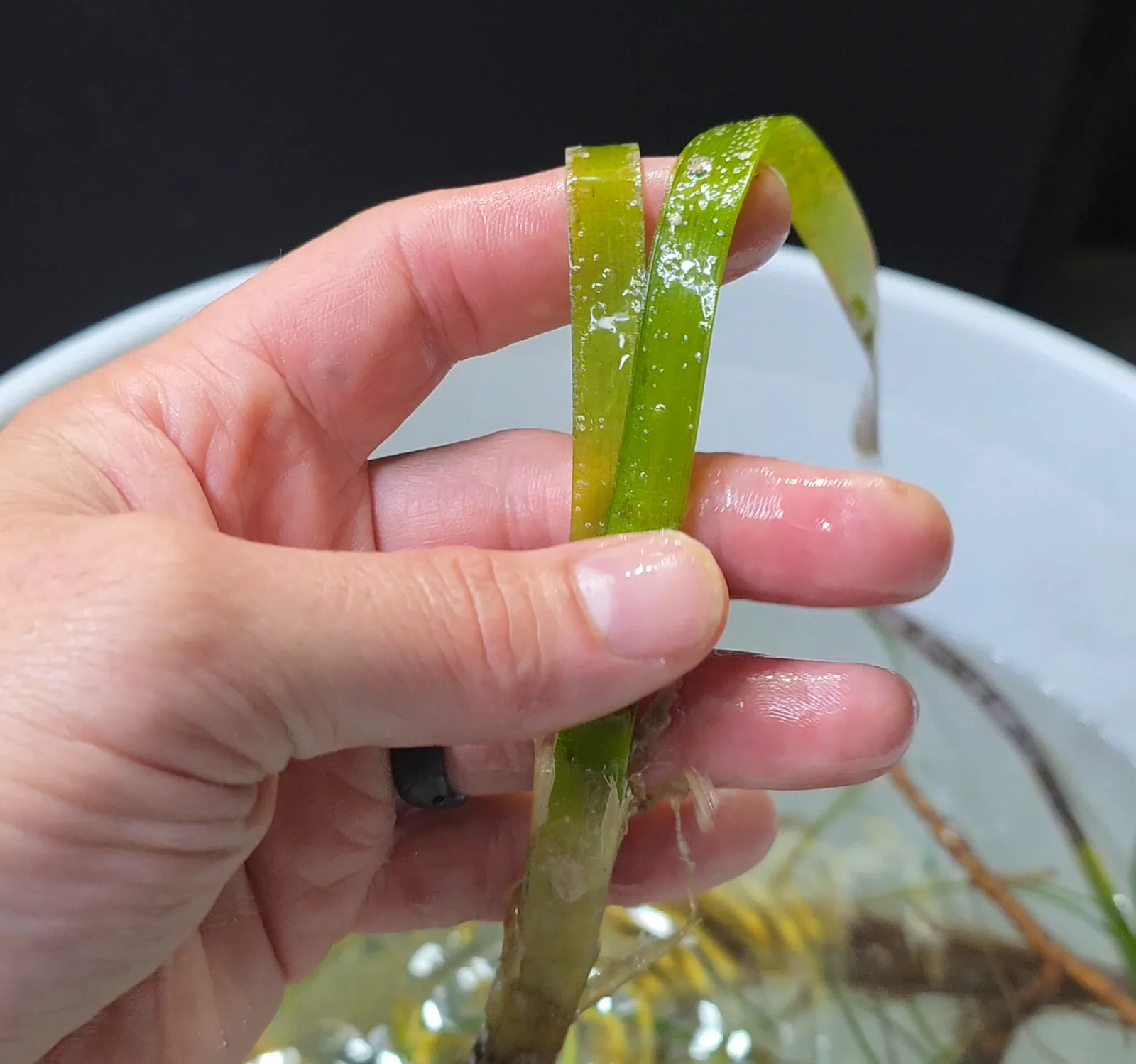
Shoal Grass remains at Vulnerable status. Turtle Grass and Manatee Grass are increasingly precarious, having never confirmed establishment since their March 27, 2026 introduction and now facing severe spatial confinement combined with epiphytic coating.
Two grazing services that would ordinarily counterbalance macroalgal expansion remain heavily compromised: hard-surface snail grazing remains depleted despite Astraea additions, and blade-surface isopod grazing is severely constrained even with the September 5, 2026 reconfirmation of Eelgrass Isopod survival at very low density.
Blue-green surface growth (apparent recession after rebound): A visually identified blue-green coating developed on seagrass blades in the remaining open area by September 14, 2026. On September 24, the growth appeared to be receding, but no coverage measurement or species-specific blade inspection was reported. Its identity, cause of retreat, and effect on seagrass health remain unresolved.
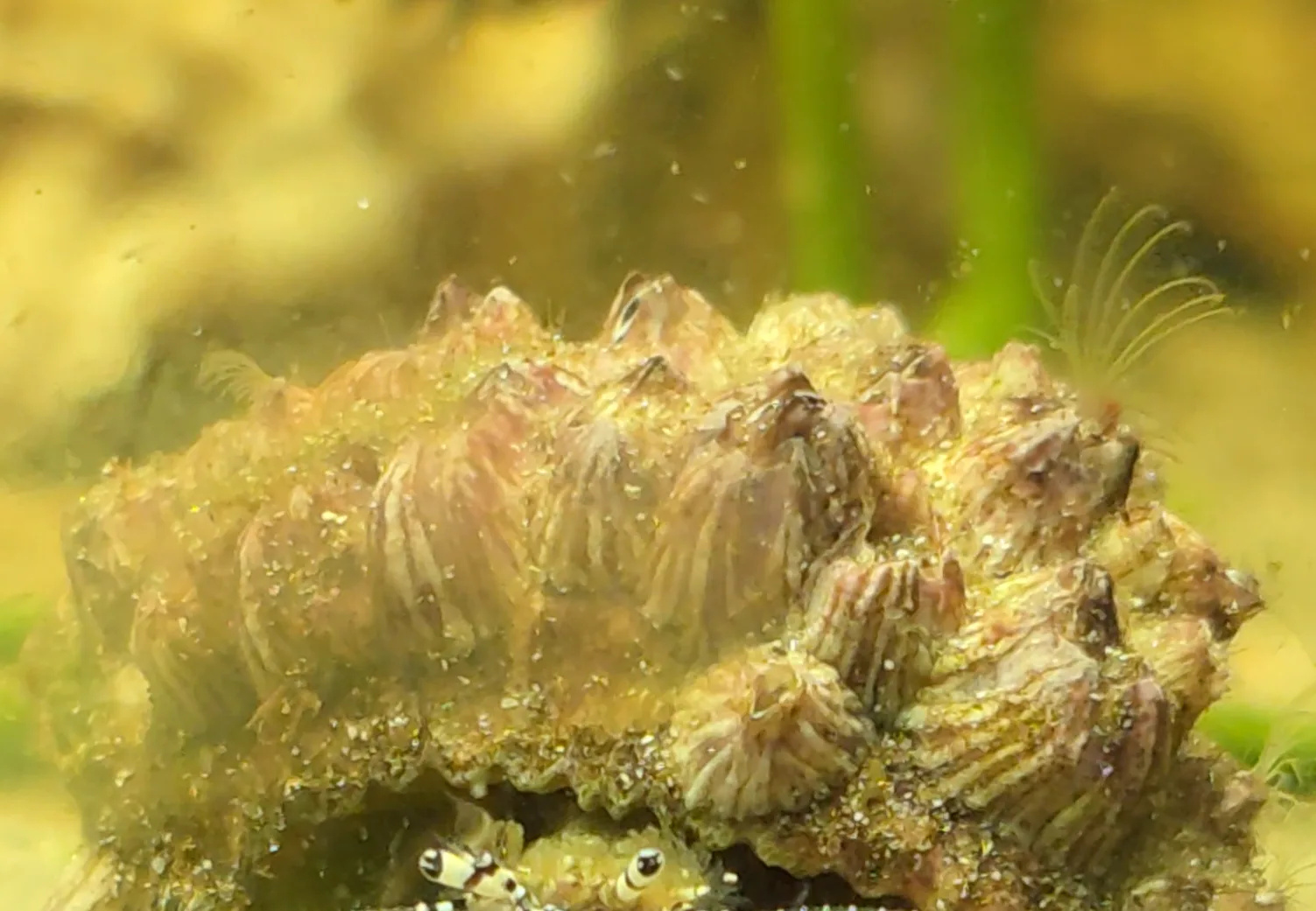
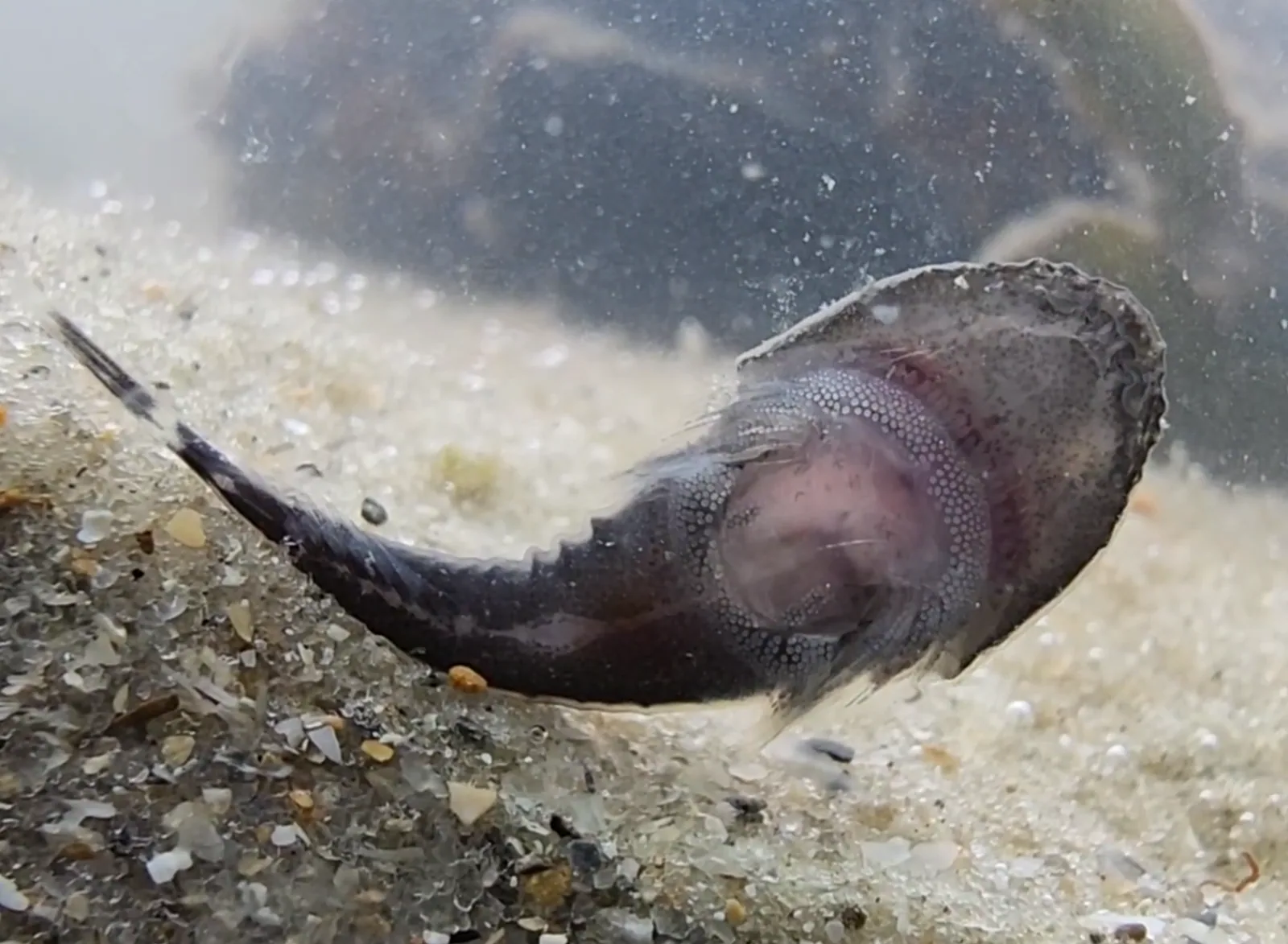
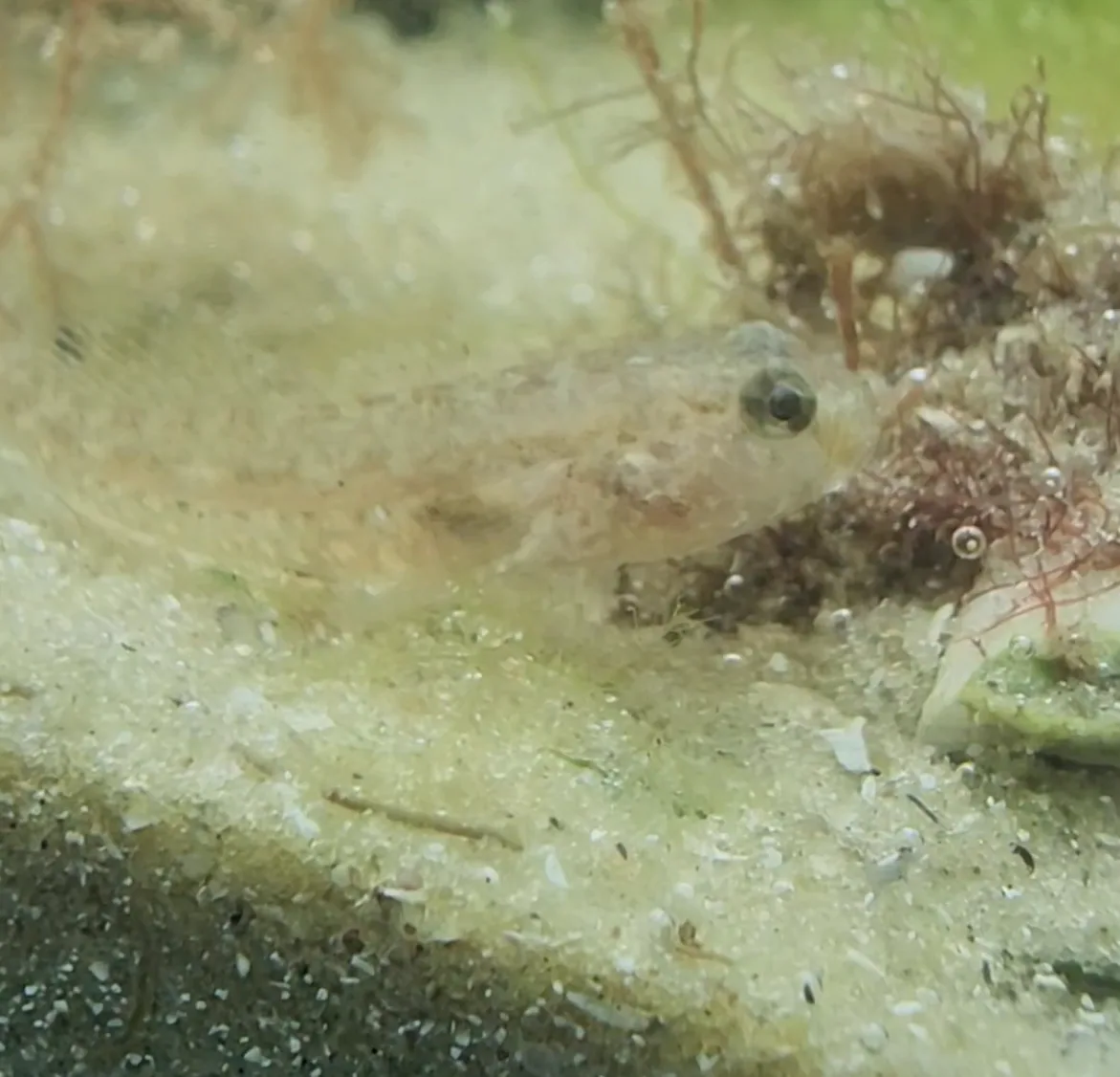
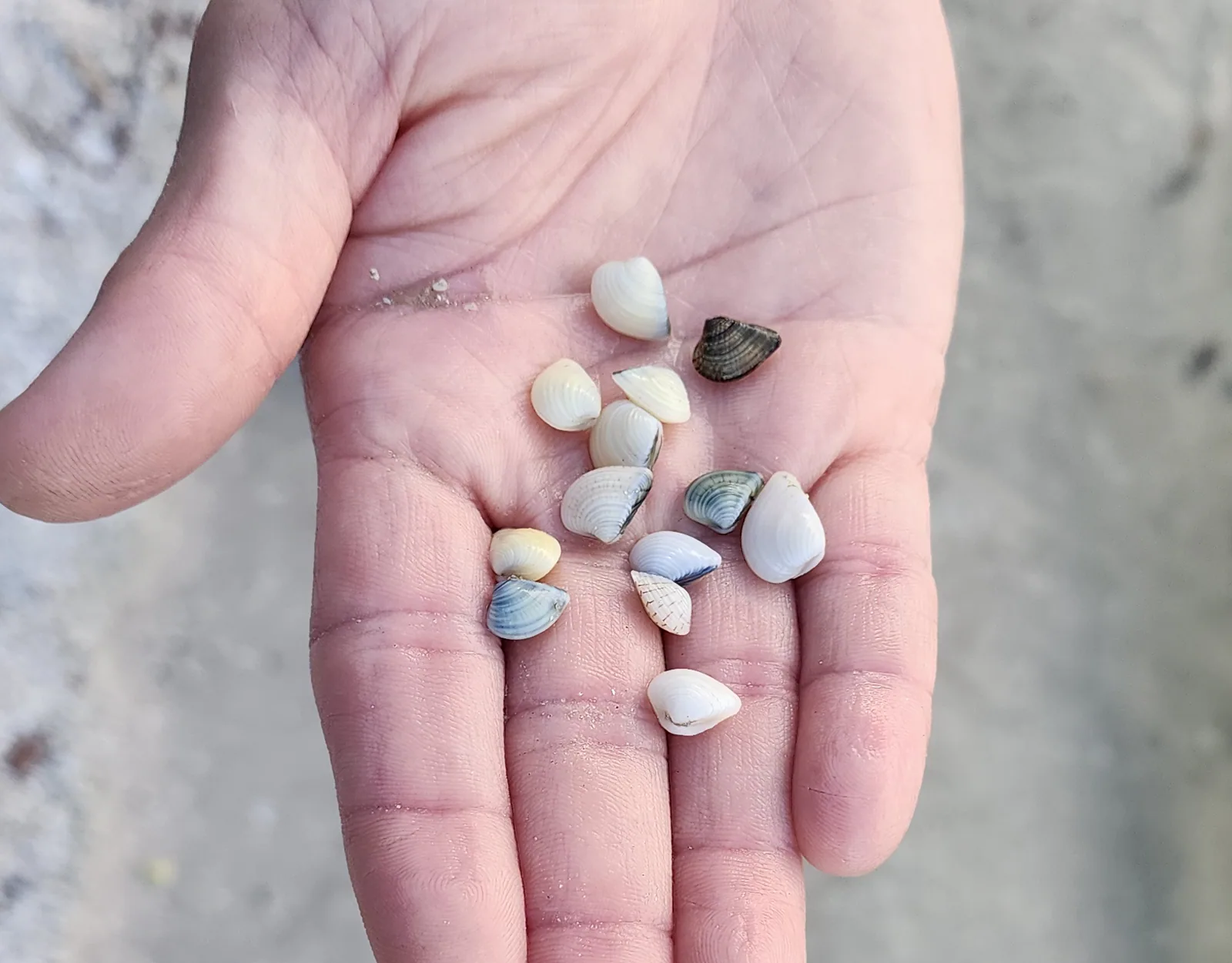
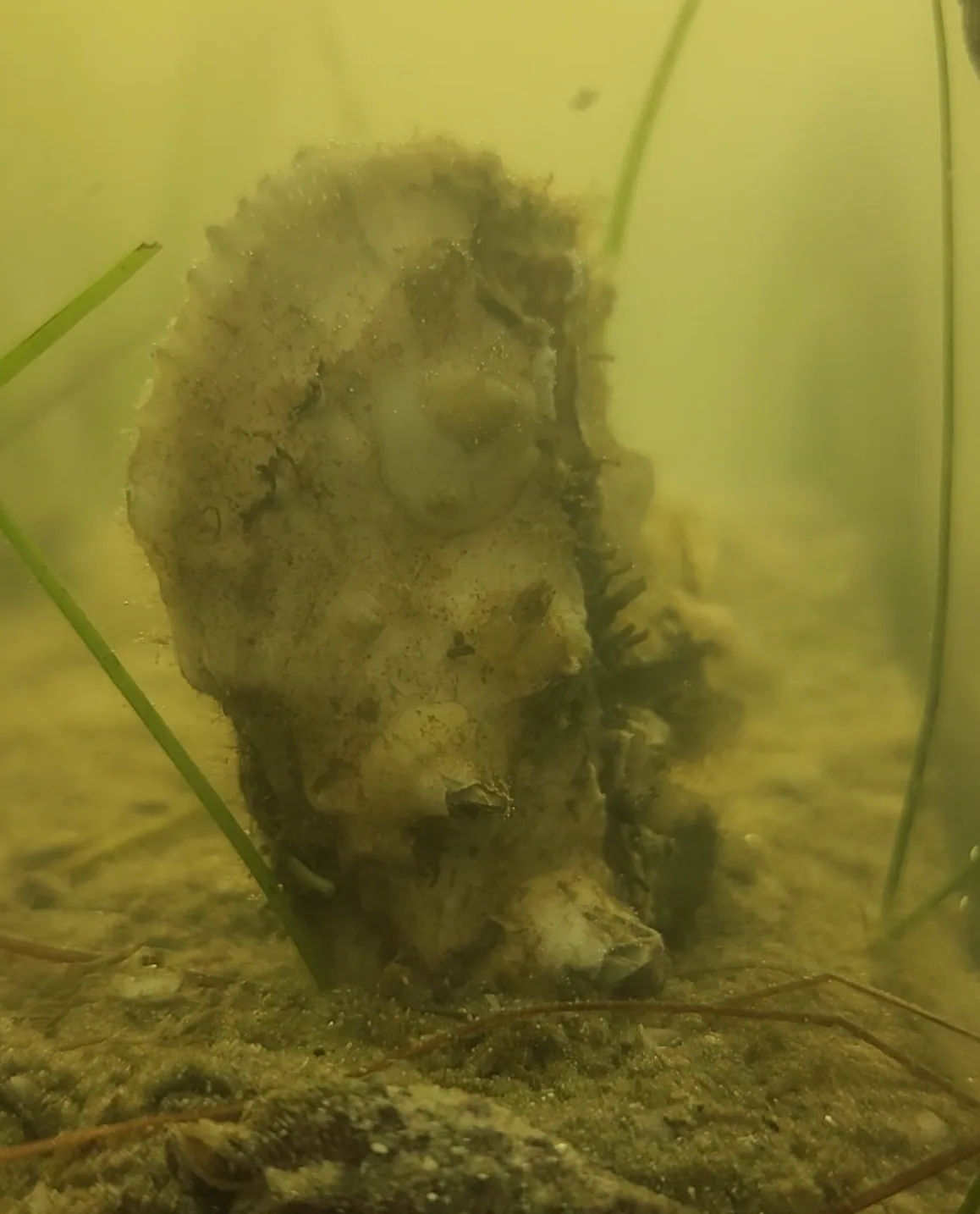
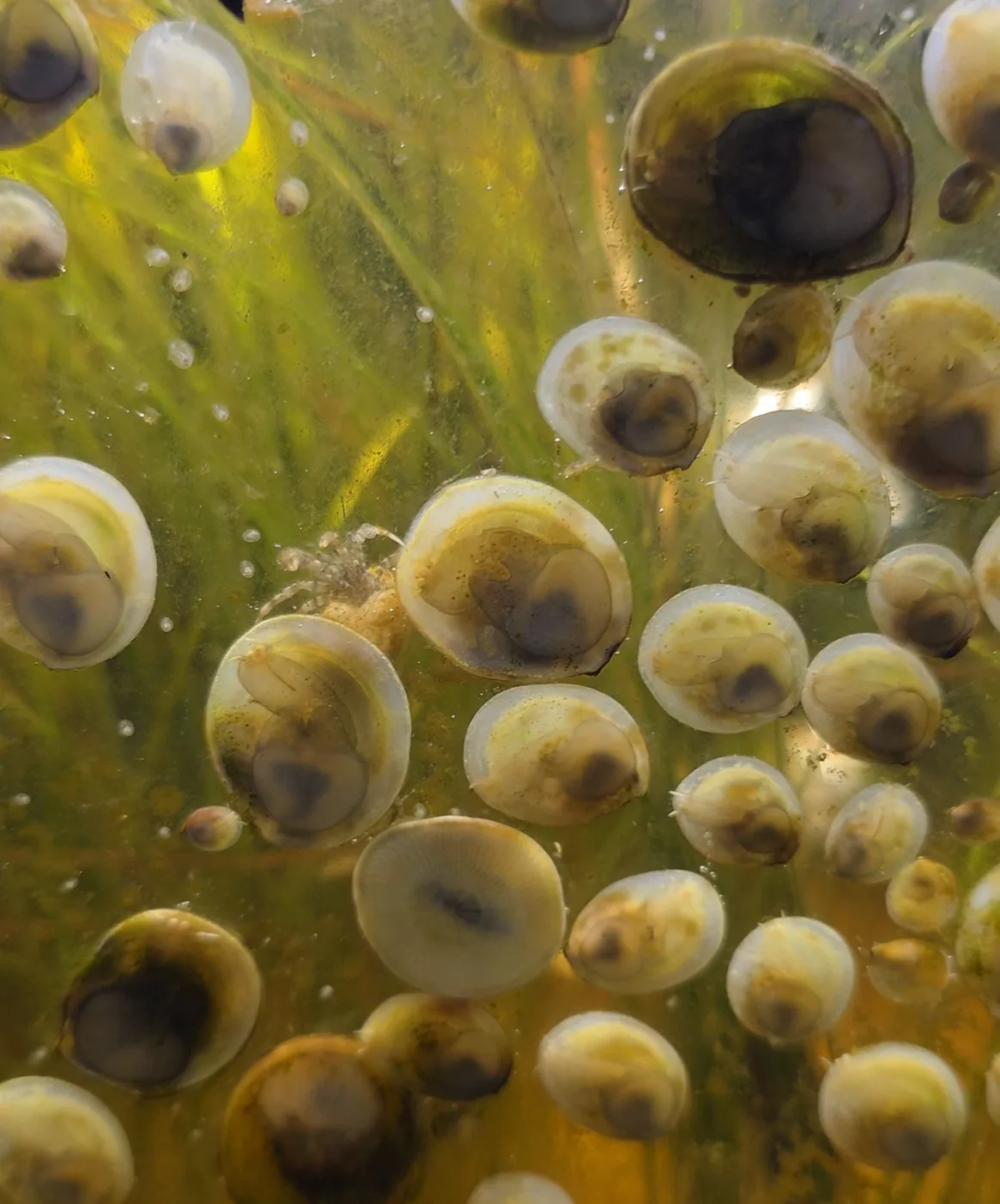
Slippersnail / Scorched Mussel competition (unresolved): Both filter feeders occupy glass and hard surfaces in the Seagrass Meadow. Whether Scorched Mussel expansion is reducing Depressed Slippersnail population density or occupying preferred surfaces has not been resolved.
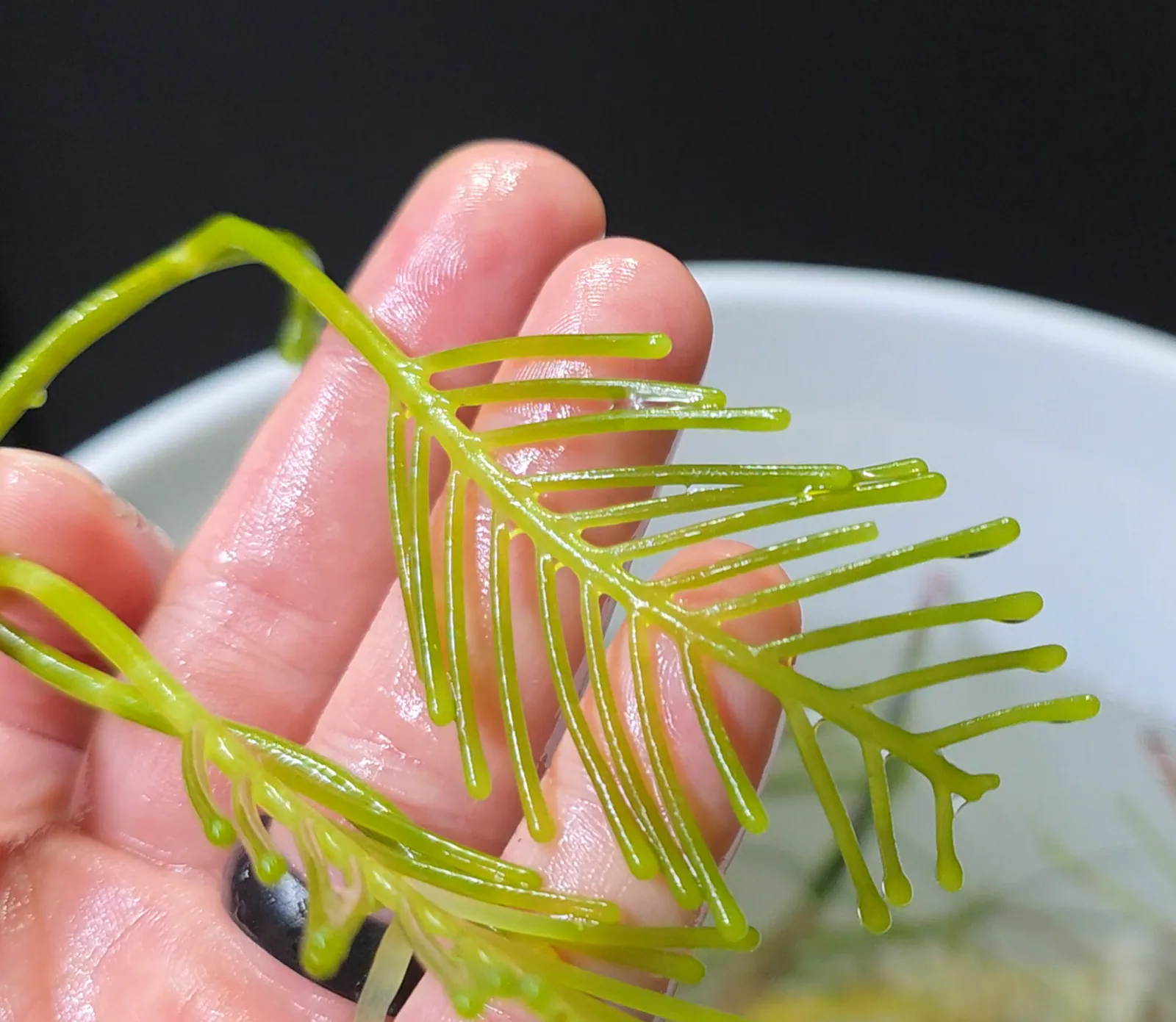
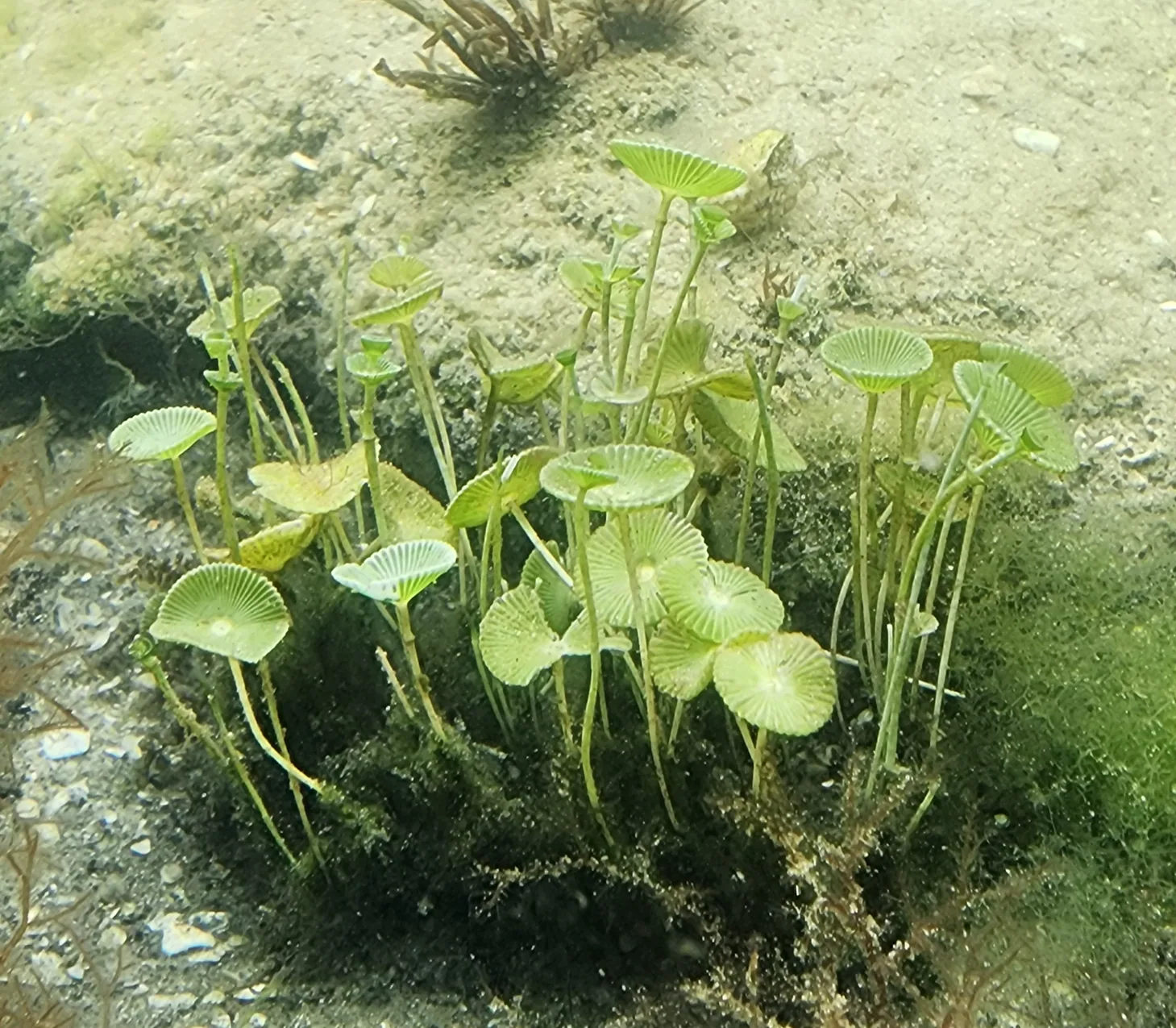
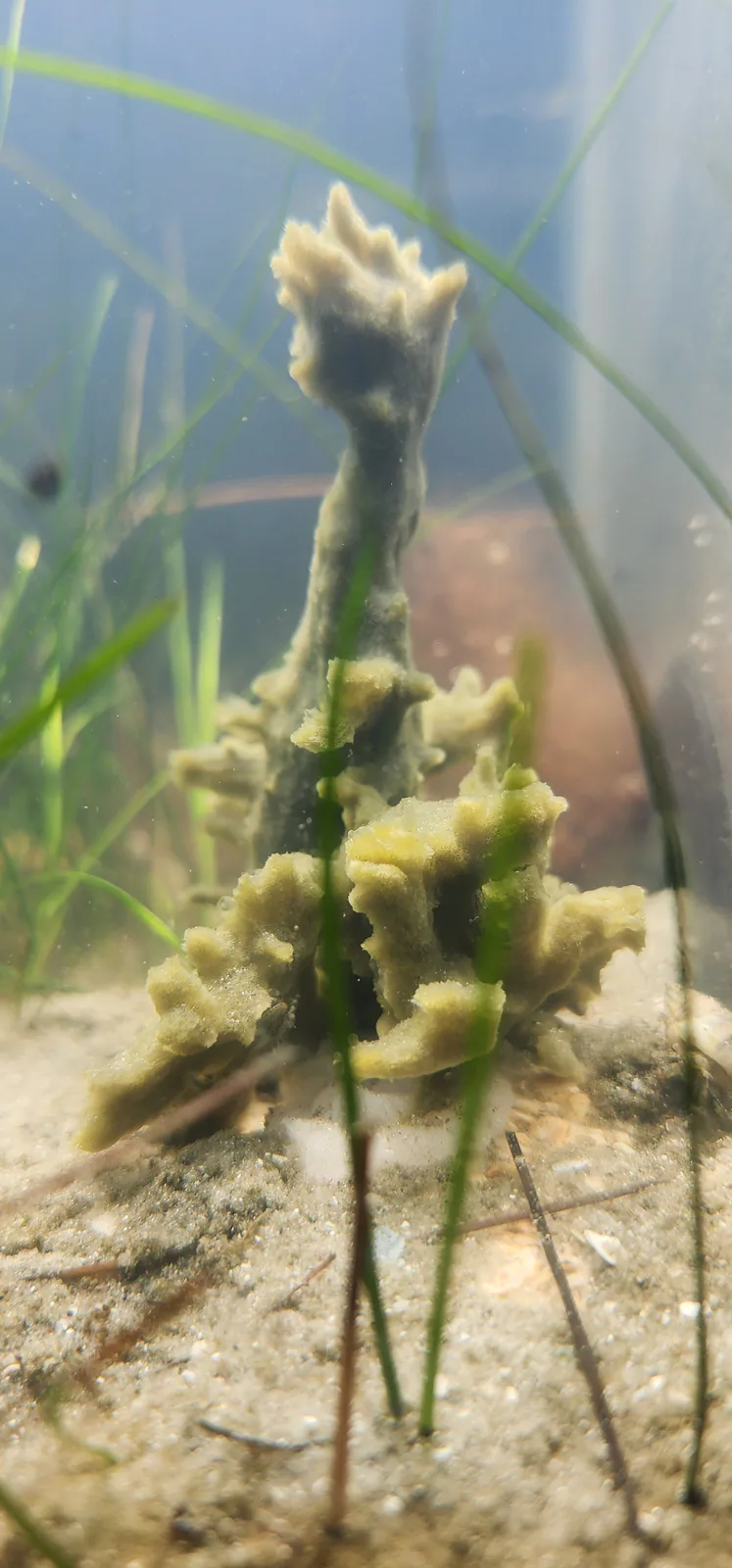
Caulerpa species fate (active watch; partial die-off August 29, 2026): Both Caulerpa species introduced March 27, 2026 are ecologically significant. C. taxifolia is invasive in non-Mediterranean contexts and spreads aggressively by fragmentation. C. ashmeadii is native Florida Caulerpa but produces toxins that deter grazers. As of July 10, 2026, both species are growing rapidly and near-exponentially, and Fern Alga has achieved its first confirmed substrate anchoring since introduction. This raises two competing concerns: the nutrient uptake may be helping suppress Graceful Redweed (whose remaining mat collapsed the same day), but the accelerated growth rate also raises the risk of a future die-off or reproductive release event that could affect water quality in the closed system. On August 29, 2026 that loop partly closed: part of the intermeshed mass underwent a holocarpic (sexual) die-off, turning white and decomposing and driving a short, self-limiting saltwater water-quality disturbance, while a substantial portion stayed healthy. By September 14, 2026, Caulerpa expansion has resumed aggressively, covering approximately 7/8 of the substrate length and coinciding with renewed Graceful Redweed recession; nutrient competition remains unmeasured. Whether the healthy mass triggers further holocarpic releases as biomass continues to accumulate is a primary open question.
Graceful Redweed collapse, regrowth, and renewed recession (July to September 2026): The Graceful Redweed floating surface mat, in decline since mid-June, thinned dramatically and collapsed onto the substrate on July 10 as dead and decomposing tissue. On July 29, redweed was observed regrowing at the surface from the centre outward, and its daily vertical photoperiod cycle was documented. Direct observation on August 8 confirmed Mottled Shore Crab browsing on redweed tissue. On September 14, redweed was again in recession while Caulerpa covered about seven-eighths of the tank length; nutrient competition was proposed but not measured. On September 24, one living redweed clump remained, visually estimated at about the area of two hands, while an intermeshed Caulerpa mass dominated much of the biome. Shading, grazing, changing light access, and nutrient competition remain possible contributors; none was isolated as the cause. Whether the remnant persists remains unknown.
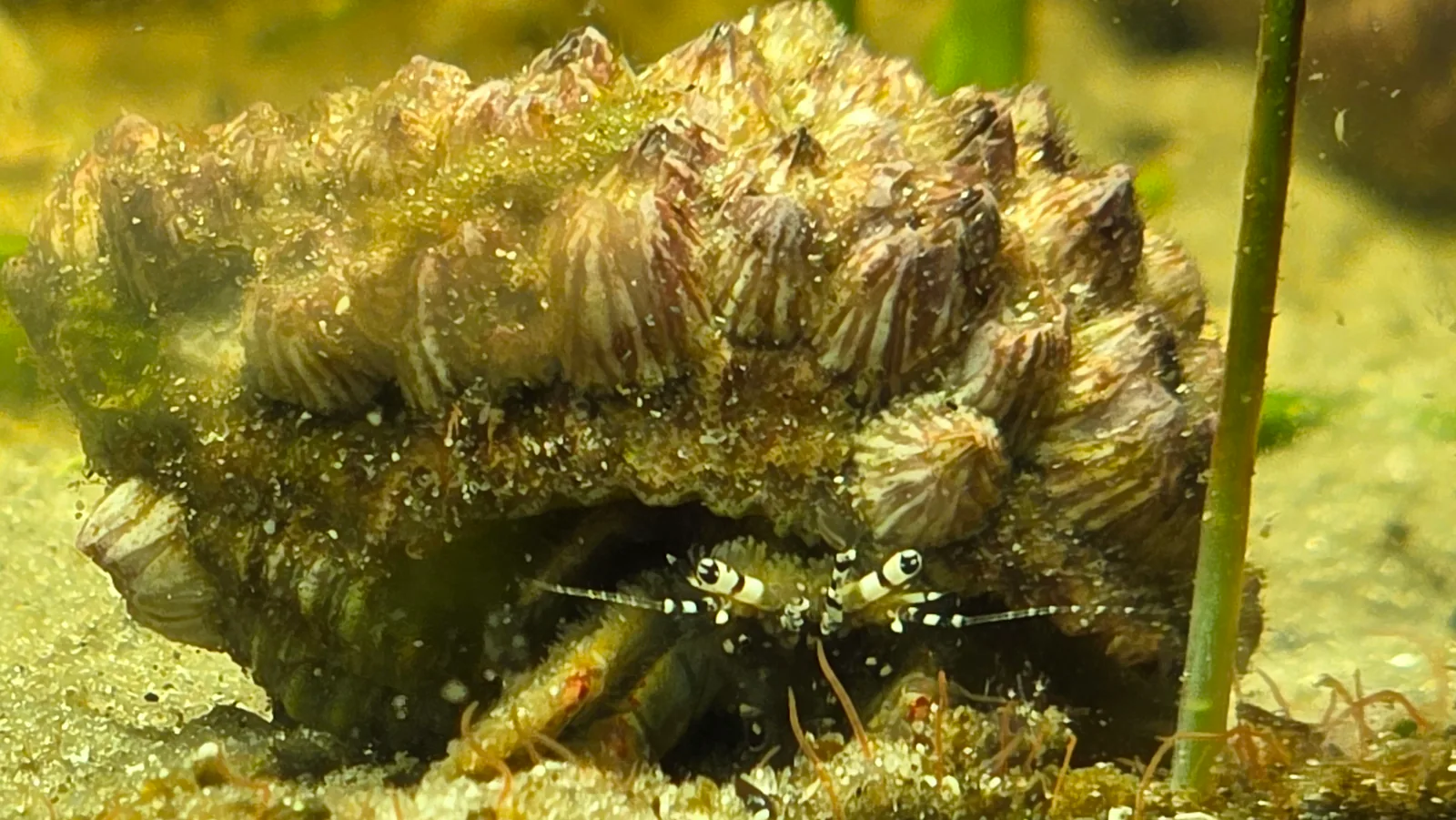
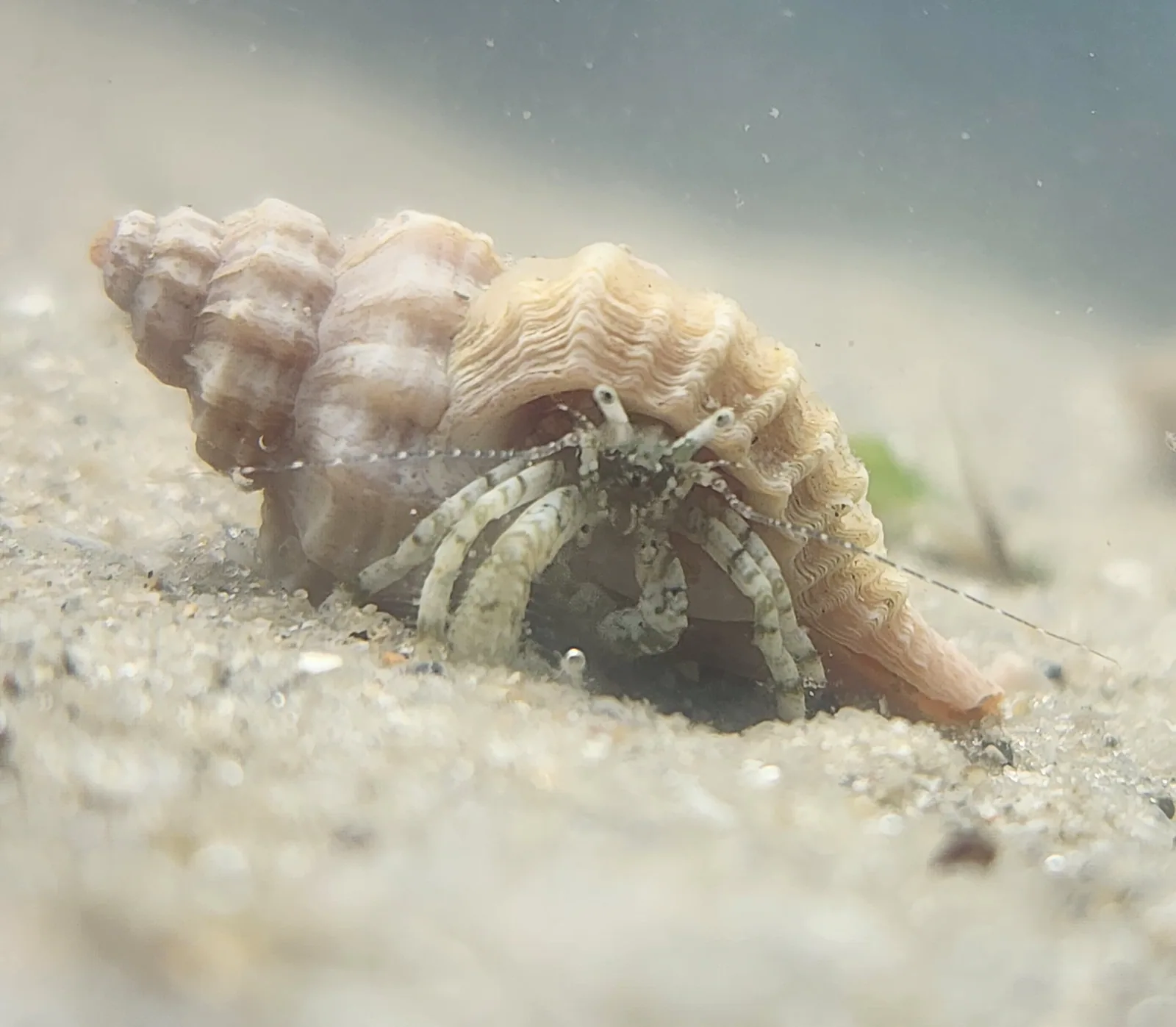
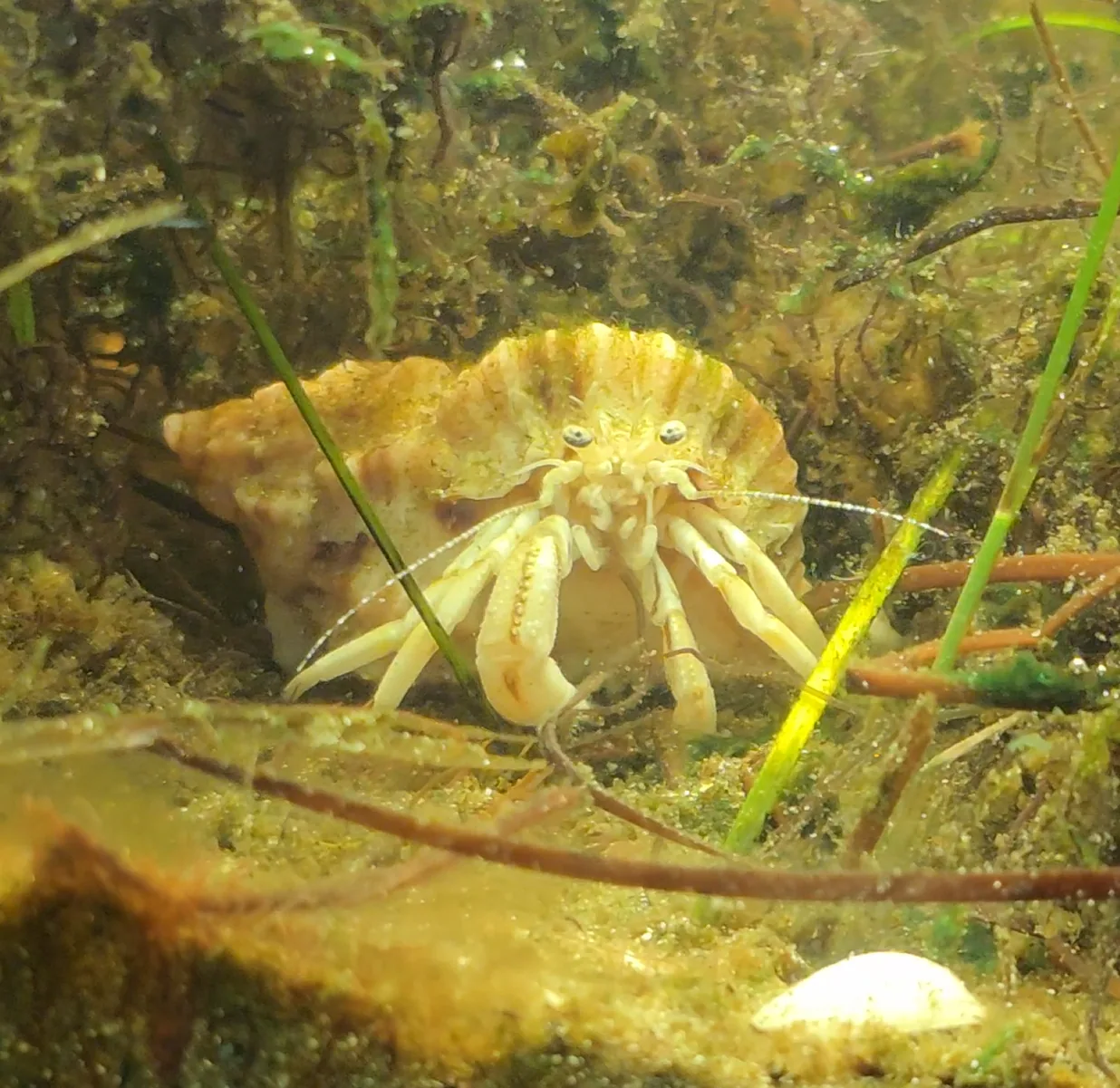
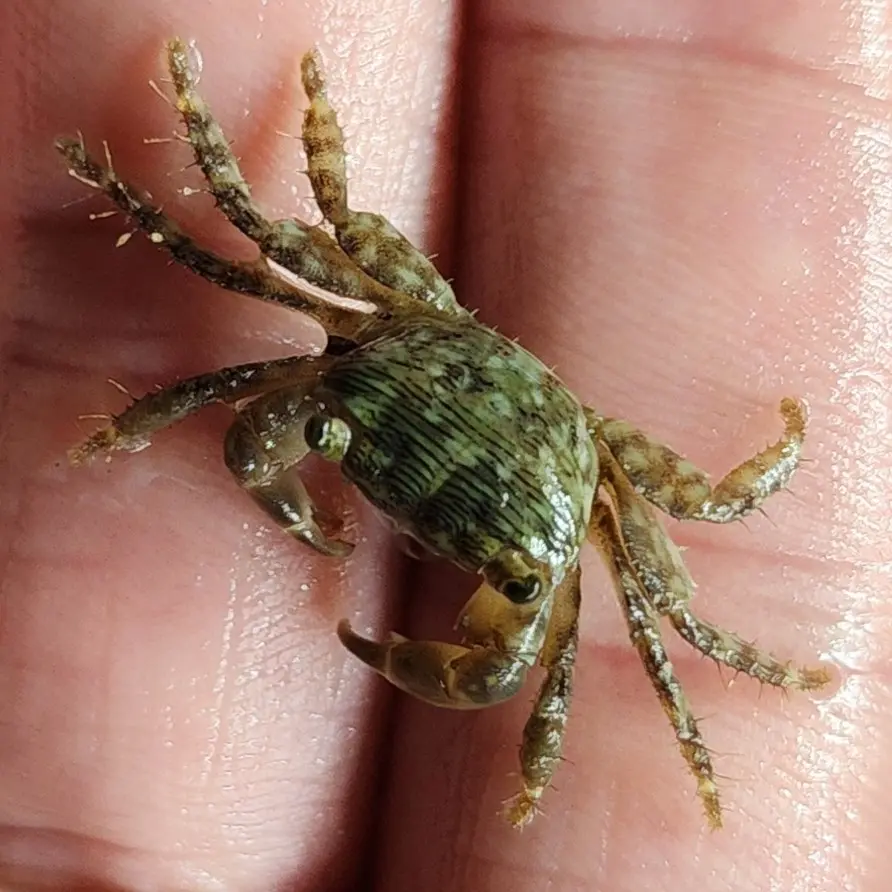
Redweed mat daily vertical cycle (documented July 29, 2026): The floating mat is not static in the water column. It rises to the surface by end of day, is pushed down to mid-column or near the floor overnight by hermit crabs crowding onto it and by wave action, and returns to the surface as photosynthetic oxygen bubbles accumulate underneath, with lift occurring after the lights come on. The cycle is therefore coupled to the lighting photoperiod, which puts a hardware-controlled parameter in direct control of where this producer sits in the light layer. Hairy Hermit Crab and Orangeclaw Hermit Crab are large enough to depress the mat; McLaughlin's Hermit Crab is not. None of them consume the redweed. A Mottled Shore Crab was filmed foraging small epiphytic algae from the mat surface the same day without visibly touching the redweed in that footage; a follow-up direct observation on August 8, 2026 confirmed the crab does eat the redweed tissue itself as well, correcting the July 29, 2026 reading. The oxygen bubble accumulation, visible in both the redweed and Caulerpa masses, is the only direct daytime indicator of photosynthetic output available in a biome with no dissolved oxygen instrumentation.
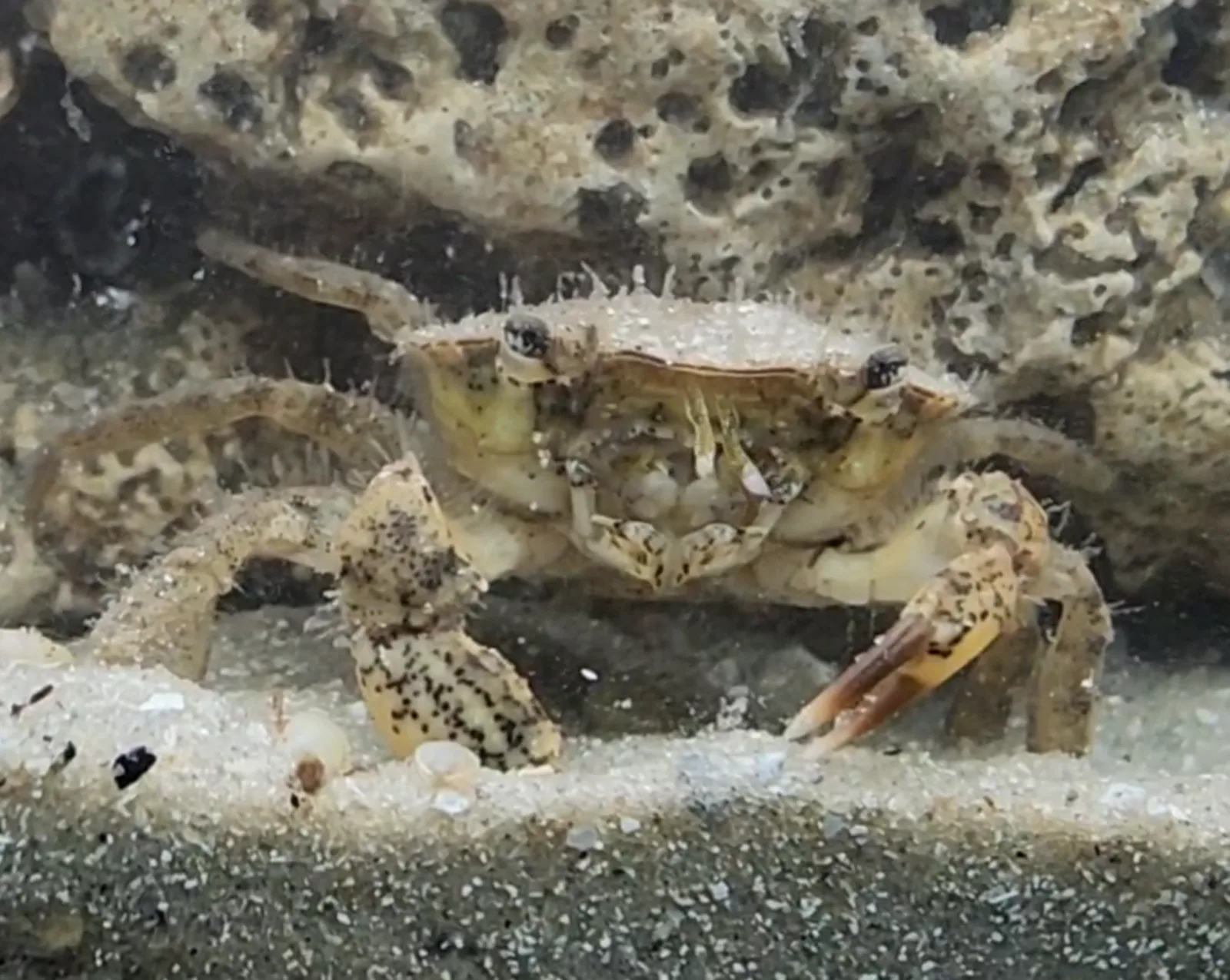
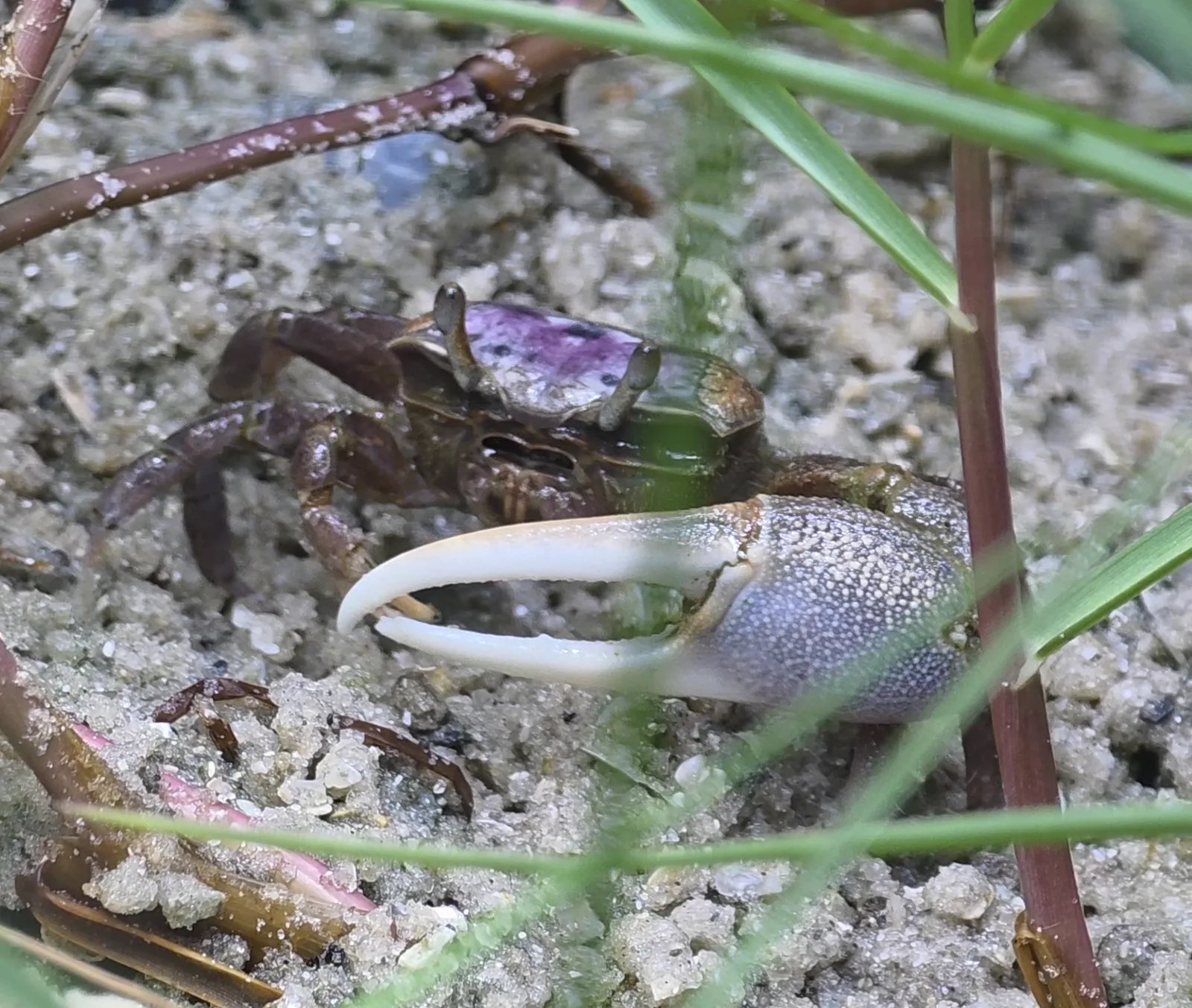
Mottled Shore Crab confirmed direct consumer of Graceful Redweed (new August 8, 2026): Direct observation on August 8, 2026 confirmed a Mottled Shore Crab clearly removing and eating small pieces of Graceful Redweed tissue, focusing especially on smaller offshoots but also consuming larger pieces, in a repeated, rapid browsing pattern. This corrects the July 29, 2026 reading that the crab used the redweed mat only as substrate for foraging epiphytic algae. A single crab's consumption is not judged sufficient to meaningfully affect overall redweed abundance in the biome; whether a larger crab population would is an untested hypothesis. Two confirmed-female crabs are currently present, with a future male introduction under consideration.
Cleanup-crew shortfall (documented July 29, 2026; response introduced July 31 to August 1, 2026): Three of the four vertical glass panes are completely covered in algae. Only the front camera pane is clear, and it is maintained manually with an external magnetic cleaner. No organism is keeping any pane clear. The glass is the clearest available readout of hard-surface grazing capacity in this biome, being uniform, vertical, fully lit and unambiguous, and it currently reads as functionally absent. It would also serve as a clean, instrument-free test of any future grazer introduction.
Two candidate grazers were introduced directly in response: two Chestnut Turban Snails (Turbo castanea) on July 31, 2026, and six Astraea Snails (genus Astraea/Lithopoma) on August 1, 2026, the latter replacing five of six snails sold as margarita snails, returned August 1 under the identification used at that time. The sixth was not removed and was subsequently documented grazing. Josue corrected its identity to Banded Tegula (Agathistoma eiseni) September 28, 2026, withdrawing the earlier species-based temperature rationale without establishing long-term suitability. A further six Astraea Snails were added August 28, 2026 to roughly double the population after the August 18 finding that the original cohort's grazing lagged algae regrowth. Chestnut Turban Snail's grazing effect was not evaluated before its September 20 extirpation determination; Astraea Snail's effect remains under observation. This is unrelated to, but coincides with, the same-week resolution of the long-unconfirmed "Turbo Snail" to Mexican Turbo Snail (Turbo fluctuosa), which remains unobserved since December 16, 2024 and is distinct from Chestnut Turban Snail.
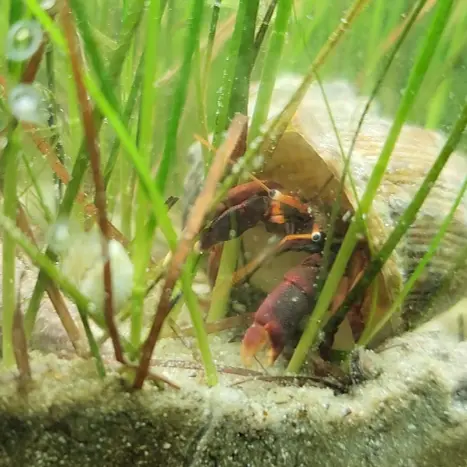
Mud crab predation and removal (June 25, 2026): The mud crab, introduced June 4, 2026 as a sediment-disturbance agent, is strongly suspected of predating approximately 13 recently introduced hermit crabs across two species (9 Hairy Hermit Crabs and 4 Long-claw Hermit Crabs) by June 25, 2026. A cracked-open clam shell and the probable loss of the male Atlantic Sand Fiddler Crab add to the evidence. Five mud crabs were removed from the marine realm on June 25, including the large individual (transferred to external holding tank). At least one Hairy Hermit Crab is confirmed alive. Hairy Hermit Crabs are proposed as the sediment-disturbance replacement. The planned restocking occurred July 3, 2026: eight Hairy Hermit Crabs and five McLaughlin's Hermit Crabs introduced. A small mud crab, much smaller than the removed individuals, was confirmed still present July 4, 2026 and was not captured. Very small mud crab individuals may still remain, and whether they pose a growing threat as they mature is the current watch item.
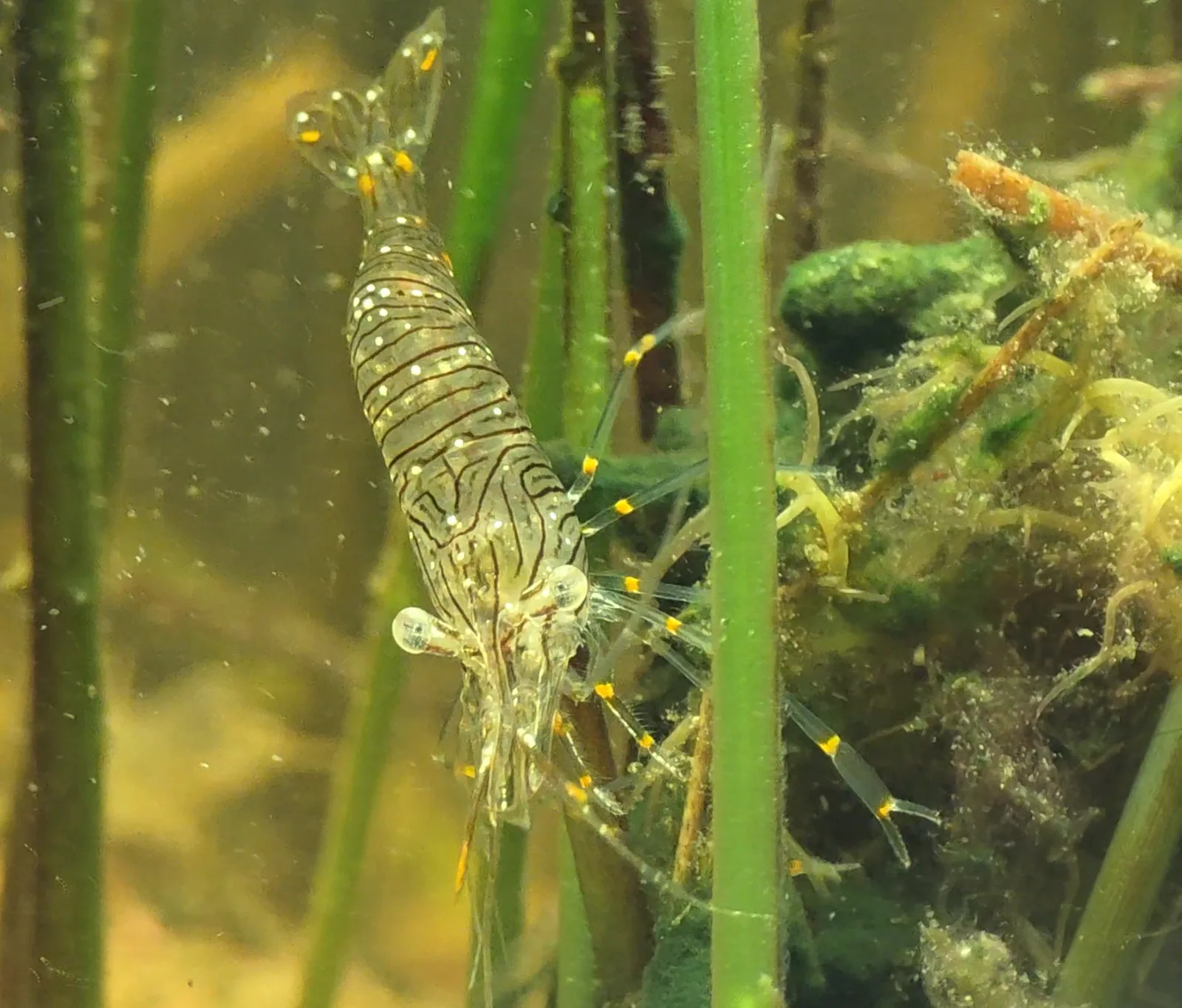
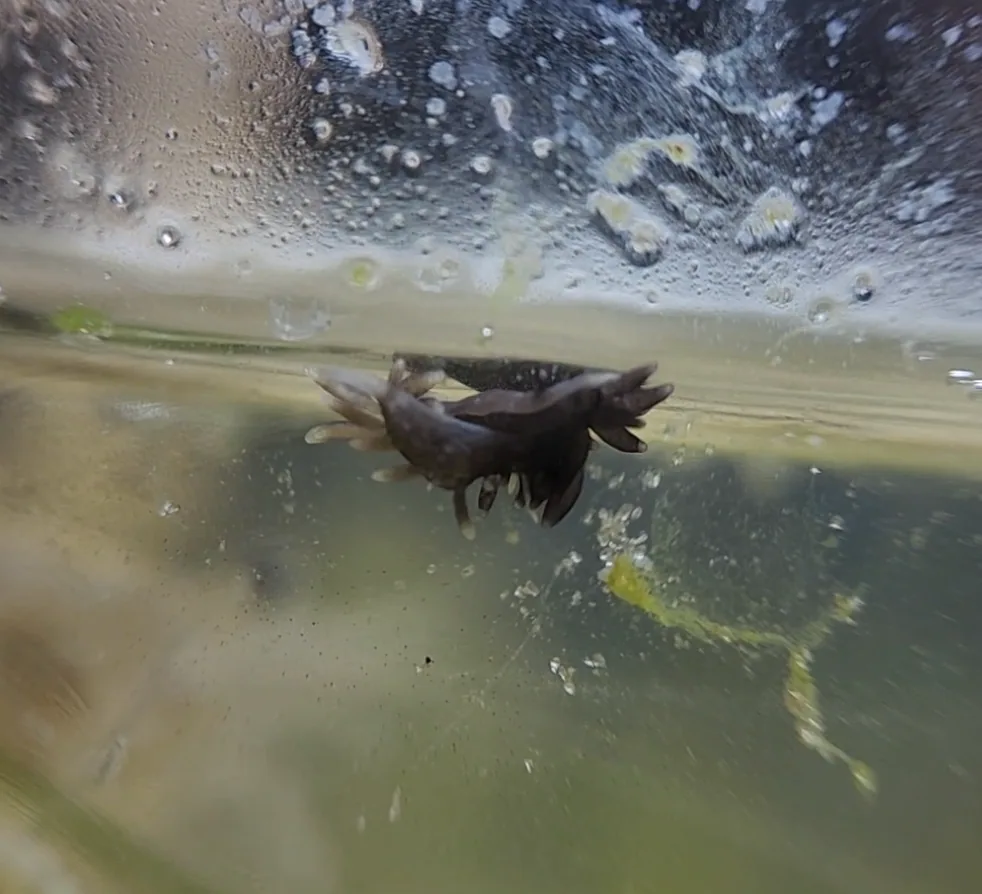
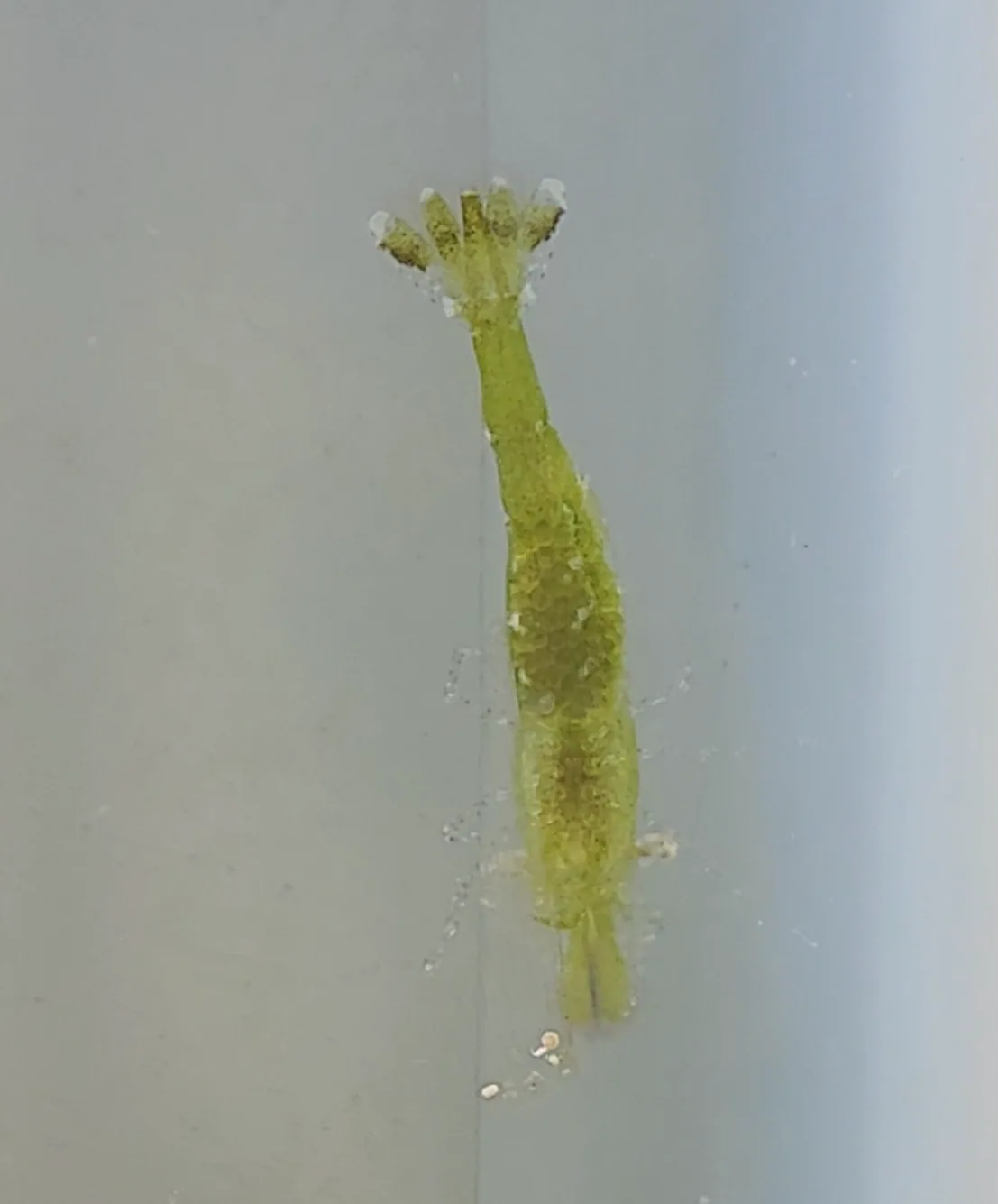
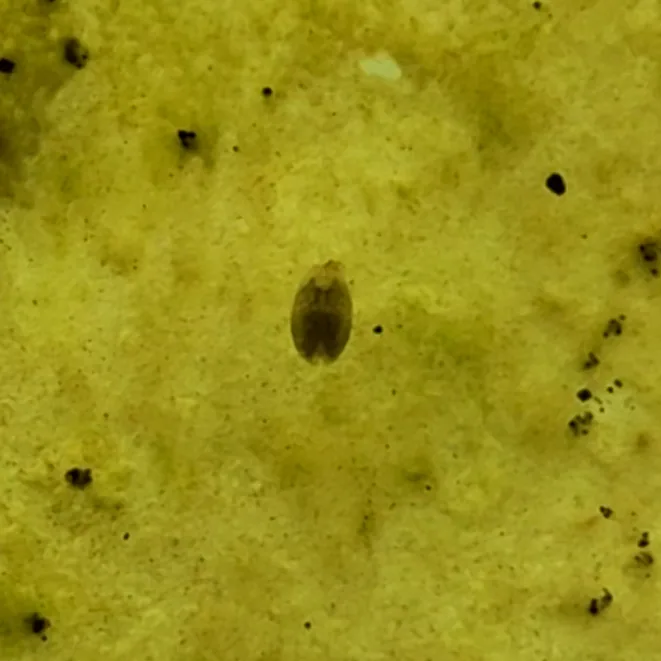
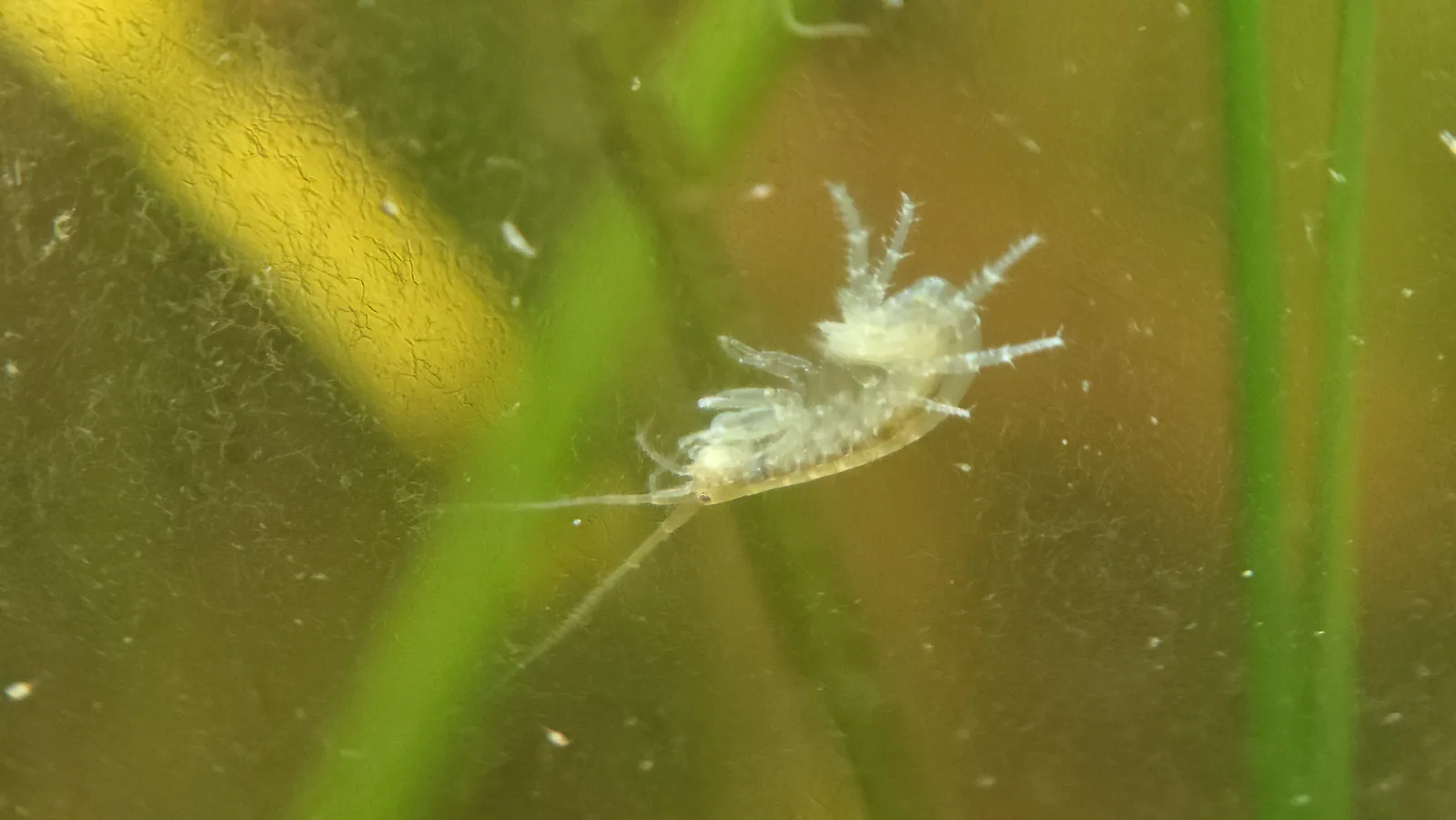
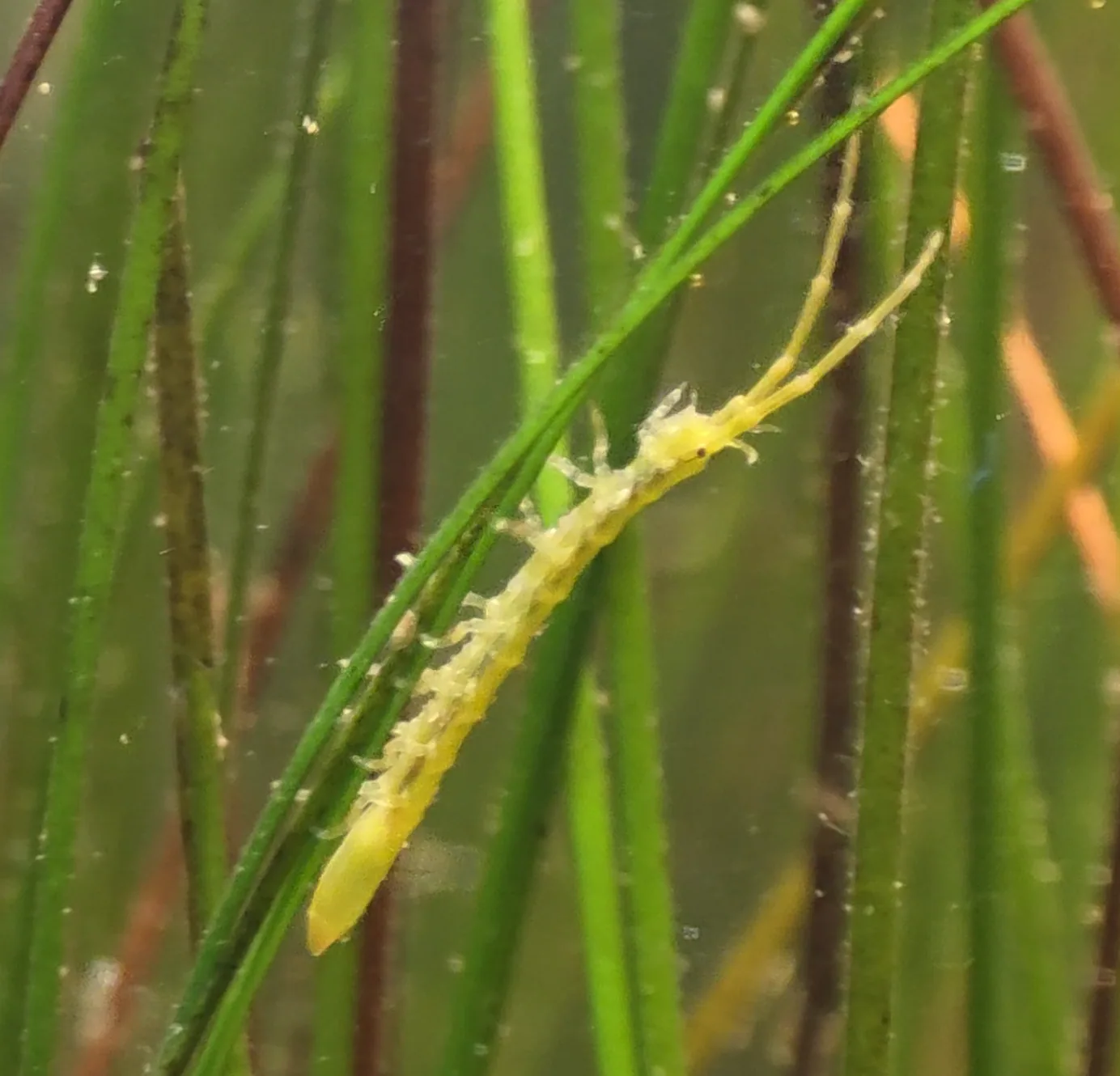
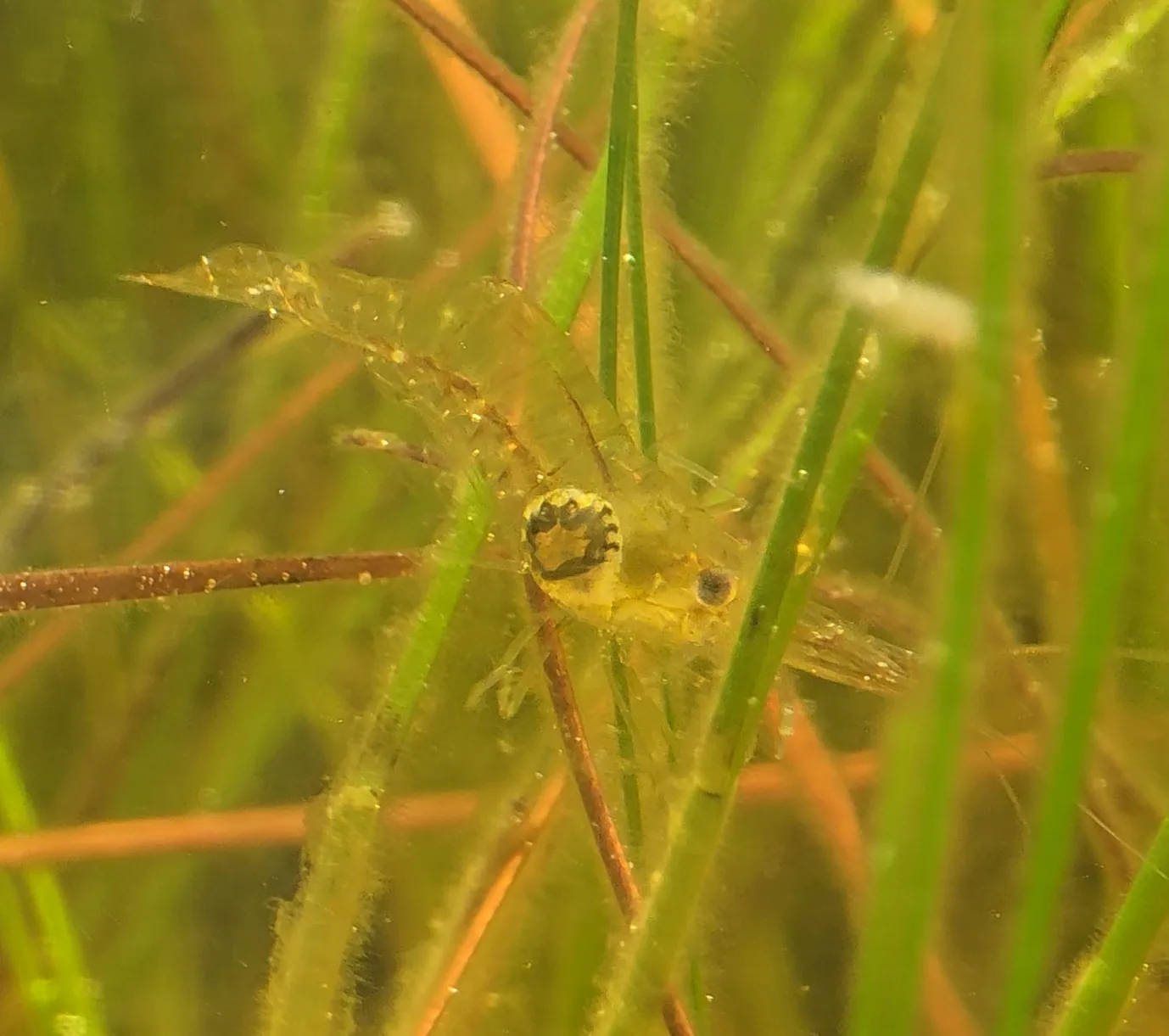
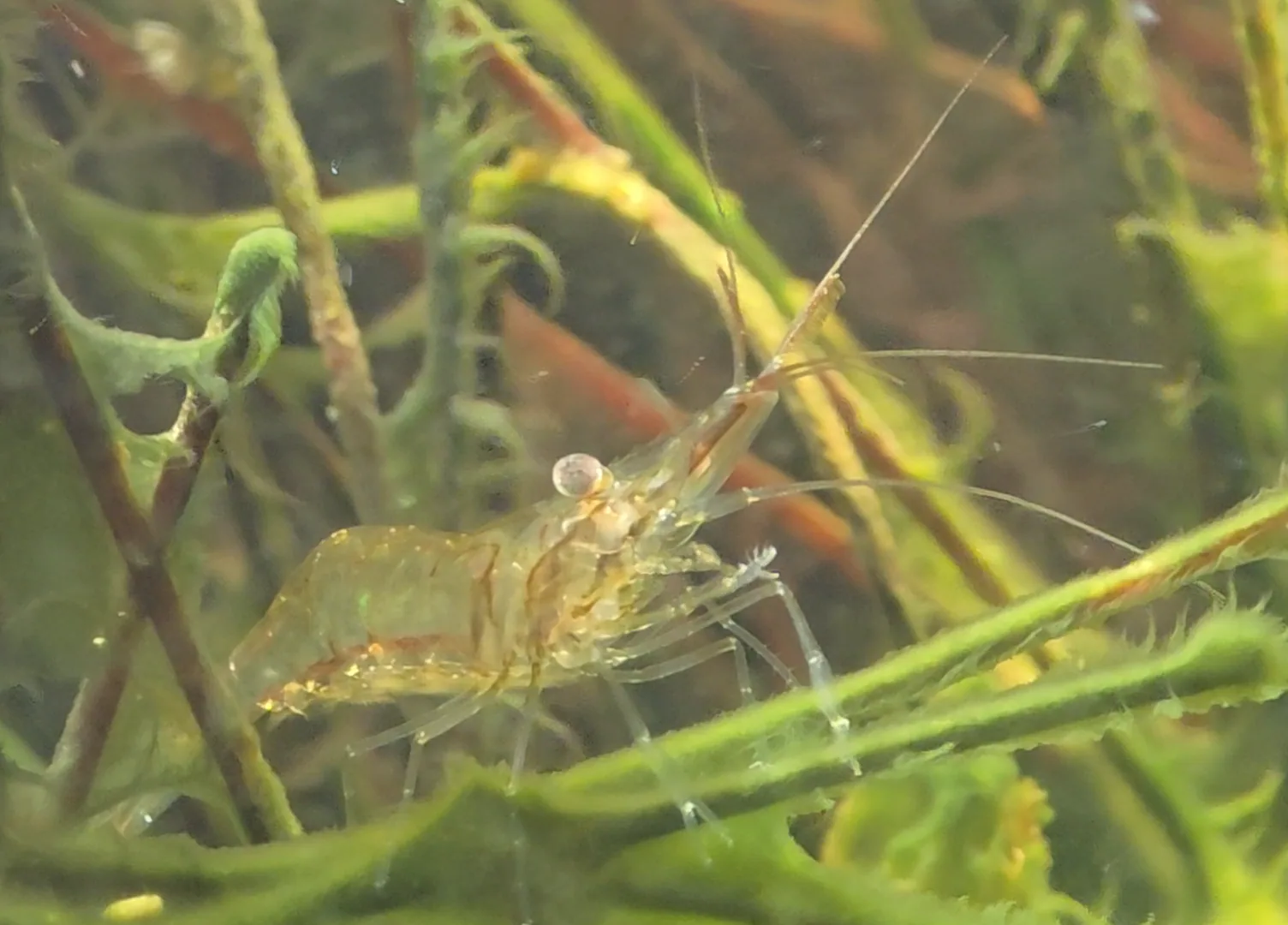
Eelgrass isopod crash, confirmed survival, and grazer vulnerability (June 27 to September 5, 2026): The Eelgrass Isopod, an epiphyte grazer that had been abundant in this biome for years, went from stable to non-detected in roughly five weeks following the introduction of seventy-five Florida Glass Shrimp on June 12, 2026. Last sighted on July 6, 2026 in the Marine Shore, the species was listed as Extirpated on July 29, 2026 on sustained non-detection. On September 5, 2026, a nighttime observation reconfirmed a living Eelgrass Isopod in the Seagrass Meadow, establishing that the species was not completely extirpated. Its population status has been updated to Present at very low abundance.
While extirpation is disproven, the grazer bottleneck persists: abundance is extremely low, and Florida Glass Shrimp remain present throughout the shared marine water volume. Whether this small remnant can rebuild its population under persistent shrimp presence, or whether predation pressure will keep it functionally marginal and unable to control epiphytic coatings like the cyanobacteria now visible on seagrass blades, is the critical question.
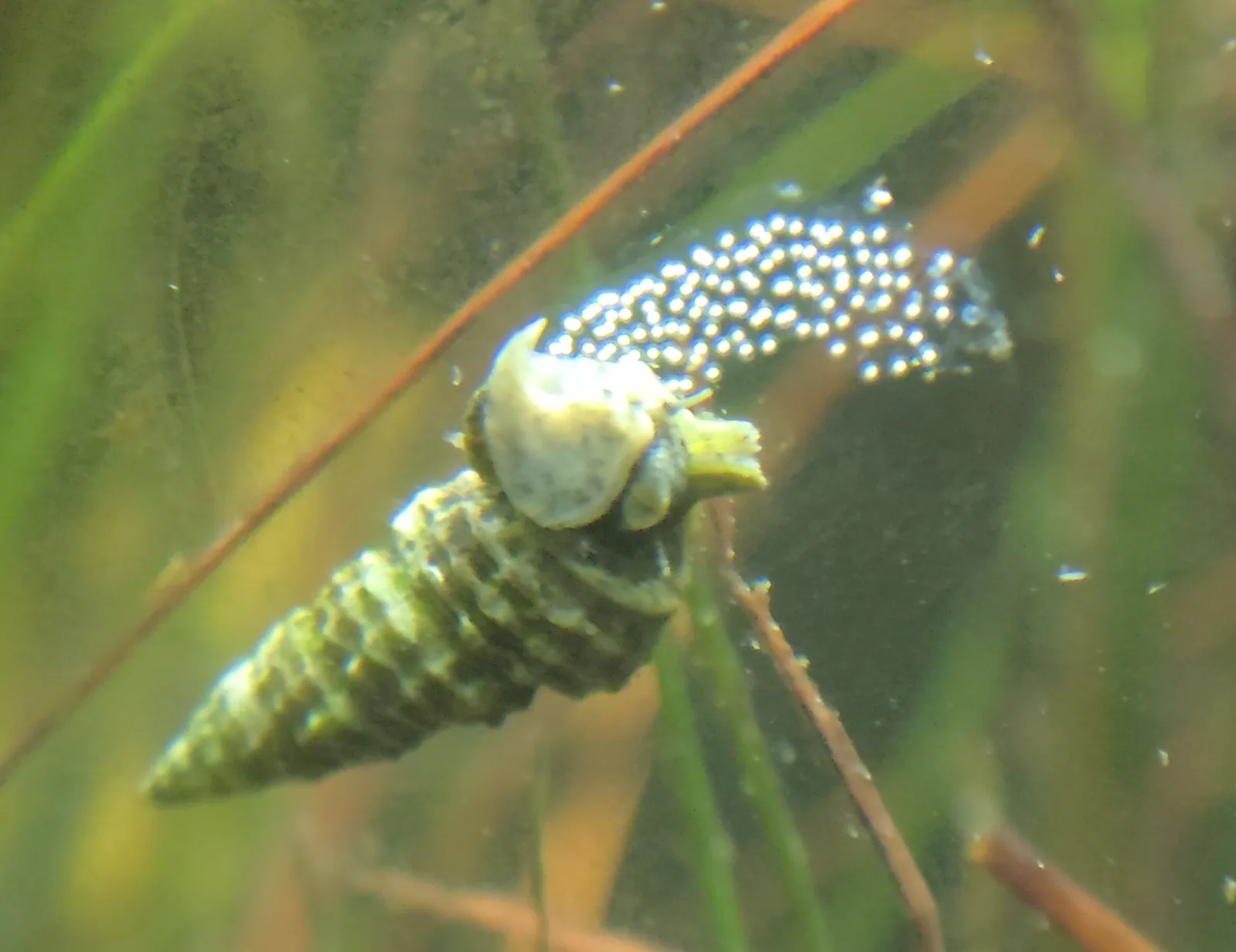
Grazer layer depletion (whole-biome, worsening through mid-to-late 2026): The isopod loss is one part of a broader pattern. The Lightning Nerite, the biome's designated hard-surface algae and biofilm grazer, is down to approximately one individual from ten. Both cerith species have declined and neither has a confirmed sighting since February 17, 2026. Mexican Turbo Snail (identity resolved August 3, 2026 from the previously unidentified "Turbo Snail") has no observation on record since December 16, 2024. The Variegated Sea Urchin, introduced April 26, 2026 as a macroalgae-grazing intervention, left for the Marine Shore shoreline by May 2026 and was found dead there September 1, 2026, extirpating the species. The visible consequence is that three of the four glass panes are completely algae-covered, with the fourth kept clear by hand rather than by any organism. Two new grazers, Chestnut Turban Snail and Astraea Snail, were introduced July 31 and August 1, 2026 in direct response, and the Astraea Snail population was doubled August 28, 2026; one Astraea Snail died September 1, 2026 (maximum possible living population eleven of twelve). See the Cleanup-crew shortfall entry below.
The two failure modes are distinct and worth keeping separate. The snails are failing at reproduction: all of them, nerite and cerith alike, reproduce through free-swimming veliger larvae, lay successfully, and recruit not at all, so losses are never replaced. The Eelgrass Isopod was not failing at reproduction, since it broods its young with no planktonic stage, and it was lost to predation instead. Only two gastropods have ever recruited in this system, the Common Atlantic Marginella and the Depressed Slippersnail.
Water-column larval predation (new as of July 29, 2026): Florida Glass Shrimp are documented consuming their own zoea and the zoea of other breeding animals including crabs. That places a recruitment ceiling on every animal in the shared saltwater volume whose young pass through a planktonic stage, including the shrimp themselves, whose population has plateaued at approximately fifty with zero recruitment despite active reproduction. A standing husbandry decision recorded July 29, 2026 excludes this species and comparable glass shrimp from future additions; it does not address the individuals already present. The cleanest available test is the Depressed Slippersnail, which has a three to four week planktotrophic veliger stage and recruited repeatedly through April 2026, all of it before the June 12, 2026 introduction. Whether it recruits again is the open question.
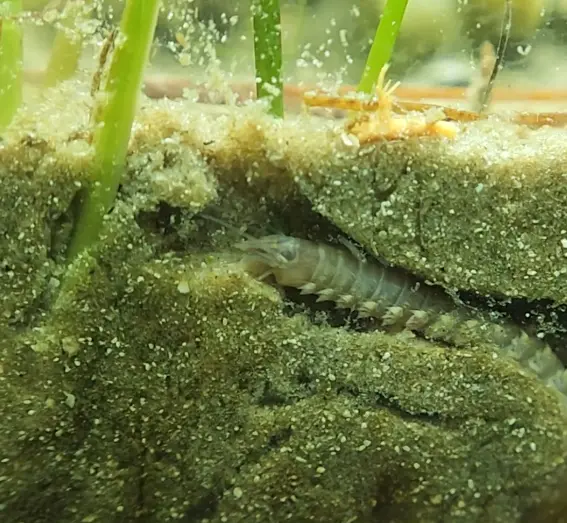
Dissolved oxygen risk (ongoing measurement gap): A deep organic sediment layer, a large worm population, anaerobic zone risk, and the absence of DO measurement combine to create an ongoing uncertainty about hypoxic or anoxic conditions. No dissolved oxygen data exists for this biome. This is the most significant unresolved physical risk. The June 11, 2026 cloudy-water event, coinciding with overnight operation at an extremely slow wave setting, adds an observed circumstantial data point but produced no dissolved oxygen measurement.
Alkalinity/calcium imbalance and possible cross-biome carbonate recycling (new, August 1, 2026): A water test found elevated alkalinity (227 ppm as CaCO3, approximately 12.7 dKH) alongside calcium notably low relative to expected seawater at the measured specific gravity, while magnesium was not depleted, ruling out simple freshwater dilution as the explanation. The working model combines active calcification and precipitation (removing both calcium and alkalinity), anaerobic sulfate reduction in sediment (supplying alkalinity, distinct from any direct acidifying effect of hydrogen sulfide itself), shell dissolution (returning some calcium), and possible subsurface transport of calcium-rich water from the Mangrove Forest and Marine Shore. Whether dissolved calcium is actively declining is not established; this is a single measurement, not a time series. See Depressed Slippersnail for the established shell-dissolution pathway and Mangrove Forest for the documented but only partially traced cross-biome transport route.