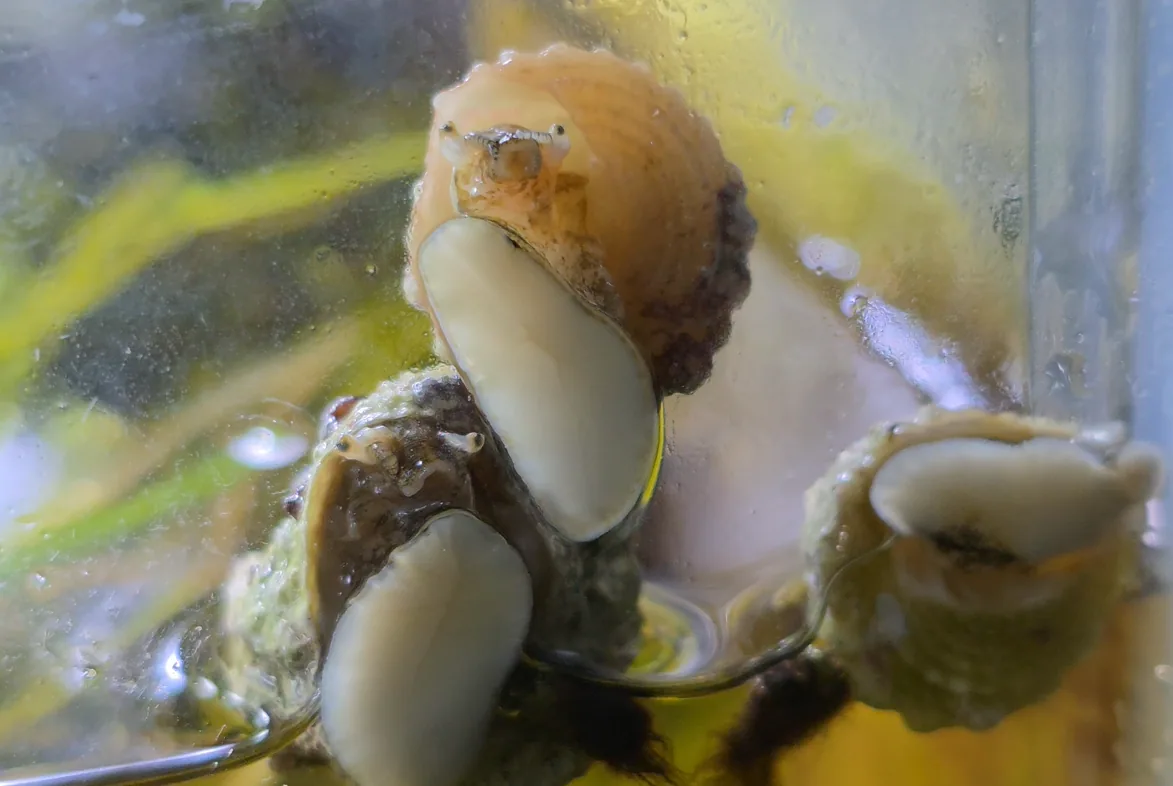
Astraea sp. (unidentified)

Astraea Snail

Brought in as a same-day replacement after a stocking mistake, this star-shelled grazer was chosen for its Florida pedigree to take on the algae buildup that the Seagrass Meadow's older cleanup crew could no longer keep up with.

Realm
Saltwater
Population
Uncertain
Primary biome
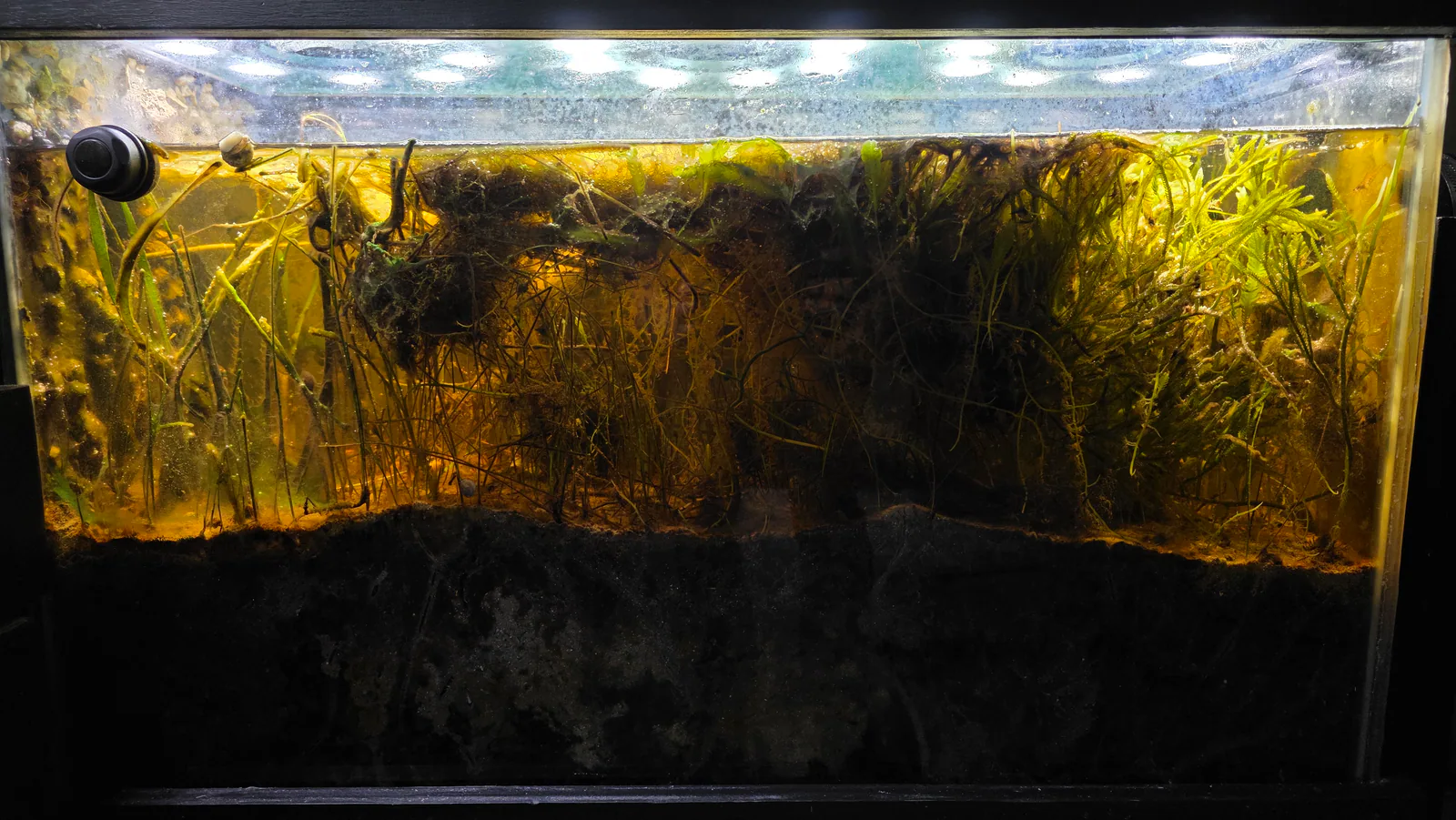
Seagrass Meadow

Overview

Six Astraea Snails (genus Astraea/Lithopoma, species unidentified) were purchased from a local saltwater aquarium store and introduced to miniBIOTA's Seagrass Meadow on August 1, 2026, replacing the margarita snails that had been introduced the day before and then identified as a cold-water species unsuited to the biome. Five of the six margarita snails were located and removed that same day; the sixth could not be found and remains a separate, tracked record. Astraea was selected specifically because it is associated with Florida and expected to tolerate Seagrass Meadow conditions, targeting the same documented hard-surface algae shortfall that motivated the Chestnut Turban Snail introduction one day earlier.

Identity

  • Common name: Astraea Snail
  • Alternate names: astraea, star shell, Astraea turban snail
  • Scientific name: Astraea sp. (unidentified; possibly Lithopoma sp.)
  • Identification confidence: Genus-level. Purchased and labeled as "Astraea snail," a common aquarium trade name applied to several species in the closely related genera Astraea and Lithopoma (both family Turbinidae); species-level identity not resolved.
  • Uncertainty label: Uncertain. Genus-level placement is reasonable from the trade name; species is unresolved.

Taxonomy

  • Kingdom: Animalia
  • Phylum: Mollusca
  • Class: Gastropoda
  • Order: Trochida
  • Family: Turbinidae
  • Genus: Astraea / Lithopoma
  • Species: Unidentified

Family note: Astraea snails (genera Astraea and Lithopoma) belong to family Turbinidae, the same family as Turbo snails (Mexican Turbo Snail, Chestnut Turban Snail, both also in miniBIOTA), but are a distinct lineage with a characteristic star-shaped, flattened-spire shell rather than the rounder Turbo shell form.

Natural History

Range and Florida Relevance

Astraea snails in the aquarium trade are most often collected from Florida and Caribbean waters, where they inhabit hard substrate in shallow marine environments. This Florida association was the specific reason Josue selected the species as a replacement for the misidentified, cold-water-adapted margarita snails.

Habitat

Astraea snails are marine grazers of hard substrate: rock, shell, glass, and other illuminated surfaces in shallow tropical and subtropical waters. In miniBIOTA, they were placed in the Seagrass Meadow.

Diet

Astraea snails are herbivorous grazers, using a radula to rasp algae, diatoms, and biofilm from hard surfaces, broadly similar in feeding mode to Turbo species. No direct feeding observation has yet been made in miniBIOTA.

Reproduction

Astraea and Lithopoma species, like other Turbinidae, are understood to be broadcast spawners with planktonic larval development, though this has not been specifically confirmed for the unidentified species in miniBIOTA. In a closed system, planktonic-larvae recruitment is not expected; any Astraea Snail in miniBIOTA should be treated as a consumable grazer requiring periodic restocking pending further information.

Tolerance Ranges

Requires full to near-full marine salinity and tropical to subtropical water temperatures consistent with a Florida/Caribbean hard-substrate habitat. Specific tolerance measurements for miniBIOTA conditions have not been taken.

Ecological Role

Astraea Snail was introduced as a targeted response to the Seagrass Meadow's documented hard-surface grazing shortfall: three of the biome's four glass panes were fully algae-covered as of July 29, 2026. Introduced one day after the Chestnut Turban Snails and as a direct replacement for the misidentified margarita snails (five of which were removed the same day; a sixth remained unlocated), it is the second of two concurrent, unevaluated attempts to restore grazing capacity lost with the decline of the Lightning Nerite, both cerith species, and the presumed loss of Mexican Turbo Snail.

miniBIOTA Evidence

Introduction Context

Six Astraea Snails were purchased from a local saltwater aquarium store on August 1, 2026, to replace the margarita snails introduced July 31, 2026, after they were identified as a cold-water Pacific species unsuited to the Seagrass Meadow. Five of the six margarita snails were removed the same day the Astraea Snails arrived; the sixth could not be located and is tracked as a separate record.

Observation Timeline

  • August 1, 2026: Six Astraea Snails purchased and introduced to the Seagrass Meadow, replacing five of the six margarita snails removed the same day (the sixth could not be located). Selected specifically for Florida association and expected suitability to Seagrass Meadow conditions. Observation record, August 1, 2026.
  • August 18, 2026: A minimum of five of the six individuals confirmed present and grazing effectively on glass algae; no more than five counted at once, so the sixth's status is unresolved rather than confirmed lost. Grazing is producing visibly cleaned areas, but algae regrowth outpaces the group's ability to maintain the full glass surface continuously. Observation record, August 18, 2026.

What Is Confirmed

  • Six Astraea Snails introduced to the Seagrass Meadow August 1, 2026, purchased rather than wild-collected.
  • Introduction was a same-day replacement for the removed margarita snails.
  • At least five of six individuals confirmed present and actively grazing as of August 18, 2026.

What Is Inferred

  • Algae and biofilm grazing role, consistent with Turbinidae family biology and the documented motivation for introduction.
  • Better environmental suitability than the margarita snails, based on Florida/Caribbean trade sourcing rather than direct testing.

What Remains Unknown

  • Species-level identity within genus Astraea/Lithopoma.
  • Whether the sixth individual (unconfirmed since introduction, not counted alongside the other five as of August 18, 2026) is still present.
  • Reproductive mode and recruitment potential specific to this species in miniBIOTA.