Neoterebra dislocata

Eastern Auger

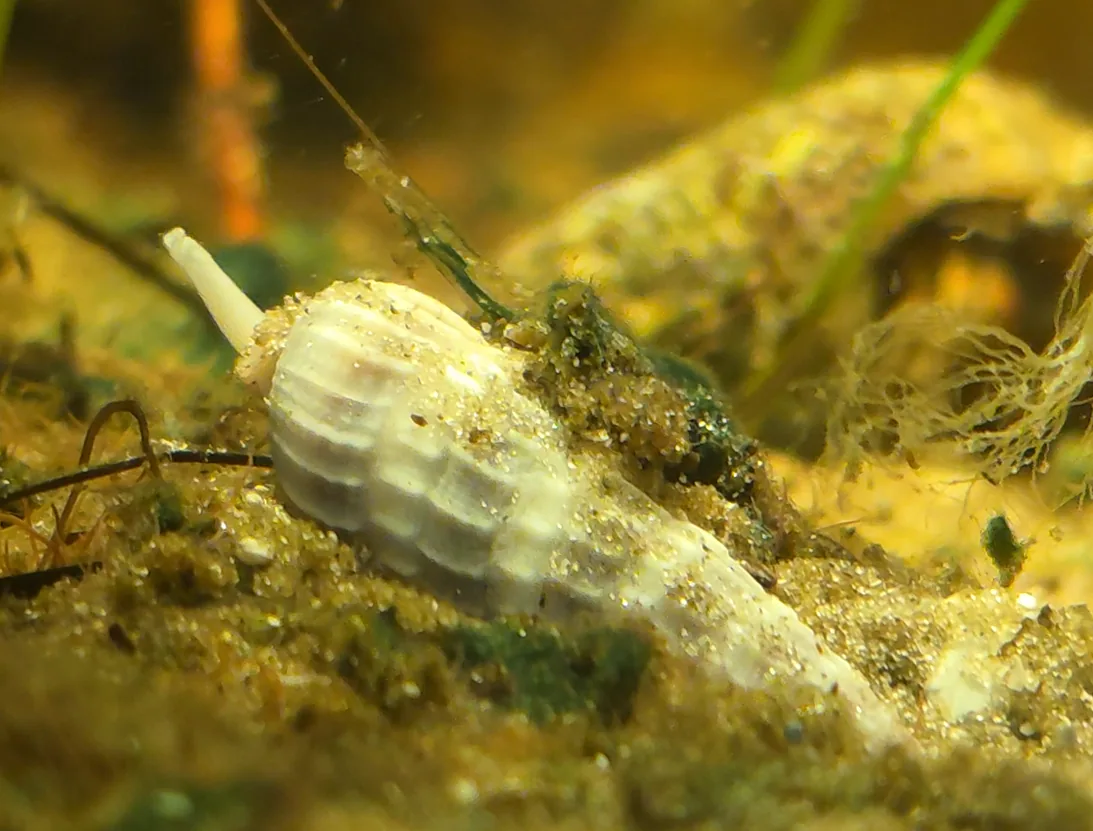
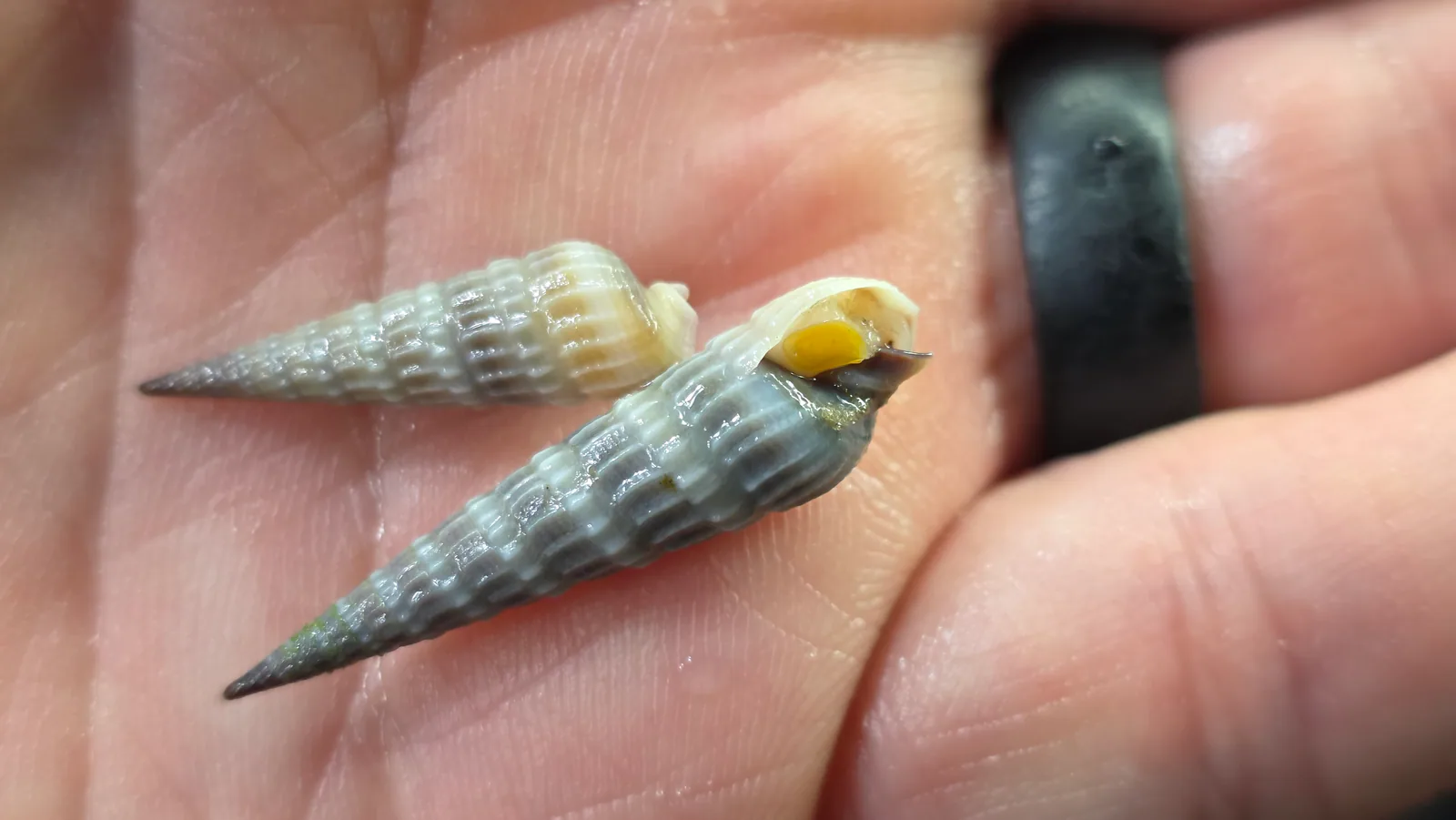
A burrowing predatory snail collected from the Tampa Bay coast and introduced to the Seagrass Meadow sand, where its drill-like shell and hunting behavior mark it as the first predatory gastropod targeting the benthic worm layer in miniBIOTA.

Overview

Two Eastern Auger snails (Neoterebra dislocata) were collected from the Tampa Bay coast and introduced to miniBIOTA's Seagrass Meadow and Marine Shore on June 12, 2026. Initially noted in the field as a "new cerith snail species," Eastern Auger was confirmed during intake as a member of family Terebridae, entirely unrelated to cerith snails despite superficial shell shape similarities. This is the first Terebridae species in miniBIOTA.

Identity

  • Common name: Eastern Auger
  • Alternate names: auger snail, eastern auger snail, Atlantic auger, Dislocated Auger
  • Scientific name: Neoterebra dislocata
  • Identification confidence: Confirmed. Identified by Josue during intake, June 18, 2026.
  • Uncertainty label: Confirmed. Species ID is solid; ecological role and establishment in miniBIOTA are unresolved.

Taxonomy

  • Kingdom: Animalia
  • Phylum: Mollusca
  • Class: Gastropoda
  • Order: Neogastropoda
  • Family: Terebridae
  • Genus: Neoterebra
  • Species: N. dislocata

Family note: Terebridae (auger snails) are predatory or scavenging gastropods with elongated, tightly coiled tower-like shells resembling a drill or auger. They burrow through sandy substrate in search of prey: primarily polychaete worms, which they immobilize using a venomous radula or, in some species, a toxic saliva. Many Terebridae species have reduced or absent radulae and may immobilize prey through chemical injection. This predatory and burrowing biology is entirely distinct from cerith snails (Cerithiidae), which are surface-grazing herbivores.

Natural History

Range and Florida Relevance

Neoterebra dislocata is native to the western Atlantic, ranging from Virginia south through Florida, the Gulf of Mexico, and into the Caribbean. It is one of the most common auger snails in Florida's nearshore and offshore sandy habitats. In Florida, it is found on sandy beaches, shallow subtidal sand flats, and seagrass bed margins where sandy substrate is accessible. It is a common shell-beach find throughout the Gulf Coast.

Habitat

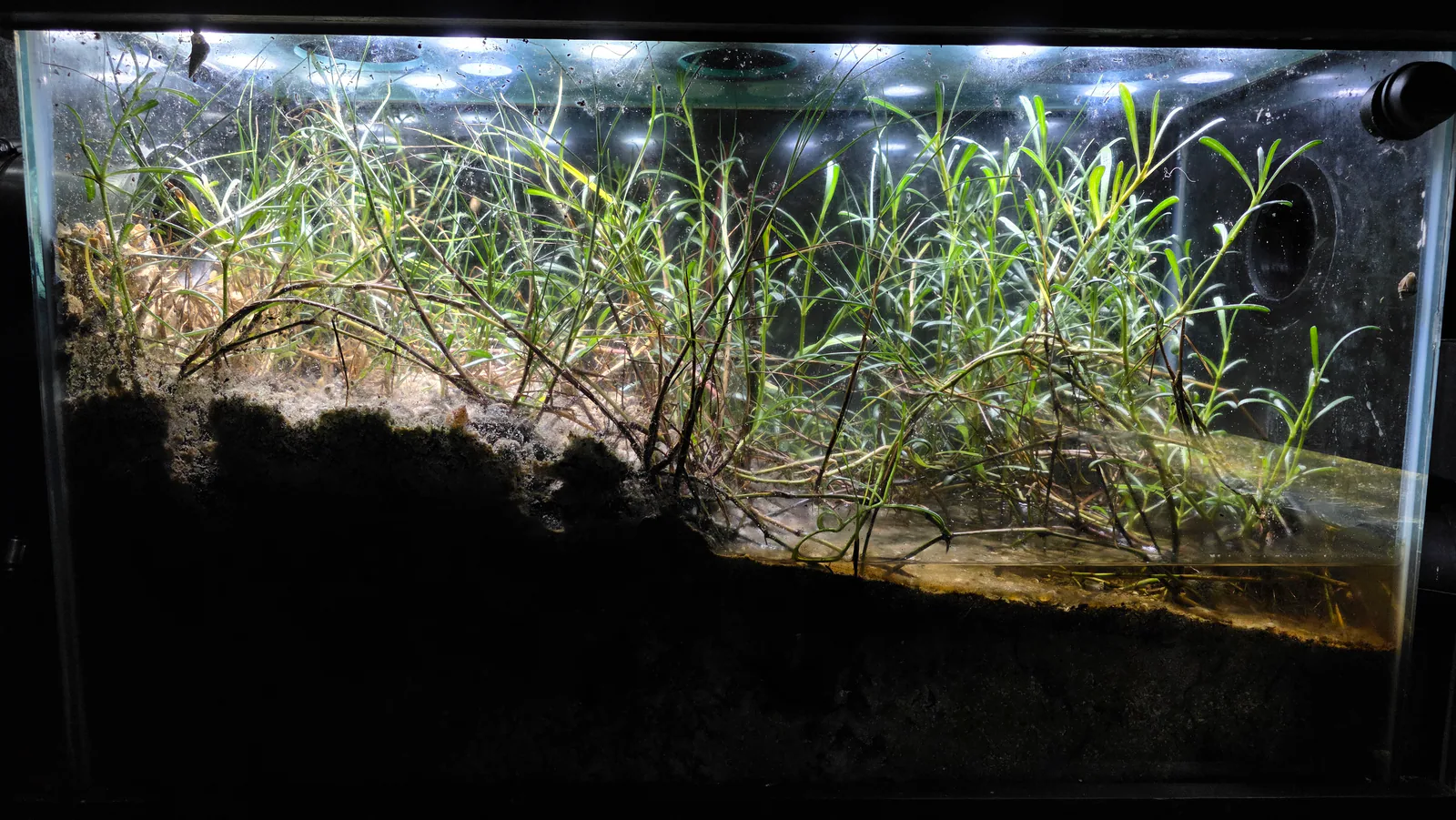
Eastern Auger inhabits sandy coastal habitats from the intertidal zone to shallow subtidal depths. It spends most of its time buried just below the surface of the sand, emerging at the surface to hunt or move. In miniBIOTA, the Seagrass Meadow's deep sand substrate provides appropriate burrowing habitat. The Marine Shore's sandy edge is also accessible.

Diet

Neoterebra dislocata is a predator or scavenger of soft-bodied invertebrates. Its primary documented prey in natural settings is polychaete worms; it detects prey chemically and drills into or injects venom to immobilize it. Scavenging of dead invertebrates is also possible. In miniBIOTA, the Seagrass Meadow's dense polychaete and spaghetti worm layer represents potential prey. Eastern Auger may also scavenge detritus. No direct feeding has been observed in miniBIOTA.

Reproduction

Neoterebra dislocata is a broadcast spawner. Eggs are deposited in gelatinous capsules and hatch as free-swimming veliger larvae. No reproductive observations have been made in miniBIOTA.

Tolerance Ranges

Eastern Auger requires full to near-full marine salinity and is adapted to Florida coastal temperature conditions. It is not a brackish or freshwater species. Specific tolerance measurements for miniBIOTA have not been taken.

Ecological Role

Eastern Auger is a burrowing predator and scavenger, distinct from all other miniBIOTA snail species. While cerith snails (Dark Cerith) graze biofilm from the surface, and periwinkles and Melampus graze at the waterline, Eastern Auger burrows through the sand substrate and hunts polychaete worms. This makes it a top-level consumer within the benthic invertebrate community and a potential predator of the Southern Lugworm, ragworm, and spaghetti worm populations in the Seagrass Meadow.

With only two individuals introduced, predation pressure on the worm community is likely minimal. However, this is the first documented predatory gastropod targeting the benthic worm layer in miniBIOTA.

miniBIOTA Evidence

Introduction

Two Eastern Auger snails were collected from the Tampa Bay coast and introduced to miniBIOTA on June 12, 2026.

Observation Timeline

  • June 12, 2026: Two individuals collected from Tampa Bay coast and introduced to Marine Shore and Seagrass Meadow. Initially recorded as a "new cerith snail species" in the field note; identity confirmed as Eastern Auger (Neoterebra dislocata) during intake, June 18, 2026.

What Is Confirmed

  • Two individuals introduced June 12, 2026, identified as Neoterebra dislocata.
  • Species is unrelated to cerith snails; field ID was corrected during intake.
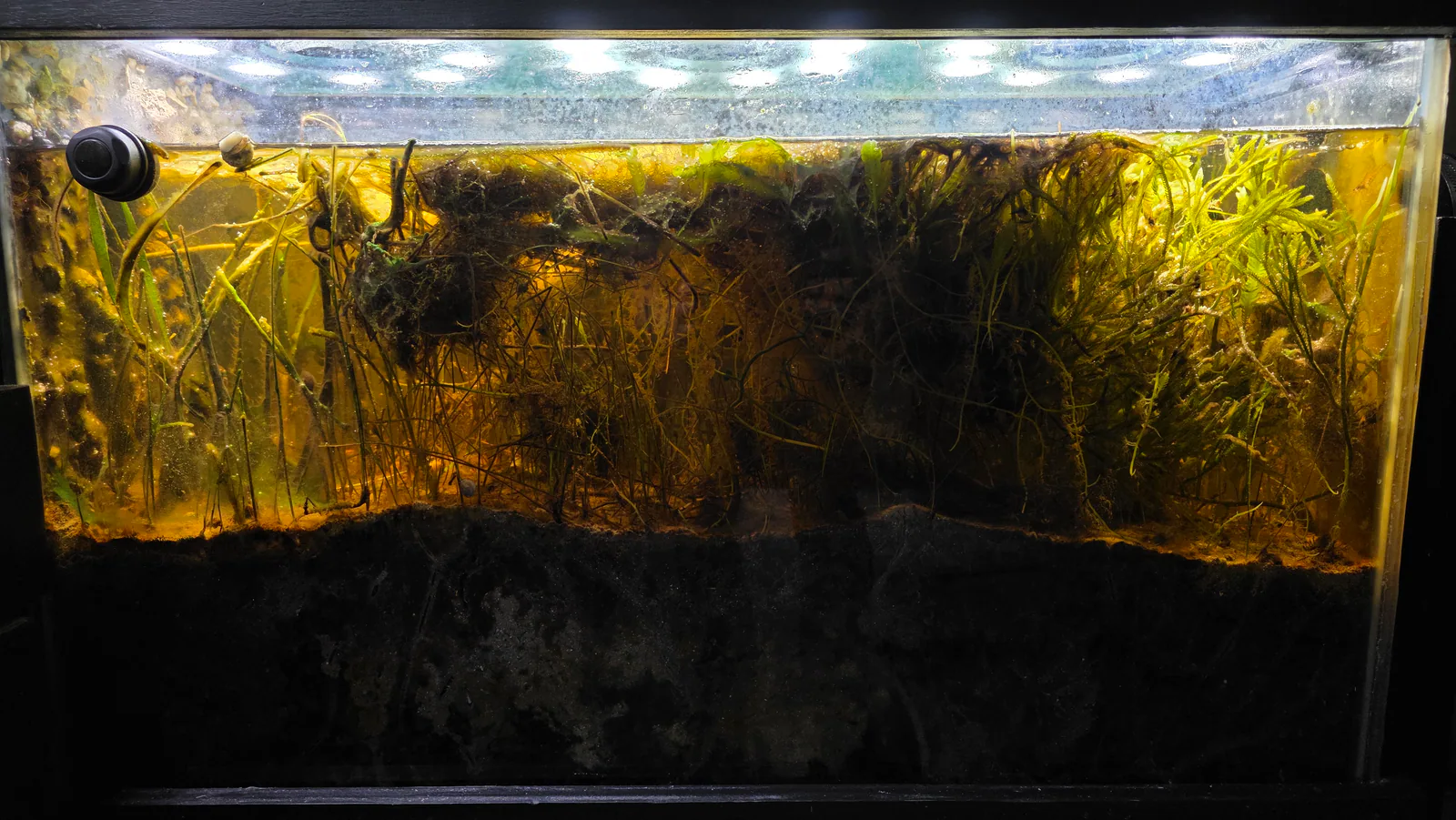
  • Introduced to Marine Shore and Seagrass Meadow.

What Is Inferred

  • Burrowing behavior in sandy substrate consistent with Terebridae family biology.
  • Potential predation on polychaete worms in the Seagrass Meadow's deep benthic layer.

What Remains Unknown

  • Whether the two individuals survived introduction.
  • Whether they will establish or persist in miniBIOTA.
  • Whether they will prey on polychaete worms in the Seagrass Meadow.
  • Whether reproduction is possible in this system.