Arenicola cristata
Southern Lugworm
A sediment-dwelling worm that processes dead organic matter and helps recycle nutrients through the ecosystem.
Arenicola cristata
A sediment-dwelling worm that processes dead organic matter and helps recycle nutrients through the ecosystem.
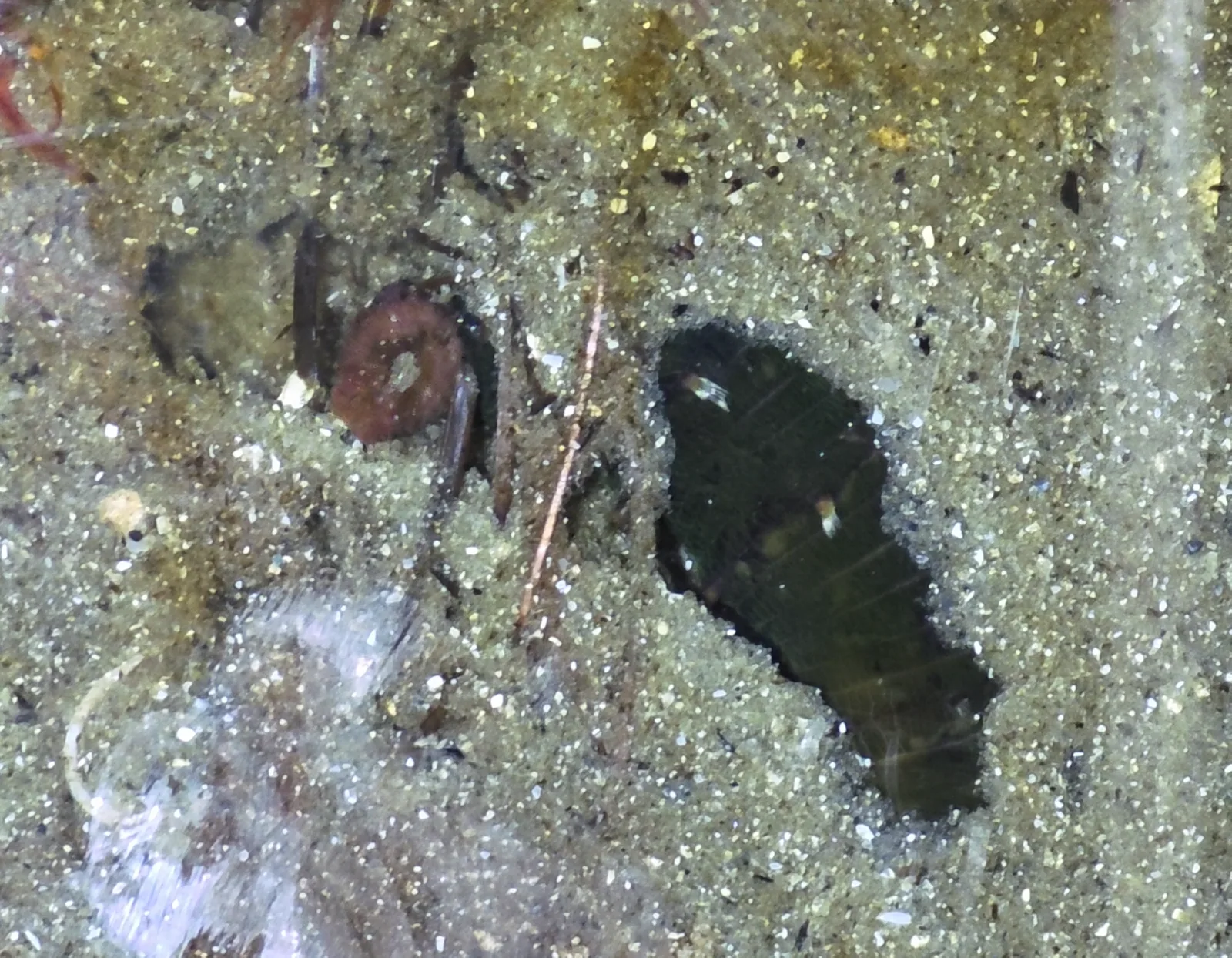
A large Southern Lugworm was directly observed deposit feeding against the Seagrass Meadow glass on February 16, 2026, and its characteristic burrow trace remained visible on February 17, 2026. This confirms subterranean survival, active feeding, and sand-processing behavior, while its wider system population density, reproduction, and overall chemical/microbial sediment outcomes remain under observation.
Feeds by ingesting large quantities of organic-rich surface sand at the funnel-like intake of its burrow. It digests the attached microscopic organic detritus, bacterial biofilms, and benthic diatoms before defecating clean, stripped sand at the surface. This deposit-feeding mechanism drives essential nutrient recycling in the benthic food web.
Highly adapted to fluctuating estuarine environments. Resilient against low oxygen (hypoxia) and high dissolved sulfides in deep sediments, relying on its copper-based blood pigment (hemerythrin/hemoglobin-like molecules) to bind oxygen efficiently under hypoxic conditions.
Breeds sexually in spring and summer. Females release distinctive, long, gelatinous pink egg masses that float like ribbons but remain anchored to the sand. Microscopic, free-swimming trochophore larvae hatch and drift in the water column before settling to the benthic floor and metamorphosing into tiny burrowing polychaetes.
Functions as the primary 'earthworm' of the marine shoreline. By continually pumping water through its J-shaped burrow, it oxygenates deep, anaerobic sediment zones. This bioturbation constant mixing of sand prevents the buildup of toxic hydrogen sulfide, keeps the sand bed active, and prevents sediment compaction.
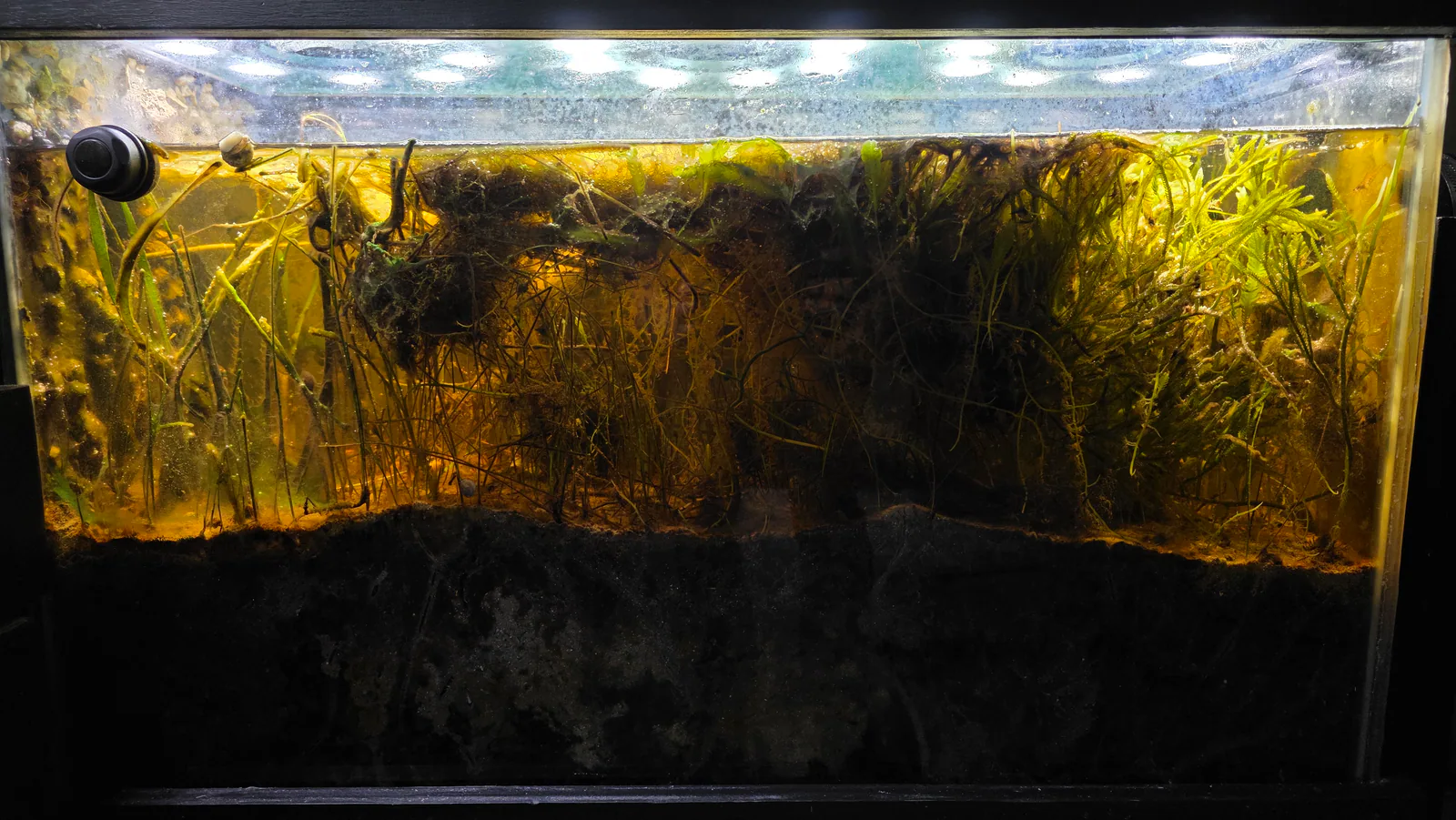
Follow this species across the habitats where it currently appears in the miniBIOTA biosphere.
Follow-up tunnel record for the large Southern Lugworm.
A large dark green worm appeared against the glass in the Seagrass Meadow after years of hidden activity. Its visible deposit-feeding behavior raised a new question about how long it has been processing the substrate and why it only became visible now.