Range and Florida Relevance
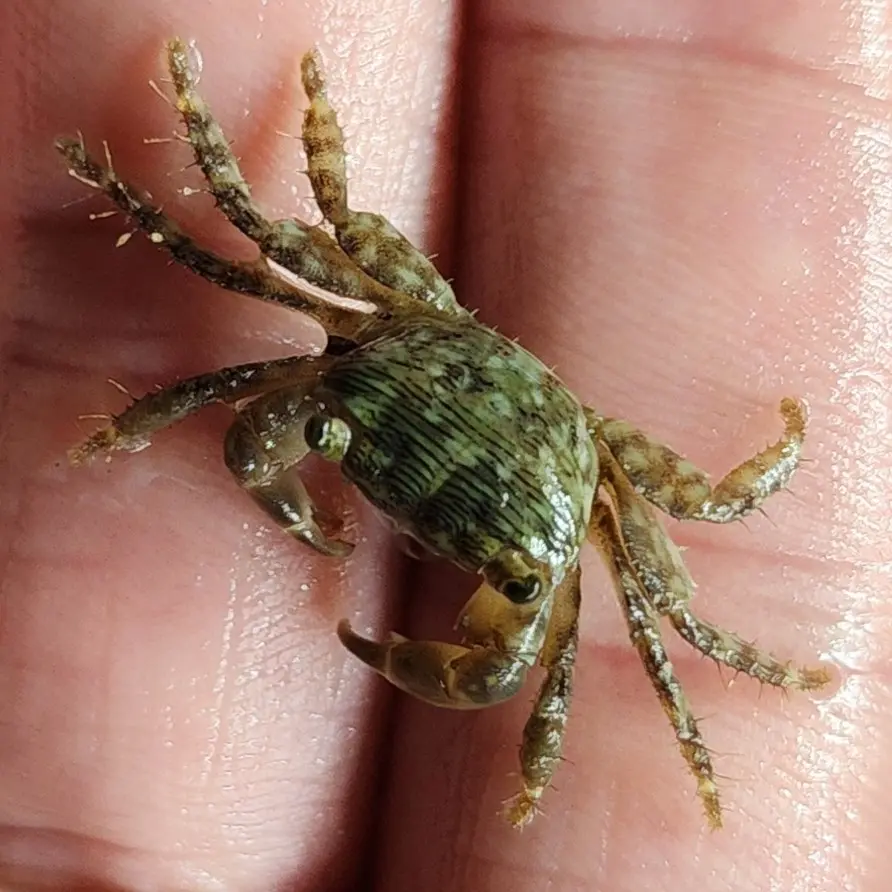
Pachygrapsus transversus is a widely distributed intertidal crab found along the Atlantic and Gulf coasts of North America, through the Caribbean, and into South America. In Florida, it is common on hard-bottom shorelines, rocky and rubble intertidal habitats, mangrove piling edges, and seawalls, where it grazes biofilm and algae from exposed surfaces. It is categorized by OBIS under Grapsidae and carries WoRMS AphiaID 107457 as an accepted species. The species is well suited to the coastal conditions represented in miniBIOTA's saltwater system.
Habitat
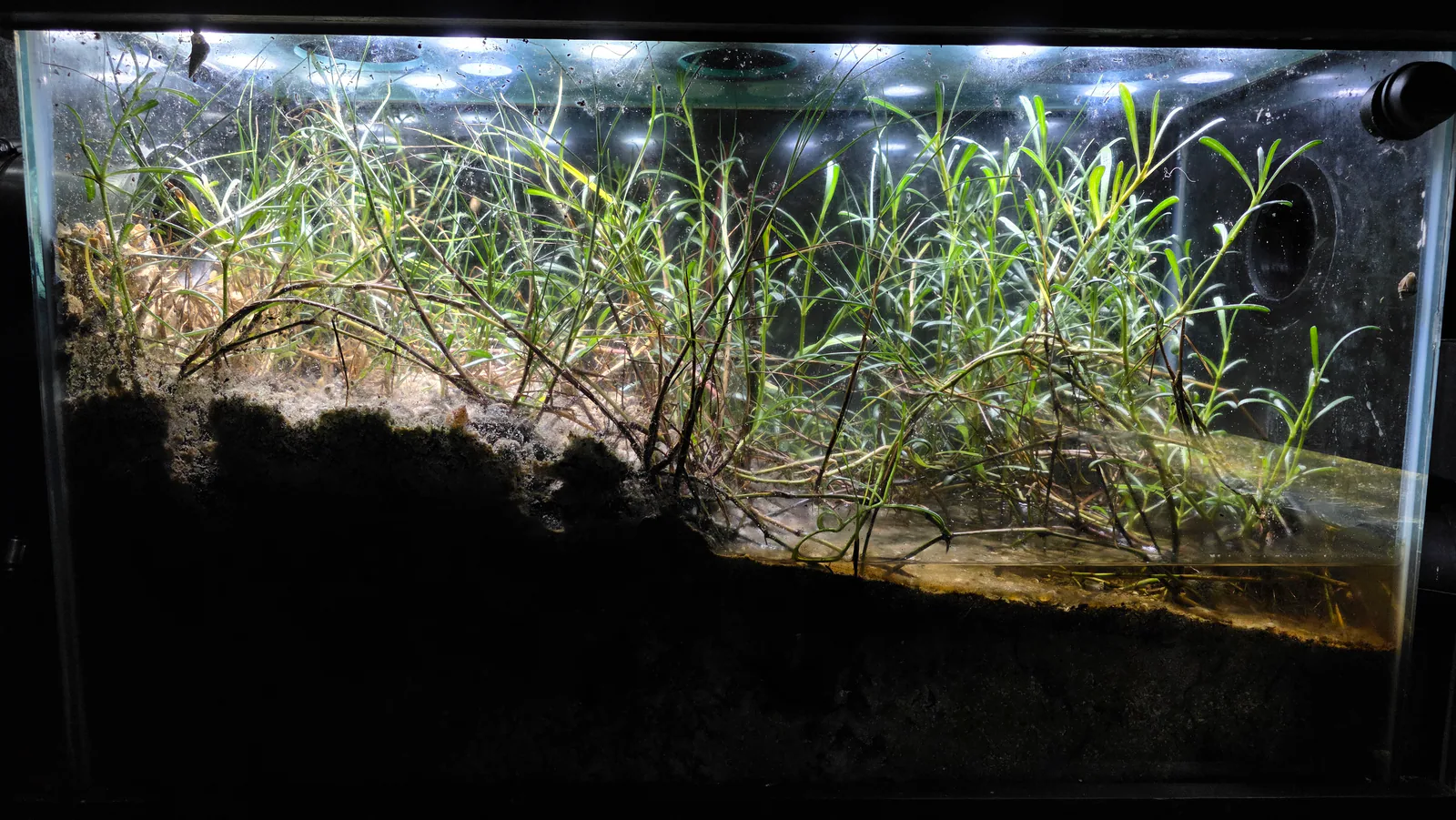
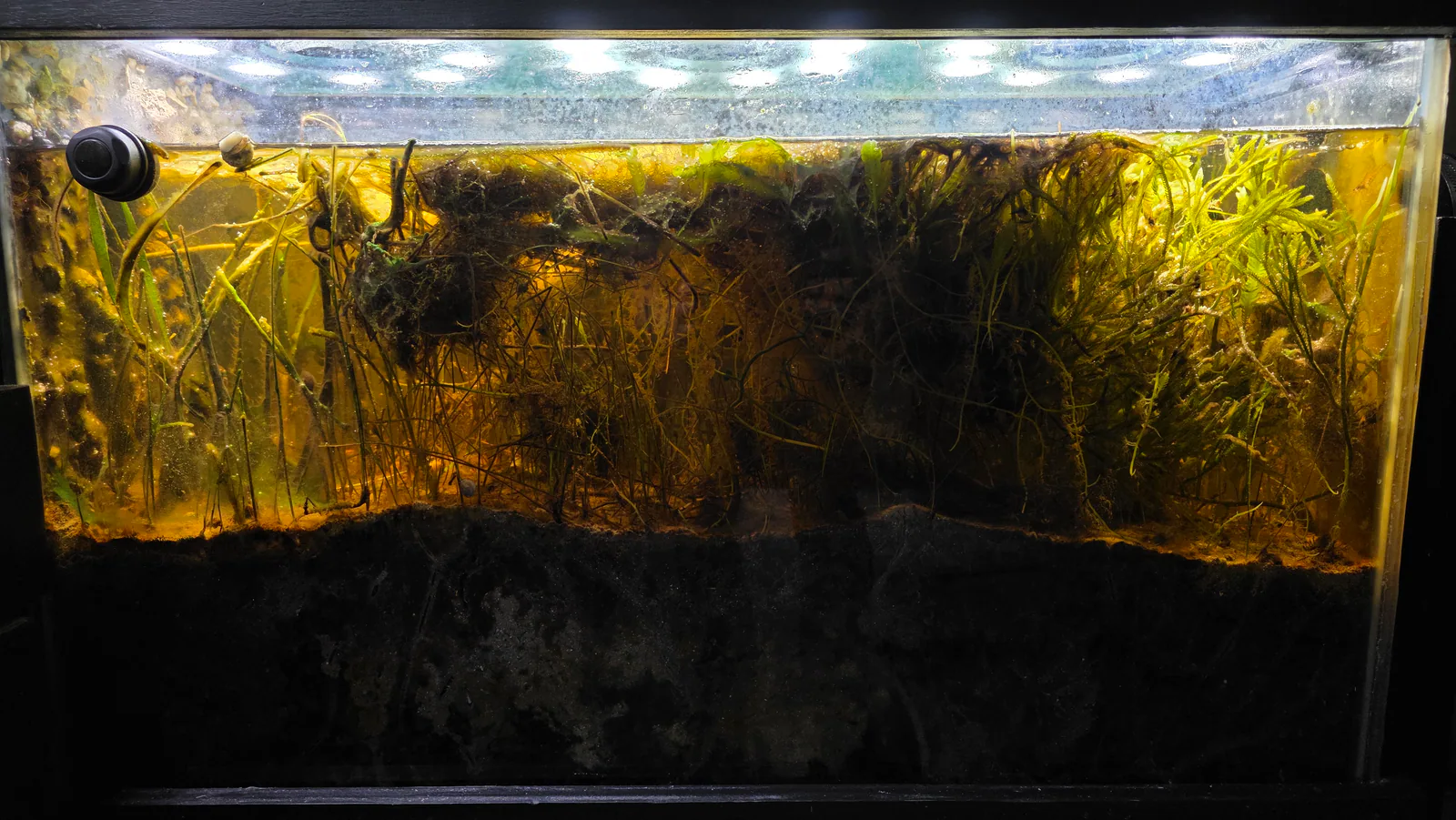
Pachygrapsus transversus is strongly associated with hard surfaces in the intertidal and subtidal zone: rock, rubble, concrete pilings, seawalls, mangrove roots, and similar structurally complex substrates. It uses surface irregularities and algal cover for shelter and forages by moving rapidly across these surfaces. In miniBIOTA, the crabs have been repeatedly observed on tank walls, rock surfaces, and macroalgal and cyanobacterial mats within the Seagrass Meadow. They anchor to the left tank wall where algae concentrations are highest and range through the far end of the Seagrass Meadow biome where macroalgae and surface growth accumulate.
Diet
Pachygrapsus transversus is primarily an algae grazer and biofilm scraper, using its chelipeds to tear and scrape material from hard surfaces. It is classified as an omnivore and can take plant material, detritus, small invertebrates, and animal remains opportunistically. In miniBIOTA, confirmed feeding items include algae from tank walls and rock surfaces (December 2024), macroalgae and cyanobacteria-like growth from the far end of the Seagrass Meadow (March 2026), and general plant and algal material across video observations. An April 2026 observation noted both crabs function largely as herbivores in this system. On August 8, 2026, direct observation confirmed Graceful Redweed tissue itself as a direct food source, correcting a July 29, 2026 finding that the crab only foraged epiphytic algae from the redweed mat surface; the crab was seen clearly removing and eating small pieces of redweed, especially smaller offshoots but also larger pieces. On August 10, 2026, a crab was directly observed scavenging animal tissue for the first time in miniBIOTA, approaching and competing with an Orangeclaw Hermit Crab for access to a dead Chestnut Turban Snail's carcass.
Reproduction
Females of Pachygrapsus transversus brood fertilized eggs under the abdomen before releasing planktonic larvae into the water column. Larval development passes through multiple zoeal stages before settling. In miniBIOTA, one crab was observed carrying eggs on April 6, 2025; because both documented individuals are female, the eggs are treated as infertile and no larval release or juvenile settlement has been confirmed.
Tolerance Ranges
Pachygrapsus transversus is a marine intertidal species tolerant of typical subtropical and warm-temperate coastal temperatures and normal marine salinity and pH. It is adapted to tidal fluctuation and handles periods of emersion, wave action, and varying light. Formal tolerance measurements for temperature, pH, salinity drift, dissolved oxygen, and flow have not been taken in miniBIOTA; the crabs' nearly two-year persistence under system conditions is the best available evidence of their tolerance.