Pagurus longicarpus

Long-claw Hermit Crab

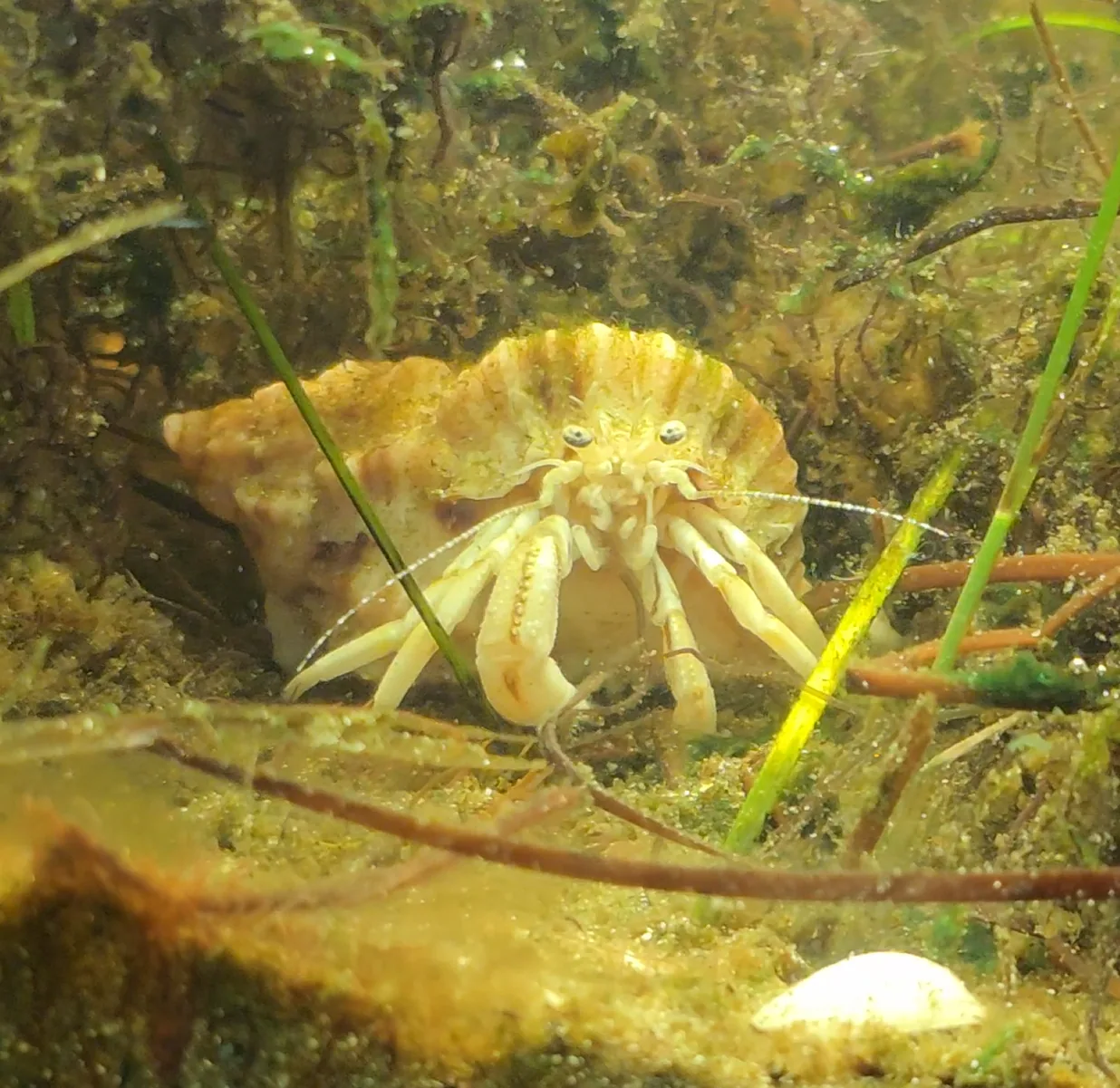
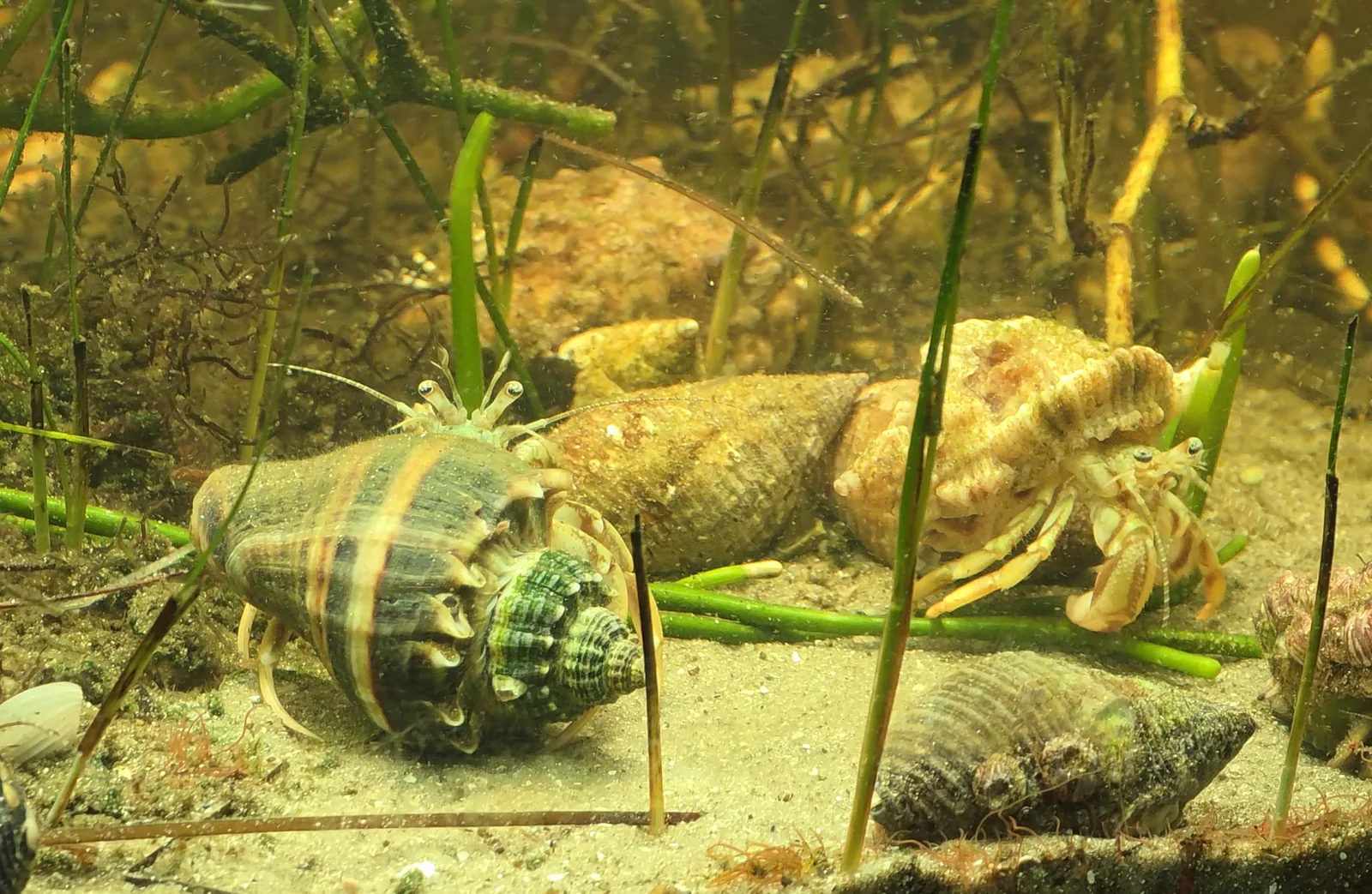
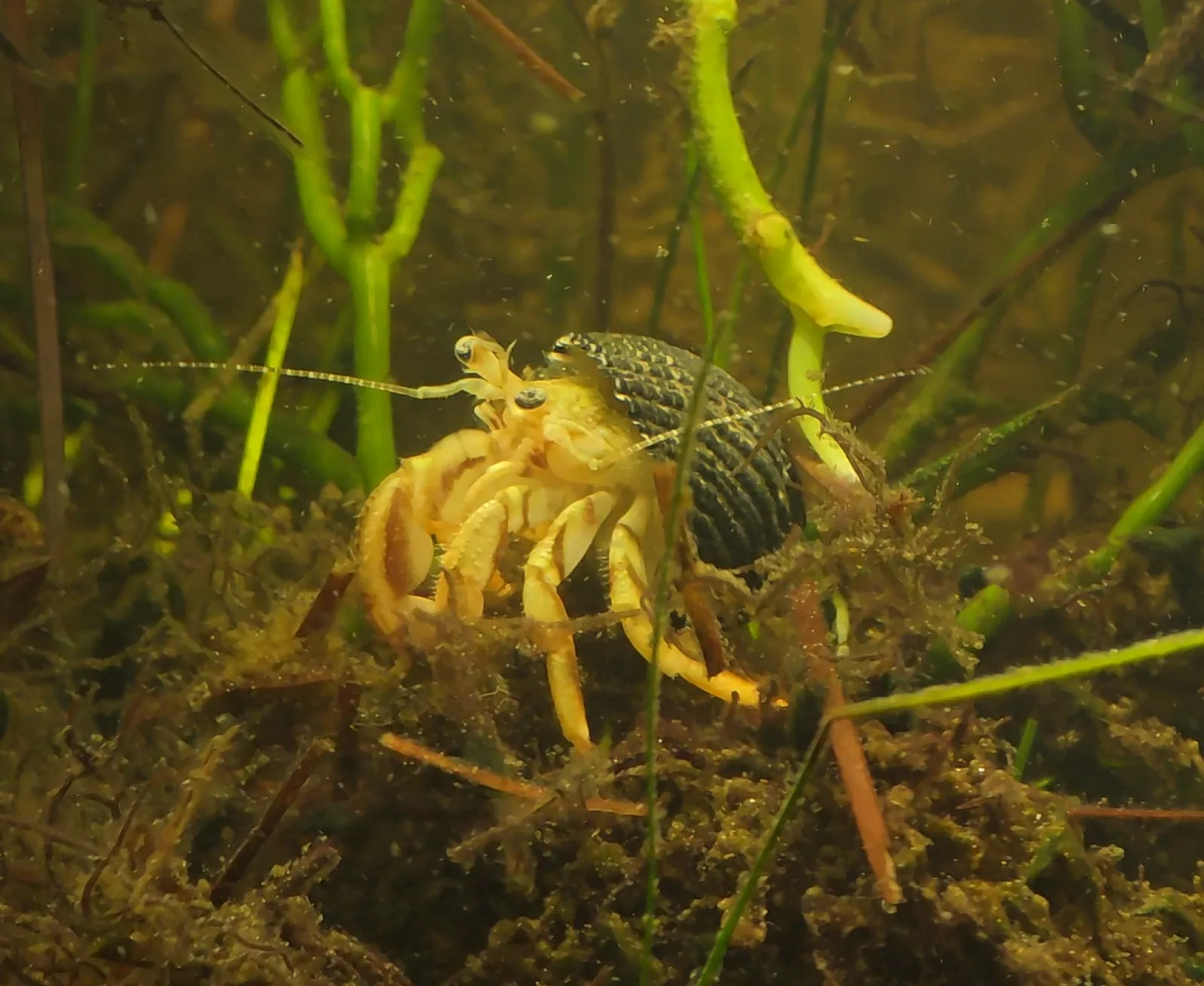
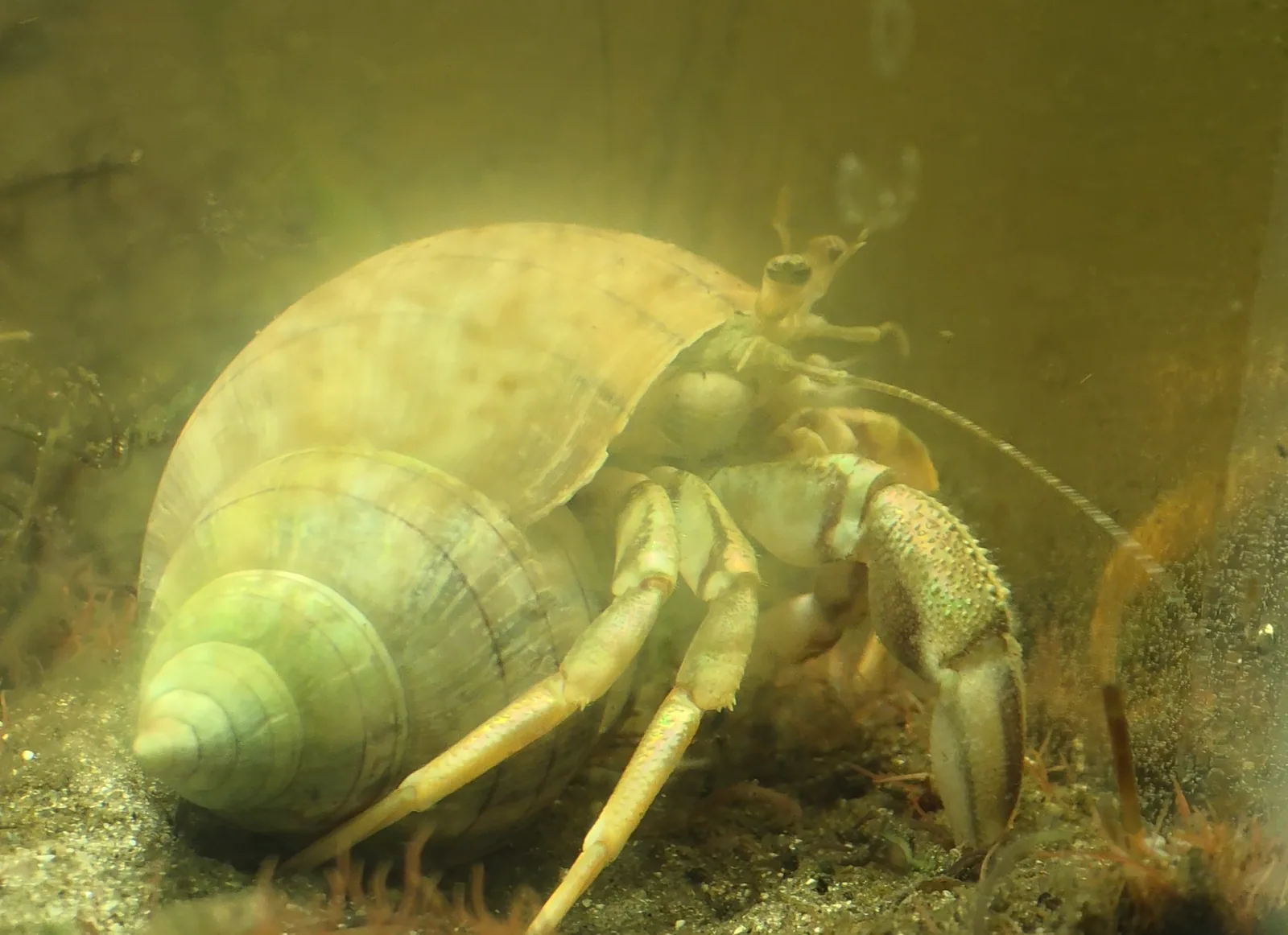
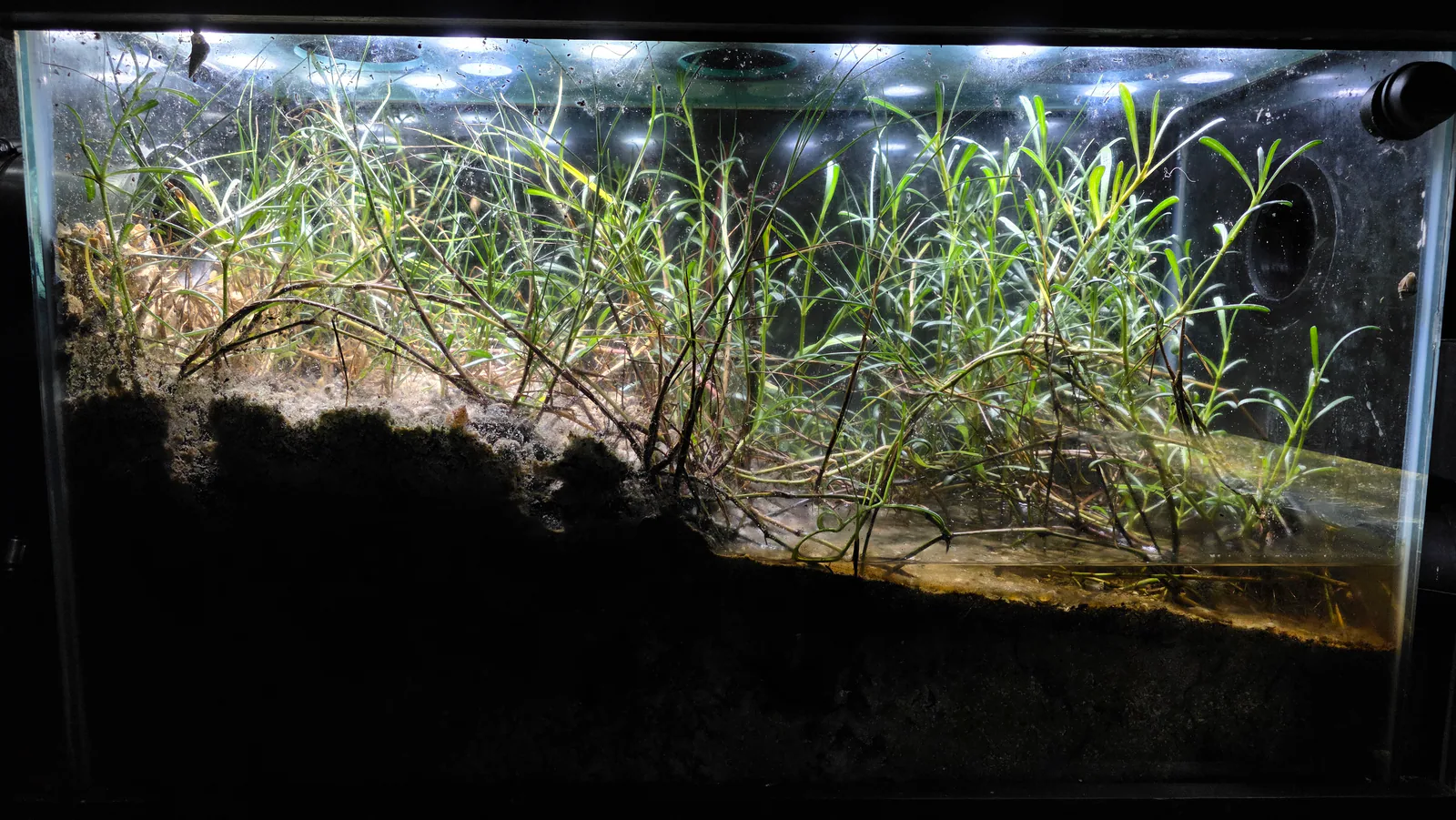
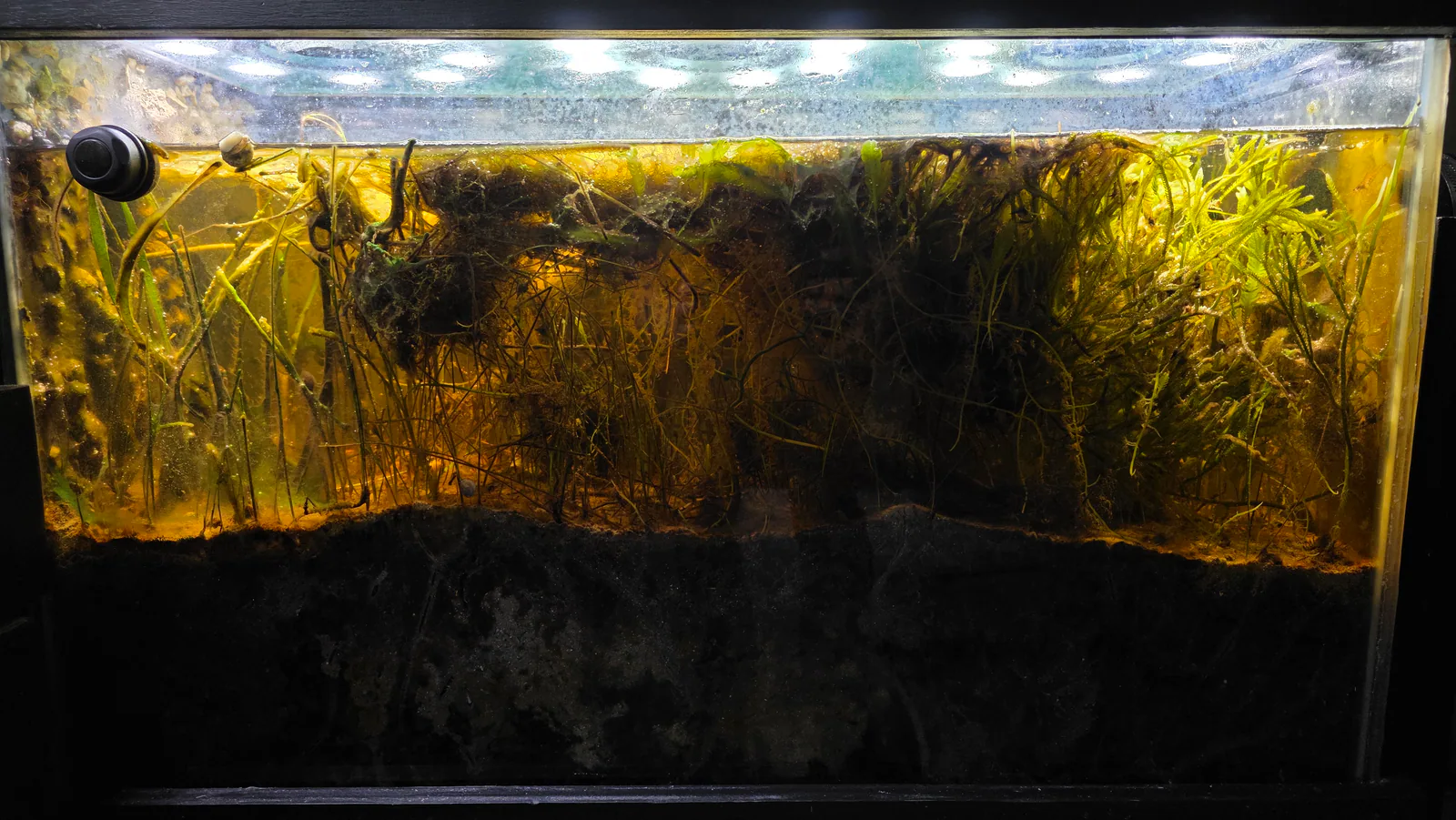
Named for its notably elongated right claw, this small hermit crab moves through the Seagrass Meadow and Marine Shore scavenging algae and organic matter; four individuals collected from Tampa Bay in June 2026 are the first confirmed Long-claw Hermit Crabs in miniBIOTA.

Visual Data Unavailable

Overview

Four Long-claw Hermit Crabs (Pagurus longicarpus) were collected from the Tampa Bay coast and introduced to miniBIOTA's Marine Shore and Seagrass Meadow on June 12, 2026. These are the first confirmed true Pagurus longicarpus in miniBIOTA. Previous miniBIOTA records using the name "Long-armed Hermit Crab" under this species ID were misidentified; those individuals were Pagurus maclaughlinae (McLaughlin's Hermit Crab). See the Historical Identity Correction section below.

Identity

  • Common name: Long-claw Hermit Crab
  • Alternate names: long-armed hermit crab, long-clawed hermit crab, common hermit crab
  • Scientific name: Pagurus longicarpus
  • Identification confidence: Confirmed. Identified by Josue from the June 12, 2026 Tampa Bay collection.
  • Uncertainty label: Confirmed. Species ID is solid; establishment and long-term population trajectory in miniBIOTA are unresolved.

Taxonomy

  • Kingdom: Animalia
  • Phylum: Arthropoda
  • Class: Malacostraca
  • Order: Decapoda
  • Family: Paguridae
  • Genus: Pagurus
  • Species: P. longicarpus

Name note: longicarpus is Latin for "long wrist" or "long arm," referring to the species' notably elongated right cheliped, which is used to block the shell entrance when the crab retracts defensively. The right cheliped dominates in Paguridae (right-handed hermit crabs), distinguishing this family from Diogenidae (left-handed), which includes the Hairy Hermit Crab also now present in miniBIOTA.

Natural History

Range and Florida Relevance

Pagurus longicarpus is one of the most abundant and widespread small hermit crabs in the western Atlantic, ranging from Nova Scotia south to Colombia. It is common throughout Florida's coastal waters on both the Atlantic and Gulf coasts, found in shallow marine and estuarine habitats from rocky intertidal zones to sandy and muddy subtidal bottoms. In Florida, it is frequently encountered in seagrass beds, tidal flats, and shallow bays and is often the most numerically dominant hermit crab in nearshore marine habitats.

Habitat

Long-claw Hermit Crabs occupy shallow coastal marine and estuarine habitats. They are found on sandy and muddy substrate, in seagrass beds, on rocky and shell-covered bottoms, and in debris zones of tidal flats. They tolerate a broad range of salinity and temperature conditions consistent with their wide range. In miniBIOTA, the four introduced individuals are associated with the Marine Shore and Seagrass Meadow.

Diet

Pagurus longicarpus is an omnivorous scavenger. It feeds on algae, biofilm, detritus, carrion, small invertebrates, and organic particles scraped or gathered from substrate surfaces. The elongated right cheliped is not a feeding tool; it functions as a defensive plug for the shell entrance.

Shell Use

Like all Paguridae, P. longicarpus carries an empty gastropod shell for protection of its soft abdomen. As the crab grows it must acquire progressively larger shells. Shell acquisition can involve competition with other hermit crabs, including chasing, grappling, and attempting to evict the occupant. The empty shells introduced to miniBIOTA on June 12, 2026 alongside the hermit crabs were intended to support the expanded hermit crab population.

Reproduction

Females brood fertilized eggs attached to the pleopods on the soft abdomen, held within the gastropod shell until hatching. Larvae pass through zoea and megalopa stages before settling and acquiring a first shell. No reproductive observations have been made in miniBIOTA.

Tolerance Ranges

Pagurus longicarpus is broadly tolerant, adapted to conditions ranging from cold-temperate New England to tropical Caribbean waters. It tolerates considerable salinity variation and temperature swings. No miniBIOTA-specific tolerance measurements are on record.

Ecological Role

Long-claw Hermit Crab functions as a saltwater scavenger and algae grazer in the Marine Shore and Seagrass Meadow. By consuming algae, biofilm, detritus, and organic particles, it contributes to substrate cleaning and nutrient cycling. As a Paguridae (right-handed) species, it occupies the same family as McLaughlin's Hermit Crab and may compete with it for shell resources.

The four individuals join a marine hermit crab community that now includes Hairy Hermit Crabs (Diogenidae), McLaughlin's Hermit Crabs (Paguridae), and Orangeclaw Hermit Crab (Diogenidae). Shell competition and community dynamics among these four hermit crab species and families are an open watch item.

miniBIOTA Evidence

Introduction

Four Long-claw Hermit Crabs were collected from the Tampa Bay coast and introduced to miniBIOTA on June 12, 2026. This is the founding record for the species at this ID. All prior records attributed to this ID (species id 38) have been reclassified to McLaughlin's Hermit Crab.

Observation Timeline

  • June 12, 2026: Four individuals collected from Tampa Bay coast and introduced to Marine Shore and Seagrass Meadow. Confirmed as Pagurus longicarpus by Josue. First true Long-claw Hermit Crabs in miniBIOTA.
  • June 18, 2026: All four individuals confirmed present and actively grazing in the Seagrass Meadow, six days post-introduction. Described as medium-sized and highly active. Intraspecific territorial charging behavior observed: crabs charge at conspecifics but show no aggression toward other species. Video documented.
  • June 25, 2026: Long-claw Hermit Crabs are no longer observed in the system. Numerous empty shells were found clustered at the Mud Crab burrow entrance. Mud crab predation is strongly suspected. All four individuals introduced June 12, 2026, together with Hairy Hermit Crabs and McLaughlin's Hermit Crabs, are missing. No direct predation event was observed. Video documented. Observation record, June 25, 2026.
  • June 25, 2026 (follow-up): Mud crab removal campaign completed the same day: 5 individuals removed from the marine realm, including the large mud crab (placed in external holding tank). Predation pressure substantially reduced. No Long-claw Hermit Crab individuals confirmed alive. Observation records, June 25, 2026.
  • June 26, 2026: No Long-claw Hermit Crabs located during a population check in the Seagrass Meadow the day after the mud crab removal campaign. Possible elimination from the system; continued monitoring needed to confirm. Observation record, June 26, 2026.

What Is Confirmed

  • Four individuals introduced June 12, 2026, identified as Pagurus longicarpus.
  • Introduced to Marine Shore and Seagrass Meadow.
  • These are the first correctly identified P. longicarpus in miniBIOTA.
  • All four individuals confirmed present and actively grazing in the Seagrass Meadow on June 18, 2026, six days post-introduction.
  • Intraspecific territorial charging behavior documented June 18, 2026: crabs charge at conspecifics but show no aggression toward other species (video).

What Is Inferred

  • Ecological role as omnivorous scavengers and algae grazers consistent with Paguridae family biology.
  • Potential shell competition with McLaughlin's Hermit Crab given shared family (Paguridae) and habitat.

What Remains Unknown

  • Whether Mud Crab predation is confirmed as the cause of the Long-claw Hermit Crab disappearances on June 25, 2026 (strongly suspected; not directly observed).
  • No Long-claw Hermit Crabs were located as of June 26, 2026, the day after mud crab removal; possible elimination from the system remains unconfirmed and requires continued monitoring.
  • Whether reproduction is possible in this system.