Pagurus maclaughlinae

McLaughlin's Hermit Crab

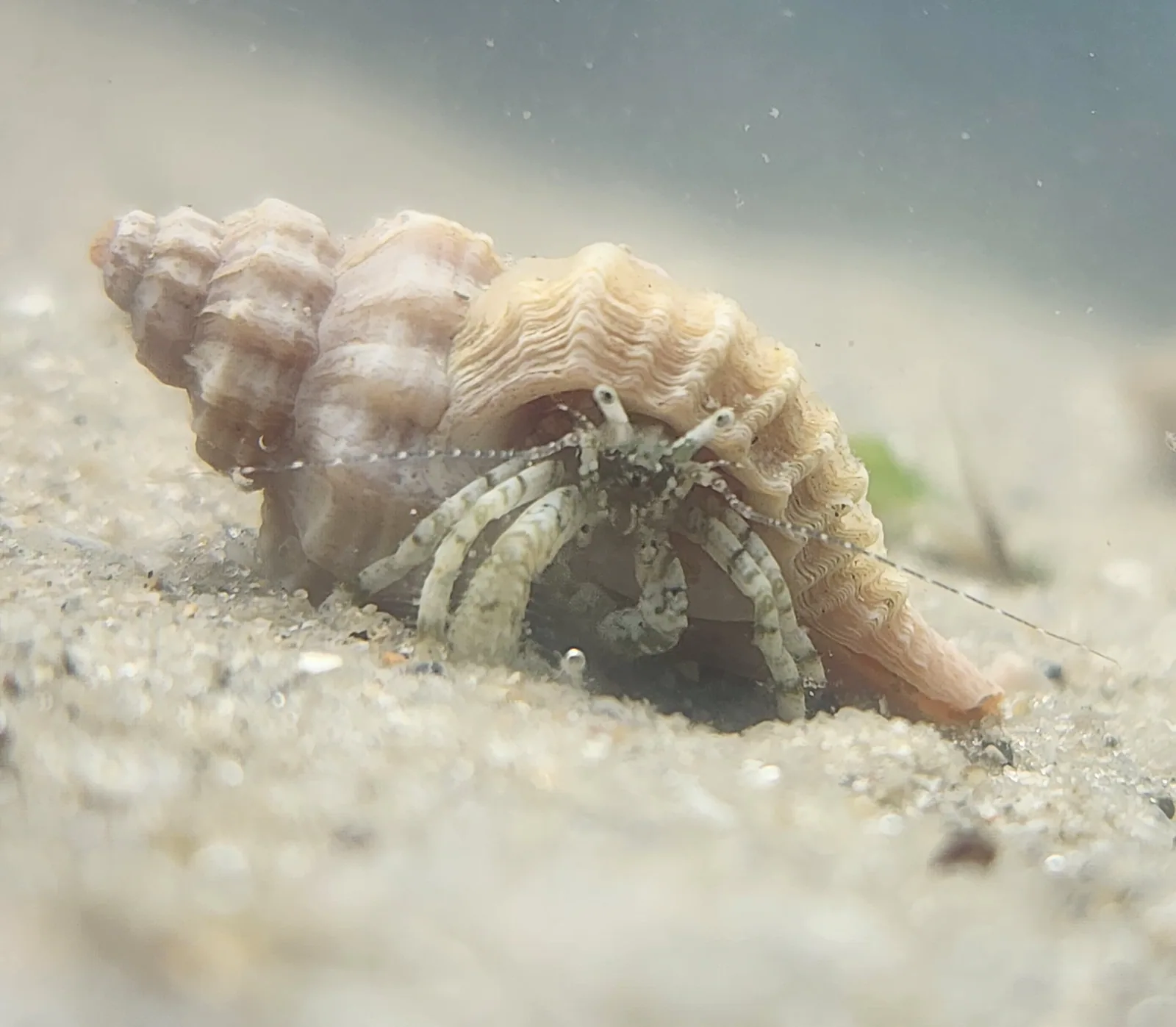
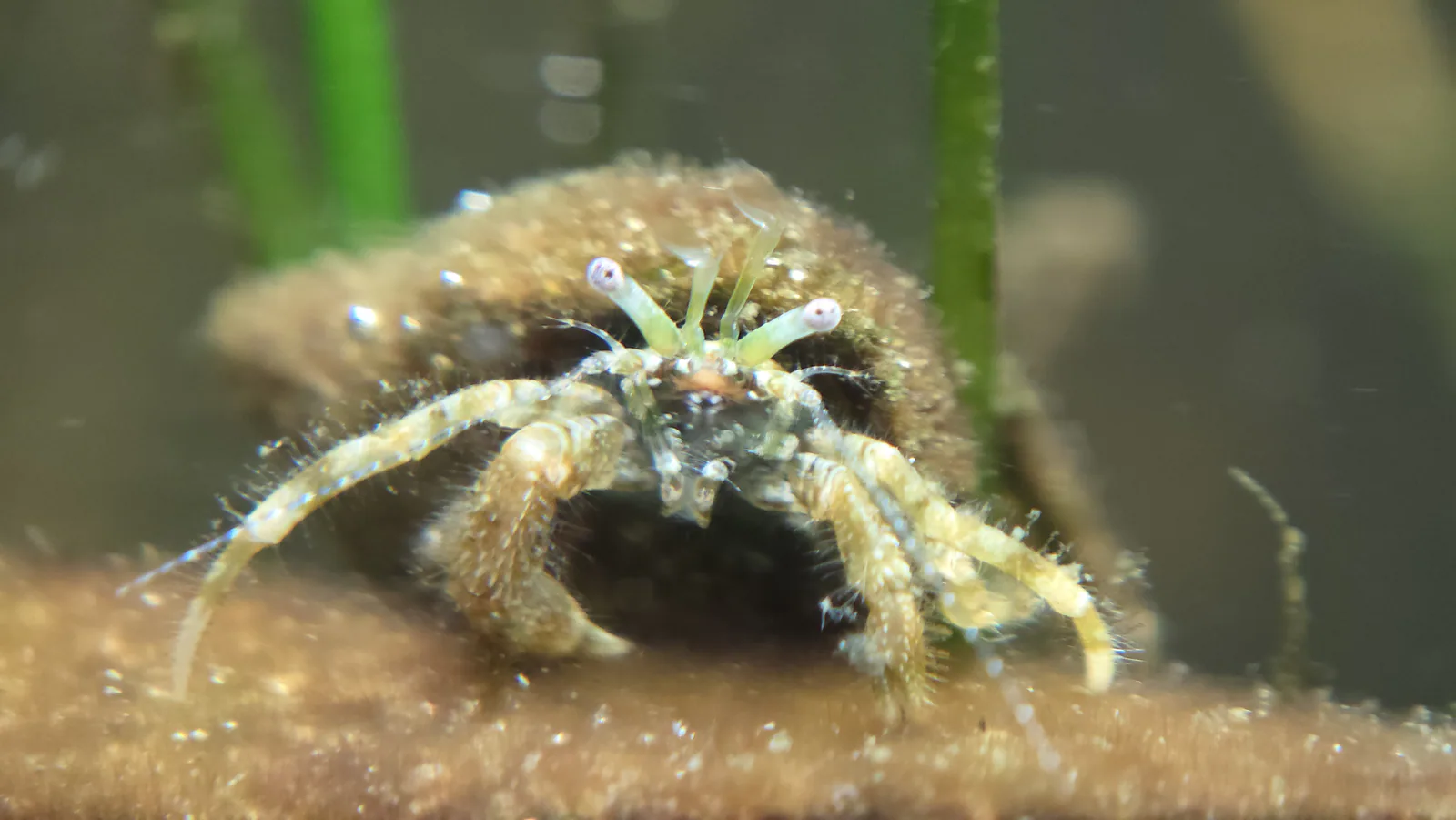
Moving through the Seagrass Meadow substrate with a borrowed gastropod shell in tow, this small hermit crab grazes algae and scavenges organic matter from the bottom and competes with other hermit crabs for the best-fitting shells as it grows.

Overview

McLaughlin's Hermit Crab (Pagurus maclaughlinae) is a small saltwater hermit crab recorded in miniBIOTA's Seagrass Meadow. The species has been present since at least December 15, 2024, and five additional individuals collected from the Tampa Bay coast were introduced on June 12, 2026; initially logged as unidentified at the time of collection, they were subsequently confirmed as this species. No precise population count is on record. Species-level identification is assessed as Possible; the common name and scientific name reflect existing miniBIOTA records, but no morphological confirmation is documented.

Identity

  • Common name: McLaughlin's Hermit Crab
  • Alternate names: hermit crab, pagurus, mclaughlin hermit, mclaughlin's hermit
  • Scientific name: Pagurus maclaughlinae
  • Identification confidence: Possible; species-level identity assigned in miniBIOTA records but no morphological confirmation documented
  • Uncertainty label: Possible

Taxonomy

  • Kingdom: Animalia
  • Phylum: Arthropoda
  • Class: Malacostraca
  • Order: Decapoda
  • Family: Paguridae
  • Genus: Pagurus
  • Species: maclaughlinae

Name note: Pagurus maclaughlinae was described by García-Gómez in 1983 and is named in honor of Dr. Patsy A. McLaughlin, a prominent carcinologist whose work on Paguridae taxonomy is foundational to hermit crab research across the western Atlantic and worldwide.

Natural History

Range and Florida Relevance

Pagurus maclaughlinae is native to shallow coastal marine habitats in the western Atlantic and Caribbean, with a range that includes Florida and the Gulf of Mexico through the Caribbean islands. In Florida, Pagurus hermit crabs are common in nearshore saltwater environments including seagrass beds, sandy subtidal zones, and rubble-strewn coastal substrates. Florida hosts multiple Pagurus species that can overlap in habitat, and distinguishing them in the field requires careful examination.

Habitat

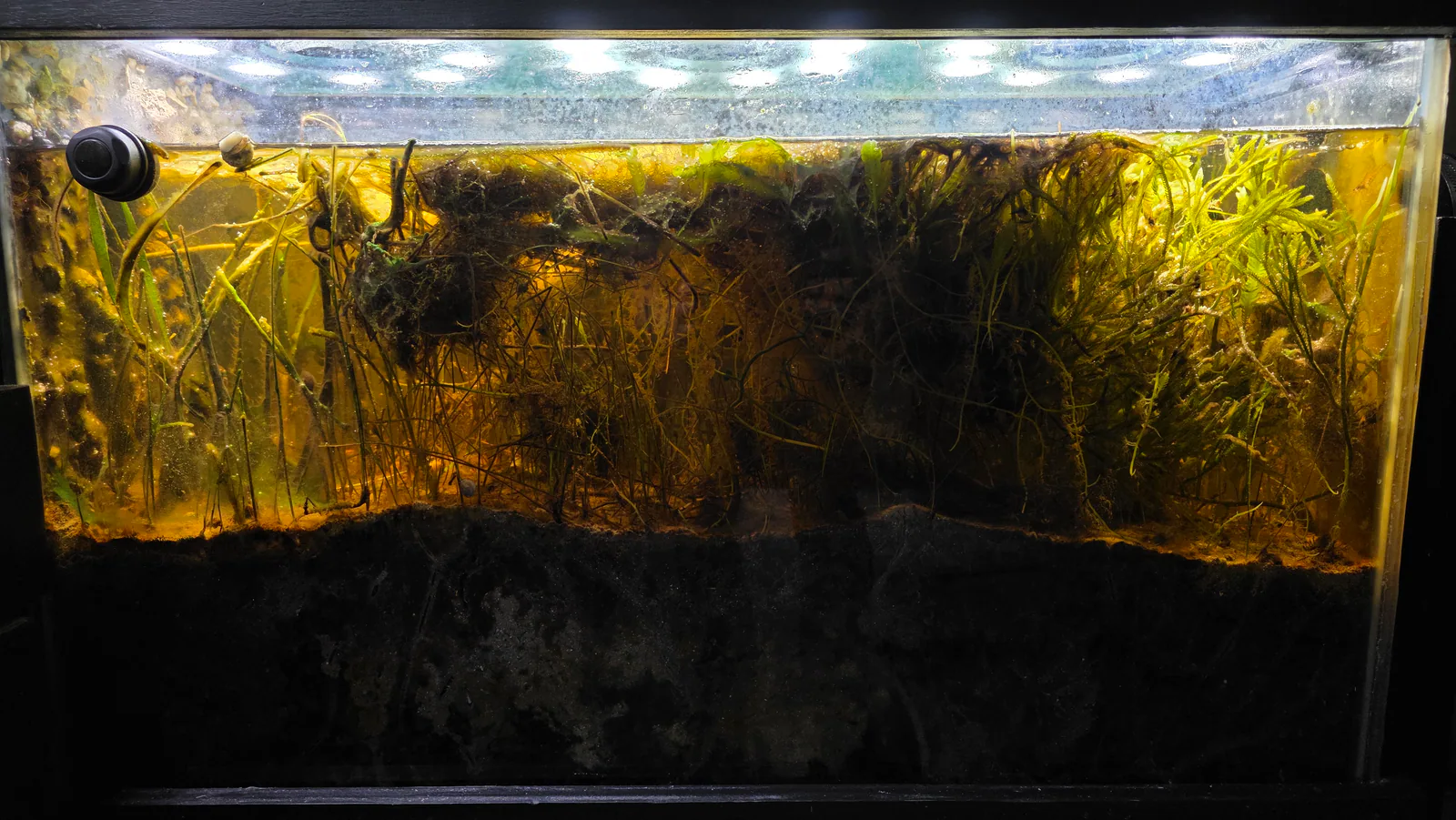
Paguridae hermit crabs in the Pagurus maclaughlinae size range are typically found in shallow subtidal and intertidal marine habitats, moving over sandy or mixed substrate, seagrass beds, and coastal rubble. They remain submerged or very close to the water surface and do not tolerate extended aerial exposure or freshwater. In miniBIOTA, this species is associated with the Seagrass Meadow and Marine Shore.

Diet

Like other members of Paguridae, Pagurus maclaughlinae is an omnivorous scavenger. It feeds on algae, biofilm, detritus, carrion, and small organic particles scraped or gathered from substrate surfaces. Feeding is opportunistic; these crabs move through the substrate picking up whatever organic material is available. They do not function as predators of significant mobile prey.

Shell Use

Paguridae hermit crabs carry an empty gastropod shell as portable shelter for their soft, unarmored abdomens. The right cheliped (claw) is enlarged and dominates over the left, a key distinguishing feature of family Paguridae versus the left-handed Diogenidae. As the crab grows, it must acquire progressively larger shells. Shell acquisition can involve competition with other hermit crabs, including chasing, grappling, and attempting to pull the occupant from its shell. In miniBIOTA, chase and clamp behavior was observed on December 15, 2024 between two individuals both now confirmed as McLaughlin's Hermit Crab; the second participant was originally logged as Long-armed Hermit Crab before the June 2026 identity correction. The specific roles of each individual in that interaction were not differentiated.

Reproduction

Reproduction in Paguridae follows the pattern common to marine hermit crabs. Females carry fertilized eggs attached to the pleopods on the soft abdomen, brooding them within the protective shell until hatching. Larvae pass through zoea and megalopa stages in the water column before settling and acquiring a first shell. Sex determination typically requires examination of pleopods, which are concealed within the gastropod shell. No reproductive observations have been made for this species in miniBIOTA.

Tolerance Ranges

Pagurus maclaughlinae requires full marine salinities and subtropical to tropical water temperatures consistent with its Florida and Caribbean range. It is not adapted to freshwater or extended exposure to air. No miniBIOTA-specific tolerance measurements are on record.

Ecological Role

McLaughlin's Hermit Crab functions as a saltwater scavenger and algae grazer in the Seagrass Meadow. By consuming algae, detritus, biofilm, and small organic particles, it contributes to substrate cleaning and nutrient cycling in the marine zone. Shell-use behavior creates shell resource dynamics shared with other hermit crab species in the system; the December 2024 chase-and-clamp interaction between two McLaughlin's Hermit Crabs suggests active intraspecific shell competition.

No confirmed predators of this species have been documented in miniBIOTA. In natural settings, hermit crabs of this size class are prey for predatory fish, octopus, and larger crabs. No symbiotic relationships have been documented.

miniBIOTA Evidence

Introduction

No introduction date is on record for the original McLaughlin's Hermit Crab population in miniBIOTA; the earliest documented appearance is December 15, 2024. Five additional individuals were introduced on June 12, 2026, collected from the Tampa Bay coast alongside Hairy Hermit Crabs and Long-claw Hermit Crabs. These five were initially logged as Unidentified Hermit Crab 1 and subsequently confirmed as McLaughlin's Hermit Crab.

Observation Timeline

  • December 15, 2024: McLaughlin's Hermit Crab and Long-armed Hermit Crab both present in the Seagrass Meadow. Small hermit crabs engaging in chase and clamp behavior; one grabbed the other's leg and held or carried them briefly. No physical damage observed. Behavior interpreted as possible competition or mating. Species not differentiated by individual in the event. McLaughlin's Hermit Crab logged as context species; Long-armed Hermit Crab as primary.
  • June 10, 2026: Date logged in the species record from a live record check; no dedicated observation file exists for this date.
  • June 12, 2026: Five small hermit crabs collected from the Tampa Bay coast and introduced to the Marine Shore and Seagrass Meadow alongside Hairy Hermit Crabs and Long-claw Hermit Crabs. Species could not be determined in the field at the time of collection; logged as Unidentified Hermit Crab 1. Now confirmed as McLaughlin's Hermit Crab.
  • June 18, 2026: Identity correction confirmed during intake: all prior miniBIOTA records labeled "Long-armed Hermit Crab" were misidentified and are now rerouted here as Pagurus maclaughlinae. The December 15, 2024 chase-and-clamp interaction involved two individuals both identified as McLaughlin's Hermit Crab going forward.
  • June 25, 2026: McLaughlin's Hermit Crabs appear still present in the system despite the simultaneous loss of approximately 13 larger hermit crabs (Hairy and Long-claw species). Numerous empty hermit crab shells were found at the Mud Crab burrow entrance. The owner proposes that McLaughlin's Hermit Crabs survived because their smaller body size prevents the Mud Crab from extracting them from their shells.

What Is Confirmed

  • McLaughlin's Hermit Crab present in the Seagrass Meadow as of December 15, 2024.
  • Chase and clamp behavior observed in the Seagrass Meadow on December 15, 2024; both individuals are now confirmed as Pagurus maclaughlinae following the June 18, 2026 identity correction of the Long-armed Hermit Crab record.
  • Species linked to Seagrass Meadow on record as of June 3, 2026.
  • Species still on record as of June 25, 2026.
  • Confirmed still present June 25, 2026, despite simultaneous loss of larger hermit crab species to suspected mud crab predation. Small body size proposed as the protective factor.
  • Five individuals collected from the Tampa Bay coast and introduced June 12, 2026; initially logged as Unidentified Hermit Crab 1 and confirmed as McLaughlin's Hermit Crab.

What Is Inferred

  • The chase and clamp behavior is consistent with published accounts of hermit crab shell competition behavior in Paguridae.
  • The December 2024 event suggests McLaughlin's Hermit Crab engages in intraspecific shell competition within the Seagrass Meadow.

What Remains Unknown

  • Introduction date and source for the original miniBIOTA population; no introduction event is on record before December 2024. Five individuals collected from the Tampa Bay coast were introduced June 12, 2026.
  • Current population count; no precise count is on record.
  • Whether the size-protection inference from the June 25, 2026 event holds long-term, particularly if the mud crab grows or as larger hermit crab prey disappear from the system.
  • How the species was identified as Pagurus maclaughlinae specifically.
  • Whether any reproductive activity has occurred.
  • Sex of any individual in the system.