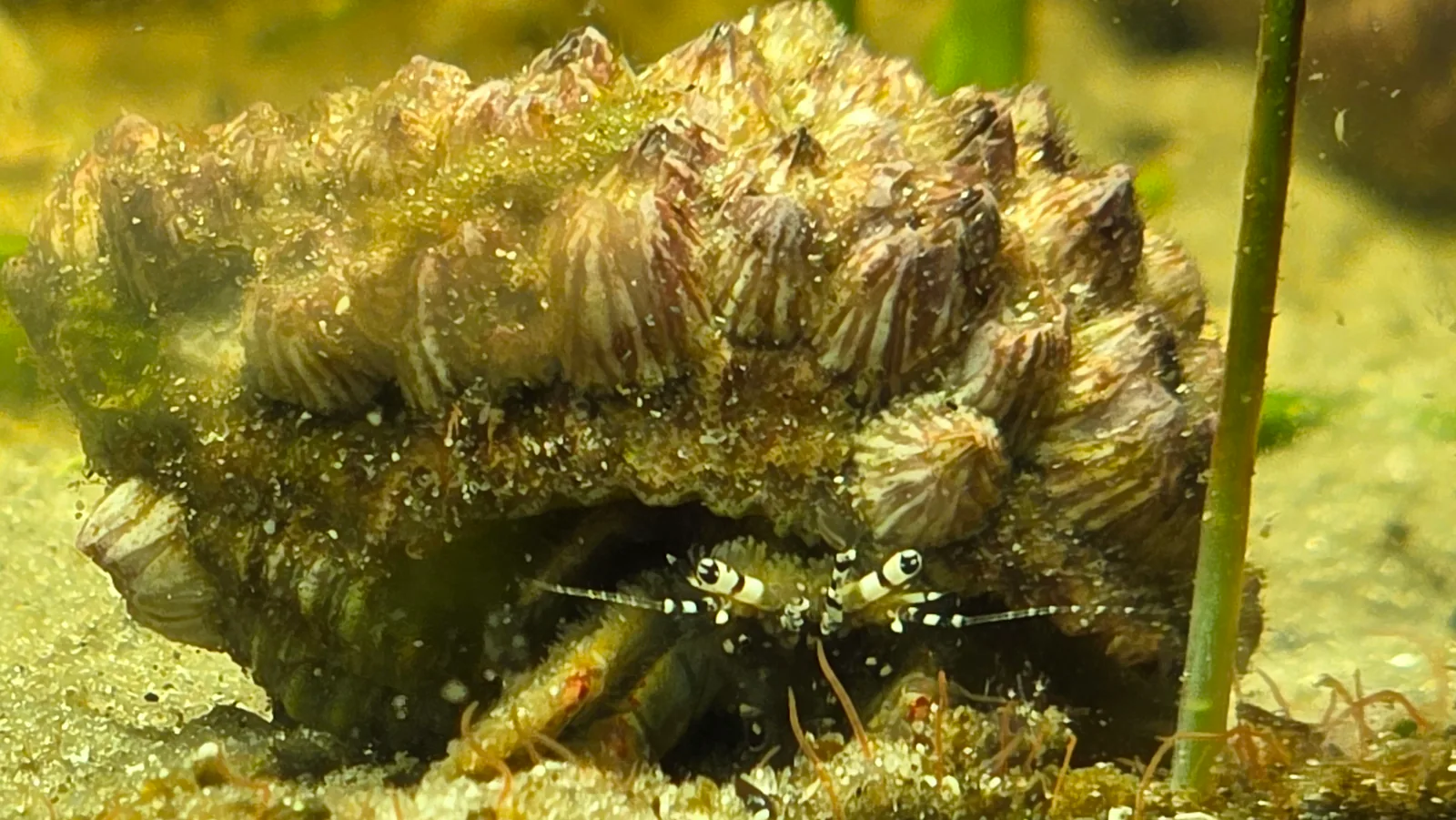
Paguristes karenae

Hairy Hermit Crab

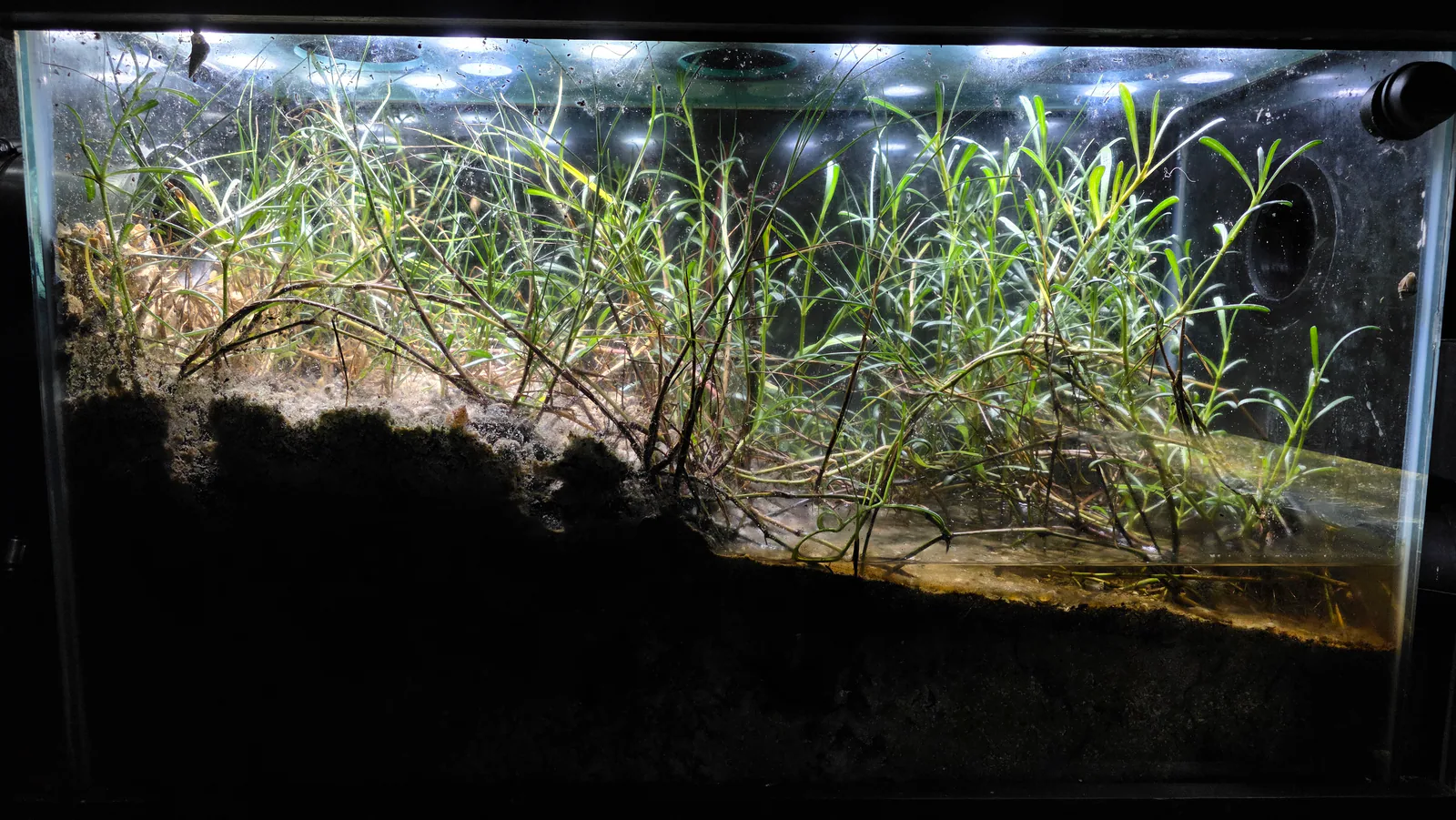
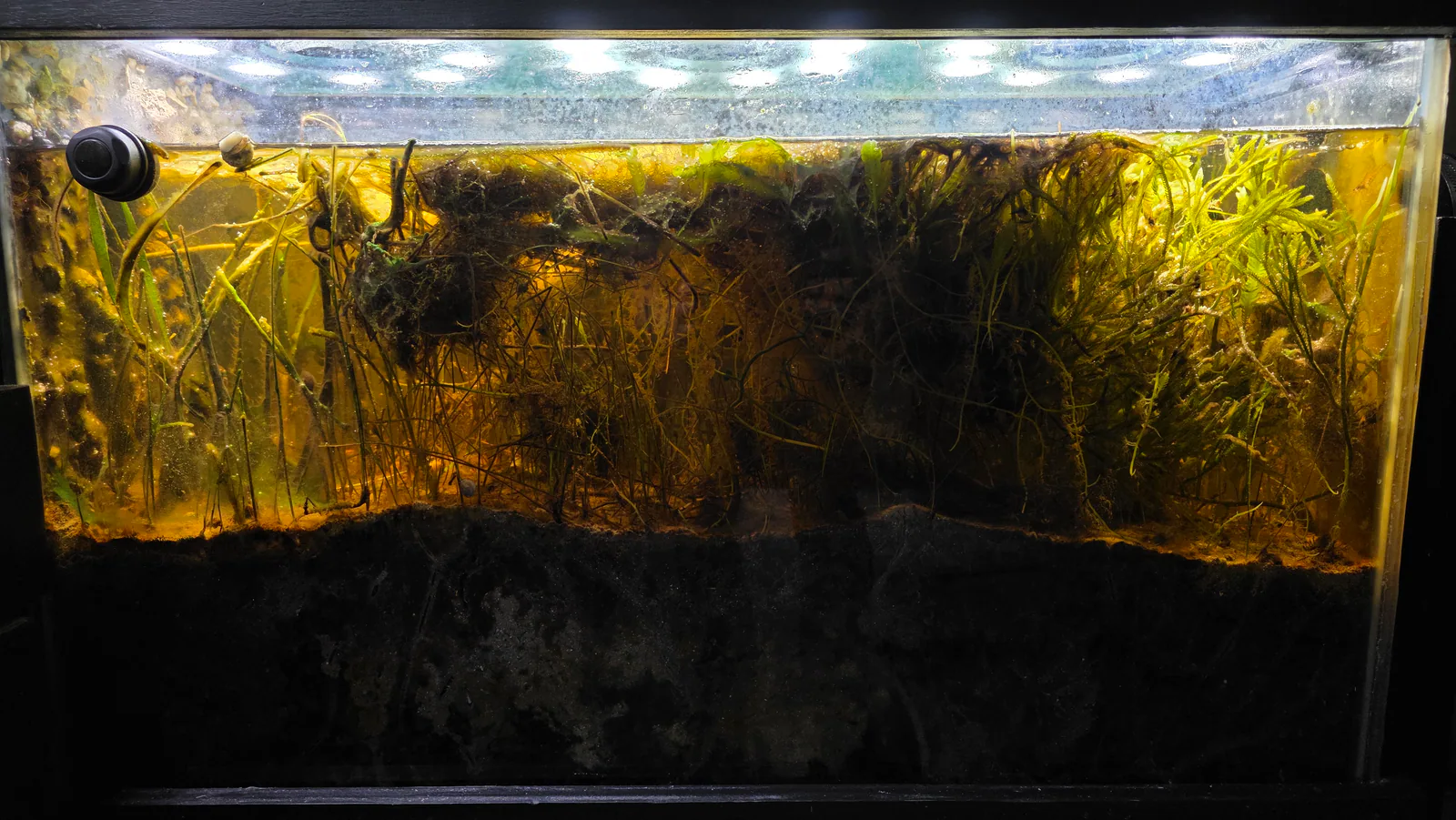
Collected from the Tampa Bay coast and introduced in a group of nine, this left-handed hermit crab scavenges algae and organic matter across the Marine Shore and Seagrass Meadow, carrying a borrowed gastropod shell as it forages.

Identity

  • Common name: Hairy Hermit Crab
  • Alternate names: hairy hermit, paguristes hermit, left-handed hermit crab
  • Scientific name: Paguristes karenae
  • Identification confidence: Confirmed. Identified by Josue from the June 12, 2026 Tampa Bay collection.
  • Uncertainty label: Confirmed. Species ID is solid; ecological role and establishment in miniBIOTA are unresolved.

Taxonomy

  • Kingdom: Animalia
  • Phylum: Arthropoda
  • Class: Malacostraca
  • Order: Decapoda
  • Family: Diogenidae
  • Genus: Paguristes
  • Species: P. karenae

Family note: Paguristes karenae belongs to family Diogenidae, the left-handed hermit crabs. In Diogenidae, the left cheliped (claw) is enlarged, the opposite of Paguridae (right-handed hermit crabs such as Pagurus and Calcinus species). This handedness difference affects how the crab blocks its shell entrance and may influence which shell openings it prefers. The other marine hermit crab species in miniBIOTA, McLaughlin's Hermit Crab and Long-claw Hermit Crab, belong to family Paguridae (right-handed). Orangeclaw Hermit Crab (Calcinus tibicen) also belongs to Diogenidae.

Natural History

Range and Florida Relevance

Paguristes karenae is native to shallow marine habitats in the western Atlantic and Caribbean, including the Gulf of Mexico and Florida's coastal waters. It is associated with hard and mixed substrate coastal environments, from intertidal and shallow subtidal zones through deeper shelf habitats. In Florida, Paguristes species are found in rocky, rubble, and shell-hash coastal environments as well as sandy nearshore habitats.

Habitat

Hairy Hermit Crabs inhabit shallow coastal marine environments, foraging across sandy substrate, shell hash, rubble, and associated seagrass beds. Like all hermit crabs, they require empty gastropod shells for shelter. The group introduced to miniBIOTA was collected from the Tampa Bay coast, consistent with their documented range and habitat.

Diet

Paguristes hermit crabs are omnivorous scavengers. They graze algae and biofilm from substrate and hard surfaces, process detritus, and scavenge dead animal matter. Feeding is opportunistic and broadly similar across hermit crab species in the same size range.

Shell Use

As Diogenidae, Hairy Hermit Crabs carry a gastropod shell on their right side with the left cheliped enlarged for blocking the shell entrance when threatened. Shell selection and size requirements overlap with other hermit crab species in the Marine Shore and Seagrass Meadow. The empty shells introduced alongside the crabs on June 12, 2026 were intended to support the expanded hermit crab population.

Reproduction

As with other Diogenidae, females brood eggs attached to the pleopods beneath the shell until hatching. Larvae pass through pelagic stages before settling and acquiring a first shell. No reproductive observations have been made in miniBIOTA.

Tolerance Ranges

Paguristes karenae requires full to near-full marine salinity, consistent with a shallow coastal marine lifestyle. No specific tolerance measurements have been taken for miniBIOTA conditions.

Ecological Role

Hairy Hermit Crabs function as marine scavengers and algae grazers, moving across the Marine Shore and Seagrass Meadow substrate and processing algae, detritus, and dead animal matter. As Diogenidae (left-handed), they contribute differently to shell dynamics than the right-handed Pagurus species: their preferred shell orientations and entrance sizes may differ, reducing direct shell competition with McLaughlin's and Long-claw Hermit Crabs, though this has not been confirmed in miniBIOTA.

Nine individuals substantially expand the marine scavenger and cleaner layer compared to the small and uncertain pre-existing hermit crab population.

miniBIOTA Evidence

Introduction

Nine Hairy Hermit Crabs were collected from the Tampa Bay coast and introduced to miniBIOTA's Marine Shore and Seagrass Meadow on June 12, 2026.

Observation Timeline

  • June 12, 2026: Nine individuals collected from Tampa Bay coast and introduced to Marine Shore and Seagrass Meadow. Species confirmed by Josue. First confirmed Paguristes karenae in miniBIOTA.
  • June 13, 2026: Several hermit crabs, including Hairy Hermit Crabs, observed partially or completely outside their shells the morning after introduction, a recognized sign of acute physiological stress. The owner interpreted the symptoms as low dissolved oxygen caused by the sudden large biomass increase from the June 12 introduction. No mortality was reported. Wave system programming was modified on June 13 in response.
  • June 25, 2026: Hairy Hermit Crabs are no longer observed in the system. Numerous empty shells were found clustered at the Mud Crab burrow entrance. Mud crab predation is strongly suspected. All nine Hairy Hermit Crabs introduced June 12, 2026, together with the Long-claw Hermit Crabs and McLaughlin's Hermit Crabs, are missing. No direct predation event was observed. Video documented. Observation record, June 25, 2026.
  • June 25, 2026 (later in the day): At least one Hairy Hermit Crab confirmed alive in the Seagrass Meadow, identified during the same day's observation session. The owner cites this survival as reinforcing the urgency of completing the mud crab removal before the last individual is lost. Mud crab removal campaign completed the same day: 5 individuals removed from the marine realm, including the large mud crab (transferred to external holding tank). The owner considers the primary predation threat substantially reduced. Additional Hairy Hermit Crabs planned for the July 3, 2026 beach collection. Observation record, June 25, 2026.
  • June 26, 2026: At least three Hairy Hermit Crabs confirmed alive in the Seagrass Meadow, the day after the mud crab removal campaign. The population is much smaller than the nine individuals introduced June 12, 2026, but the species has clearly persisted. Observation record, June 26, 2026.

What Is Confirmed

  • Nine individuals introduced June 12, 2026, identified as Paguristes karenae.
  • Introduced to Marine Shore and Seagrass Meadow.
  • Multiple hermit crabs (including Hairy Hermit Crabs) observed outside their shells June 13, 2026, interpreted as low-oxygen stress response; no mortality reported.

What Is Inferred

  • Ecological role as omnivorous scavengers and algae grazers consistent with Diogenidae family biology.
  • Left-handed chelipeds may reduce direct shell competition with right-handed Pagurus species in the same system.

What Remains Unknown

  • Whether Mud Crab predation is confirmed as the cause of the Hairy Hermit Crab disappearances on June 25, 2026 (strongly suspected; not directly observed).
  • Whether additional survivors beyond the three confirmed on June 26, 2026 remain sheltered and unobserved.
  • Whether reproduction is possible in this system.