Thalassia testudinum

Turtle Grass

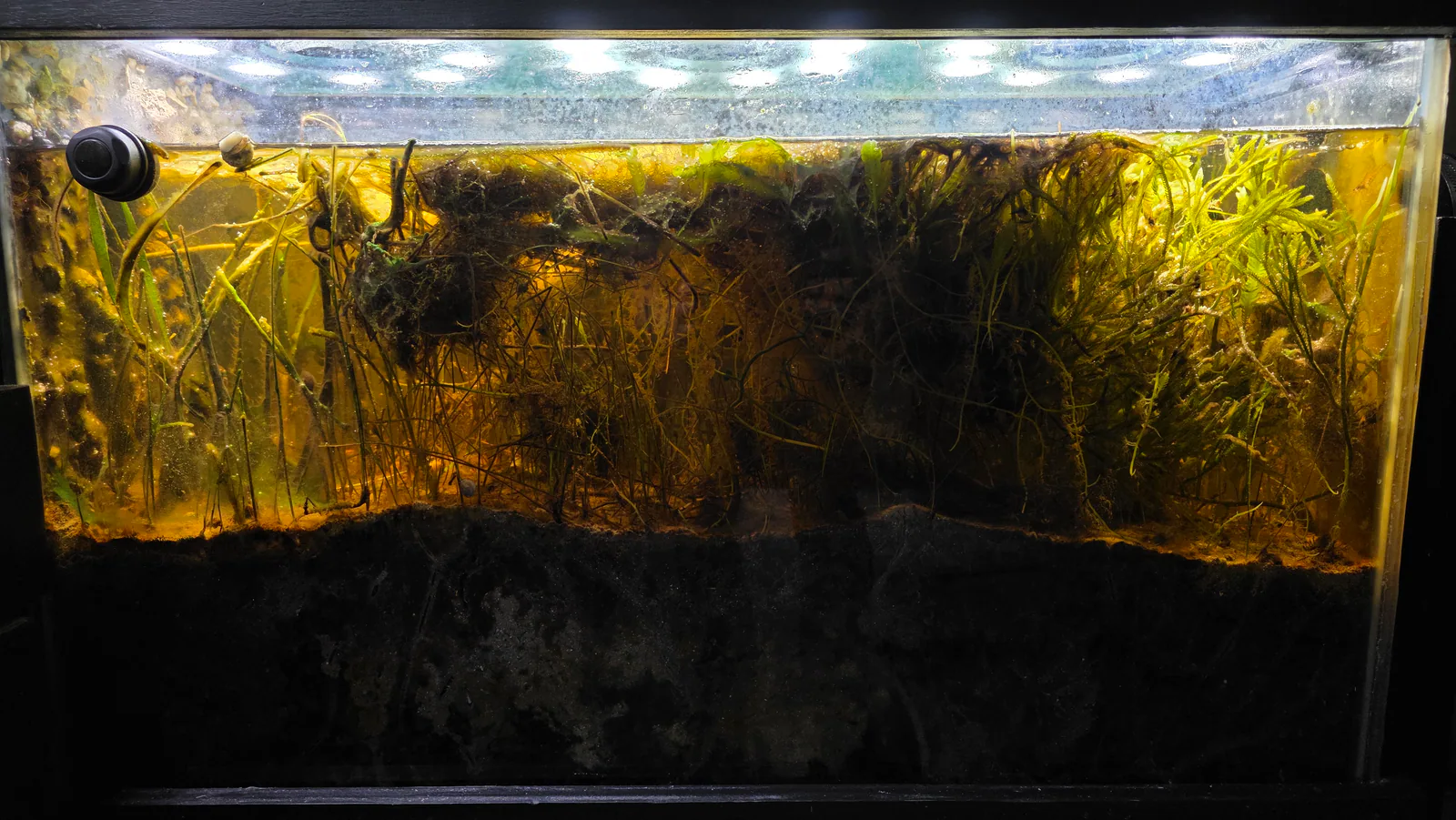
With flat, ribbon-like blades extending from dense buried rhizomes in the Seagrass Meadow, this iconic Florida and Caribbean seagrass contributes photosynthesis, epiphyte habitat, and the rhizome mat structure that stabilizes coastal seagrass bed substrate.

Visual Data Unavailable

Overview

Turtle Grass (Thalassia testudinum) is the dominant seagrass of Florida and the Caribbean, introduced to miniBIOTA's Seagrass Meadow on March 27, 2026 as part of a beach collection that also brought in manatee grass, green feather alga, megafern feather alga, and a small mud crab. It was added as a producer-diversity species and named specifically in the collection record. Species identity is Confirmed. Establishment and persistence since introduction are unresolved as of June 2026.

Identity

  • Common name: Turtle Grass
  • Alternate names: Caribbean turtle grass, sea turtle grass, thalassia, turtle seagrass, sea grass
  • Scientific name: Thalassia testudinum
  • Identification confidence: Confirmed; named as Thalassia testudinum in the March 27, 2026 beach collection record
  • Uncertainty label: Confirmed

Taxonomy

  • Kingdom: Plantae
  • Phylum: Tracheophyta
  • Class: Liliopsida
  • Order: Alismatales
  • Family: Hydrocharitaceae
  • Genus: Thalassia
  • Species: testudinum

Name note: Thalassia means "of the sea" (Greek); testudinum means "of the turtles" (Latin), reflecting the species' importance as a food source for Green Sea Turtles and West Indian Manatees. The common name turtle grass is one of the most consistently used in Florida and the Caribbean.

Natural History

Range and Florida Relevance

Thalassia testudinum is native to the tropical and subtropical coastal waters of the Gulf of Mexico, Caribbean Sea, and western Atlantic, from Florida south to Brazil. In Florida, it is by far the most abundant and ecologically dominant seagrass species, forming the foundational habitat of shallow coastal seagrass beds from the Florida Keys through Tampa Bay, Charlotte Harbor, and the Florida Gulf Coast. Florida Bay, the Florida Keys, and the Indian River Lagoon all support extensive T. testudinum meadows. Along with manatee grass and shoal grass, it forms the three-species seagrass community that defines Florida's coastal shallow water habitat.

Structure and Growth

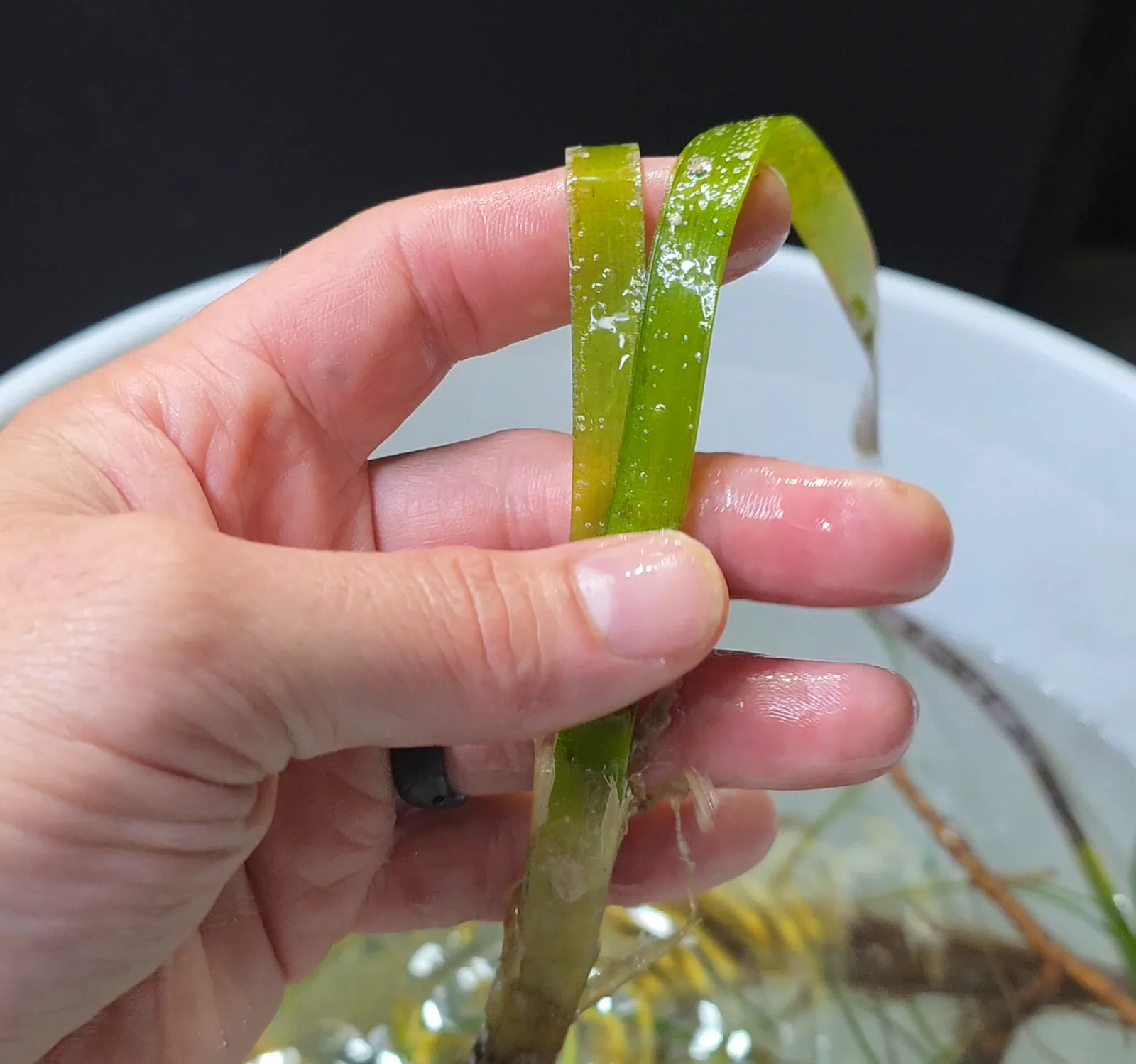
Turtle grass blades are flat and ribbon-like, 4 to 12 millimeters wide and 10 to 35 centimeters long, with parallel veins and a rounded tip. The blades emerge from vertical short shoots that in turn arise from horizontal rhizomes buried in the substrate. The rhizome system is dense, persistent, and forms a complex root-rhizome mat that binds the sediment together and stabilizes the seabed. This substrate-binding function is one of the most ecologically significant traits of turtle grass in natural seagrass beds.

The blades are thicker and more robust than those of most other Florida seagrasses, which contributes to their higher structural value and slower decomposition rate when shed.

Photosynthesis and Epiphytes

T. testudinum is a photosynthetic producer requiring adequate light penetration to the substrate. Its leaves support a high load of epiphytic algae, bacteria, and small invertebrates, making the leaf surface an important microhabitat and food source for small grazers in the seagrass community. Epiphytes are consumed by amphipods, isopods, shrimp, and small fish in natural meadows.

Reproduction

Turtle grass reproduces primarily through vegetative rhizome spread. New shoots emerge from the lateral rhizome as it extends through the substrate. The species also produces flowers and small seeds; pollination is submerged and hydrophilous. Seeds settle to the substrate and can establish new rhizome systems, though this pathway is slower than vegetative spread in established beds. In a closed aquarium, vegetative rhizome extension is the relevant growth mechanism. No reproductive activity has been observed in miniBIOTA.

Detritus

Shed turtle grass leaves enter the detrital food web and are colonized by bacteria and fungi before being consumed by detritivores. The thick blades decompose more slowly than those of most other seagrasses, contributing to a long-lasting detrital input to the system. In natural meadows, turtle grass leaf litter is a major source of organic carbon for the benthic food web.

Tolerance Ranges

T. testudinum is adapted to warm subtropical and tropical coastal conditions. It requires water temperatures consistently above approximately 15 degrees Celsius and grows best in the 20 to 30 degree Celsius range. It is highly sensitive to light reduction and does not tolerate chronic turbidity or shading, which limits its depth range relative to light availability. It prefers salinity from approximately 20 to 40 parts per thousand. It requires well-oxygenated substrate at rhizome depth and does not tolerate prolonged anoxic sediment conditions.

Ecological Role

Turtle Grass is a foundational photosynthetic seagrass producer that contributes primary production, structural habitat, substrate stabilization, and detrital inputs to the Seagrass Meadow. In natural Florida coastal habitats, its rhizome mats are among the most important structures in the coastal marine environment, supporting hundreds of associated species.

In natural settings, turtle grass is grazed directly by West Indian Manatees and Green Sea Turtles (both of which give the plant its common names and scientific name). Sea urchins, some fish, and waterfowl also graze turtle grass blades or epiphytes. In miniBIOTA, none of these large vertebrate grazers are present; grazing pressure on the grass blades, if they establish, would come from small invertebrate herbivores.

The rhizome-root mat structure stabilizes substrate and prevents erosion, an important function in the dynamic environment of a seagrass bed. Shed blades and rhizome fragments contribute organic matter to the benthic food web.

No predation, grazing, or symbiotic relationships involving this species have been documented in miniBIOTA.

miniBIOTA Evidence

Introduction

Turtle Grass was introduced to miniBIOTA on March 27, 2026 as part of a beach collection from a Florida coastal site. The collection also included manatee grass (Syringodium filiforme), green feather alga (Caulerpa taxifolia), megafern feather alga (Caulerpa ashmeadii), a small mud crab, and a possible unidentified amphipod. Turtle Grass is the primary species in the collection record; all material was introduced to the Seagrass Meadow on the same day and documented in video. Turtle Grass was added as part of a producer-diversity expansion.

Observation Timeline

  • March 27, 2026: Introduced to the Seagrass Meadow as the primary species of a Florida beach collection. Named in the collection record as turtle grass (Thalassia testudinum). Video documented of each addition introduced individually.
  • June 10, 2026: Last observed date on record. No dedicated observation file for this date; date reflects a live record check.

What Is Confirmed

  • Thalassia testudinum introduced to the Seagrass Meadow on March 27, 2026 via beach collection.
  • Turtle Grass was the primary routing species for the March 27, 2026 collection event.
  • Introduction was part of a planned producer-diversity expansion.
  • Species still listed as active in the species record as of June 10, 2026.

What Is Inferred

  • The addition was intended to bring the dominant Florida seagrass species into the system to complement manatee grass and establish a multi-species seagrass community.
  • Wild-collected beach material may have introduced associated epiphytes, invertebrates, or sediment organisms along with the grass.

What Remains Unknown

  • Whether the introduced material has established rhizome contact with the Seagrass Meadow substrate.
  • Whether the grass is growing, persisting, or declining as of mid-2026.
  • Whether it is competing with or complementing manatee grass or other producers.
  • Whether any grazers in the system are consuming it.