Family Panopeidae (species undetermined)

Mud Crab

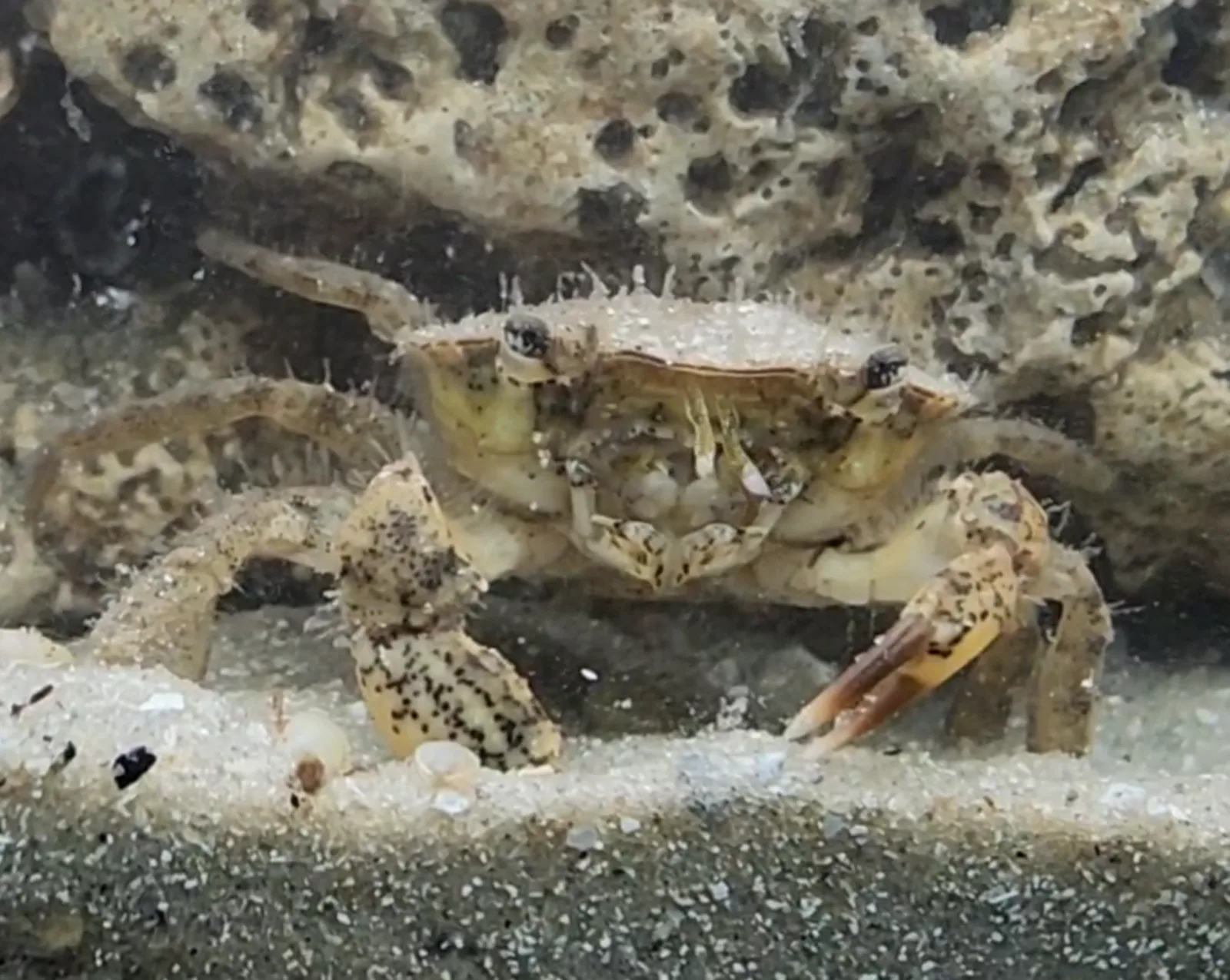
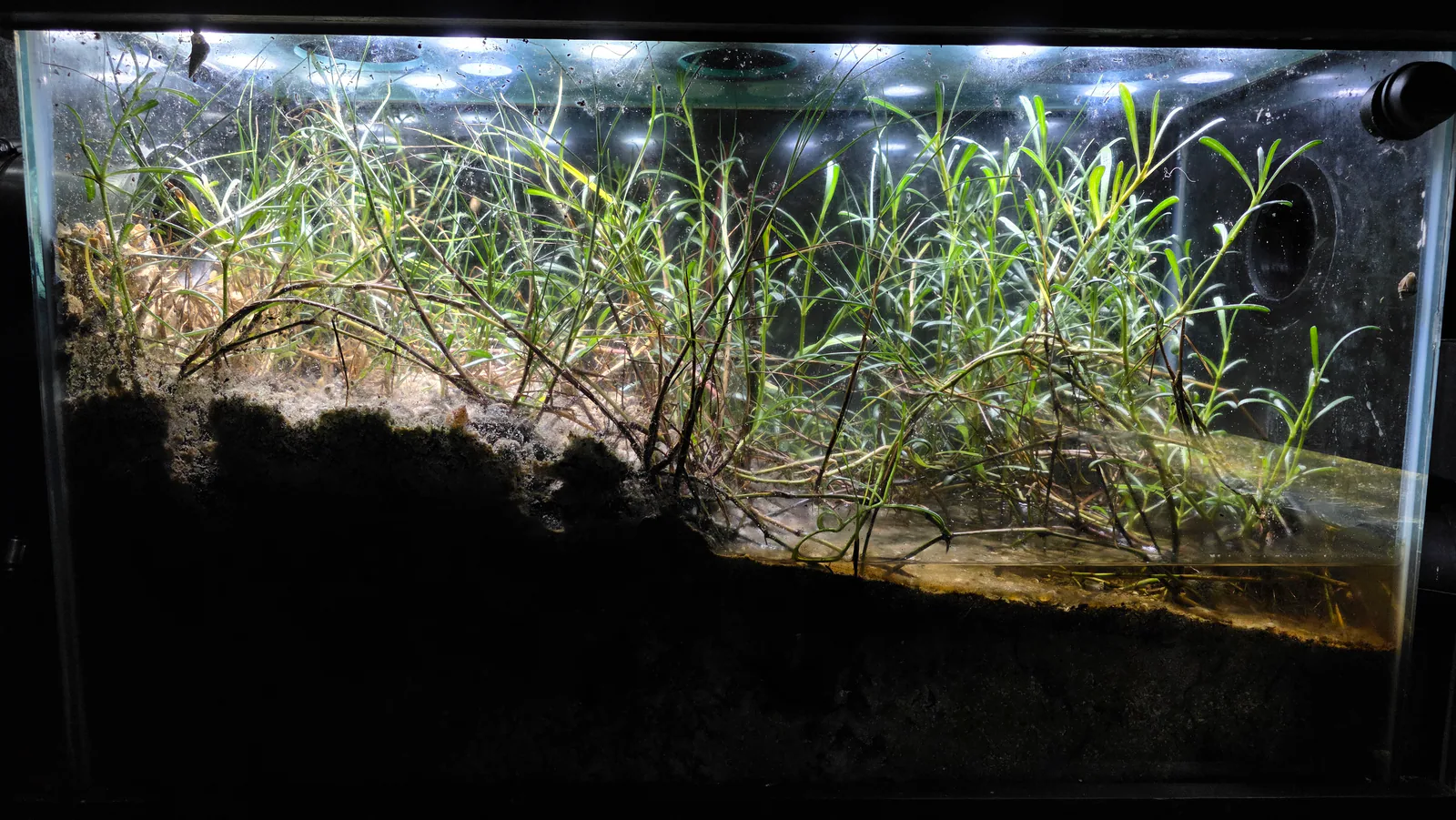
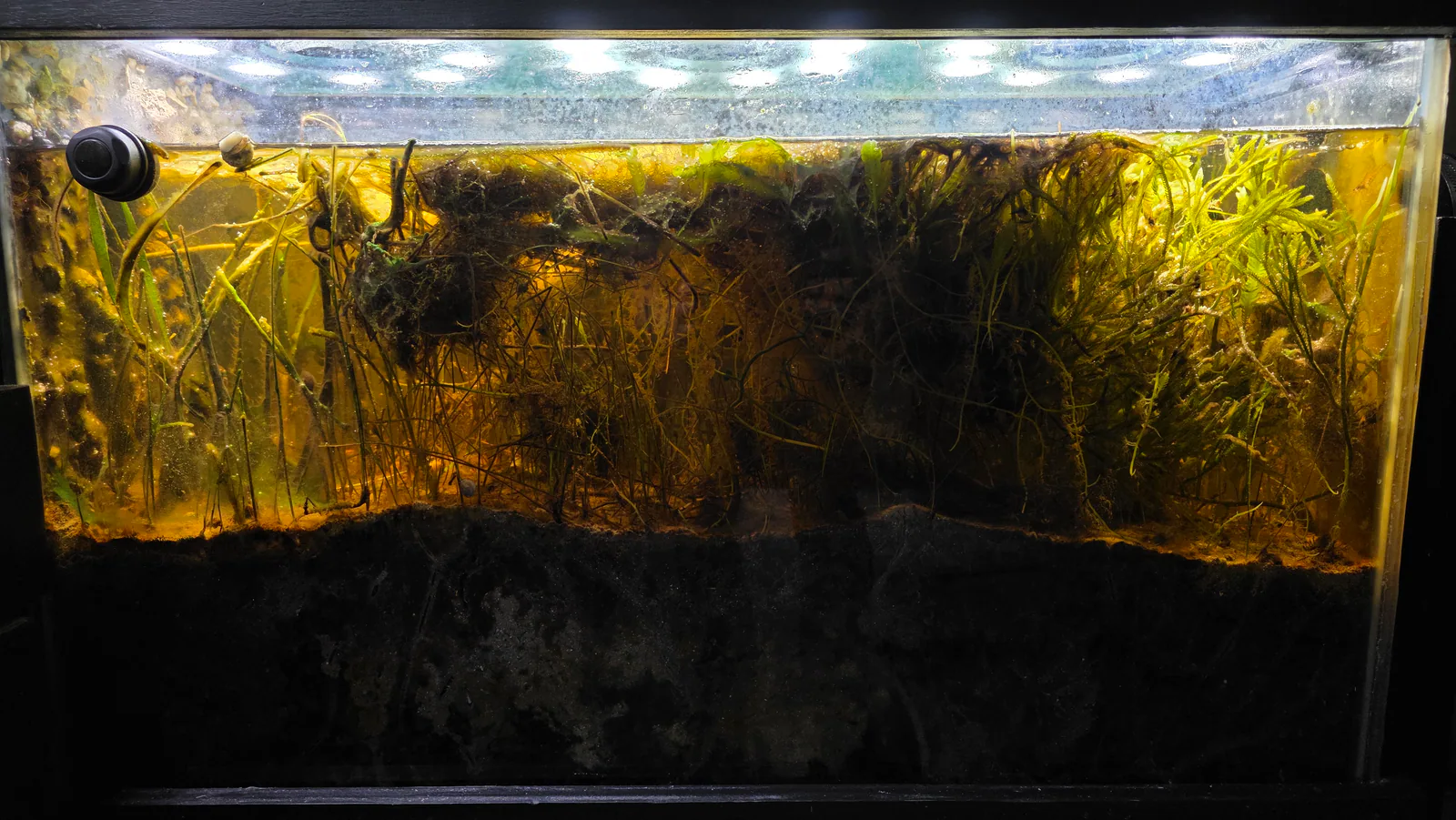
Found burrowing through substrate in the Seagrass Meadow and Marine Shore, these small coastal crabs forage opportunistically on detritus, algae, and small animals while their digging visibly reshapes the seafloor across the saltwater realm.

Overview

Found burrowing through substrate in the Seagrass Meadow and Marine Shore, these small coastal crabs forage opportunistically on detritus, algae, and small animals while their digging visibly reshapes the seafloor more extensively than any previous organism in the saltwater realm. Introduced June 4, 2026; species-level identity within the family Panopeidae remains unresolved and multiple species may be present.

Identity

  • Common name: Mud Crab
  • Alternate names: Stone crab, marsh crab, panopeid crab, xanthid crab, panopeidae
  • Scientific name: Family Panopeidae (species undetermined)
  • Identification confidence: Family confirmed; species unresolved. Multiple panopeid species may be represented in this group.

Taxonomy

  • Kingdom: Animalia
  • Phylum: Arthropoda
  • Class: Malacostraca
  • Order: Decapoda
  • Family: Panopeidae
  • Genus: Undetermined
  • Species: Undetermined

Natural History

Range and Florida Relevance

The family Panopeidae includes numerous small to medium crab species distributed throughout Florida's coastal and estuarine environments. Common Florida genera include Panopeus, Eurypanopeus, and Dyspanopeus, with species such as the Atlantic mud crab (Panopeus herbstii), the flatback mud crab (Eurypanopeus depressus), and Say's mud crab (Dyspanopeus sayi), and the Harris Mud Crab (Rithropanopeus harrisii) all present in seagrass beds, oyster reefs, and soft-bottom marine habitats across the state. Until species-level identification is resolved, natural history notes apply at the family level and should not be attributed to any single species.

Habitat

Panopeid crabs are typically found in shallow coastal and estuarine habitats: seagrass beds, oyster reefs, under rocks, in crevices, and buried in soft substrate. They are cryptic and often partially buried during the day. Burrowing and digging are characteristic behaviors across the family. In miniBIOTA, individuals have been observed actively excavating substrate across both the Seagrass Meadow and the Marine Shore, with visible disturbance extending across both biomes.

Diet

Panopeids are opportunistic omnivores. Depending on the species, diet can include small mollusks (crushed with strong claws), small crustaceans, algae, detritus, biofilm, carrion, and organic scraps. Their foraging style combines active predation on small invertebrates with scavenging and surface grazing. In miniBIOTA, dietary inputs have not been directly observed and are inferred from family-level natural history.

Reproduction

Females brood eggs under the abdomen until larvae hatch as zoea. Larvae pass through several planktonic stages before settling as juvenile crabs. Reproduction in miniBIOTA has not been observed. Given the small size of the founding group and the unresolved species composition, reproduction should not be assumed without direct observation.

Tolerance Ranges

Tolerance ranges vary across the panopeid genera present in Florida. Most are well-suited to the temperature and salinity ranges typical of Florida estuaries and shallow coastal systems. Specific tolerance data for miniBIOTA conditions has not been measured.

Ecological Role

Panopeids are important members of shallow-water benthic communities as both predators of small invertebrates and processors of detritus and organic material. Their digging and burrowing directly alter sediment structure, aerating substrate and redistributing organic matter. This physical disturbance can affect the distribution and survival of other benthic organisms, including burrowing invertebrates, algae mats, and sediment-dwelling fauna.

In miniBIOTA, the most immediately visible ecological effect is substrate disturbance. Within six days of introduction, mud crabs were documented reshaping the seafloor across both the Seagrass Meadow and the Marine Shore more extensively than any previously observed organism in these biomes. Whether this disturbance improves conditions (sediment aeration, reduced algae mat formation, disruption of cyanobacteria) or destabilizes them (displacement of established invertebrates, substrate erosion) remains an open question requiring follow-up observation.

The proposed role in disrupting cyanobacteria growth in the Seagrass Meadow is a working hypothesis based on the timing and scale of their digging. It has not been confirmed.

miniBIOTA Evidence

Introduction

Several mud crabs were collected and introduced to the Seagrass Meadow on June 4, 2026. Josue noted at introduction that multiple mud crab species may be present in the group. Exact count not recorded.

Observation Timeline

  • June 4, 2026: Several mud crabs introduced to the Seagrass Meadow. Exact number and species composition unresolved. Intended roles included testing digging, sediment turnover, and possible effects on cyanobacteria and substrate organisms.
  • June 10, 2026: Mud crabs documented actively excavating substrate across Seagrass Meadow and Marine Shore. Freshly disturbed areas visible in video. Disturbance more extensive than any previously observed organism in these biomes.
  • June 25, 2026: Numerous empty hermit crab shells found clustered at the mud crab burrow entrance. Approximately 13 hermit crabs, comprising 9 Hairy Hermit Crabs and 4 Long-claw Hermit Crabs, are no longer observed in the system. McLaughlin's Hermit Crabs appear still present; the owner proposes that their smaller body size protected them from being extracted from their shells by the mud crab. Predation on the larger two species is strongly suspected. The owner is considering mud crab removal in response. Video documented. Observation record, June 25, 2026.
  • June 25, 2026 (same day, continued): Decision made to remove all mud crabs from the marine realm, citing prior destructive history with the species, a cracked-open clam shell found in the system, strong evidence of predation on the June 12 hermit crab cohort, and the proposed connection to the male Atlantic Sand Fiddler Crab's detached claw documented June 20, 2026. The owner notes that Hairy Hermit Crabs have been observed actively turning over sand while foraging and are proposed as the replacement sediment-disturbance agent. A Hairy Hermit Crab restocking run is planned for July 3, 2026. At least one Hairy Hermit Crab confirmed alive in the Seagrass Meadow. Observation record, June 25, 2026.
  • June 25, 2026: Large mud crab removed from the Seagrass Meadow and transferred to an external holding tank outside miniBIOTA. Identified as the primary predation threat. Smaller individuals remain. Observation record, June 25, 2026.
  • June 25, 2026: Second mud crab removed from the marine realm, approximately penny-sized. Total removed: 2. Observation record, June 25, 2026.
  • June 25, 2026: Third mud crab removed, medium-sized; believed to be the second largest remaining individual. All larger mud crabs now removed. Only very small individuals believed to remain. Total removed: 3. Observation record, June 25, 2026.
  • June 25, 2026: Two additional mud crabs removed, both approximately pinky-fingernail sized. Total mud crabs removed from the marine realm: 5 (1 large, 1 penny-sized, 1 medium, 2 pinky-fingernail). The owner considers the primary predation threat effectively neutralized; a few very small individuals may still remain. Observation records, June 25, 2026.

What Is Confirmed

  • Introduction of several individuals to the Seagrass Meadow on June 4, 2026.
  • Active substrate excavation across Seagrass Meadow and Marine Shore observed June 10, 2026.
  • Physical sediment disturbance more extensive than previously observed for other organisms in these biomes.
  • Empty hermit crab shells clustered at the mud crab burrow entrance on June 25, 2026; approximately 13 hermit crabs across two species (9 Hairy, 4 Long-claw) no longer observed.
  • A cracked-open clam shell found in the system; attributed to mud crab predation by the owner.
  • Five mud crabs removed from the marine realm on June 25, 2026: one large (from Seagrass Meadow, transferred to external holding tank), one penny-sized, one medium-sized, and two pinky-fingernail sized. All larger individuals removed; very small individuals may remain.
  • At least one Hairy Hermit Crab confirmed alive in the Seagrass Meadow as of June 25, 2026.

What Is Inferred

  • Digging behavior is likely redistributing organic material and aerating sediment to some degree.
  • Multiple panopeid species may be present in the founding group.
  • The mud crab is the most likely cause of the disappearance of approximately 13 hermit crabs across two species (Hairy and Long-claw) and the accumulation of empty shells at the burrow entrance (June 25, 2026). Predation is strongly suspected but not directly observed.
  • Size-selectivity is inferred: McLaughlin's Hermit Crabs (smaller) appear to have survived while the larger Hairy and Long-claw Hermit Crabs did not. The mud crab may be unable to extract small hermit crabs from their shells.

What Remains Unknown

  • Exact species composition of the group.
  • How many very small mud crab individuals remain in the marine realm after the June 25 removal campaign.
  • Whether the remaining very small individuals will be locatable and removable before they grow into a renewed predation risk.
  • Whether any Hairy or Long-claw Hermit Crab individuals escaped or sheltered beyond the one confirmed surviving Hairy Hermit Crab.
  • Whether substrate disturbance by Hairy Hermit Crab foraging behavior can substitute for the sediment-disturbance role the mud crabs provided.
  • Whether size-selectivity continues to protect McLaughlin's Hermit Crabs from the remaining small mud crabs as those individuals grow.
  • Whether reproduction of remaining mud crabs is occurring or will occur in current conditions.