Oligochaeta sp. (unidentified)

Earthworm

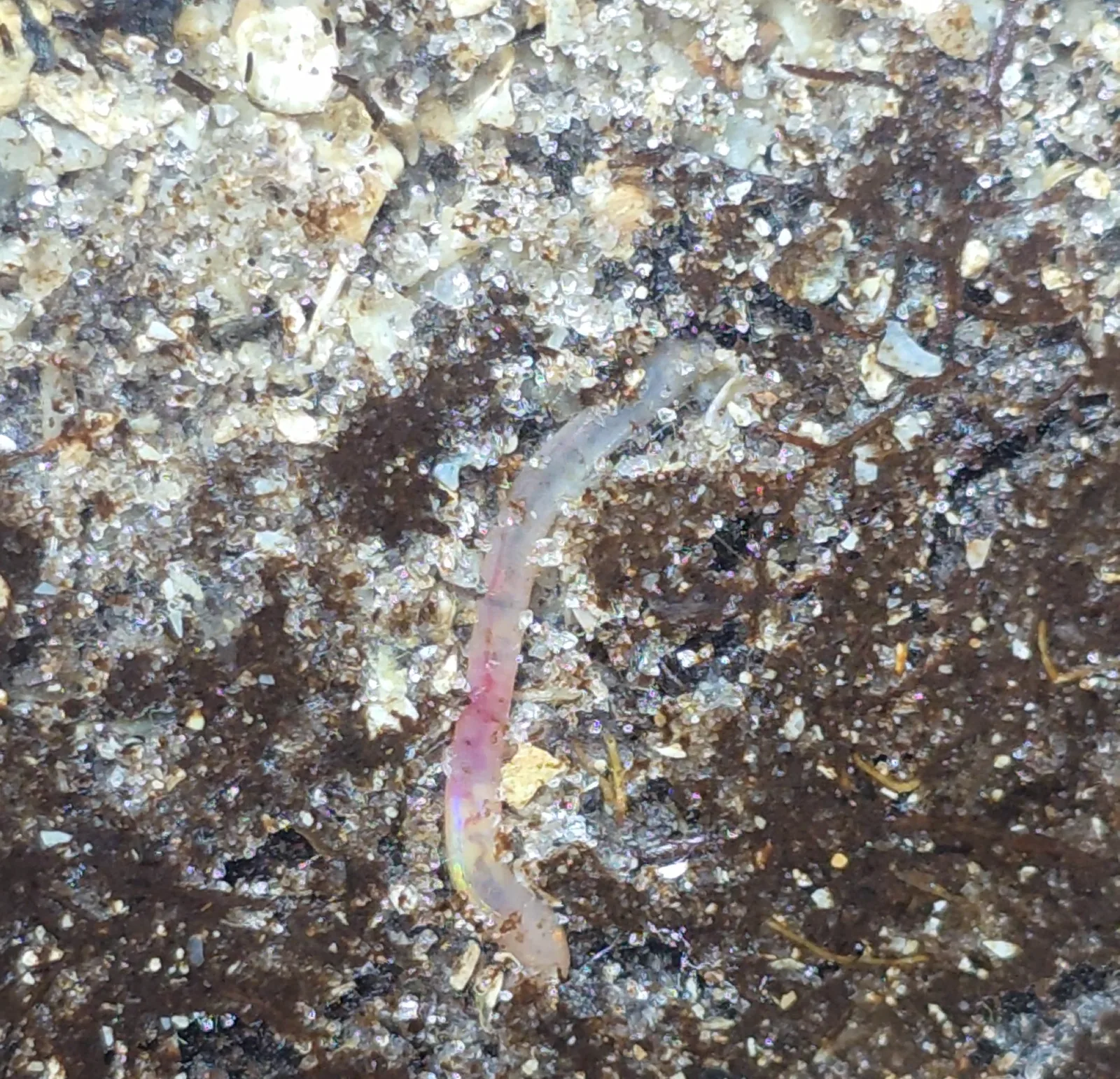
A translucent terrestrial worm discovered moving across the Mangrove Forest substrate in February 2026; unexpected in that biome given its shell-heavy ground layer, and smaller than a large common earthworm; genus is unidentified.

Visual Data Unavailable

Overview

A translucent terrestrial worm discovered moving across the Mangrove Forest substrate in February 2026; unexpected in that biome given its shell-heavy ground layer, and smaller than a large common earthworm; genus is unidentified.

Identity

  • Common name: Earthworm
  • Alternate names: nightcrawler, common earthworm, soil worm, garden worm, fishing worm, dew worm
  • Scientific name: Oligochaeta sp. (unidentified)
  • Identification confidence: Subclass-level only; confirmed as a terrestrial oligochaete from behavior and habitat; genus and species unidentified
  • Uncertainty label: Observed

Taxonomy

  • Kingdom: Animalia
  • Phylum: Annelida
  • Class: Clitellata
  • Subclass: Oligochaeta
  • Order: (unidentified)
  • Family: (unidentified)
  • Genus: (unidentified)
  • Species: (unidentified)

Natural History

Oligochaeta is a subclass of annelid worms in the class Clitellata. It encompasses both aquatic oligochaetes (such as Tubificidae) and terrestrial earthworms. The most familiar terrestrial earthworms in Florida belong to several families: Lumbricidae (European earthworms, widely introduced), Megascolecidae (native and introduced tropical and subtropical earthworms, common in South Florida), and Enchytraeidae (potworms, small and pale or translucent, living in the upper organic soil layer). Multiple earthworm species from both native and introduced lineages occur in South Florida soils.

Terrestrial earthworms are soil engineers. They swallow soil and organic matter as they move, digest the organic component, and excrete nutrient-rich castings. This process aerates the soil, redistributes organic matter vertically, and greatly accelerates decomposition. Dense earthworm populations can process enormous quantities of leaf litter and dead plant matter into castings that enrich the soil available to plants and soil microbes.

The February 2026 Mangrove Forest observation describes the individual as "translucent" and "approximately earthworm-sized, smaller than large common earthworm." The Mangrove Forest biome has shell-heavy substrate and comparatively low surface detritus, which the observation notes as unexpected context for an earthworm sighting. Lumbricidae earthworms are typically pinkish or brownish; a translucent appearance may suggest a different family. Megascolecidae species can vary widely in color; some are pale or pale-pinkish. Enchytraeidae (potworms) are characteristically translucent-white and much smaller, typically under 3 centimeters; the observation suggests the animal was larger. Without morphological examination, the most that can be confirmed is terrestrial oligochaete at subclass level.

Ecological Role

Earthworms are primary detritivores and soil engineers. They physically ingest soil and organic matter, digest the decomposable fraction, and produce castings rich in nitrogen, phosphorus, and beneficial microbes. Their burrowing creates channels for water infiltration and root penetration, improving soil structure. In enclosed systems with significant organic matter accumulation, earthworms can be important in converting leaf litter and plant debris to plant-available nutrients.

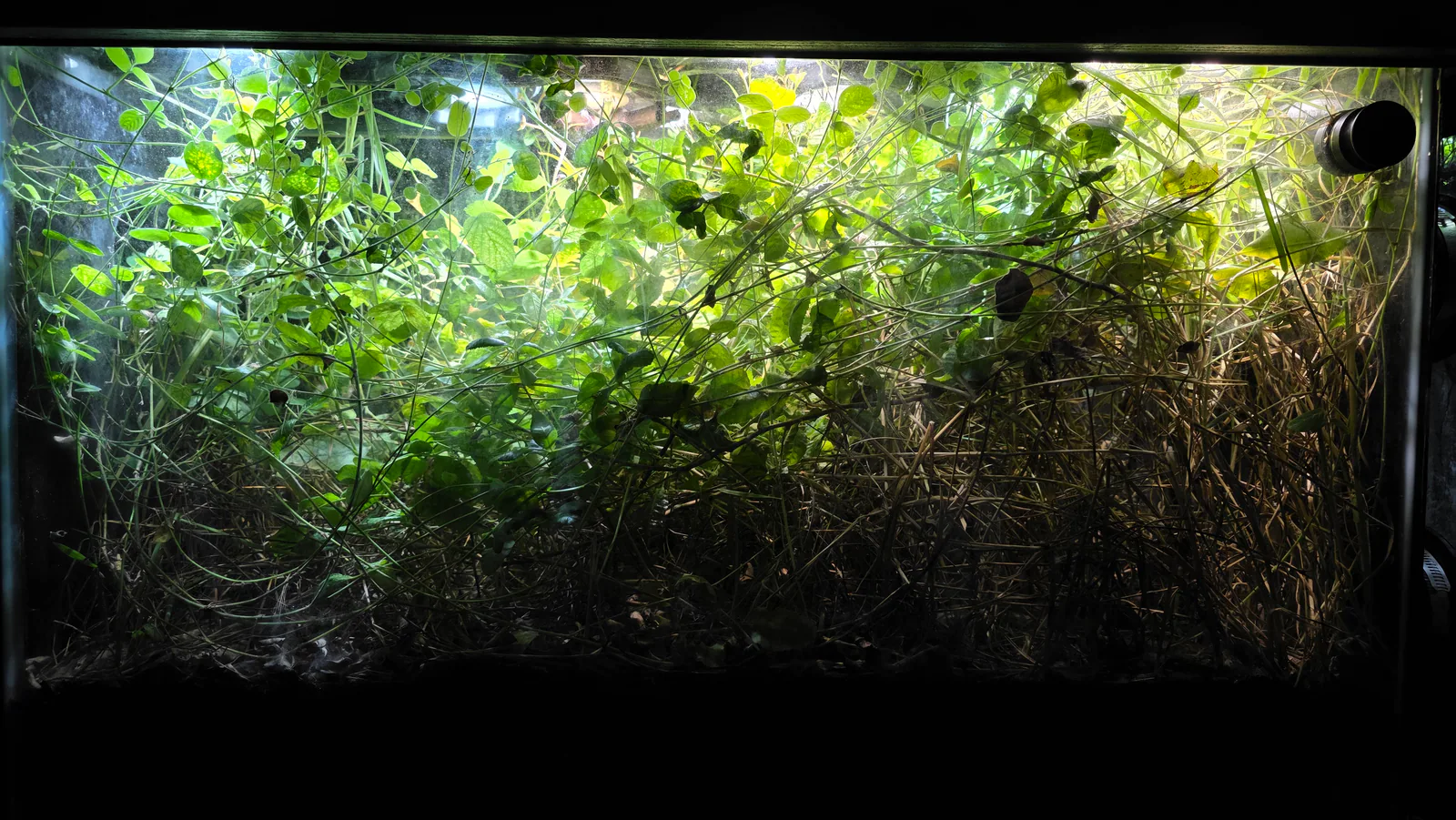
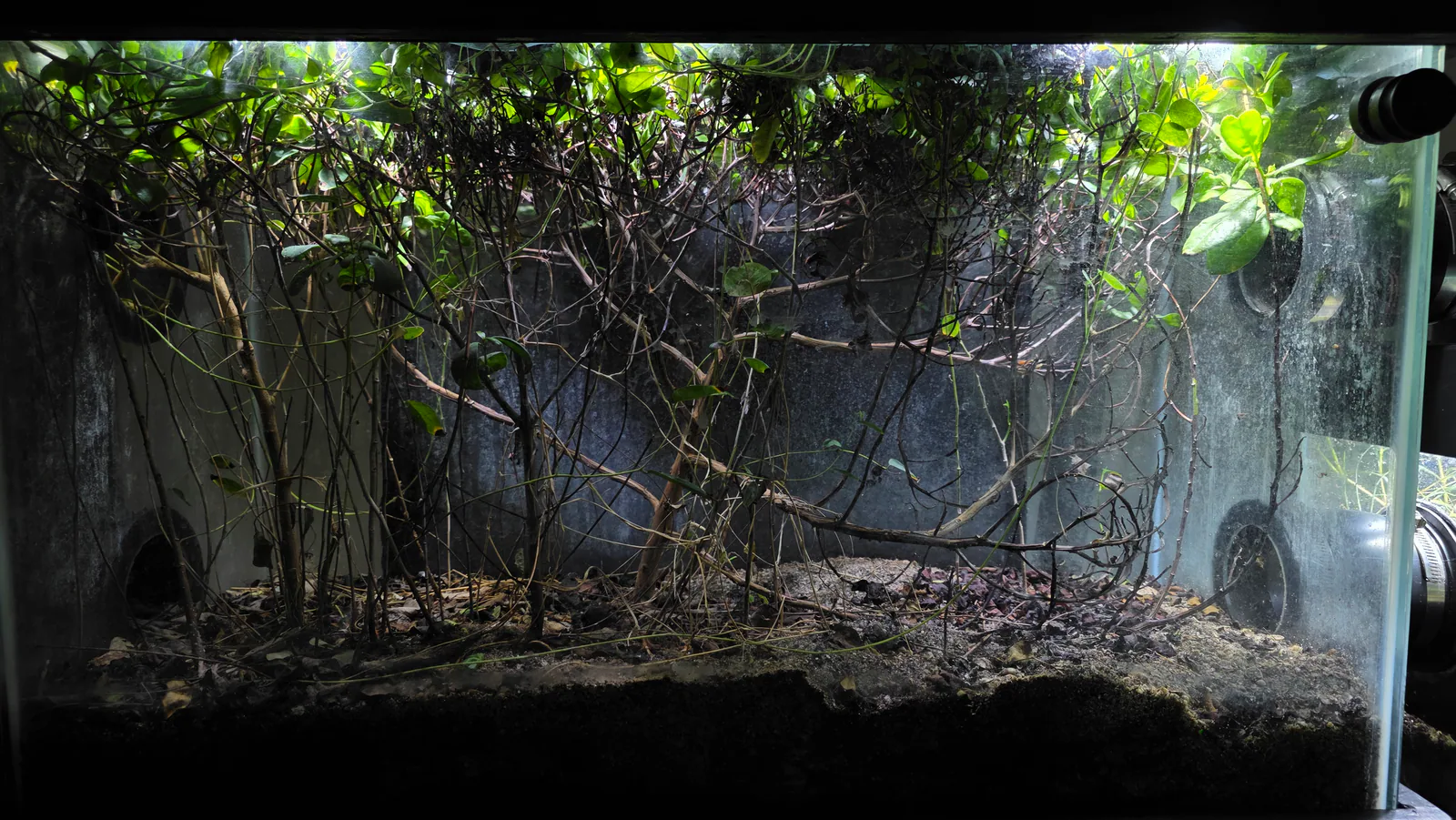
In miniBIOTA, the Earthworm is documented by a single observation in the Mangrove Forest (February 16, 2026). The Mangrove Forest biome assignment it to the Lowland Meadow, which is ecologically appropriate as the expected primary habitat in the terrestrial biomes, but the only archived observation is from the Mangrove Forest. The observation notes the worm's presence as unexpected in that biome. Whether the individual was a stray from the Lowland Meadow population or represents a distinct Mangrove Forest population is unknown.

miniBIOTA Evidence

Introduction: Not recorded. No introduction date or source is documented. The population was already present when the observation was made in February 2026.

Observation timeline:

  • February 16, 2026: Translucent terrestrial worm documented moving across the Mangrove Forest substrate; described as approximately earthworm-sized and smaller than a large common earthworm; noted as unexpected in that biome given its shell-heavy substrate and low visible detritus; video evidence (~15 seconds).

Confirmed:

  • At least one terrestrial oligochaete present in the Mangrove Forest biome as of February 16, 2026
  • Video evidence documents the individual moving across the Mangrove Forest substrate
  • Translucent coloration and approximate size noted; genus and species unidentified

Inferred:

  • A population likely also exists in the Lowland Meadow biome (the biome_to_species assignment) based on typical terrestrial oligochaete ecology, even though no Lowland Meadow observation is archived
  • The Mangrove Forest individual was either resident there or had moved from the Lowland Meadow through the adjacent biome

Unknown:

  • Genus and species identity; translucent coloration suggests it may not be a standard Lumbricidae earthworm
  • Introduction date and source
  • Whether a population is established in both the Lowland Meadow and Mangrove Forest, or primarily in one biome
  • Current population size in either biome
  • Whether reproduction has been confirmed in miniBIOTA