Oligochaeta sp. (unidentified)

Aquatic Earthworm

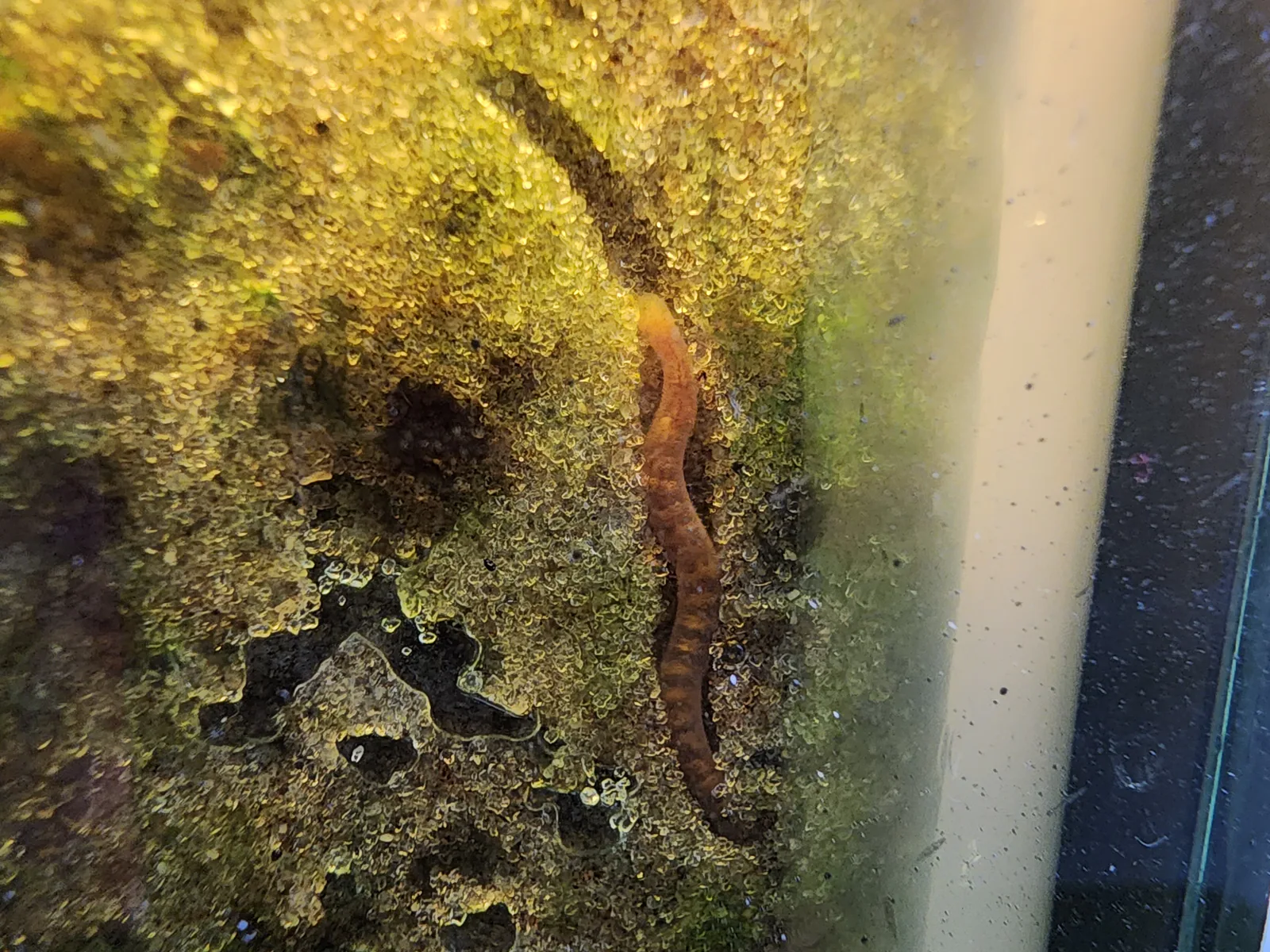
A slender aquatic worm in the Freshwater Lake sediment, observed in September 2023 extending its full length along the glass wall at approximately 11 centimeters long and 1 millimeter wide, notably longer than typical tubifex worms found in aquarium systems.

Visual Data Unavailable

Overview

A slender aquatic worm living in the Freshwater Lake sediment, observed in September 2023 extending its full length along the glass wall at approximately 11 centimeters long and 1 millimeter wide, notably longer than the typical tubifex worms commonly found in aquarium systems. It is a freshwater oligochaete distinct from the terrestrial Earthworm found in the Mangrove Forest; genus and species are unidentified. No observation has been recorded since September 2023.

Identity

  • Common name: Aquatic Earthworm
  • Alternate names: tubifex worm, aquatic worm, mud worm, oligochaete, sludge worm
  • Scientific name: Oligochaeta sp. (unidentified)
  • Identification confidence: Subclass-level (Oligochaeta); genus and species unidentified
  • Uncertainty label: Observed

Taxonomy

  • Kingdom: Animalia
  • Phylum: Annelida
  • Class: Clitellata
  • Subclass: Oligochaeta
  • Order: Unidentified
  • Family: Unidentified
  • Genus: Unidentified

Natural History

Aquatic oligochaetes are segmented worms in the subclass Oligochaeta that have adapted to freshwater sediment habitats. They are distributed globally across lentic (still) and lotic (flowing) freshwater systems, living in and on the sediment layer where they process detritus, bacteria, fungal hyphae, and fine organic particles. Many species are cryptic, spending most of their time within the sediment and becoming visible only when they extend to the glass wall or disturb the substrate.

Common aquatic oligochaetes in freshwater aquarium systems include tubificids (Tubifex, Limnodrilus) and lumbriculids (Lumbriculus and relatives). Tubificids are generally 1 to 5 centimeters long, slender, and often reddish from hemoglobin; they are among the most pollution-tolerant freshwater invertebrates and thrive in low-oxygen, organic-rich sediment. Lumbriculids tend to be longer and are common in well-oxygenated substrates. The 11-centimeter length of miniBIOTA's specimen is consistent with a larger lumbriculid or an atypically large tubificid, but genus-level identification from the observation is not possible.

Aquatic oligochaetes commonly enter closed aquarium systems as hitchhikers on substrate, gravel, or plant material. They reproduce through cocoon-laying (sexual reproduction) and some species also reproduce asexually through fragmentation and regeneration.

Ecological Role

In the Freshwater Lake, the Aquatic Earthworm occupies the benthic sediment layer, processing fine organic detritus, bacteria, and decaying plant material. Sediment-dwelling worms in this functional role accelerate nutrient cycling by fragmenting organic particles, increasing the surface area available for microbial decomposition, and releasing bound nutrients back into the water column through bioturbation of the substrate.

The Aquatic Earthworm is the only dedicated benthic sediment detritivore in the Freshwater Lake with an observation record predating the April 2026 food-web reset. Its role as a sediment processor complements the surface-grazing snail community (Seminole Ramshorn, Bladder Snail, Freshwater Limpet) and the water-column filter feeders and microcrustaceans.

Slough Crayfish is the dominant macroinvertebrate in the Freshwater Lake and is a probable predator of sediment worms; no direct predation event on the Aquatic Earthworm has been recorded.

miniBIOTA Evidence

Introduction context: No deliberate introduction event is recorded. Aquatic oligochaetes commonly hitchhike into aquarium systems on substrate, gravel, or plant material. The most probable introduction route is one of the early Freshwater Lake substrate or plant introductions, consistent with the species being established by September 2023.

Observation timeline:

  • September 11, 2023: Aquatic worm observed extending its full length along the side of the glass in the Freshwater Lake for the first time. Measured approximately 1 millimeter thick and 11 centimeters long. The note records the length as "much longer than expected." Direct observation; no video or photo record.

Confirmed:

  • One aquatic oligochaete observed in the Freshwater Lake on September 11, 2023, with physical measurements recorded
  • Subclass-level identification (Oligochaeta) consistent with the described morphology and behavior

Inferred:

  • Arrived as a hitchhiker on substrate or plant material
  • Benthic sediment-processing role consistent with oligochaete biology; no direct feeding observation on record

Unknown:

  • Whether the species is still present; no observation since September 2023
  • Genus and species identity within Oligochaeta
  • Whether population reproduction has occurred
  • Whether Slough Crayfish has predated any individuals