Procambarus fallax

Slough Crayfish

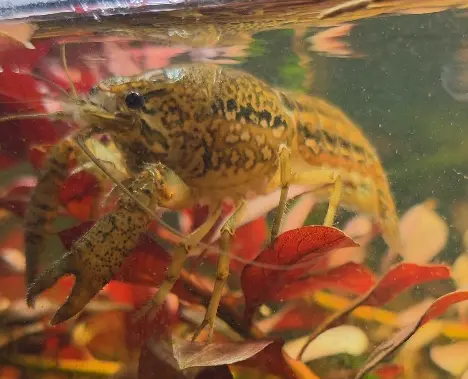
An established Freshwater Lake omnivore with at least one newly seen juvenile in September 2026, this crayfish digs through sediment, scrapes cyanobacteria from glass surfaces, and feeds on plant roots and aging leaf tissue along the lake floor. Josue identifies the juvenile as his sixth tracked generation; its parentage is unknown.

Realm
Freshwater
Population
Established
Primary biome
Freshwater Lake

Overview

The Slough Crayfish (Procambarus fallax) is an omnivorous freshwater crayfish introduced to the miniBIOTA Freshwater Lake on April 17, 2023 and now one of the most established and documented animals in the system. Juveniles have been observed repeatedly in Freshwater Lake and Lakeshore root structures across multiple hatching waves. A March 2026 hatchling event was counted as the fifth generation in Josue's running tally; he identified a baby seen in the Freshwater Lake on September 26 as the sixth. His count began with the first consistently maintained population and advanced to the next label when babies appeared. The number and dates of distinct batches still need reconstruction from historical photos and videos. The juvenile's parentage is unknown. Observations across 2026 have documented cyanobacteria grazing, plant-root consumption, sediment digging, animal scavenging, and mating behavior. Population status is Established; the estimated population remains approximately 20, with no new census from the juvenile sighting or September 29 clarification.

Identity

  • Common name: Slough Crayfish
  • Alternate names: marbled crayfish, marmorkrebs, florida crayfish, crawfish, crawdad, crayfish, mudbug, mud bug, slough crawfish
  • Scientific name: Procambarus fallax
  • Identification confidence: Confirmed
  • Uncertainty label: Established

Taxonomy

  • Kingdom: Animalia
  • Phylum: Arthropoda
  • Class: Malacostraca
  • Order: Decapoda
  • Family: Cambaridae
  • Genus: Procambarus
  • Species: fallax

Natural History

Range and Florida Relevance

Procambarus fallax is native to Florida and adjacent coastal-plain habitats in Georgia, occurring in slow-moving or stagnant freshwater across swamps, marshes, ponds, drainage canals, and sluggish streams. The common name "slough" refers to this characteristic still-water habitat. The species is native to the same subtropical environment that miniBIOTA's freshwater zone models, making it an ecologically appropriate resident of the Freshwater Lake and Lakeshore. Florida populations span a wide range of lowland freshwater habitats from the panhandle south through the peninsula.

Habitat

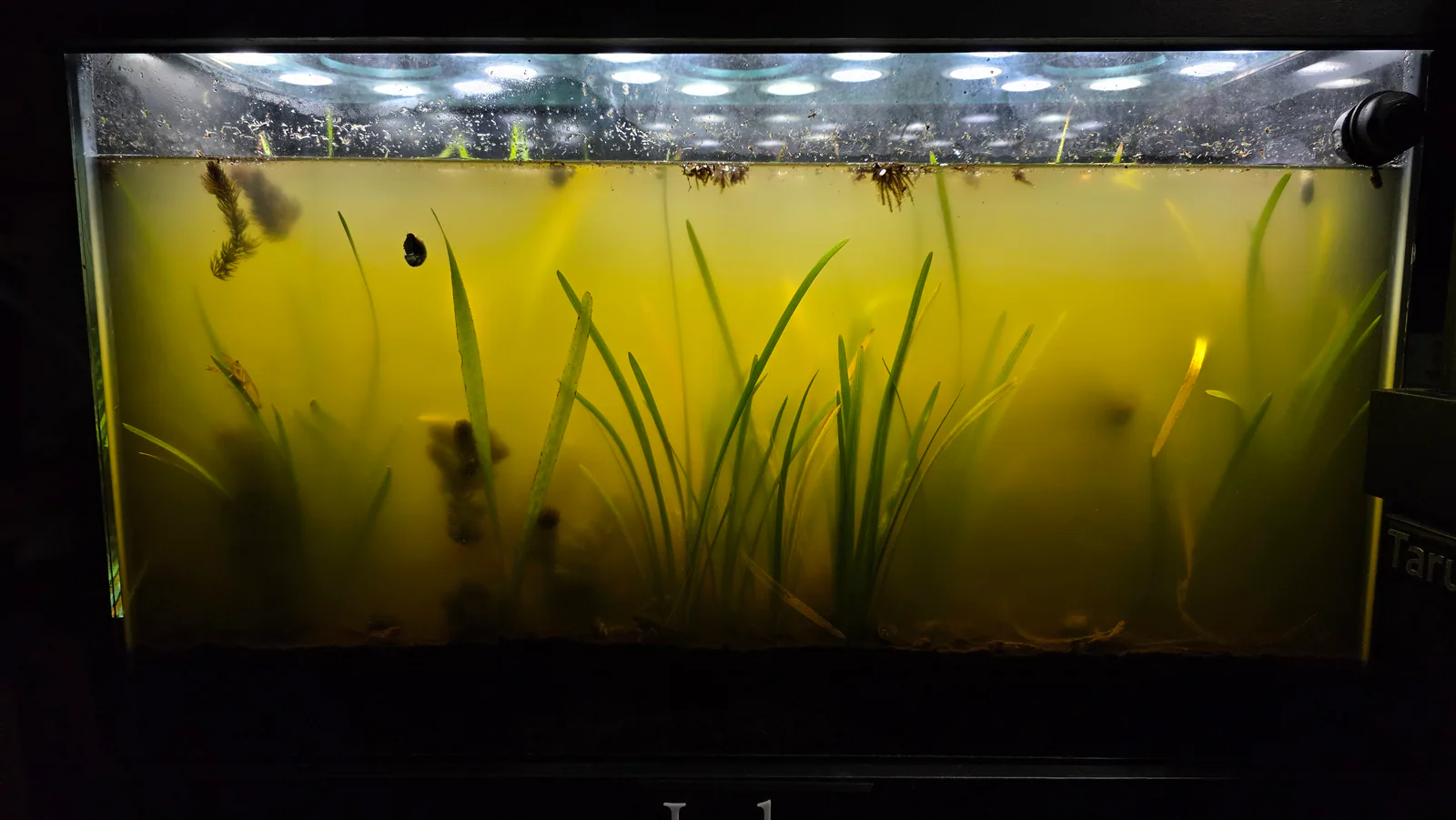
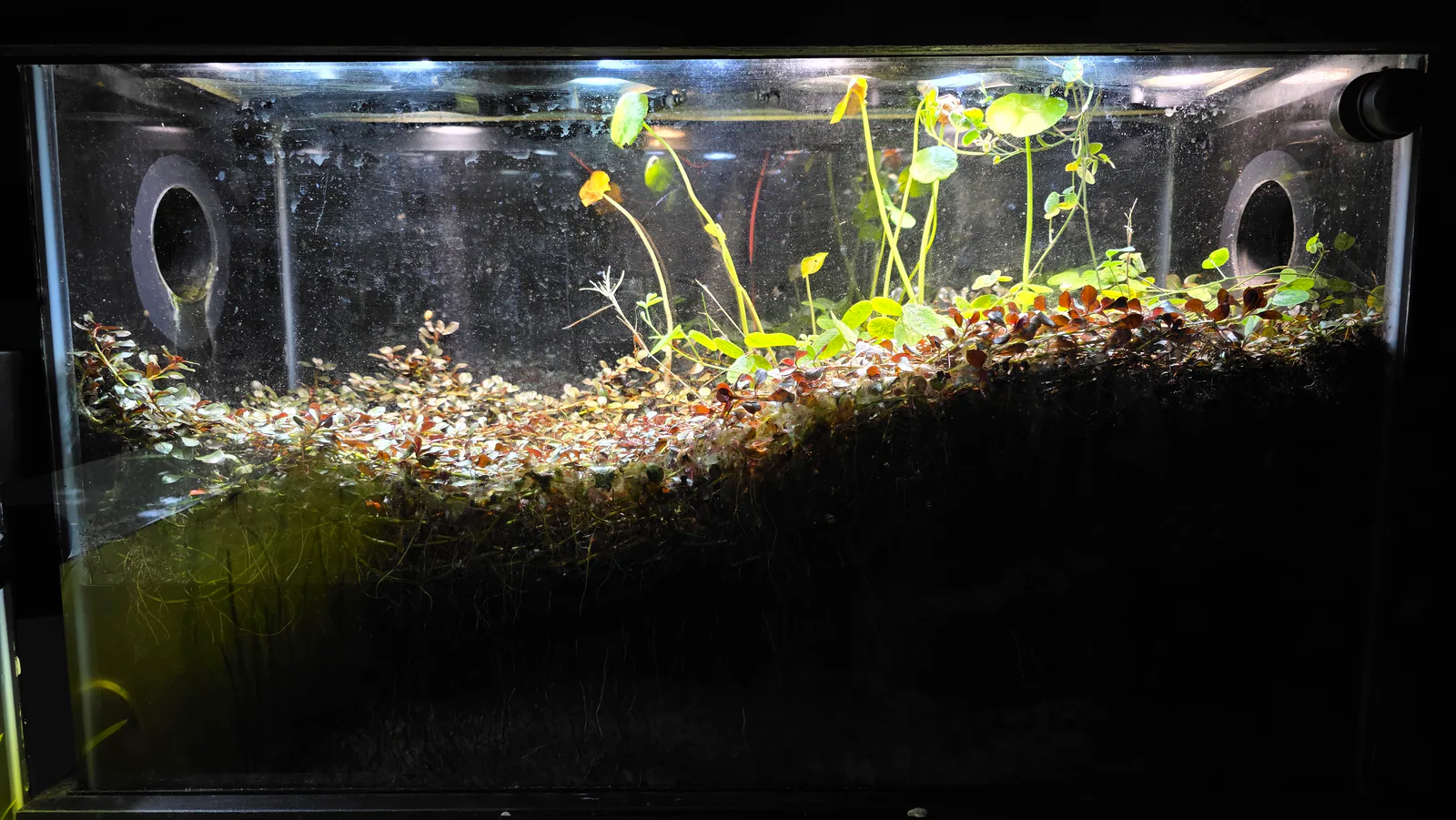
In the wild, Procambarus fallax occupies shallow vegetated areas with soft sediment, root tangles, and accumulated organic debris. It shelters under plants, in root mats, and in burrows dug into muddy substrate. In miniBIOTA, crayfish have been observed using the full range of Freshwater Lake and Lakeshore microhabitats: open substrate along the glass, the base of submerged plants, root structures along the shoreline, and the sediment-water interface. Juveniles concentrate in dense shoreline root systems.

Diet

Procambarus fallax is a generalist omnivore that feeds on algae, aquatic plant tissue, roots, detritus, and animal material including invertebrates and carrion. In miniBIOTA, observed dietary inputs span cyanobacteria grazed directly from glass and sediment surfaces, older tapegrass leaves, aquatic plant roots accessed by digging beneath the substrate, and the leg of a Florida woods cockroach pulled from a grazing individual at the water surface. On July 1, 2026, crayfish were observed climbing to the water surface to feed on newly introduced duckweed and other floating plants from below, and concentrating heavily on hornwort and the filamentous algae growing intertwined with it. On August 7, 2026, a crayfish was directly observed preying on and consuming a live Bladder Snail, the first fully documented predation sequence on live prey: after failing to gain access through the shell opening, the crayfish breached the shell at its narrow terminal tip and extracted the snail.

Reproduction

Procambarus fallax reproduces sexually: males and females mate, and females carry fertilized eggs attached beneath the tail. Eggs hatch into miniature crayfish that initially remain attached to the female before dispersing. In warm conditions, multiple generations per year are possible. In miniBIOTA, mating behavior was documented on video in February 2026. The March 2026 hatchlings were counted as the fifth generation in Josue's running tally, with another hatch wave observed in April. At least one baby crayfish was seen in the Freshwater Lake on September 26, 2026; Josue calls this his sixth tracked generation. His tally began with the original persistent population and moved to the next generation label when he saw new babies; the number and dates of distinct batches and parentage have not yet been reconstructed from historical photos and videos. Newly hatched crayfish have also been observed sheltering in Lakeshore root structures.

Tolerance Ranges

Procambarus fallax is broadly tolerant of the warm, low-oxygen, and variable-pH conditions typical of Florida freshwater habitats. It can survive periodic hypoxia by retreating into burrows. In miniBIOTA no formal tolerance measurements have been taken, but the species has persisted and reproduced continuously since April 2023 through varying conditions.

Ecological Role

The Slough Crayfish occupies multiple functional roles simultaneously in the miniBIOTA Freshwater Lake and Lakeshore. As a grazer and scavenger it converts algae, plant tissue, detritus, and animal matter into crayfish biomass, connecting lower food-web producers and decomposers to any predator capable of taking a crayfish. As a burrower and sediment disturber it prevents compaction at the sediment-water interface, keeps nutrients mobile, and exposes subsurface organic material for consumption. Cyanobacteria grazing from glass surfaces and sediment edges has been documented repeatedly across early 2026.

A particularly notable behavior is root-feeding: in April 2026, crayfish were observed digging beneath aquatic plants and consuming their roots, causing the above-ground tissue to die. Dead leaves then entered the detrital food web and became available to ramshorn snails and other detritivores. This pathway gives crayfish an indirect role in reshaping which plants persist in the lake and at what pace living plant biomass transitions into decomposing organic matter.

Individual behavioral specialization has also been documented: one crayfish was observed repeatedly returning to a specific stretch of the front glass to dig and consume cyanobacteria while other individuals did not, suggesting that consistent individuals may carry disproportionate functional weight within localized areas of the lake floor.

On July 1, 2026, crayfish demonstrated the ability to exploit new floating plant material within one day of introduction, climbing to the surface and hanging beneath floating vegetation to feed from below while concentrating heavily on hornwort and filamentous algae. This rapid response reinforces crayfish grazing as a primary factor shaping whether fast-growing or floating aquatic plants can persist in the Freshwater Lake.

On August 7, 2026, a crayfish was directly observed as a predator of live prey for the first time: it fully overcame a Bladder Snail's shell defenses through a multi-stage sequence (probing the shell opening, repositioning the shell, and ultimately breaching the shell's narrow terminal tip) before extracting and consuming the snail. This confirms Slough Crayfish as a predator capable of taking live, defended invertebrate prey in miniBIOTA, not only detritus, plant material, and carrion.

No confirmed predators of Slough Crayfish have been documented in miniBIOTA. No symbiotic relationships have been documented.

miniBIOTA Evidence

Introduction Context

One or more Slough Crayfish were introduced to the miniBIOTA Freshwater Lake on April 17, 2023. The introduction is recorded in the species record; observation notes from 2023 and 2024 are not documented in observation records. By January 2026, the population had grown to approximately two dozen individuals spanning multiple generations and was described as approaching stable carrying capacity, with juvenile competition noted as the primary population regulation mechanism.

Observation Timeline

  • April 17, 2023: Introduction to the Freshwater Lake. Recorded in miniBIOTA; pre-2026 observation notes are not documented.
  • January 23, 2026: A crayfish in the Freshwater Lake was observed eating a Florida woods cockroach leg, apparently pulled from a cockroach grazing on willow plants at the water surface. Video documented.
  • January 26, 2026: Population estimated at approximately two dozen individuals spanning multiple generations; population described as appearing to have reached stable carrying capacity. Note referenced transgenerational phenotypic plasticity as influencing population regulation. Video documented.
  • January 27, 2026: Crayfish attempting to dig beneath newly introduced tapegrass roots; not fully successful due to planting depth. Video documented.
  • January 28, 2026: Crayfish digging deeply into lake sediment near the glass and foraging on cyanobacteria; behavior described as stirring and redistributing detritus and keeping nutrients mobile at the sediment-water interface. Video documented.
  • February 6, 2026: Mating behavior documented on video: male positioned over female, who was partially pressed into the detritus layer; interaction described as sustained and stable. Video documented.
  • February 7, 2026: A crayfish dug a pit in the substrate using both claws, settled into it, then scraped and consumed cyanobacteria from the adjacent glass. Video documented.
  • February 11, 2026: A single crayfish repeatedly dug along the front glass of the lake biome and consumed cyanobacteria growing there; described as a persistent, localized behavior distinct from other individuals in the group. Video documented.
  • March 11, 2026: Large number of newly hatched baby crayfish observed in Lakeshore root structures; counted by Josue as the fifth generation in his running tally. Video documented.
  • April 16, 2026: A new group of very small crayfish distributed throughout the Freshwater Lake, indicating another wave of recent hatchlings.
  • April 17, 2026: Aquatic plants in the lake were observed being consumed from the root structure upward; crayfish were digging beneath the substrate to reach roots, causing leaves to die and become available to ramshorn snails and other detritivores as detritus.
  • May 24, 2026: One crayfish actively consuming significant portions of older tapegrass sections; observer noted this was the first visible tapegrass grazing in weeks to possibly months, focused on older plant material rather than new growth. Video documented.
  • July 1, 2026: One day after the introduction of four floating plant species, hornwort, and filamentous algae to the Freshwater Lake, crayfish were observed climbing to the water surface and hanging beneath floating vegetation to feed on duckweed and other floating plants from below, while concentrating heavily on hornwort and the filamentous algae intertwined with it. The observer predicts the newly introduced plants may again be eliminated before establishing. Video documented.
  • August 7, 2026: A crayfish was directly observed fully consuming a Bladder Snail in the Freshwater Lake, the first closely observed full predation sequence on live prey. The crayfish's initial attempts through the shell opening had little effect; it repeatedly repositioned the shell while probing for other access points, then breached the shell at its narrow terminal tip and extracted the snail through that rear opening. Observation record, August 7, 2026.
  • August 22, 2026: A small female, approximately 3 cm in length, observed carrying approximately 10 eggs beneath her abdomen in the Freshwater Lake. A later juvenile might have been counted as the next generation, but no link to this female was established. Several larger crayfish examined the same day showed no eggs; this individual was the only confirmed berried female in that observation. Her notably small size relative to other adults present raises an unconfirmed hypothesis that reproductive body size may be decreasing across generations. Observation record, August 22, 2026.
  • September 1, 2026: Fifteen Slough Crayfish counted visible at the same time in the freshwater realm, the highest simultaneous count in recent observation records and a new minimum confirmed population. Limited visibility through the lake water column and dense Lakeshore cover mean the true population is almost certainly higher; fifteen is a floor from a single observation period, not a census, and is broadly consistent with the standing estimate of roughly twenty. Observation record, September 1, 2026.
  • September 21, 2026: A check for hatchlings from the small berried female observed August 22, 2026: no hatchlings observed yet; outcome remains unconfirmed/unknown; further observation planned. Observation record, September 21, 2026.
  • September 26, 2026: Josue saw at least one baby crayfish in the Freshwater Lake after previously observing egg-bearing crayfish, and identifies this as the sixth generation he has tracked. He expects more young but reported seeing one. He also reports video of crayfish hunting for organisms he called Daphnia and amphipods. The file was not supplied for review; prey identity, capture, consumption, and the juvenile's parentage remain unconfirmed. Observation records, September 26, 2026.
  • September 29, 2026: Josue explained that his count began with the first consistently maintained population and advanced to the next generation label whenever a new batch of babies appeared, reaching six. The exact number and dates of distinct batches and parentage have not yet been reconstructed from historical photos and videos. This clarification adds no new hatchling or census. Observation record, September 29, 2026.

What Is Confirmed

  • Introduced to the Freshwater Lake on April 17, 2023.
  • Population Established, spanning multiple generations; approximately two dozen individuals by January 2026.
  • Hatchlings were directly observed March 11, 2026 and counted by Josue as his fifth generation; another hatch wave was observed in April.
  • At least one baby crayfish seen in the Freshwater Lake September 26, 2026, following prior observations of egg-bearing crayfish; Josue identifies this as his sixth tracked generation.
  • Mating behavior documented on video, February 6, 2026.
  • Feeding documented on cyanobacteria (glass and sediment surfaces), older tapegrass leaves, aquatic plant roots, and animal material (cockroach leg).
  • Sediment disturbance and burrowing documented across multiple video observations.
  • Individual behavioral specialization: one crayfish showed consistent glass-edge digging and cyanobacteria grazing while others did not.
  • Crayfish observed feeding on newly introduced duckweed and other floating plants from below, and concentrating heavily on hornwort and filamentous algae, July 1, 2026.
  • Direct predation on a live Bladder Snail confirmed August 7, 2026, via a shell-tip breach mechanism, the first fully documented predation sequence on live, defended prey.
  • A small (approximately 3 cm) female observed carrying approximately 10 eggs in the Freshwater Lake, August 22, 2026, the only confirmed berried individual at the time of observation.
  • Fifteen individuals counted visible simultaneously in the freshwater realm, September 1, 2026, a new minimum confirmed population.

What Is Inferred

  • Root-feeding behavior may influence which aquatic plants persist in the Freshwater Lake by converting living plant biomass into detritus available to the broader food web.
  • Digging activity likely keeps nutrients and organic material mobile at the sediment-water interface, potentially benefiting decomposer communities.
  • Renewed tapegrass grazing in May 2026 may indicate that older plant tissue re-enters the crayfish food pathway as it ages, but this pattern is not confirmed from one observation.
  • The current population estimate of approximately 20 individuals is approximate; exact count has not been recently verified.
  • The small size of the August 22, 2026 berried female relative to other adults present in the same lake may indicate a trend toward smaller reproductive body size across generations, but a single individual cannot establish this.
  • Additional baby crayfish may be present beyond the one seen September 26, 2026, but no further count was reported.
  • The six-generation tally is Josue's label sequence from the initial persistent population onward; its distinct baby-batch count and date-by-date evidence sequence have not yet been assembled.

What Remains Unknown

  • Current exact population count after the September 26, 2026 juvenile sighting.
  • Whether root-feeding has permanently affected the composition of aquatic plants in the Freshwater Lake.
  • Whether any predators in miniBIOTA can or will take adult Slough Crayfish.
  • Whether individual behavioral specialization persists across molts and how many individuals carry key functional behaviors.
  • Whether the population will grow beyond the approximate January 2026 ceiling or remain regulated by juvenile competition.
  • Which female produced the baby seen September 26, 2026, and whether it came from eggs observed on August 22.
  • The starting cohort, exact number and dates of distinct baby batches, and supporting photos or videos behind Josue's six-generation labels.
  • Whether the reported hunting video shows actual prey capture or consumption, and whether the organisms called Daphnia can be identified more precisely.