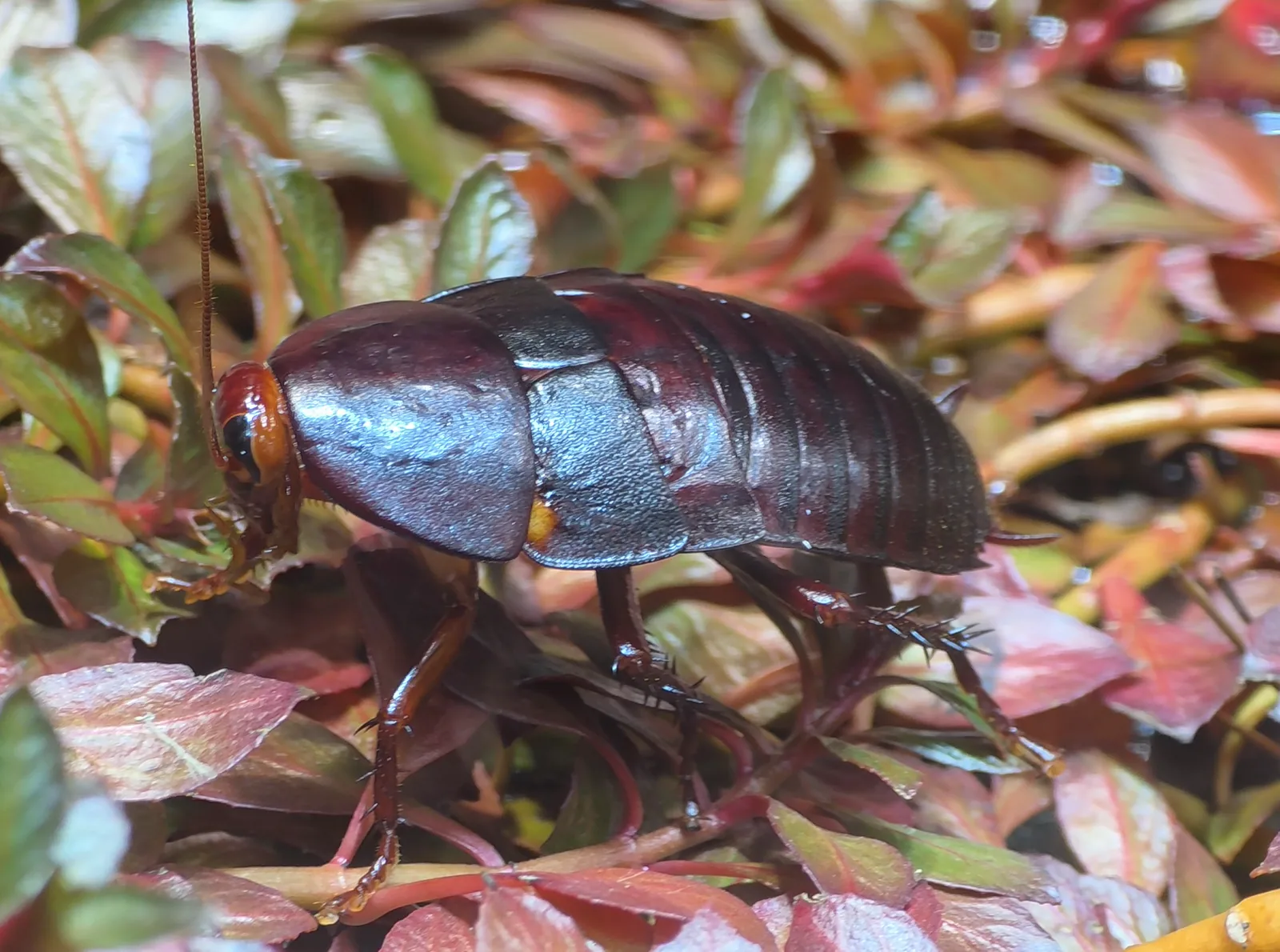
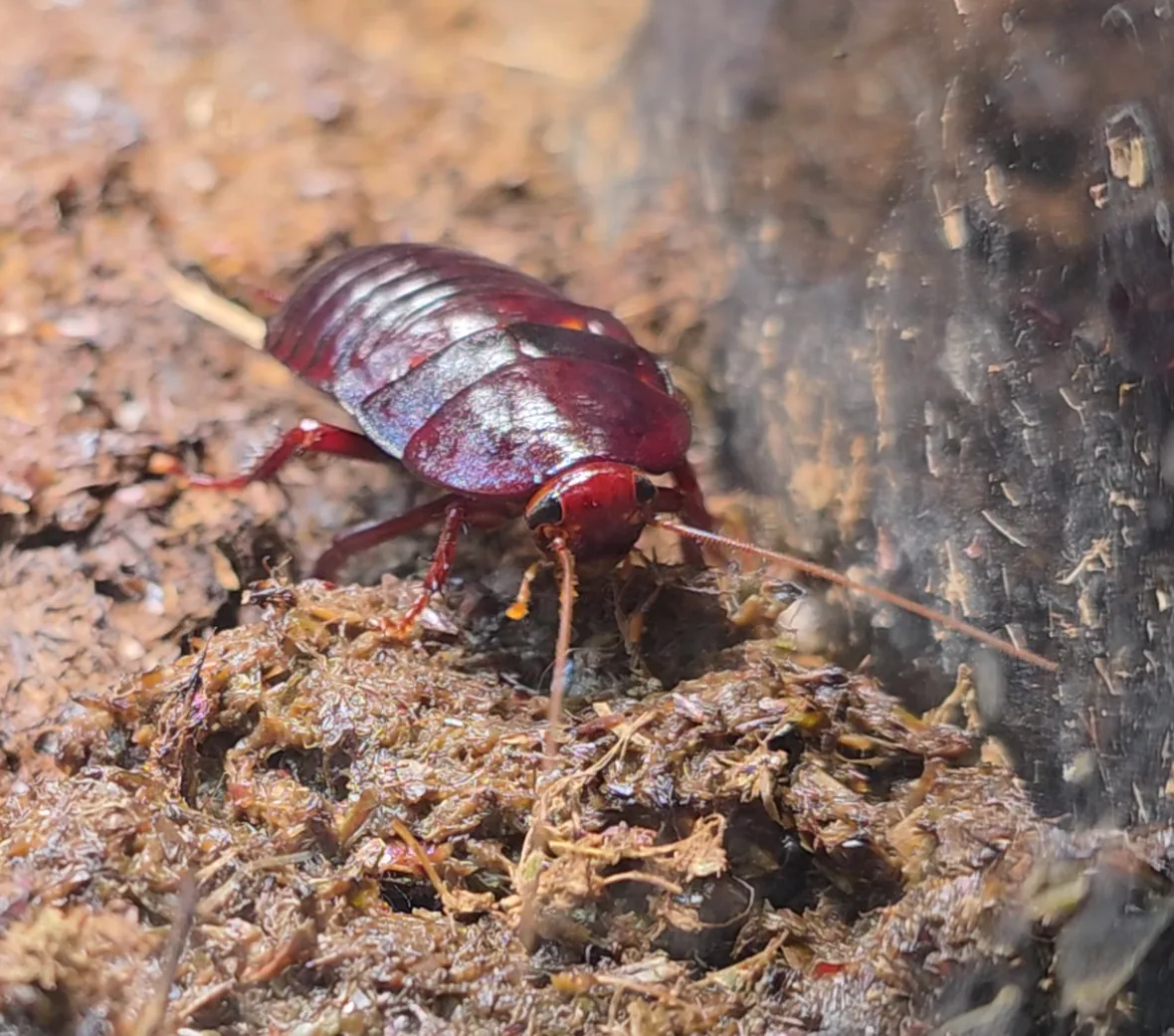
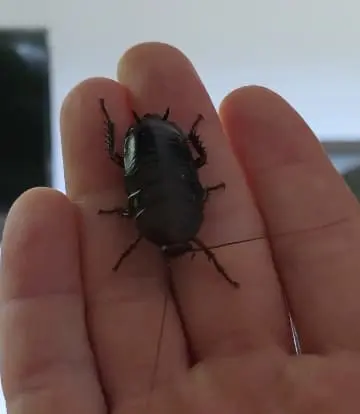
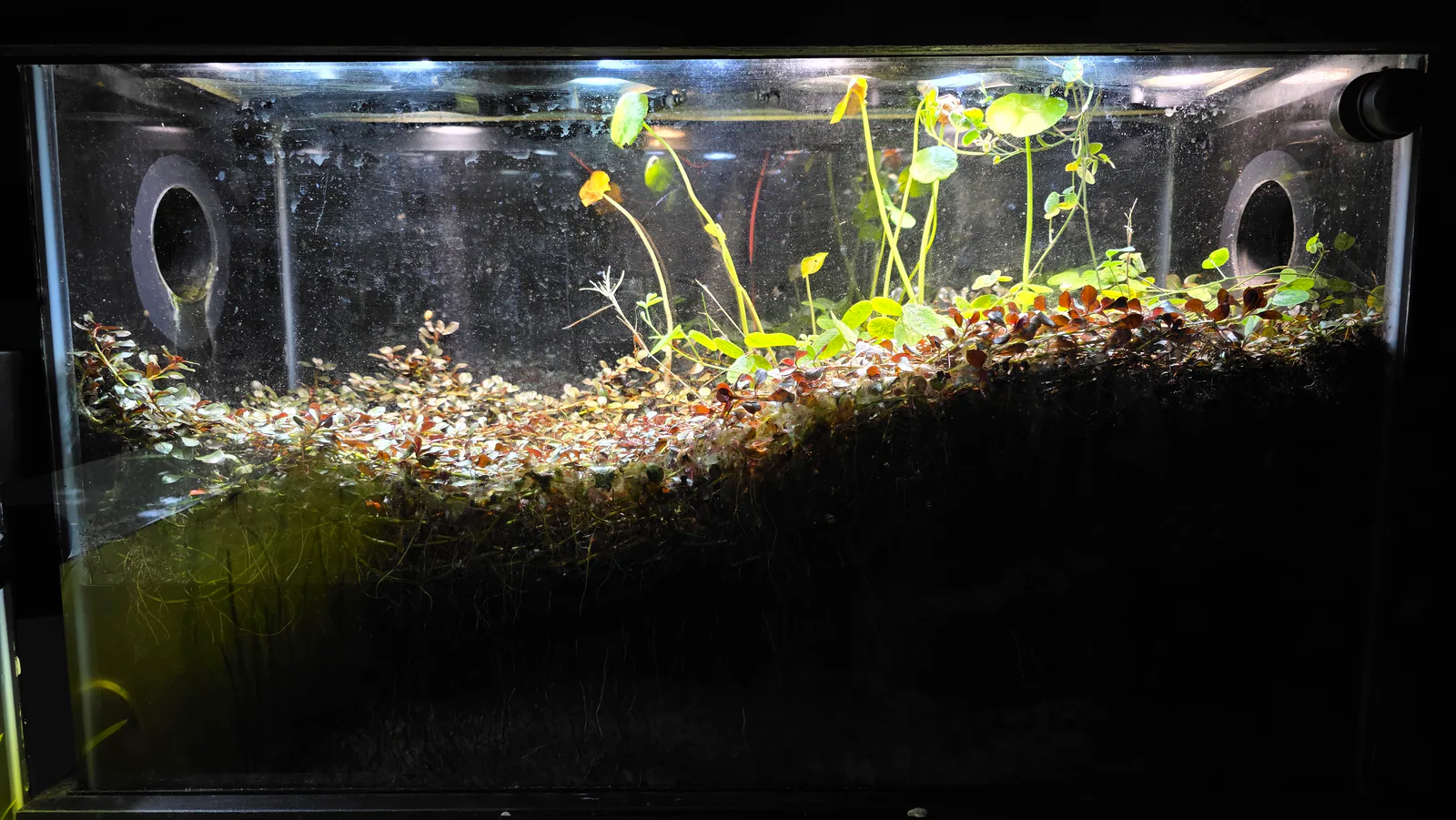
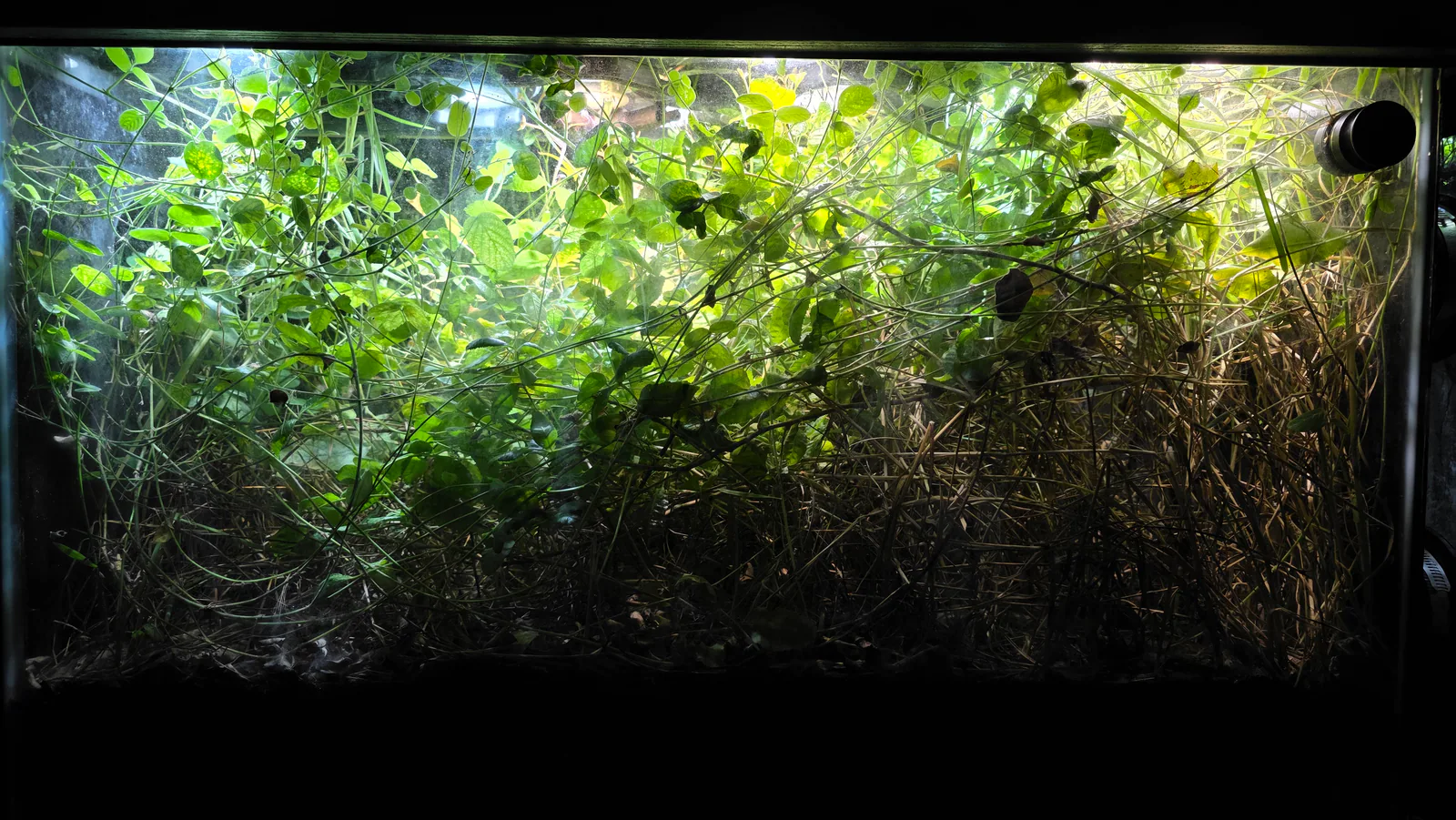
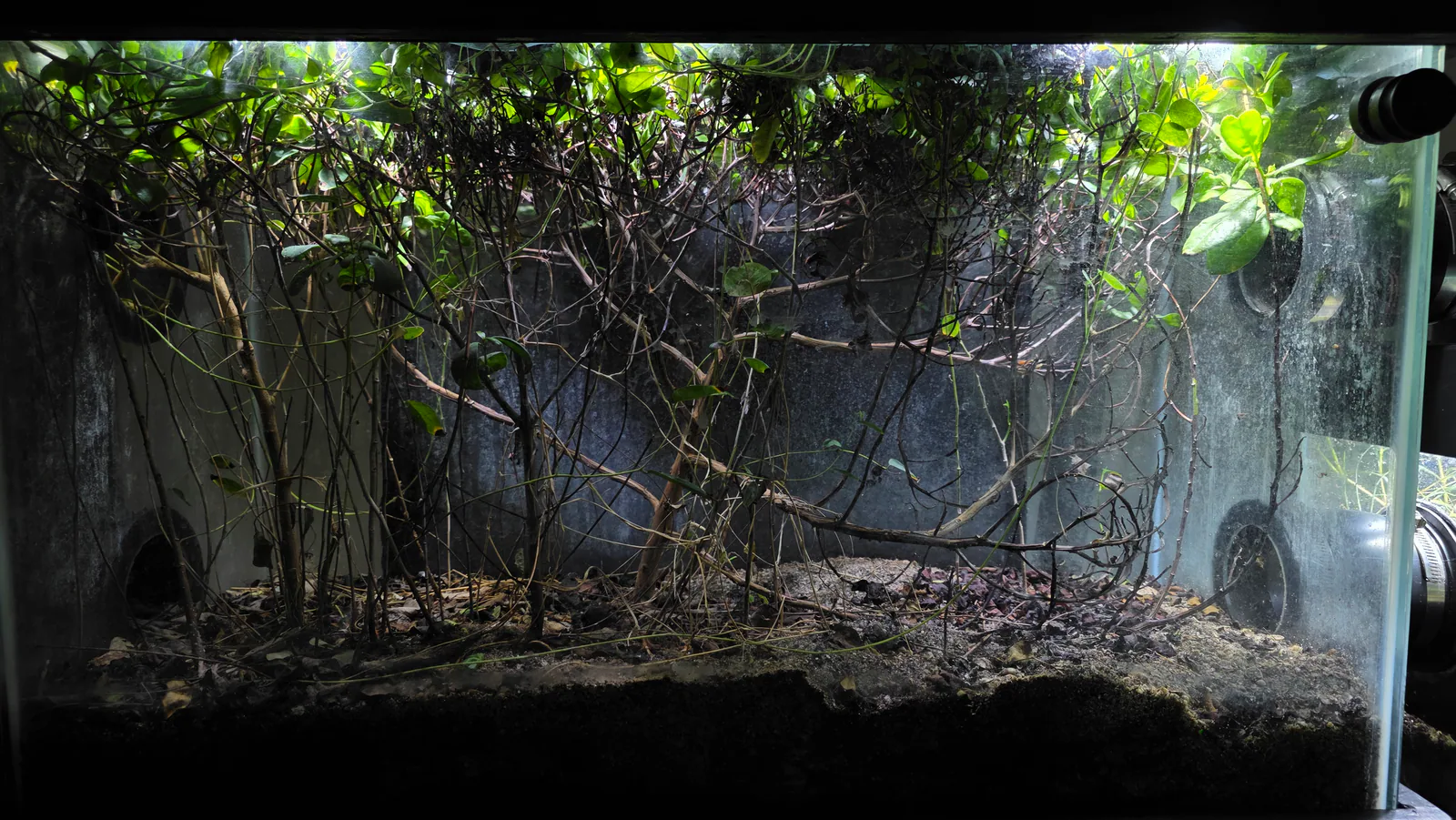
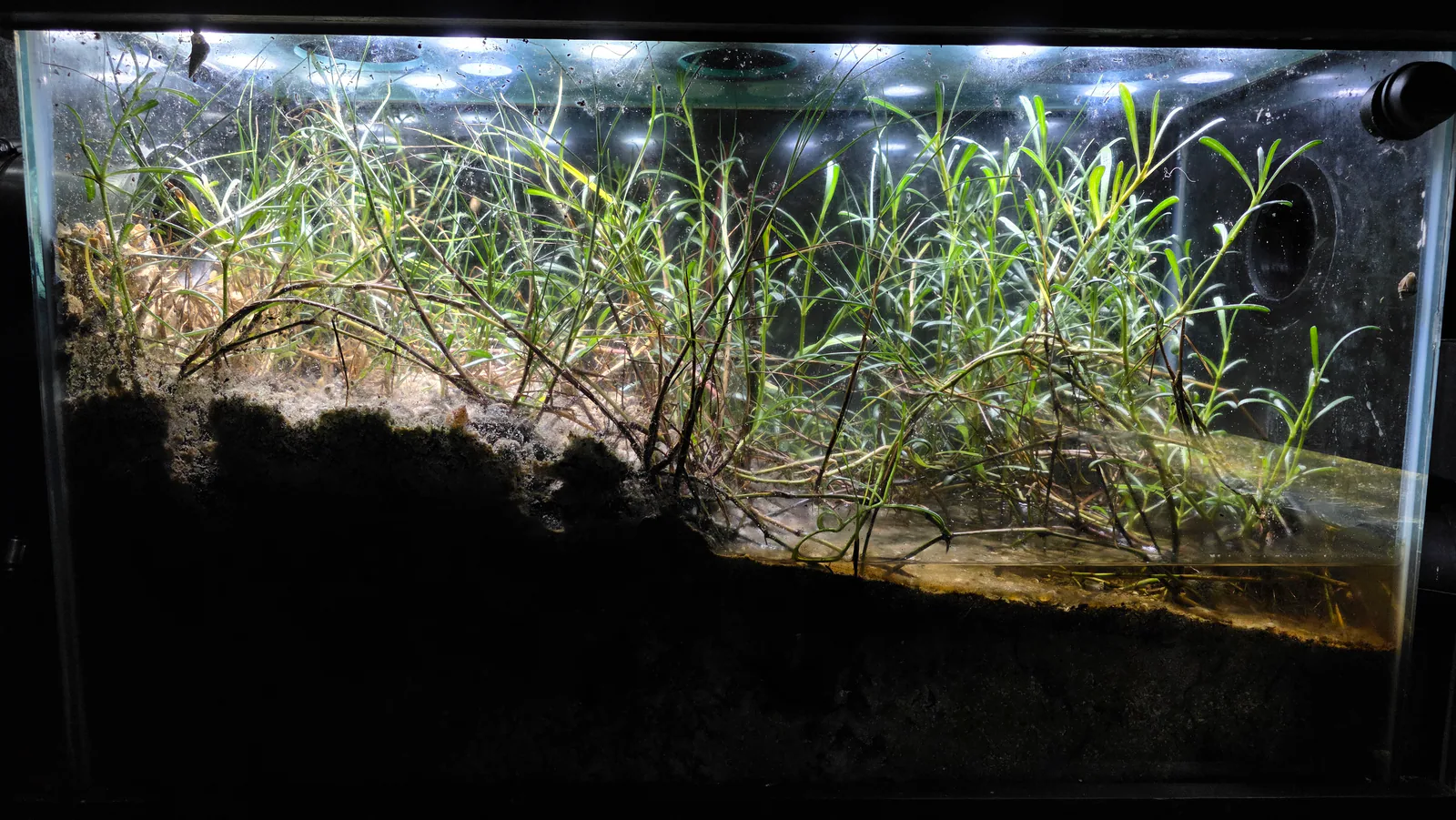
Florida Woods Cockroaches were first introduced on July 6, 2025 and have been supplemented by additional introductions in 2025 and 2026. A juvenile was confirmed in April 2026.
July 6, 2025 (first introduction): Florida Woods Cockroaches introduced to miniBIOTA. The initial number is not recorded in the observation records; the October 2025 note implies approximately three individuals were present before that addition.
October 3, 2025: Five more Florida Woods Cockroaches were added to the system, bringing the estimated total population to eight.
January 24, 2026: A Florida Woods Cockroach was observed appearing to form an egg case in the Mangrove Forest biome, described as the first potential second-generation breeding event in miniBIOTA. Video evidence: short clip of the cockroach appearing to form an egg case in the top right corner of the Mangrove Forest.
January 28, 2026: A Florida Woods Cockroach was found residing in the atmosphere tank and defecating inside. The note flagged that waste was being carried into rain lines by rain events, posing a risk of gradual clogging. Video evidence: cockroach filmed from multiple angles in the atmosphere tank; accumulated waste near rainwater collection area.
February 2, 2026: A Florida Woods Cockroach was cold-stunned on the Mangrove Forest floor at approximately 50°F, barely moving after falling from a branch. A Humic Marsh Crab approached, foraged on detritus nearby, and passed the cockroach without interacting. Video evidence: approximately four minutes showing the cold-stunned cockroach, the crab approaching, foraging, and moving past without predation.
February 8, 2026: The first rain event in miniBIOTA since the system was fully sealed (day 13) was observed in the Mangrove Forest. The field note hypothesized that Florida Woods Cockroach mass on the suspended reservoirs may have pushed the third reservoir past its tipping threshold, triggering the second and first reservoirs in sequence. Video evidence: aftermath of the rain event; wet surfaces and evidence of multiple tipped reservoirs. Causation was not confirmed.
March 17, 2026: One adult Florida Woods Cockroach was added to the system. Estimated population now approximately three.
March 20, 2026: A Florida Woods Cockroach was observed in the Lowland Meadow with a bulbous yellow protrusion at the rear of its body, described as appearing consistent with a prolapse. Individual health and reproductive viability were flagged for monitoring. Video evidence: close-up of the individual.
April 12, 2026: One large adult Florida Woods Cockroach was added to the Lowland Meadow. If all previously observed individuals were still alive, estimated population now four.
April 22, 2026: A juvenile Florida Woods Cockroach was observed on a Mangrove Forest branch, described as evidence of a second generation emerging in miniBIOTA. A second individual was found deceased in a Red House Spider web, confirming active predation on this population. Video evidence: clips of the juvenile on a branch and the individual caught in a spider web.
June 14, 2026: One medium-sized Florida Woods Cockroach added to the Lowland Meadow. No behavioral observations at time of introduction. Part of the ongoing supplementation effort; population count uncertain due to unquantified predation losses since April 2026.
June 22, 2026: One deceased Florida Woods Cockroach found in the Mangrove Forest biome. Cause of death unknown; age, predation, and environmental conditions are all possible. Based on the most recent population count of four, the estimated population is now three. No media. Observation record, June 22, 2026.
July 6, 2026 (tentative, identity unresolved): A cluster of very small cockroach nymphs observed on a dead leaf in the Lowland Meadow. The nymphs may represent a new generation of Florida Woods Cockroach, but nymphs of this species and Surinam Cockroach can appear similar at this stage, and identity could not be resolved from the footage. Video documented. Not counted toward confirmed population or reproduction status pending further development. Observation record, July 6, 2026.
August 3, 2026: During a full-system nighttime tour, a larger but still immature cockroach was observed in the Mangrove Forest, its appearance now more consistent with Florida Woods Cockroach than at its earlier nymph stage. It may be the same individual documented in the July 6, 2026 Lowland Meadow nymph cluster, now further developed; identity remains based on visual interpretation, not confirmed. The individual was confirmed not Surinam Cockroach, narrowing candidates to Florida Woods Cockroach or a currently unidentified species. The population was reassessed at four individuals: two adults, one late-stage juvenile or possible subadult, and one smaller juvenile nymph. Observation record, August 3, 2026.
Confirmed:
- Presence and continued activity from July 2025 through April 2026
- Multiple introductions: July 2025, October 2025, March 2026, April 2026
- Egg case formation behavior, January 24, 2026 (video)
- Cold-stunned at approximately 50°F without predation by the Humic Marsh Crab, February 2, 2026 (video)
- Presence in the atmosphere tank and rain infrastructure, January 28, 2026 (video)
- Confirmed breeding: juvenile observed on Mangrove Forest branch, April 22, 2026 (video)
- Predation by Red House Spider confirmed, April 22, 2026 (video)
- One mortality confirmed in the Mangrove Forest biome, June 22, 2026; cause unknown
- A late-stage juvenile observed in the Mangrove Forest, August 3, 2026, confirmed not Surinam Cockroach
Inferred:
- Ongoing processing of leaf litter and decaying plant matter across the terrestrial realm
- Activity concentrated in the Mangrove Forest canopy and forest floor; also ranging across Lowland Meadow, Lakeshore, and Marine Shore edges
- Use of chemical defense glands in predator encounters
Unknown:
- Whether the egg case observed January 24 hatched successfully
- How many individuals are currently alive; reassessed at four as of August 3, 2026 (two adults, one late-stage juvenile/subadult, one small nymph) during a full-system direct census, superseding the June 22, 2026 estimate of three
- Whether the late-stage juvenile observed August 3, 2026 is Florida Woods Cockroach or a currently unidentified species; Surinam Cockroach has been ruled out for this individual
- Whether the juvenile observed April 22 is still alive and has reached adulthood
- The full scale of Red House Spider predation pressure on this population
- Whether the prolapse observed March 20 affected reproductive viability
- Whether cockroach activity on rain reservoirs has triggered any additional rain events