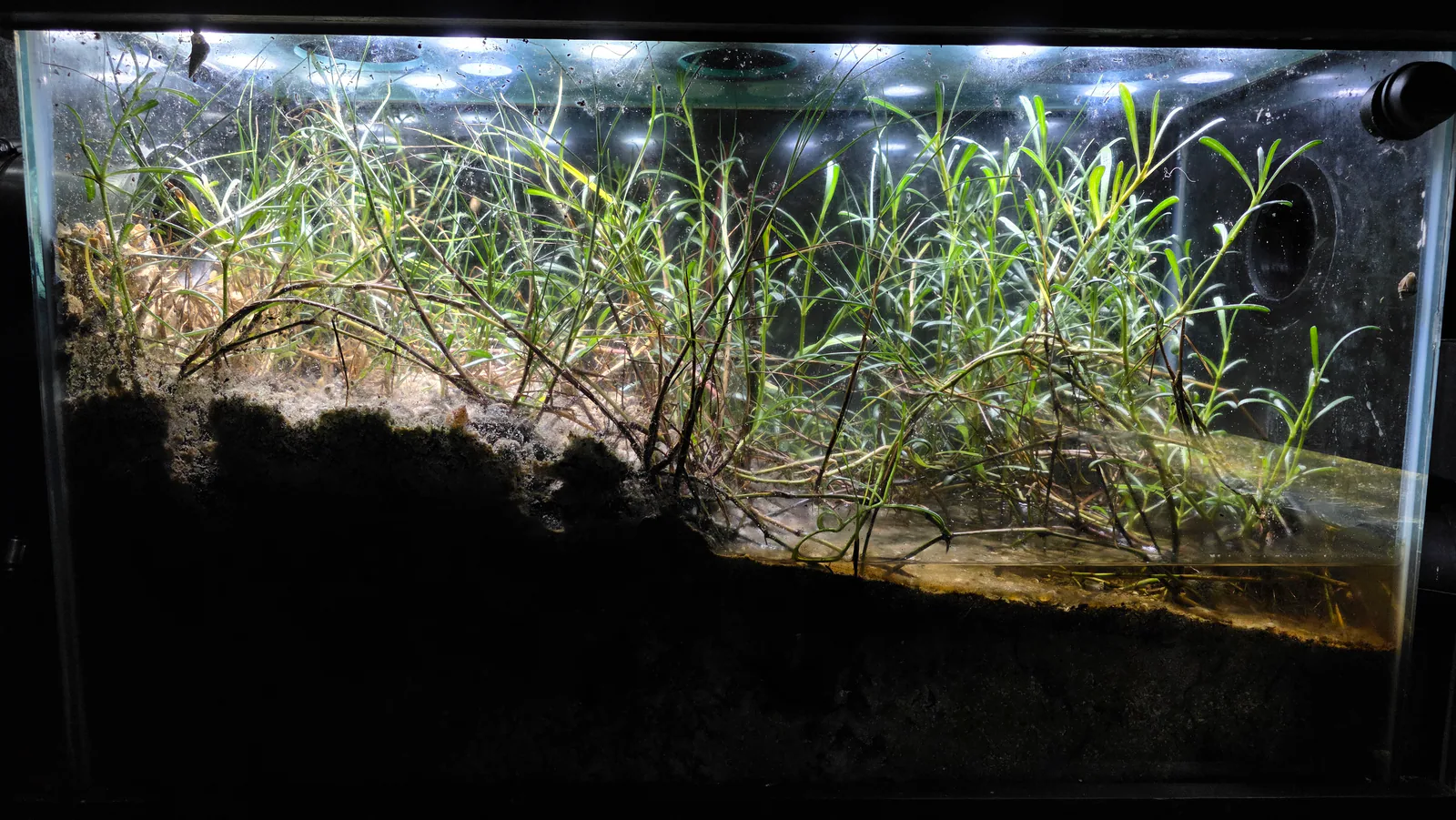
Armases ricordi

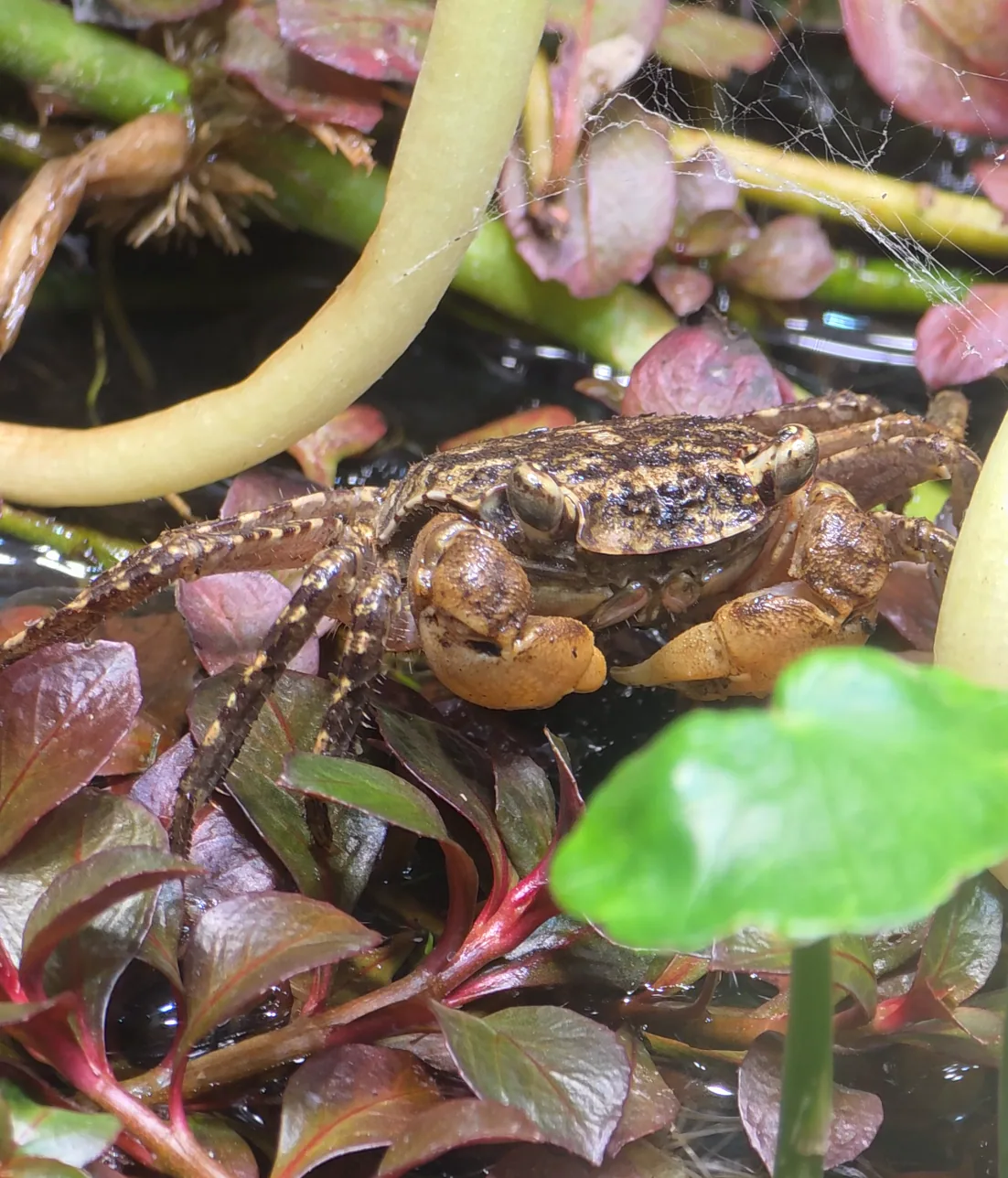
Humic Marsh Crab

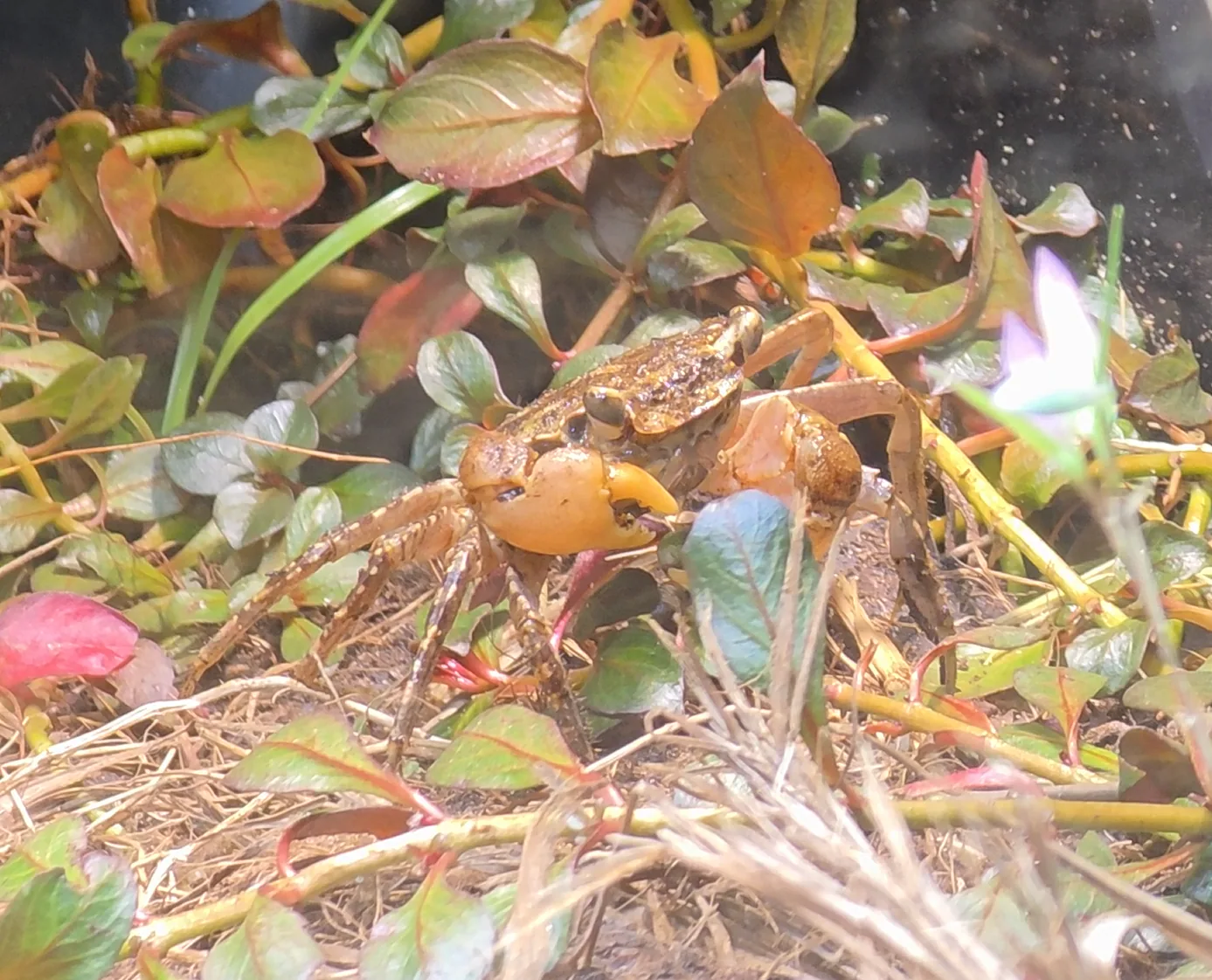
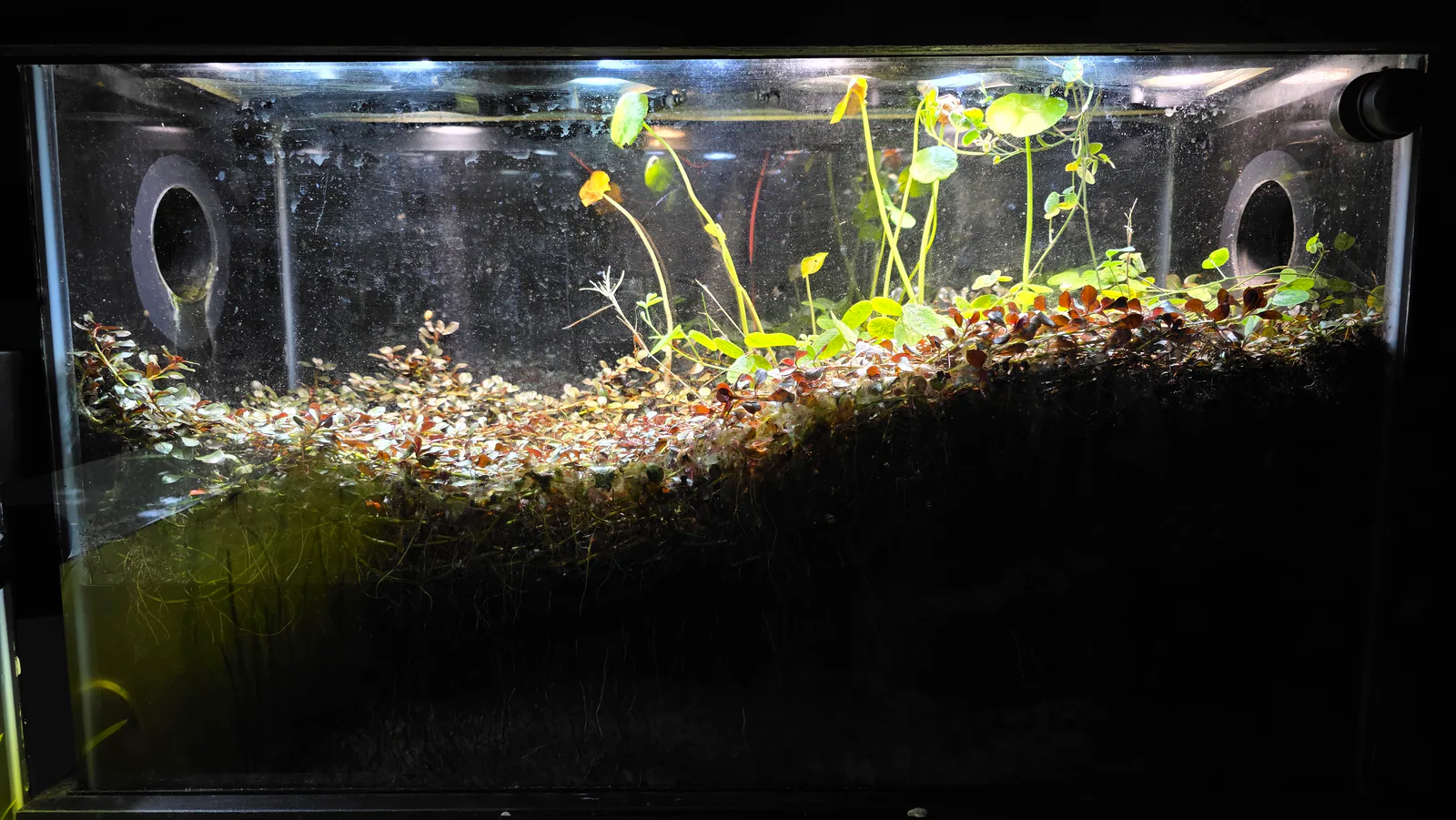
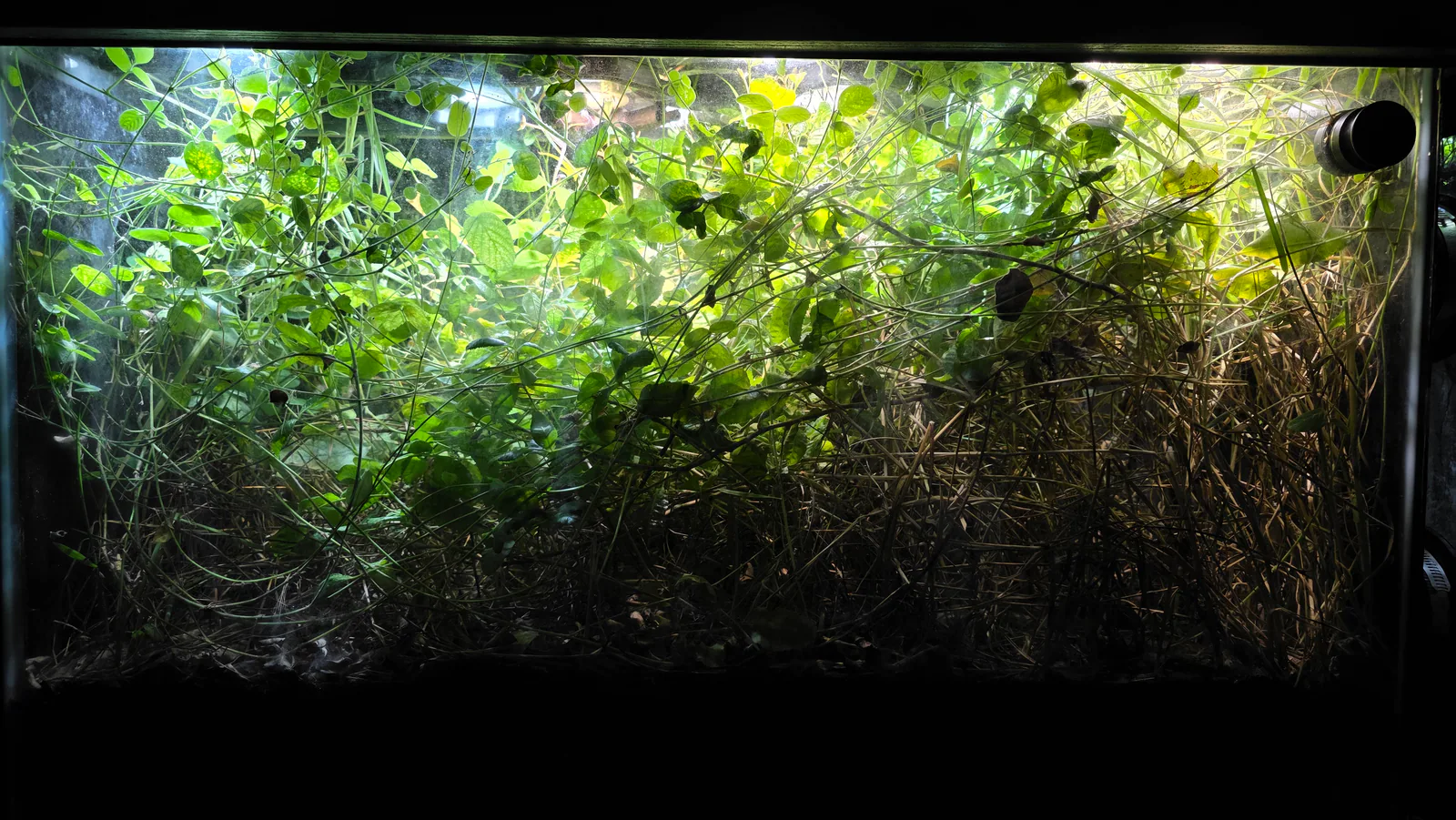
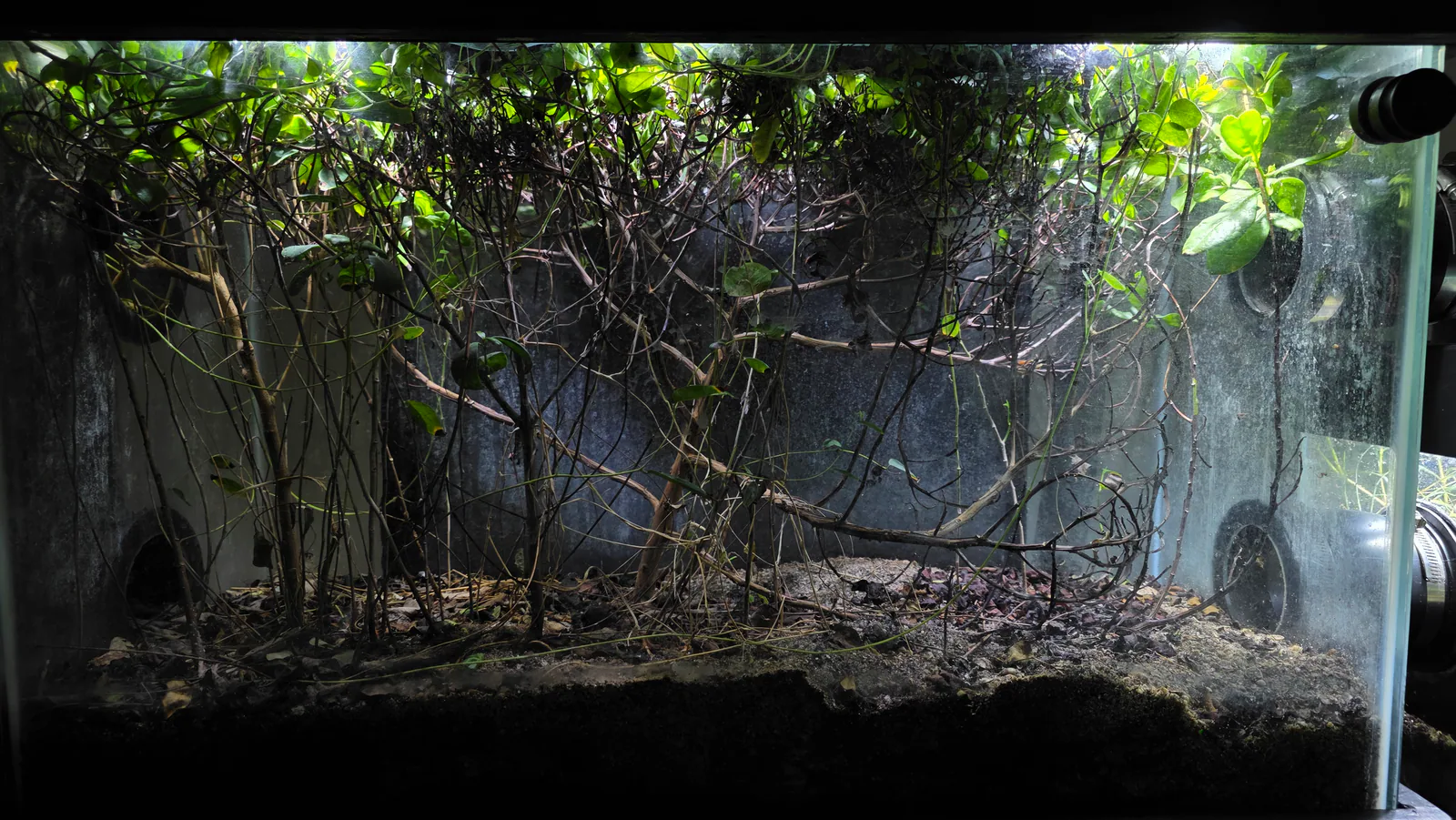
A semi-terrestrial marsh crab that climbs through mangrove branches and forages on fallen leaf litter and detritus at the coastal forest edge, moving between the Mangrove Forest, Lakeshore, and Marine Shore across the saltwater-terrestrial boundary.

Visual Data Unavailable

Overview

The Humic Marsh Crab (Armases ricordi) is the long-established climbing crab of the miniBIOTA Mangrove Forest, active at the boundary between the saltwater and terrestrial realms. It had been identified as Mangrove Tree Crab (Aratus pisonii) since its introduction, but was reclassified as Armases ricordi on June 4, 2026 after Josue compared it directly with six newly collected true Mangrove Tree Crabs and found a clear visual mismatch. All historical miniBIOTA records describing a climbing mangrove crab before June 4, 2026 refer to this species. The crab ranges freely across the Mangrove Forest, Lakeshore, Marine Shore, and Lowland Meadow. Population is Uncertain; one long-established individual is confirmed. Date of first introduction and source are not on record.

Identity

  • Common name: Humic Marsh Crab
  • Alternate names: marsh crab, sesarmid crab, humic crab, Armases
  • Scientific name: Armases ricordi
  • Identification confidence: Provisional (visual comparison by owner; no formal morphological examination)
  • Uncertainty label: Established, identity corrected June 2026

Taxonomy

  • Kingdom: Animalia
  • Phylum: Arthropoda
  • Class: Malacostraca
  • Order: Decapoda
  • Family: Sesarmidae
  • Genus: Armases
  • Species: ricordi

Natural History

Range and Florida Relevance

Armases ricordi is found in mangrove forests and salt marsh margins from the Gulf of Mexico and Florida south through the Caribbean to Brazil. In Florida, it occurs at the upper edges of mangrove forests and tidal creek banks, where it favors the transition zone between mangrove canopy and adjacent terrestrial vegetation. It is frequently encountered in co-occurrence with Aratus pisonii (true Mangrove Tree Crab) in natural settings, which likely contributed to its misidentification in miniBIOTA. Armases crabs generally occupy slightly more terrestrial and slightly higher positions in the mangrove forest than Aratus, and tend to forage more broadly on litter and detritus rather than strictly on living mangrove foliage.

Habitat and Behavior

Armases ricordi is a semi-terrestrial, amphibious crab capable of breathing both in water and in air. It is an agile climber, moving through root systems, prop roots, branches, and terrestrial edges with ease. It actively uses the transition zone between mangrove canopy, shoreline margin, and adjacent upland habitats, which in miniBIOTA corresponds to the Mangrove Forest, Marine Shore, Lakeshore, and Lowland Meadow biomes. The crab is primarily nocturnal in natural settings but may be active at any hour. It shelters in leaf litter, under root overhang, and in substrate crevices.

Diet

Armases ricordi is an omnivore with a primarily herbivorous diet. It feeds heavily on fallen mangrove leaves, algae growing on roots and substrate surfaces, biofilm, and decomposing organic material. It supplements this with opportunistic scavenging on carrion, small invertebrates, and other organic particles encountered during foraging. In natural mangrove systems, sesarmid crabs like Armases are key processors of leaf litter: they shred fallen leaves into smaller fragments that accelerate the detrital breakdown pathway. In miniBIOTA, feeding behavior is inferred from species biology; no direct feeding observations under the corrected identity have been made.

Reproduction

Armases ricordi reproduces via planktonic larvae. Females brood fertilized eggs under the abdomen until hatching, releasing zoea larvae that must complete development in saltwater or brackish water. The larvae pass through multiple zoea stages before settling as megalopae and completing metamorphosis into juvenile crabs. This reproductive mode means that sustained reproduction in a closed system requires an appropriate saltwater connection for larval development. In miniBIOTA, no reproduction has been confirmed, and the population of one established individual precludes an assessment of breeding activity.

Tolerance Ranges

Armases ricordi is tolerant of the warm subtropical temperatures of Florida mangrove habitats, generally from approximately 18 to 32 degrees Celsius. It tolerates variable salinity at the land-sea interface, from near-freshwater terrestrial runoff zones to full marine salinity at the shoreline margin. It is well-adapted to intermittent aerial exposure and is not dependent on constant water access. In miniBIOTA, no formal temperature or chemical measurements have been taken in the Mangrove Forest or at the terrestrial-marine boundary.

Ecological Role

Humic Marsh Crab is a leaf-litter processor and omnivorous forager at the land-sea boundary in miniBIOTA. As a sesarmid crab, it plays the same role that this family plays in tropical and subtropical mangrove systems globally: shredding coarse leaf litter into smaller organic fragments that become available to microbial decomposers, worms, isopods, and other benthic processors. Its range across multiple biomes means it may also redistribute small amounts of organic matter between the Mangrove Forest and adjacent zones.

In miniBIOTA, the Humic Marsh Crab is the sole confirmed long-established crab of the Mangrove Forest canopy and forest floor layer. Its climbing and foraging behavior adds an active detritivore presence to a biome otherwise dominated by small-bodied invertebrates (cockroaches, isopods, spiders, scorpions). Its known predators in miniBIOTA have not been documented; in natural settings, sesarmid crabs in the mangrove forest are occasionally taken by predatory birds, large spiders, and scorpions.

miniBIOTA Evidence

Introduction Context

The Humic Marsh Crab has been present in miniBIOTA for a long period: the June 4, 2026 observation note describes it as having been in the system "for a very long time, possibly approaching two years." This would place the introduction at approximately mid-2024 or earlier, but no specific introduction date, method, or source has been recorded. The introduction predates the identity correction and was not tagged with a dedicated observation file at the time. All historical records referencing the Mangrove Forest climbing crab before June 4, 2026 should be interpreted as this species.

Observation Timeline

  • Before June 4, 2026 (exact date unknown): The Humic Marsh Crab arrived in miniBIOTA and established a long-running presence in the Mangrove Forest. Historical records in the content pipeline reference a climbing "mangrove crab" or "mangrove tree crab" that describes this individual. Known content pipeline records affected by the identity correction include entries 18, 17, 195, 13, 57, 49, and 357.
  • February 9, 2026: Most recent date recorded in miniBIOTA as last recorded date under the historical identity; corresponds to an observation logged under the former Mangrove Tree Crab row. No dedicated observation record for this date was located.
  • June 4, 2026: Josue collected six true Mangrove Tree Crabs (Aratus pisonii) for the Mangrove Forest. Direct comparison with the long-established crab revealed the existing individual was a different species. Josue noted the established crab had been in miniBIOTA "possibly approaching two years." This observation is recorded in (primary routing: Mangrove Tree Crab; context routing: Humic Marsh Crab). Video evidence.
  • June 10, 2026: Identity correction written into the species record and confirmed via live readback.
  • June 11, 2026: One Humic Marsh Crab observed in the lakeshore biome in a multi-species interaction with two Caribbean hermit crabs and one Mangrove Tree Crab (Aratus pisonii). No aggression between any individuals; buffer spacing maintained throughout. The four crabs passed sequentially through a narrow passage toward the lowland meadow. Approximately 13-14 minutes of video documented. Most recent confirmed observation; confirms continued active presence and broad biome movement.

What Is Confirmed

  • A long-established climbing crab has been present in the miniBIOTA Mangrove Forest for an extended period, estimated at approaching two years as of June 4, 2026.
  • The crab was correctly identified as Armases ricordi (Humic Marsh Crab) on June 4, 2026 by direct comparison with true Mangrove Tree Crabs (Aratus pisonii).
  • The identity correction was applied to species row 41 and confirmed.
  • The crab ranges across the Mangrove Forest, Lakeshore, Marine Shore, and Lowland Meadow.
  • Observed in the lakeshore biome on June 11, 2026, in close proximity to two Caribbean hermit crabs and one Mangrove Tree Crab, with no aggression and sequential passage through a bottleneck toward the lowland meadow.

What Is Inferred

  • The crab has been successfully feeding on leaf litter, algae, and detritus in the Mangrove Forest since its introduction.
  • It has not been adversely affected by any documented mortality event.
  • Its broad biome range is consistent with the semi-terrestrial behavior described for Armases ricordi in natural settings.

What Remains Unknown

  • The exact date and method of introduction.
  • The source of the original individual.
  • Whether more than one Humic Marsh Crab is present in miniBIOTA.
  • Whether the species has reproduced or whether larval development could be supported in the current system.
  • The current location and activity level of the individual following the June 4, 2026 introduction of true Mangrove Tree Crabs to the same biome.
  • Whether the identification as Armases ricordi (vs. another sesarmid species) would be confirmed by formal morphological examination.