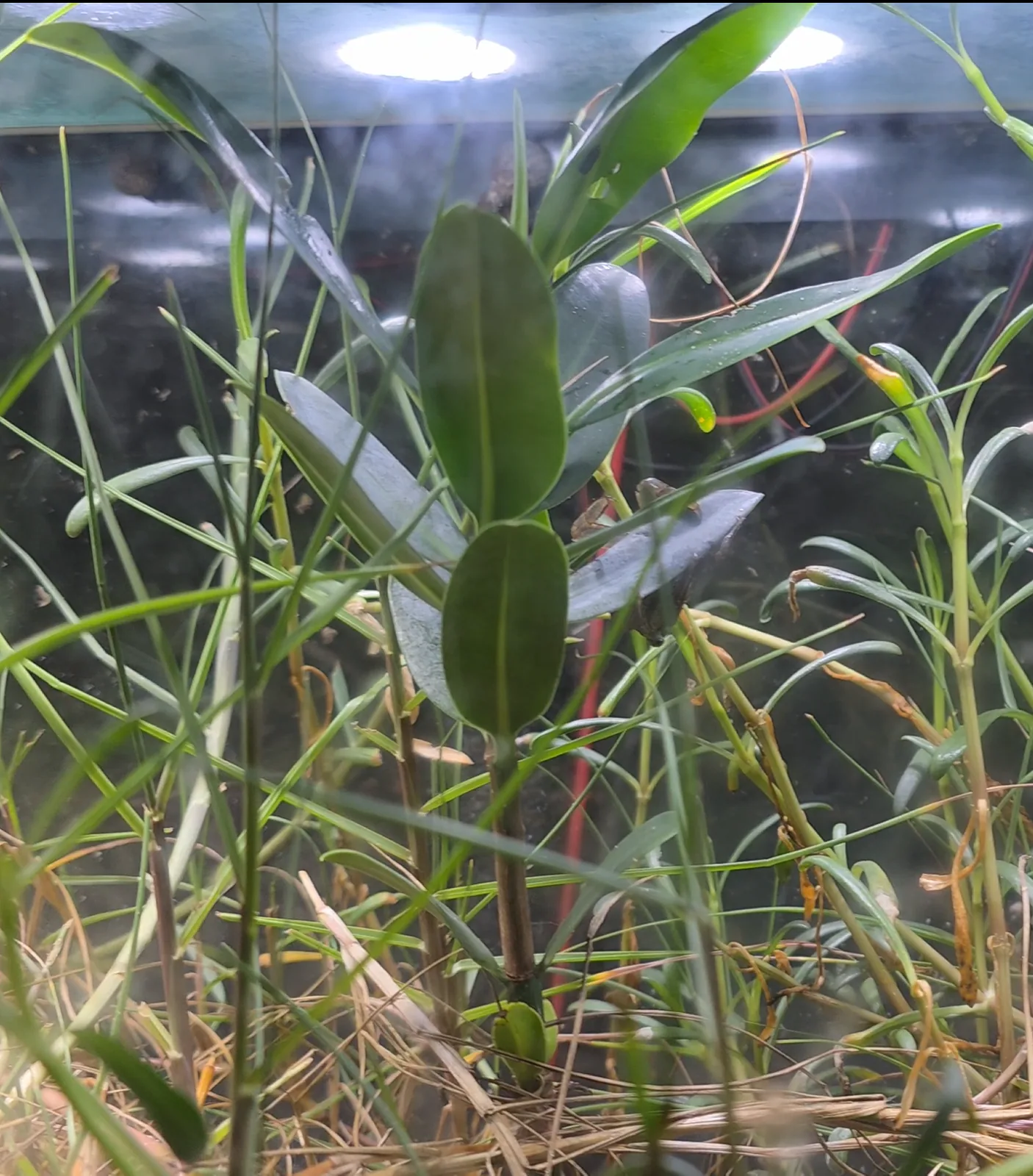
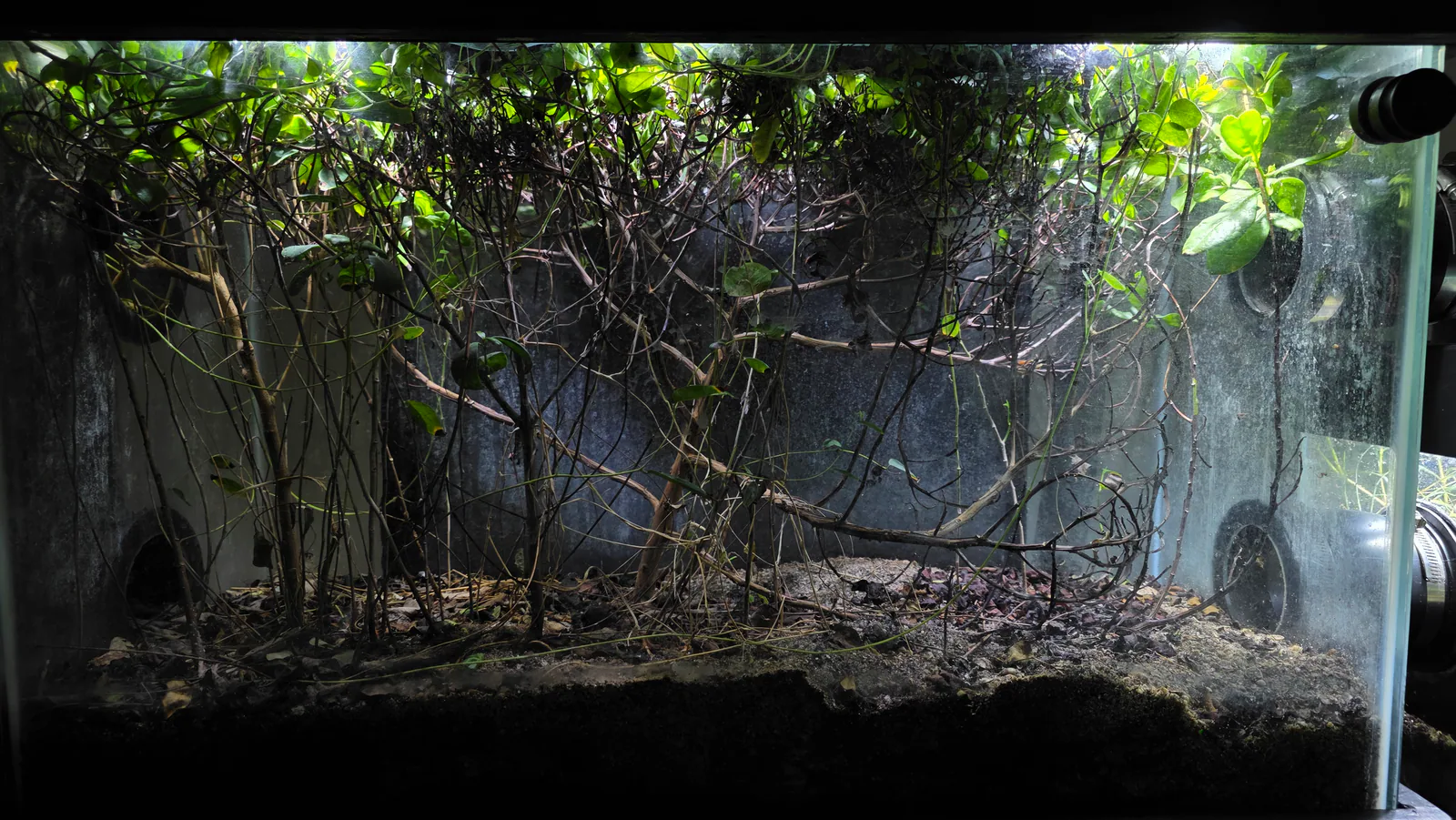
In the Mangrove Forest, Red Mangrove is the primary structural producer: its canopy, branches, and prop roots define the physical architecture of the biome, and its leaf litter is the foundational energy input for the terrestrial food web. Thick, waxy mangrove leaves fall continuously, accumulate on the substrate, and are consumed by Mangrove Tree Crabs, Florida Woods Cockroaches, Surinam Cockroaches, isopods, and other detritivores. This detrital pathway converts plant material into animal biomass and, ultimately, into the shell-rich soil that builds up over time.
The prop root system creates vertical habitat used by climbing animals. Mangrove Tree Crabs (introduced June 2026) use the root and branch structure as both foraging substrate and refuge. Spiders, scorpions, and ants occupy the forest floor and mid-canopy layer, making the Mangrove Forest the most complex terrestrial predator community in miniBIOTA.
Red Mangrove also functions as a chemical boundary node: the organic-rich, anaerobic substrate under the Mangrove Forest can produce hydrogen sulfide during decomposition, and water movement between the Mangrove Forest and the adjacent marine side may carry chemical signals that affect other biomes.