Laguncularia racemosa

White Mangrove

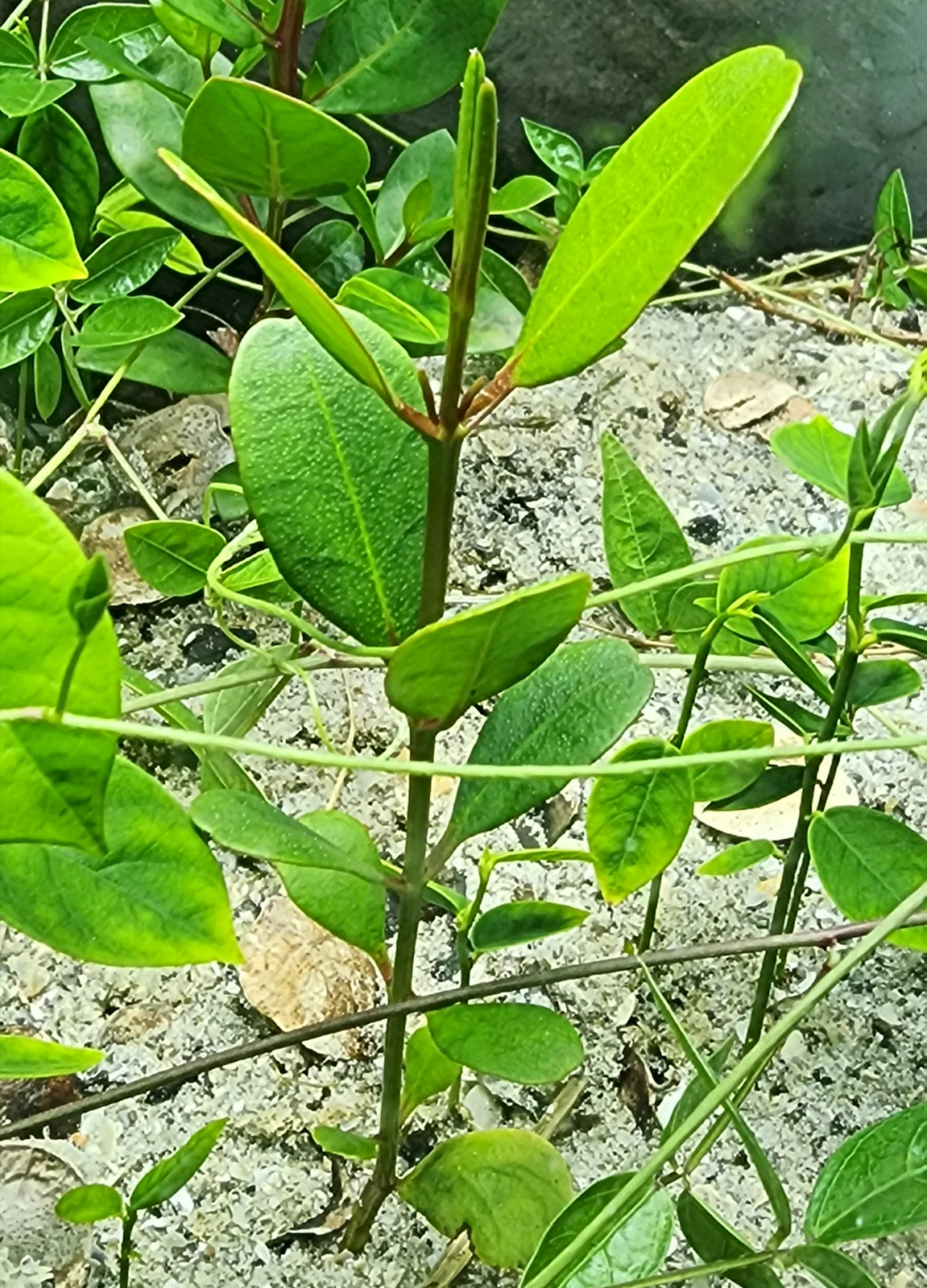
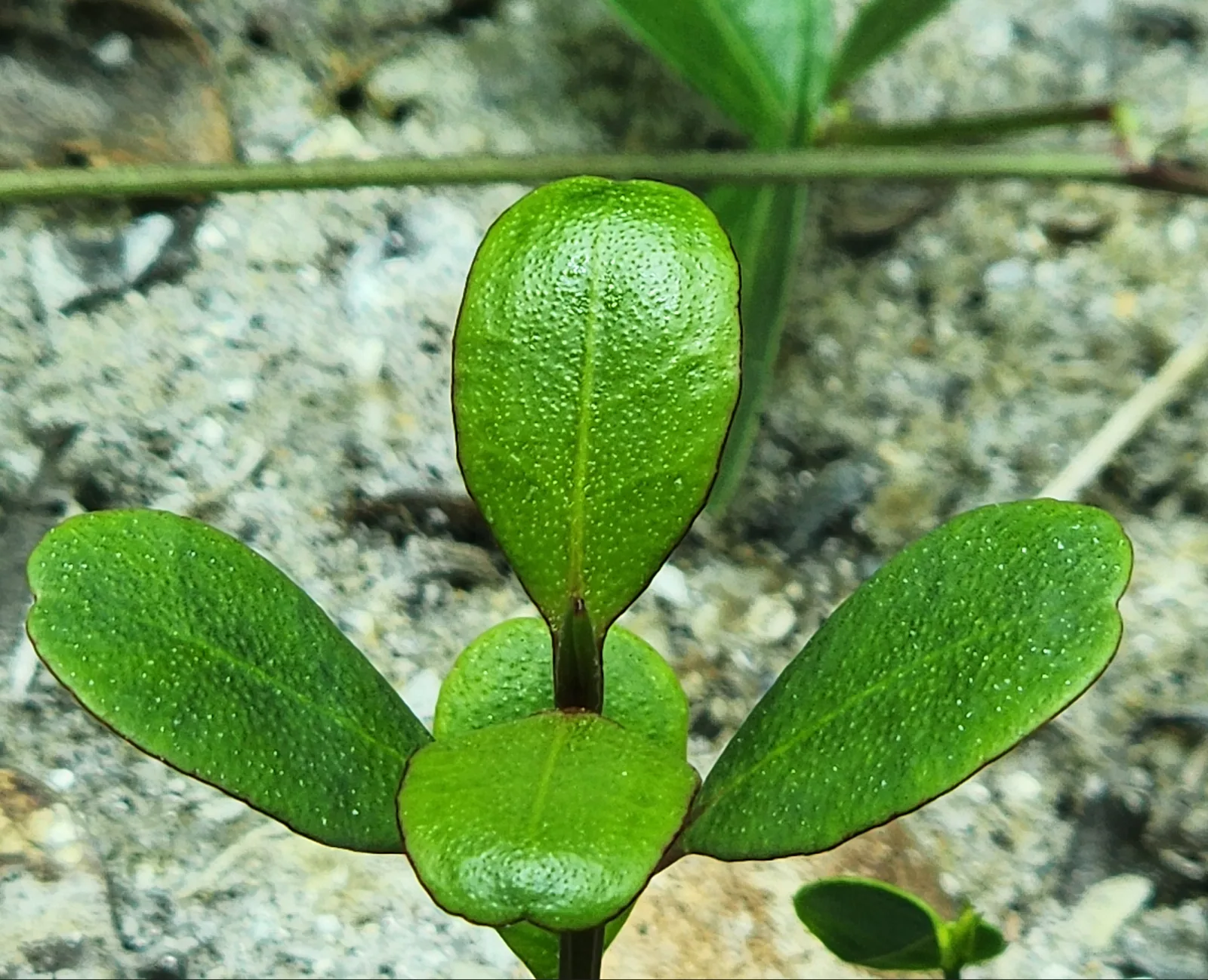
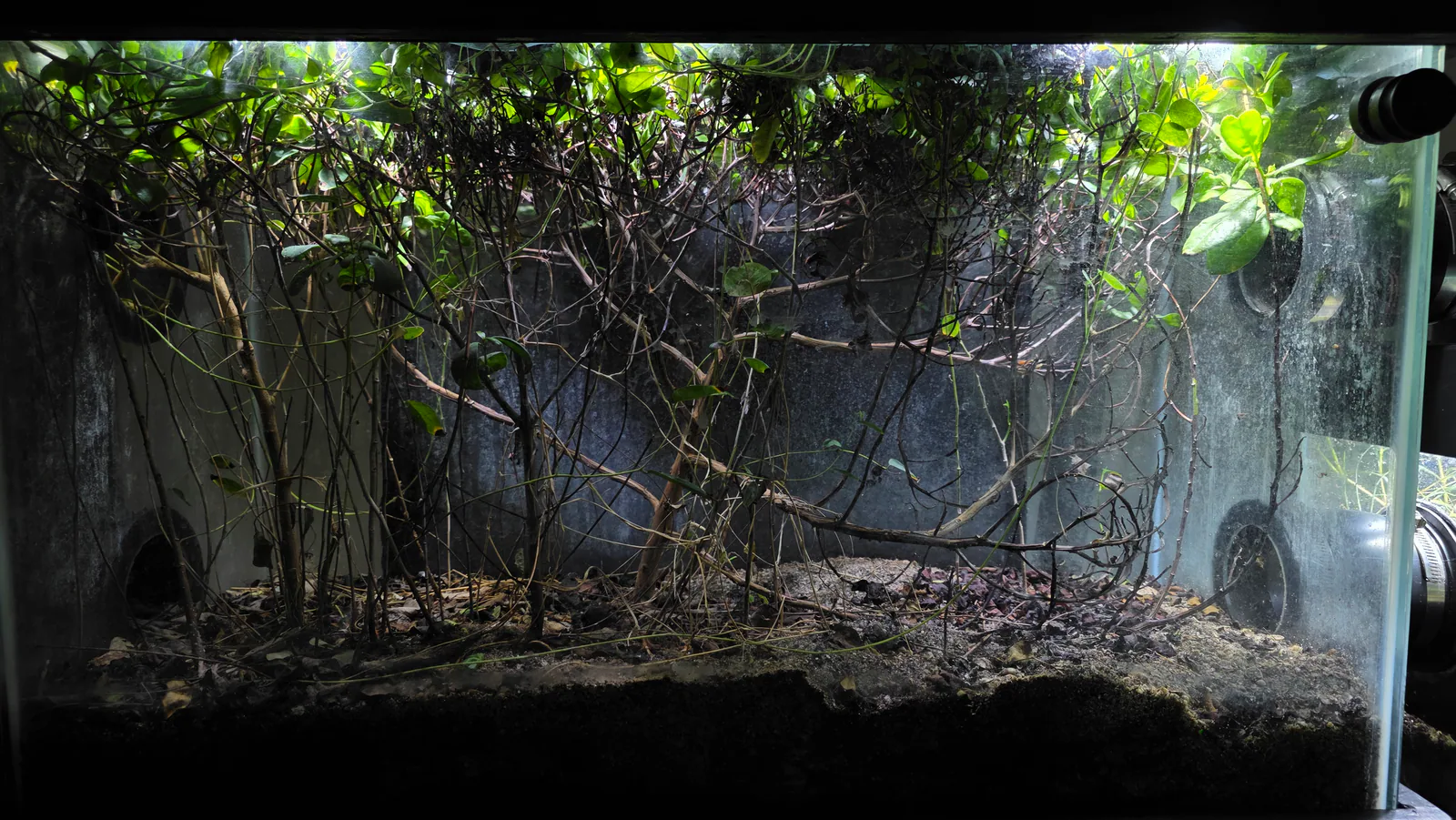
Growing at the most landward edge of miniBIOTA's Mangrove Forest, this rounded-leaf tree is the most terrestrial of the three mangrove species in the system, identifiable by paired nectar glands at the base of each leaf stalk.

Visual Data Unavailable

Overview

The White Mangrove is the most landward of the three mangrove tree species that anchor miniBIOTA's Mangrove Forest, occupying the upper, less frequently flooded fringe of the biome. It is identifiable by its rounded leaves and the distinctive paired nectar glands at the base of each leaf stalk, and it lacks the visible aerial root structures of its neighbors. No dedicated observation records exist for this species; its presence is documented only through biome-level references as a founding structural component of the Mangrove Forest.

Identity

  • Common name: White Mangrove
  • Alternate names: white mangle, buttonwood mangrove (misidentification: Buttonwood is Conocarpus erectus, a different species)
  • Scientific name: Laguncularia racemosa
  • Identification confidence: Species-level
  • Uncertainty label: Confirmed

Taxonomy

  • Kingdom: Plantae
  • Phylum: Tracheophyta
  • Class: Magnoliopsida
  • Order: Myrtales
  • Family: Combretaceae
  • Genus: Laguncularia
  • Species: L. racemosa

Natural History

Laguncularia racemosa ranges from Florida south through the Caribbean basin and along both coasts of Central and South America, with a disjunct population in West Africa. In Florida, it is one of three mangrove species protected under state law, alongside Red Mangrove (Rhizophora mangle) and Black Mangrove (Avicennia germinans). It occupies the highest, most landward zone of the mangrove community, above the mean high water mark, where flooding is periodic and brief rather than the near-continuous inundation tolerated by Red and Black Mangrove in the outer and mid-intertidal zones.

The defining visual identifier is the pair of raised extra-floral nectar glands at the top of each leaf petiole, just below the leaf blade. These glands produce nectar independent of flowering and attract ants, which in natural settings may deter herbivores from the foliage. The leaves are rounded to oval, opposite on the stem, and fleshy in texture. White Mangrove excrets excess salt through specialized pores in the leaves; this excretion mechanism is shared with Black Mangrove and distinguishes both from Red Mangrove, which excludes salt at the roots rather than excreting it at the leaf surface.

White Mangrove is the least salt-tolerant and most drought-tolerant of the three Florida mangroves, consistent with its preference for the upper fringe rather than the intertidal zone. It produces small pale greenish-white flowers on terminal spikes that attract pollinators, followed by small ribbed propagules that are viviparous but far less dramatically elongated than Red Mangrove's large pendant propagules. White Mangrove propagules germinate on the parent tree but the hypocotyl remains short; seedlings establish in moist, non-flooded soil rather than open water. In natural Florida stands, White Mangrove can reach 15 meters but typically grows as a smaller tree or dense shrub in marginal conditions.

Ecological Role

In the Mangrove Forest, White Mangrove occupies the upper canopy fringe, providing cover and leaf litter at the most terrestrial edge of the biome. Its leaf litter enters the same detrital pathway as Red and Black Mangrove: consumed by Florida Woods Cockroaches, Surinam Cockroaches, isopods, millipedes, and other forest floor detritivores. The extra-floral nectaries are a potential attractant for ants; in miniBIOTA, Common Crypt Ants are the most plausible candidate for this interaction, though no direct observation of ants visiting White Mangrove nectaries has been recorded.

White Mangrove does not produce the complex root architecture of the other two species. It provides simpler structural canopy cover rather than the three-dimensional root habitat offered by Red Mangrove's prop roots or Black Mangrove's pneumatophore field. Its contribution to the Mangrove Forest is primarily as an upper-margin canopy producer, extending the photosynthetically active zone and detrital leaf litter input toward the most terrestrial edge of the biome.

Brazilian Peppertree (a Category I invasive present in the Mangrove Forest) occupies similar upper-fringe canopy space. Competition between these two species at the upper mangrove margin is ecologically plausible; no direct competitive interaction has been observed in miniBIOTA.

miniBIOTA Evidence

Introduction context: No introduction event is formally recorded. Introduction method, source, and date of first introduction are all not documented. White Mangrove was present at or near the founding of the Mangrove Forest (established December 10, 2023) and is treated as a structural component of the biome rather than an individually tracked introduction.

Observation record:

  • No dedicated observation records exist for White Mangrove. The species has no last-observed date on record.
  • White Mangrove is referenced in biome-level documentation as one of three structural mangrove species, but no individual-focused observation records have been filed.

Confirmed:

  • White Mangrove present as a structural component of the Mangrove Forest; documented in biome records
  • Species-level identification (Laguncularia racemosa) is confident from morphology and habitat context

Inferred:

  • Leaf litter production contributing to the Mangrove Forest detrital pathway
  • Extra-floral nectaries may attract ants at the upper canopy fringe

Unknown:

  • Current tree count, height, canopy health, and growth state
  • Whether extra-floral nectaries have been observed attracting insects in miniBIOTA
  • Current competitive relationship with Brazilian Peppertree at the upper canopy fringe
  • Exact introduction date and source