Pycnoscelus surinamensis

Surinam Cockroach

Introduced as two individuals in 2023, this parthenogenetic cockroach reproduces without males; babies were confirmed in the Mangrove Forest by May 2025 and the population was documented as dominating the terrestrial habitat by July 2025.

Visual Data Unavailable

Overview

Introduced as two individuals in 2023, this parthenogenetic cockroach reproduces without males; babies were confirmed in the Mangrove Forest by May 2025 and the population was documented as dominating the terrestrial habitat by July 2025.

Identity

  • Common name: Surinam Cockroach
  • Alternate names: harlequin roach, greenhouse cockroach, Surinam roach, burrowing cockroach
  • Scientific name: Pycnoscelus surinamensis
  • Identification confidence: Species-level; Pycnoscelus surinamensis is the well-established scientific name; the common name Surinam Cockroach is specific to this species in North American pest and entomological literature
  • Uncertainty label: Observed

Taxonomy

  • Kingdom: Animalia
  • Phylum: Arthropoda
  • Class: Insecta
  • Order: Blattodea
  • Family: Blaberidae
  • Genus: Pycnoscelus
  • Species: Pycnoscelus surinamensis

Natural History

Pycnoscelus surinamensis is a tropical and subtropical burrowing cockroach originally native to Southeast Asia, now established throughout tropical and subtropical regions globally including across Florida. In Florida, it is most common in southern counties in organically rich moist substrates: garden beds, mulch, compost, and leaf litter. Despite its name, it is not native to Suriname; the name reflects the region where it was first formally described by European naturalists during the colonial era.

The defining biological feature of Pycnoscelus surinamensis in its introduced North American range is parthenogenesis. Florida and North American populations are nearly entirely female and reproduce without males; virgin females produce viable offspring through facultative parthenogenesis. This reproductive mode explains the species' exceptional colonization ability: a single introduced female, or a small group, can establish a breeding population without the need for a male counterpart. The offspring are typically female clones of the mother, perpetuating the parthenogenetic lineage. Sexual populations do exist in parts of its native Asian range, but these are effectively absent in the introduced Florida range.

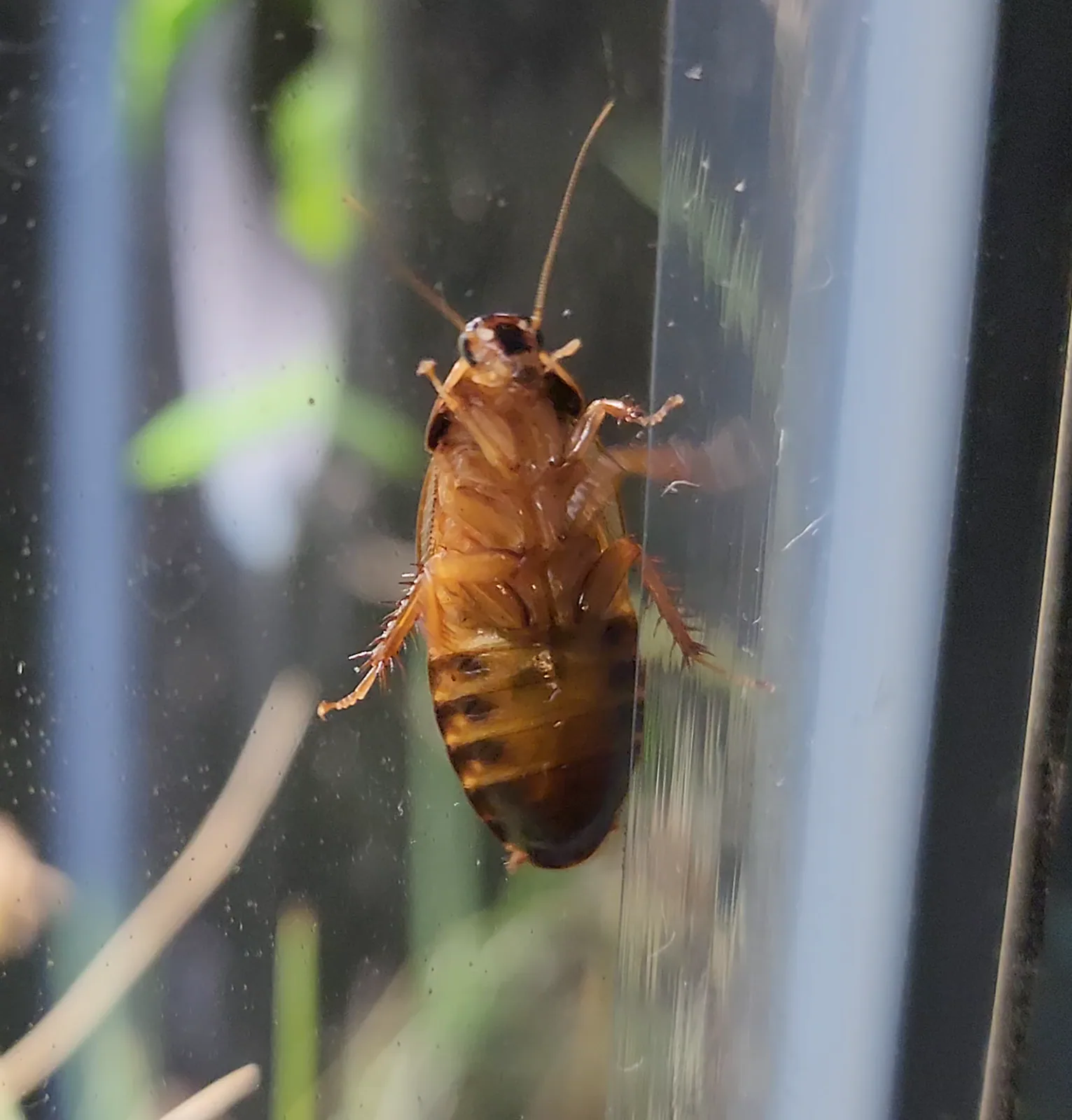
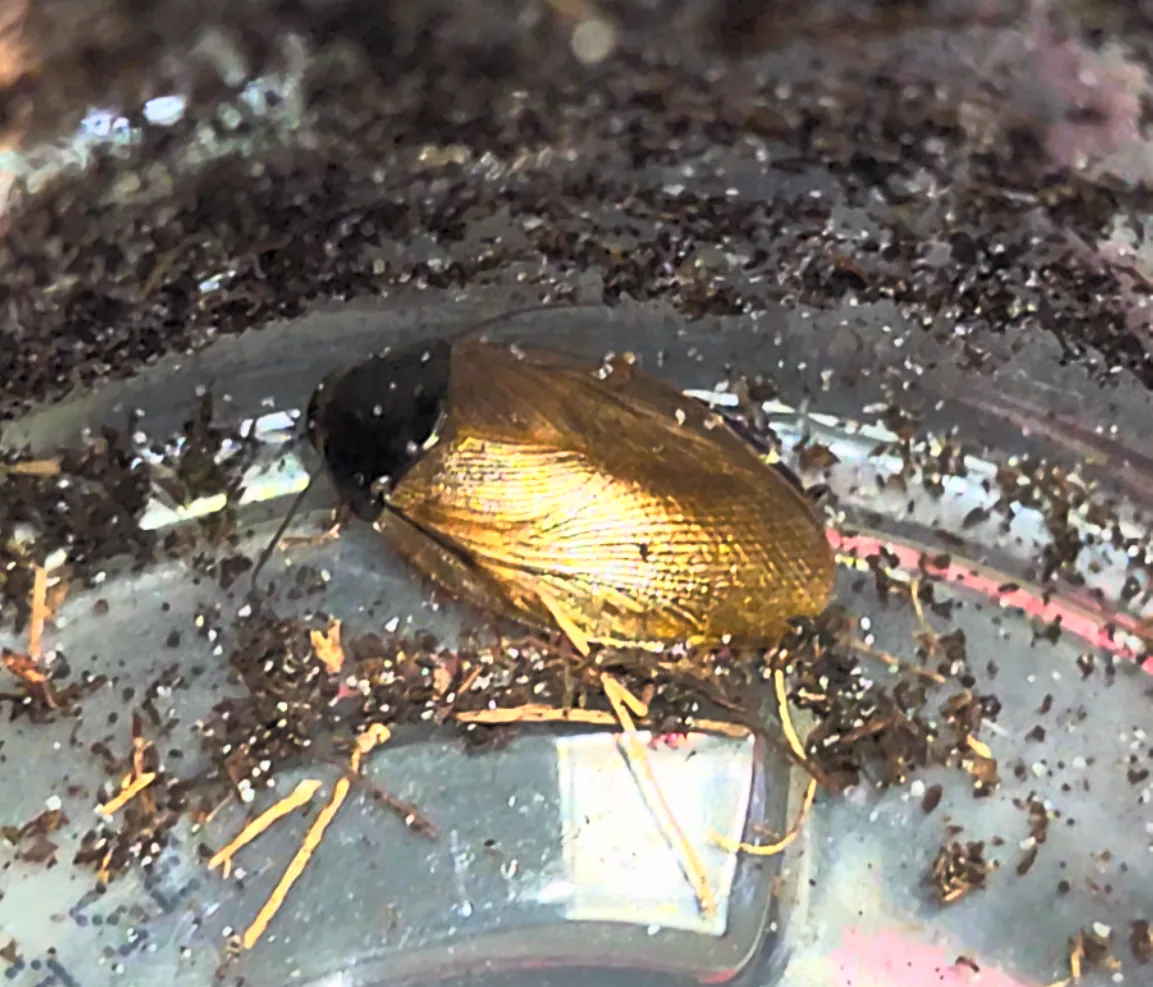
Adults are medium-sized cockroaches, approximately 18 to 25 millimeters in length, with a shiny dark brown to black dorsal surface and a paler underside. They possess wings but do not fly; the wings are non-functional in Florida populations. The species is strongly subterranean in habit, spending most of its time in soil, leaf litter, and organic substrate, emerging at night to forage. It feeds primarily on decaying plant matter, fungi, soft plant roots, and organic debris in the soil layer.

Surinam Cockroach populations can build to high densities in warm, moist, organically rich habitats. In Florida gardens, populations sometimes reach pest levels in mulched flower beds, where their burrowing and root feeding can cause plant damage. In natural settings, they function primarily as detritivores, processing organic matter in the soil layer.

Ecological Role

Surinam Cockroaches are primary detritivores in the soil and litter layer. They physically process decaying plant matter and fungi, fragmenting organic material and contributing nutrients to the soil food web through their feces and by feeding on leaf litter. Their burrowing activity also aerates and redistributes substrate in the upper soil layer. At higher densities, the species channels significant plant biomass into animal protein, a role that increases food availability for predators in the terrestrial food web.

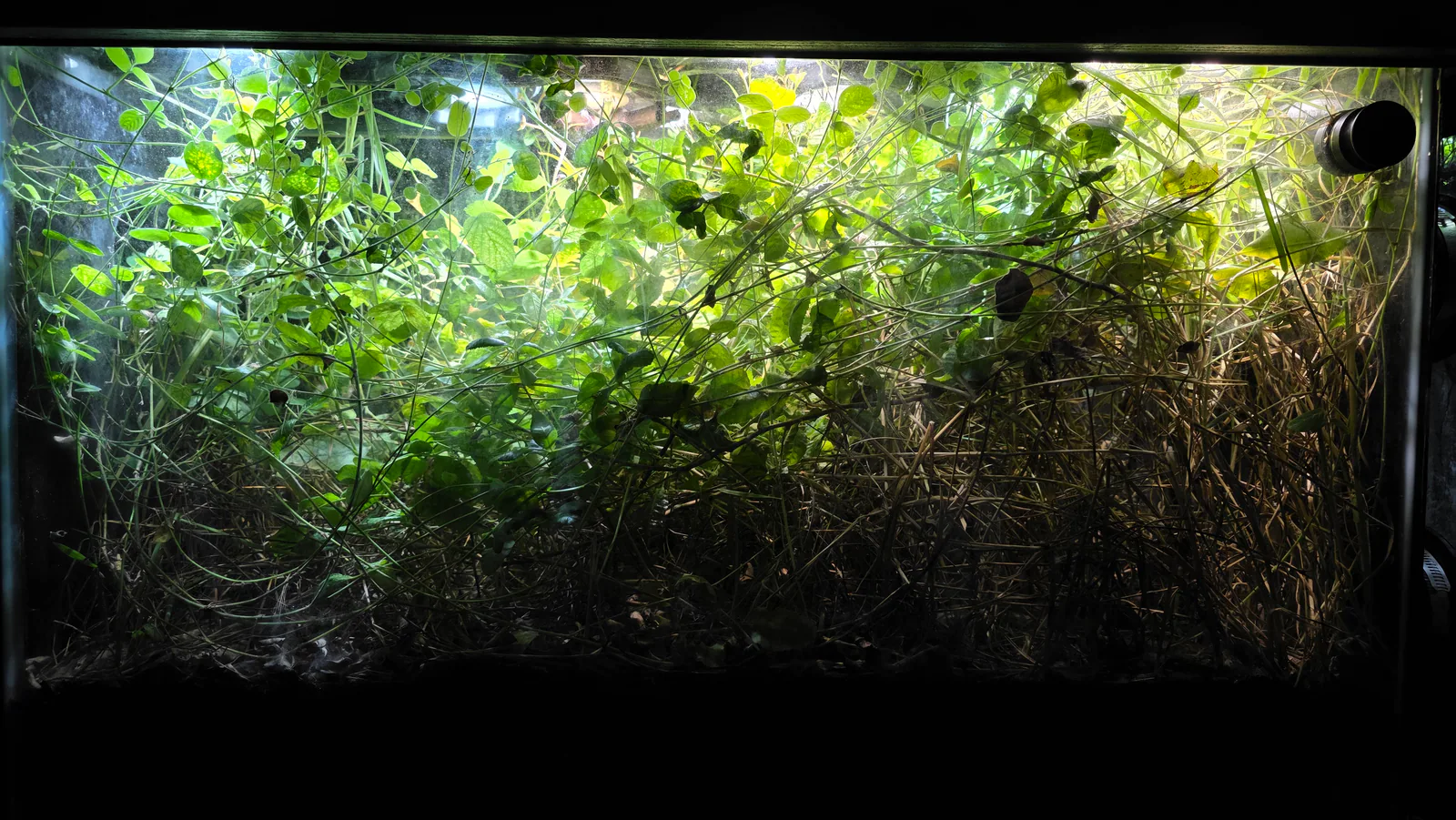
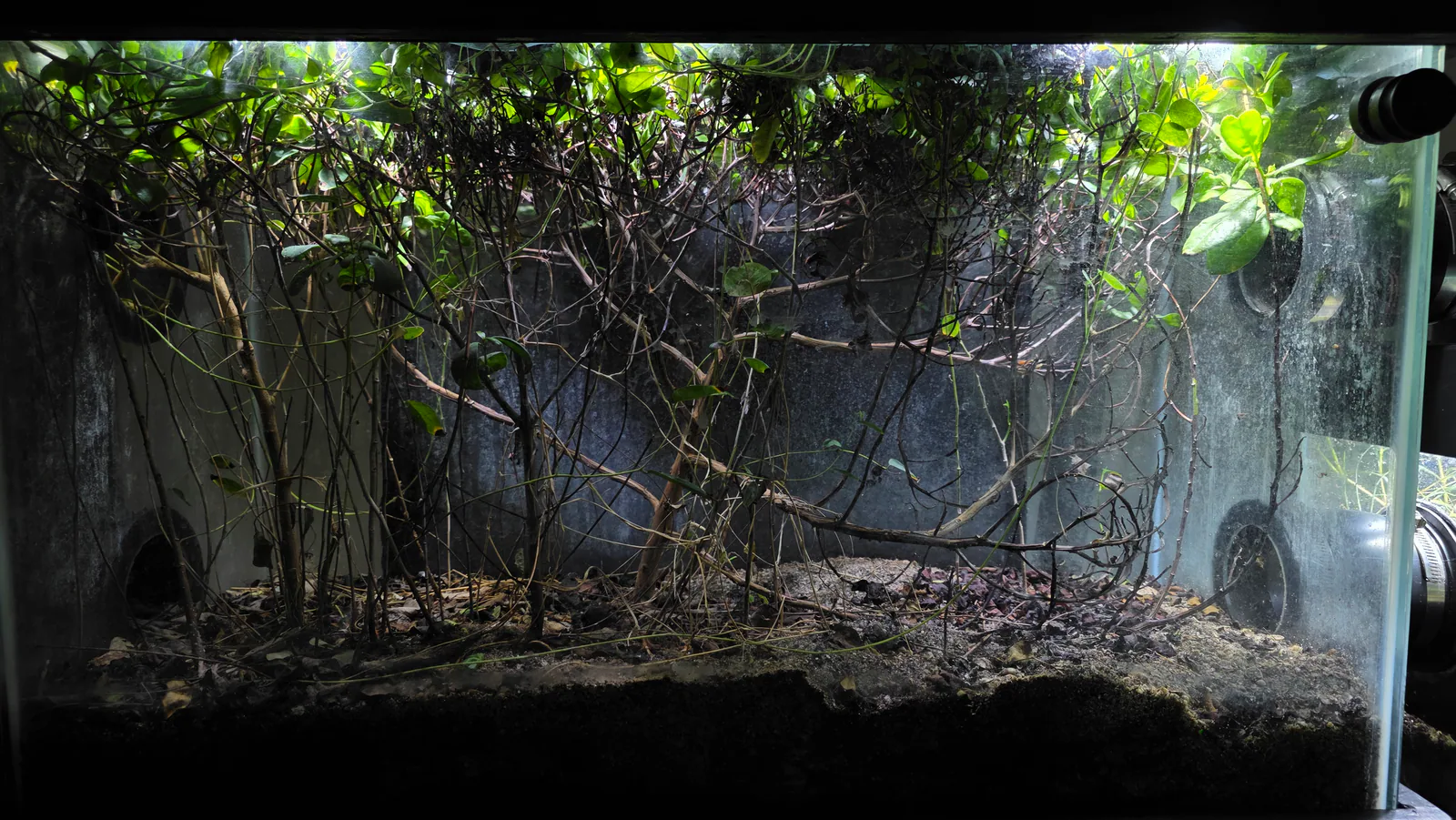
In miniBIOTA, the Surinam Cockroach population was introduced deliberately in 2023 and subsequently established a reproducing, expanding population across both the Lowland Meadow and Mangrove Forest biomes. By July 2025, the population was described as dominating the terrestrial habitat alongside Field Crickets, with growing numbers noted as potentially outcompeting other insect populations. The observation that they are "efficiently converting plant matter into protein and raising overall food web complexity" frames them as a net positive for food web richness in the closed system, even as their competitive dominance over other terrestrial insects is a consideration.

miniBIOTA Evidence

Introduction: Deliberately introduced. First individual added to the Lowland Meadow on August 27, 2023. A second, younger individual added September 3, 2023. No source location for either individual is recorded.

Observation timeline:

  • August 27, 2023: First Surinam Cockroach introduced to the biota in the Lowland Meadow; described as well-suited to the system's decaying organic matter.
  • September 3, 2023: Second individual (young) added to the Lowland Meadow; described as the second introduction, first having been added August 27, 2023.
  • May 22, 2025: Baby Surinam cockroaches confirmed in the Mangrove Forest biome; described as the first documented reproduction in that habitat.
  • July 20, 2025: Population documented as dominating the terrestrial habitat alongside crickets; growing numbers noted as possibly outcompeting other insect populations.
  • July 20, 2025: Population described as having "exploded," efficiently converting plant matter into protein and raising overall food web complexity.

Confirmed:

  • Two individuals deliberately introduced to the Lowland Meadow in August and September 2023
  • Active reproduction confirmed in the Mangrove Forest biome by May 22, 2025 (babies documented)
  • Population expanded to dominant status in the terrestrial biomes by July 2025
  • Population described as contributing to food web complexity by converting plant matter to animal protein

Inferred:

  • Expansion from the Lowland Meadow to the Mangrove Forest between September 2023 and May 2025 occurred through the parthenogenetic reproductive capacity of the founding females; no additional individuals were introduced
  • Population density high enough by July 2025 to compete with other terrestrial invertebrate species, including Field Crickets
  • The population remains established in both biomes; the July 2025 observations are the most recent archived record and no collapse event has been documented

Unknown:

  • Current population size across both biomes; the last specific count is the July 2025 "exploded" characterization
  • Whether predation pressure (Southern Black Widow, Regal Jumping Spider, Centipede, Wolf Spider) has modulated the population size since July 2025
  • Whether the population has reached or exceeded carrying capacity in either biome
  • Whether there are any sexual individuals in the population (Florida populations are typically parthenogenetic)