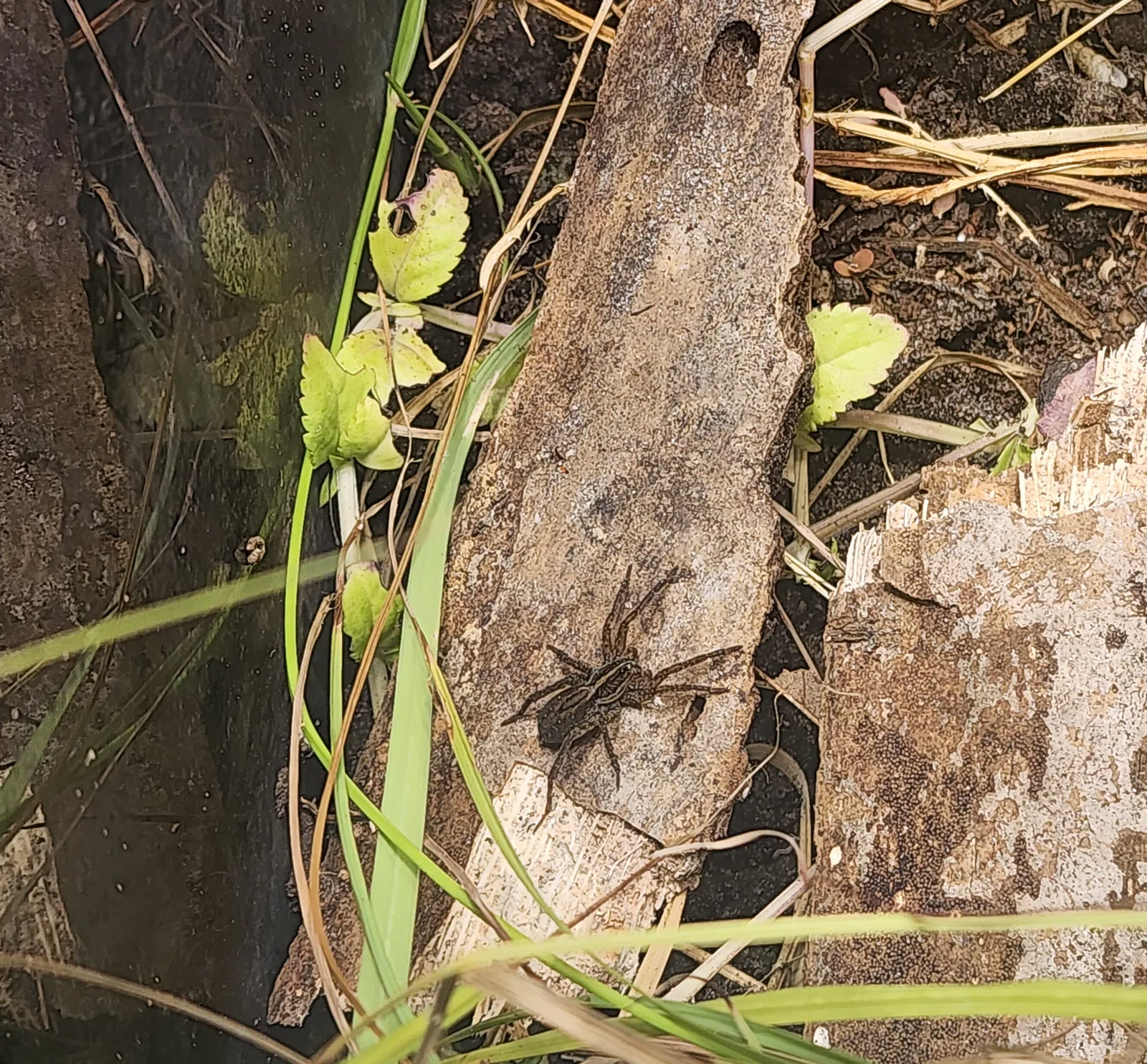
Lycosidae sp. (unidentified)

Wolf Spider

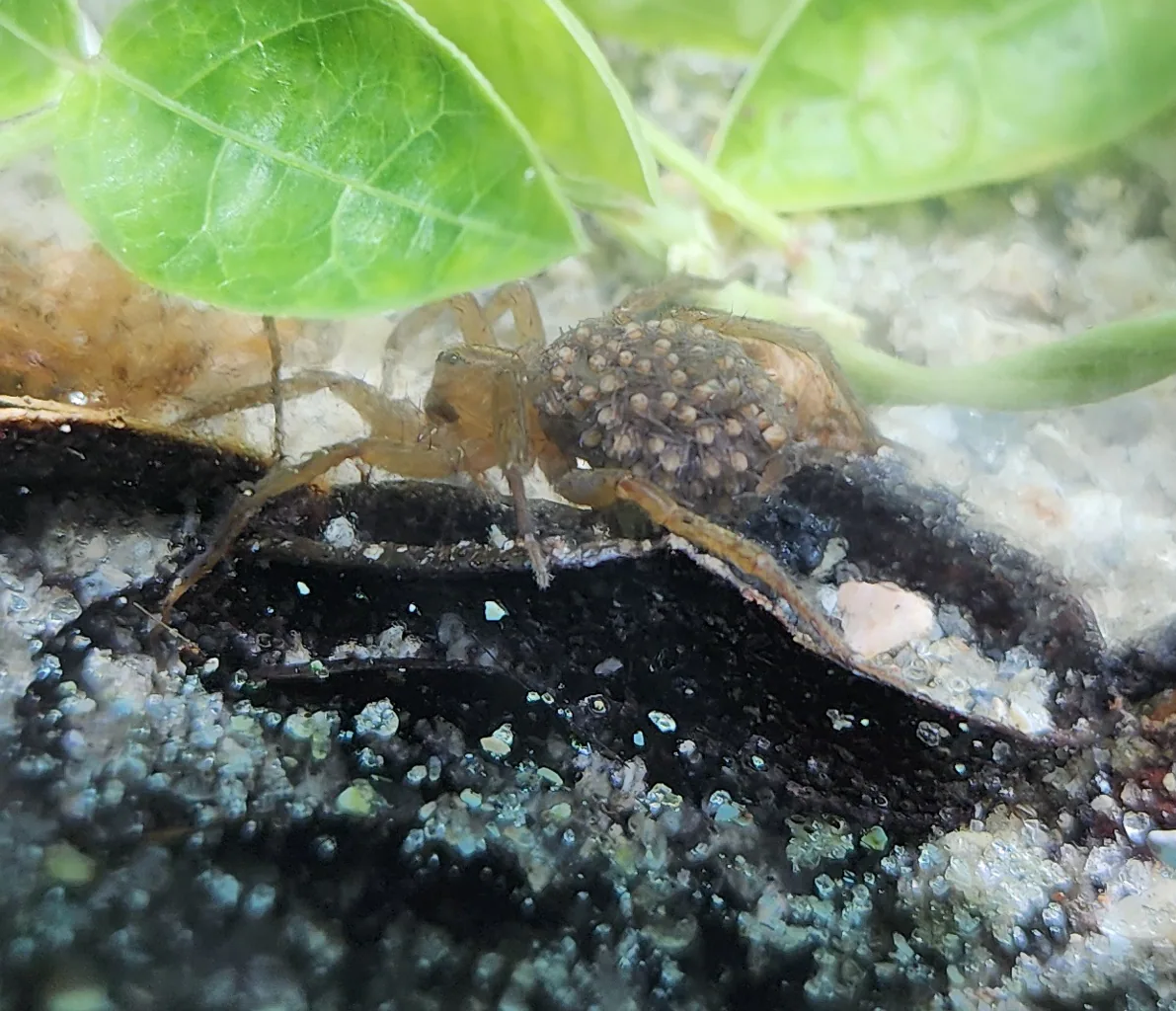
A ground-hunting spider that colonized the Mangrove Forest, the Wolf Spider was documented in March 2024 carrying young on its abdomen, the characteristic maternal behavior of the Lycosidae, providing evidence of successful reproduction in the Mangrove Forest predator community.

Visual Data Unavailable

Overview

A ground-hunting spider that colonized the Mangrove Forest, the Wolf Spider was documented in March 2024 carrying young on its abdomen, the characteristic maternal behavior of the Lycosidae, providing evidence of successful reproduction in the Mangrove Forest predator community.

Identity

  • Common name: Wolf Spider
  • Alternate names: wolf spider, lycosidae, ground spider, hunting spider, burrow spider
  • Scientific name: Lycosidae sp. (unidentified)
  • Identification confidence: Family-level; species unresolved
  • Uncertainty label: Uncertain

Taxonomy

  • Kingdom: Animalia
  • Phylum: Arthropoda
  • Class: Arachnida
  • Order: Araneae
  • Family: Lycosidae
  • Genus: Unresolved
  • Species: Unresolved

Natural History

Wolf spiders (Family Lycosidae) are among the most diverse and ecologically widespread spider families in the world, with approximately 2,400 described species distributed across every habitat from tropical forests to arctic tundra. In Florida, Lycosidae is represented by dozens of species ranging from small leaf-litter hunters to large, fast-moving ground predators. They do not build prey-capture webs; instead they rely on acute vision and speed to stalk or ambush prey directly on the ground or in low vegetation.

Wolf spiders have a distinctive eye arrangement, two large posterior-median eyes flanked by smaller lateral pairs, that gives them strong directional vision and produces a characteristic eyeshine when illuminated with a flashlight at night. This nocturnal eye-reflection is a reliable field identification marker for wolf spiders in leaf litter and ground cover.

The most recognizable behavioral trait of wolf spiders is maternal egg-sac and spiderling care. After mating, females produce a round silk egg sac that they attach to their spinnerets and carry wherever they go until hatching. After the spiderlings emerge, they climb onto the female's abdomen and are carried for days to weeks, a behavior unique to Lycosidae among spider families. This maternal investment is visible to the naked eye and provides direct evidence of both successful egg production and hatching.

Ecological Role

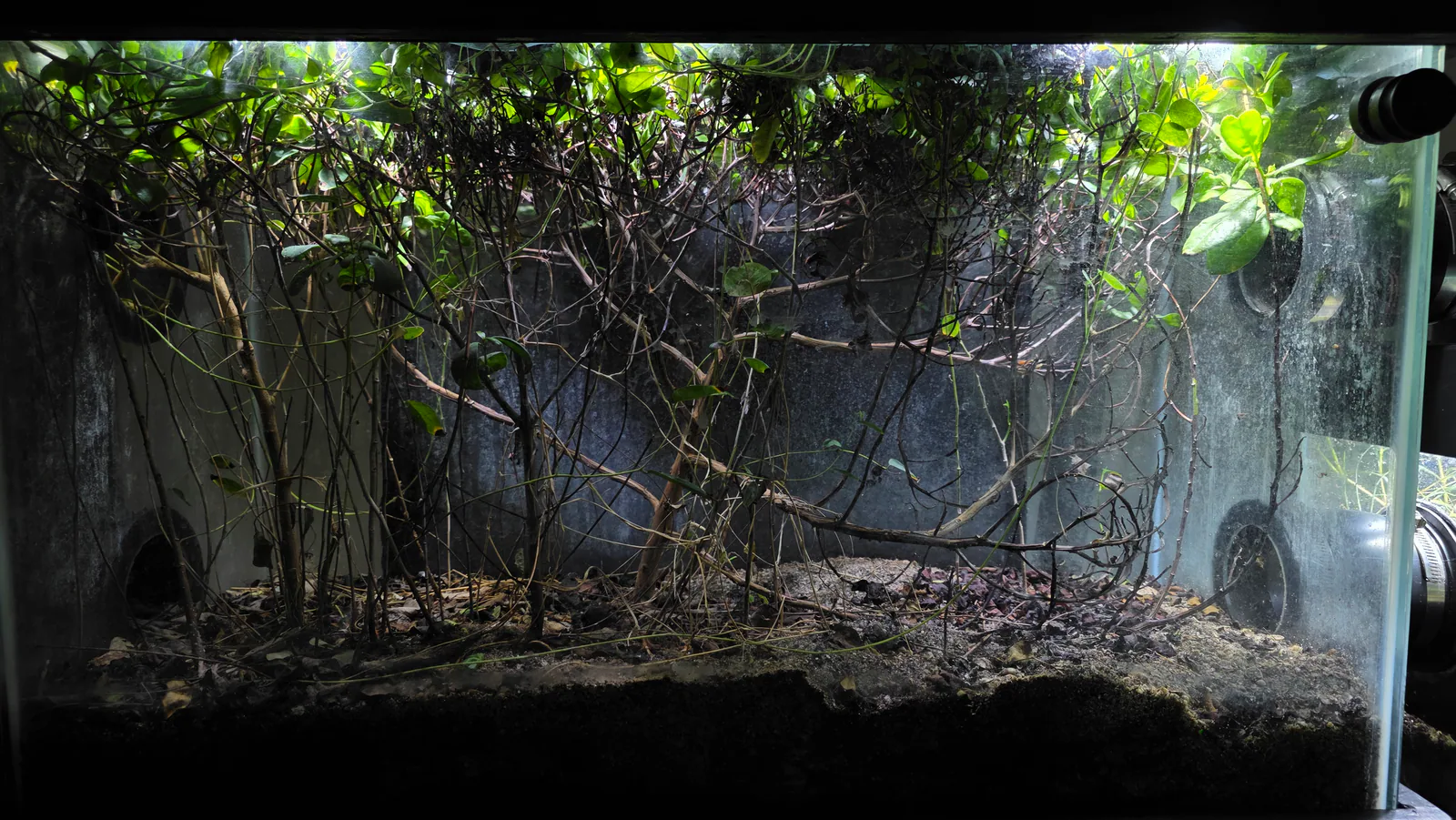
In the Mangrove Forest, Wolf Spiders occupy the terrestrial ground layer, the leaf litter, exposed root surface, and low-vegetation zone where cockroaches, isopods, small beetles, and other invertebrates move at night. As a visual, active-hunting predator, the wolf spider hunts primarily at night, patrolling the forest floor and ambushing invertebrate prey on contact. In a closed system like miniBIOTA's Mangrove Forest, even a single wolf spider can exert measurable predation pressure on the cockroach and detritivore layer.

Spider predation on cockroaches in the Mangrove Forest is documented in the biome record as a pre-June 2026 observation. Whether this specific event involved the wolf spider or a Red House Spider is not resolved, but it confirms spider predation as an active process in the Mangrove Forest predator community. The wolf spider is one of at least three confirmed spider taxa in the Mangrove Forest alongside Red House Spider and Southern Black Widow.

miniBIOTA Evidence

Introduction context: No introduction event has been recorded for the Wolf Spider. Introduction method, source origin, and date of first introduction are all not documented. Self-arrival is the consistent interpretation, wolf spiders are highly mobile ground hunters common in Florida gardens and terrestrial outdoor habitats, and would readily colonize a suitable ground-litter environment.

Observation timeline:

  • March 9, 2024: An adult female wolf spider was documented carrying young on her abdomen in the Mangrove Forest. The observation is recorded as a "maternal-young record" in miniBIOTA. This is the only observation formally linked to this species; no dedicated observation record exists for this date. This is also the species' date_last_observed.

Confirmed:

  • Adult female wolf spider present in the Mangrove Forest, March 9, 2024
  • Maternal young confirmed on female's abdomen; reproduction had occurred
  • Wolf spider documented as part of the Mangrove Forest predator web in biome-level records

Inferred:

  • Self-arrival from surrounding outdoor terrestrial environment
  • Ground-hunting predation on invertebrates (cockroaches, isopods, and other small invertebrates) consistent with family biology
  • Part of the broader Mangrove Forest predator guild alongside Hentz Striped Scorpion, Red House Spider, and Southern Black Widow

Unknown:

  • Species identity within Family Lycosidae
  • Whether the wolf spider population persisted, bred again, or declined after March 2024
  • Whether the spiderlings from the March 2024 maternal observation survived and established
  • Current population status in the Mangrove Forest