Latrodectus mactans
Southern Black Widow
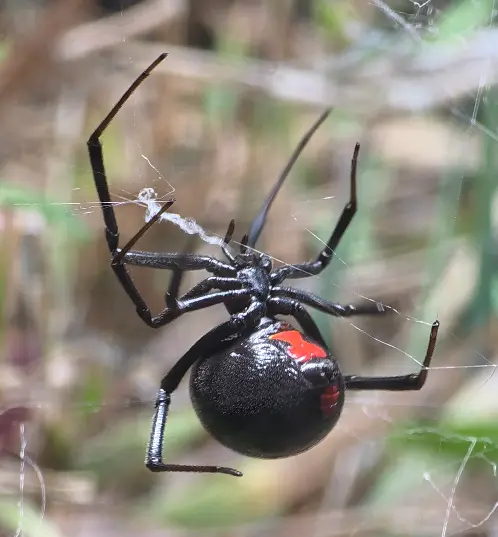
A historical web-building predator with glossy black body and red hourglass marking, once exerting strong insect pressure in Lakeshore and Lowland Meadow before removal.
Latrodectus mactans
A historical web-building predator with glossy black body and red hourglass marking, once exerting strong insect pressure in Lakeshore and Lowland Meadow before removal.
[11/2/2025] Two known individuals are still within miniBIOTA. These two are being tracked for now.
[10/30/2025] I've begun to remove this species from miniBIOTA. As of today, there are 2 known individuals still needing removal.
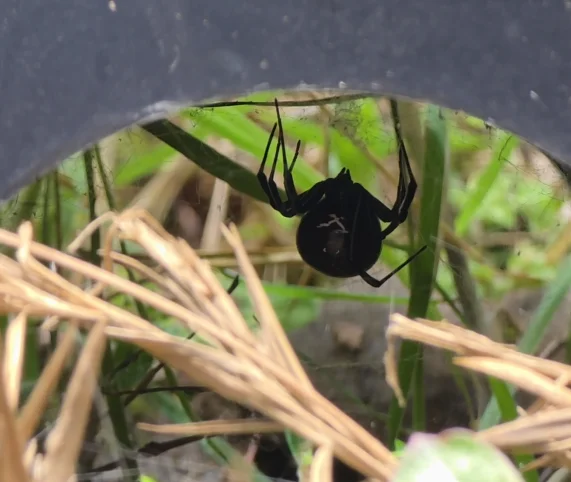
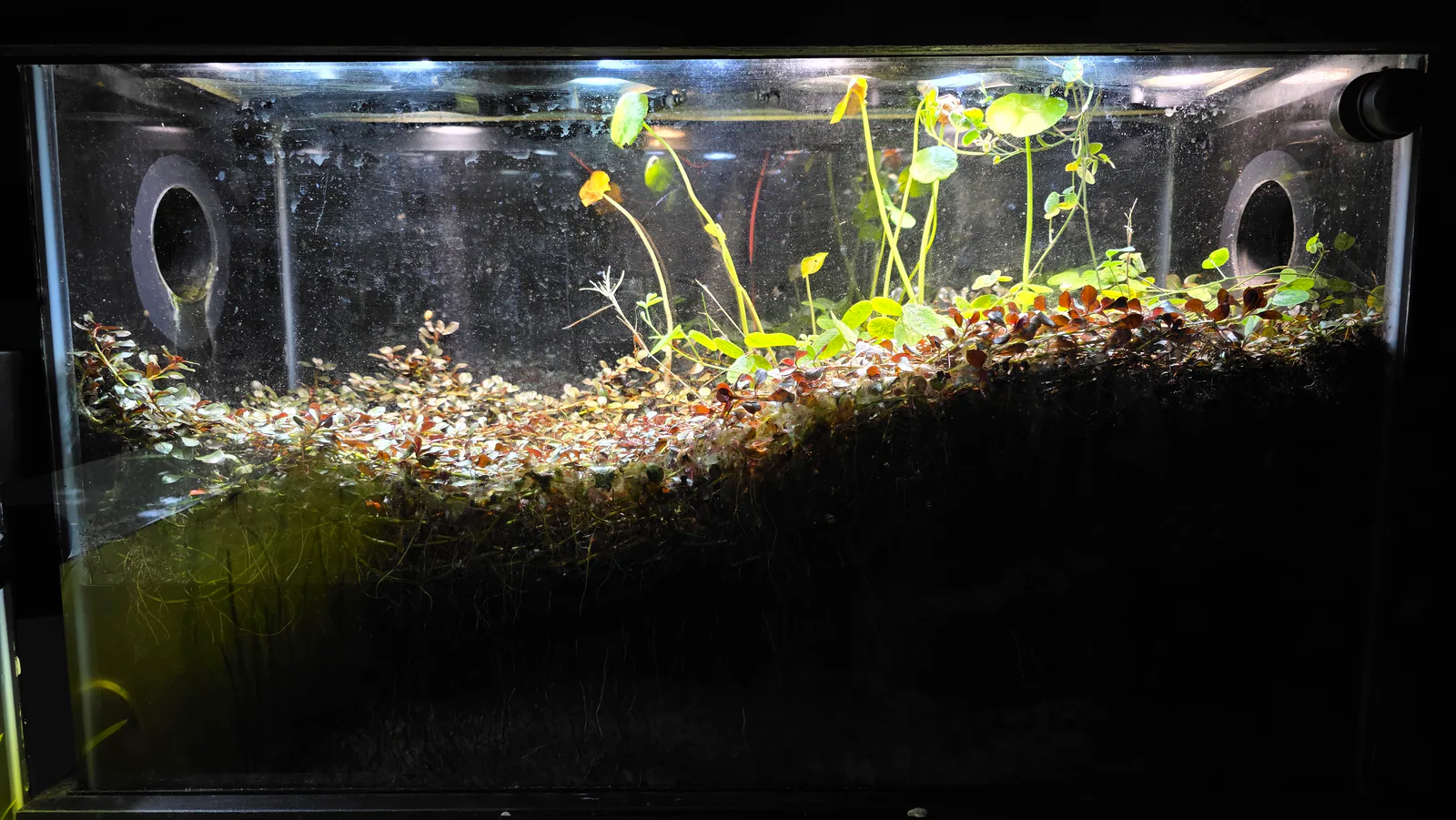
The black widow made it's home in the tunnel connecting the grassland biome and the lakeshore biome
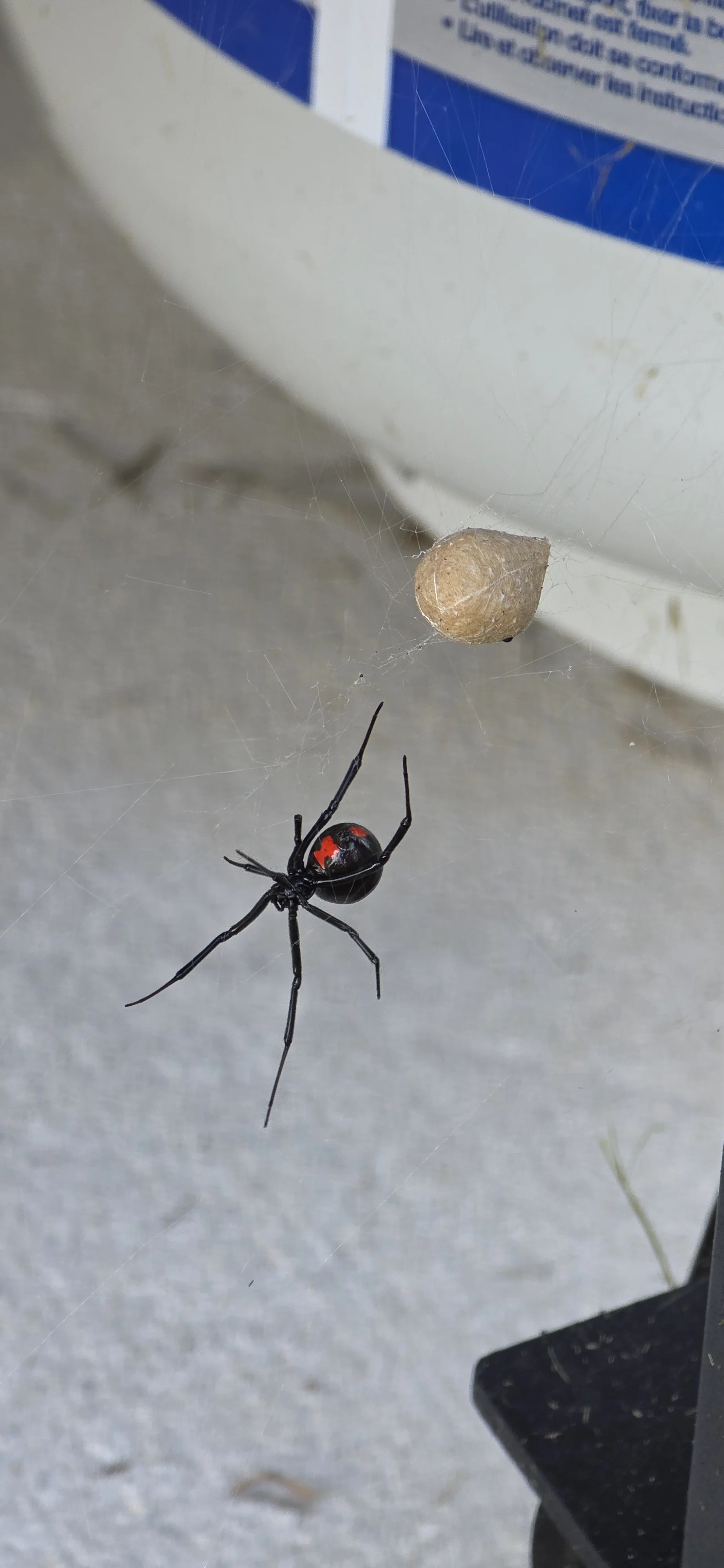
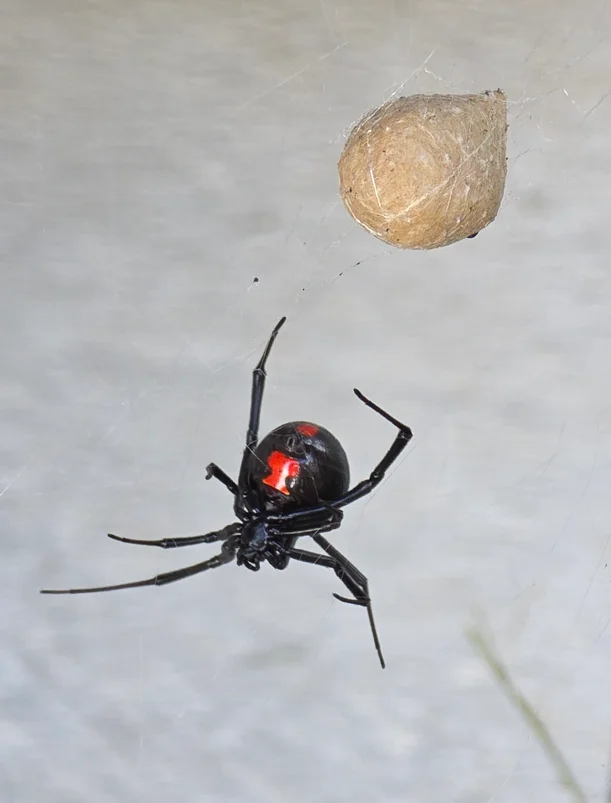
Came in with a sac of eggs that hatched. Then the spider laid a second egg sac
Trophic classification is Secondary Consumer. Food-web role: Small-invertebrate predator. Feeding method: Active Predator. Dietary inputs: Predator of small insects
This section will expand as more information is documented for this species.
Came in with a sac of eggs that hatched. Then the spider laid a second egg sac
Follow this species across the habitats where it currently appears in the miniBIOTA biosphere.
This chronicle is connected here as related context. Open the primary chronicle for the full story.
After the black widow was removed from the Lakeshore, Florida woods cockroaches began exploring open areas and feeding on Dollar Weed. Their grazing showed the food web returning to a plant-herbivore-predator structure, with roach offspring likely becoming future prey.
The original Southern Black Widow was removed by slowly twisting a rubber tie through her web tunnel and transferring the web, spider, and egg sacs into a ventilated container. The removal revealed eight egg sacs, showing that more waves had hatched inside miniBIOTA than previously counted.
The black widows were scheduled for removal, with the original female and egg sac to be contained before another hatch. The record reframed the spider plan toward smaller ground spiders or tiny jumping spiders while the Regal Jumping Spider and new armyworms remained under review.
A walking stick was killed by the Regal Jumping Spider, and later an adult scorpion was found caught in a large black widow web. The losses showed that predator pressure had become too strong, leading to plans to rehome the widows and rebalance the system for the next phase.
The original Southern Black Widow produced another hatch, but this brood was smaller than earlier waves. The smaller generation may reflect food scarcity or the female nearing the end of her egg production, while a male nearby suggested the next generation could continue the cycle.
A cricket seen near the Lakeshore water edge was later caught high in a black widow web. The widow pulled the prey upward, showing that the Lakeshore widow population remained strong even as grassland widows declined and cricket numbers came under pressure.
A Regal Jumping Spider was caught stalking and pouncing on a young black widow, confirming it as a major predator of the spiderlings in the Lowland Meadow. The black widows may still survive elsewhere, but the grassland group faced heavy hunting pressure.
Black widow web remains obstacle context.
Black widows remain pressure entering red-house-spider territory.
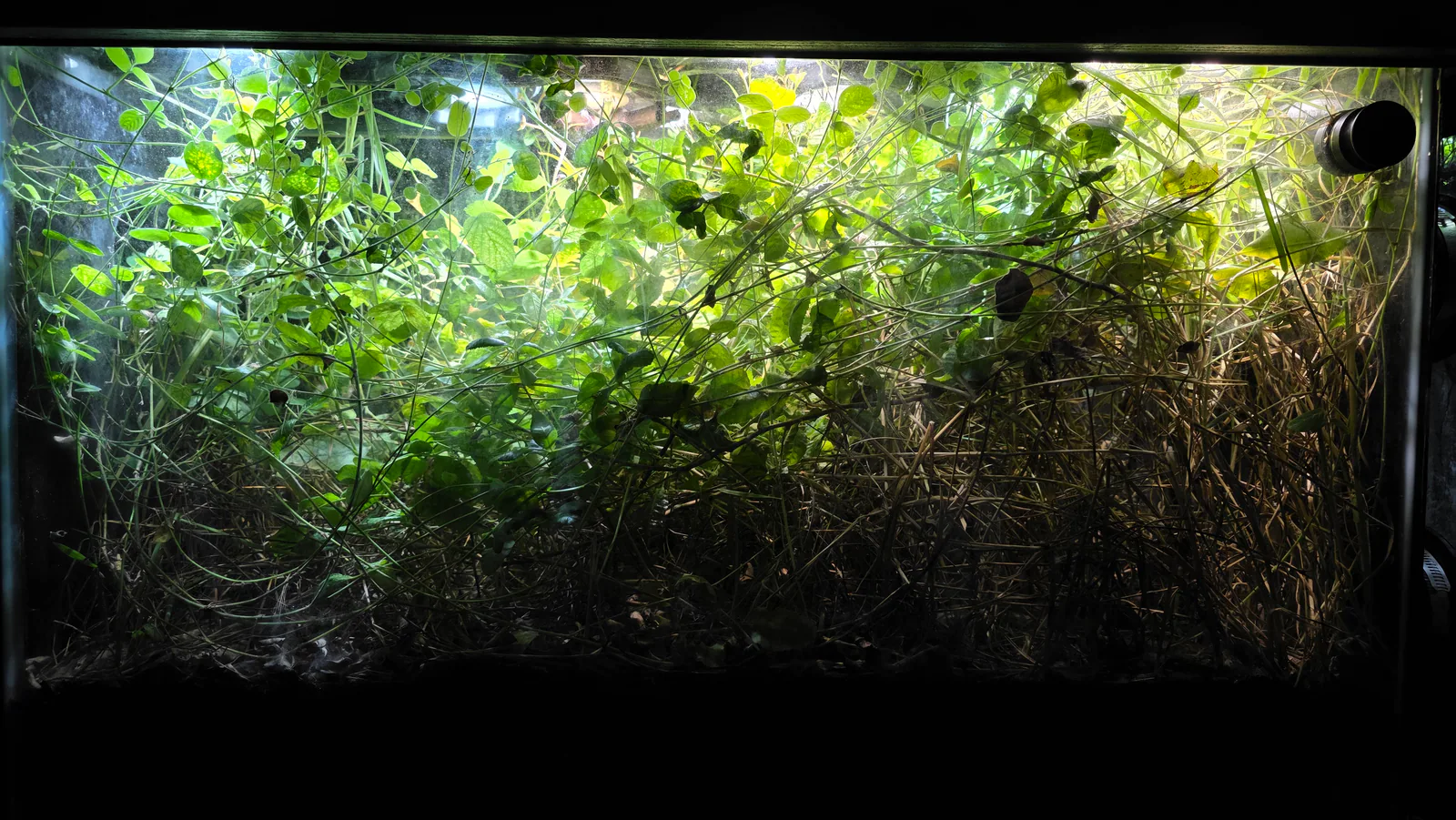
A fourth wave of Southern Black Widow spiderlings hatched from the original female tunnel and began spreading through the web network across all six biomes. With soldier flies declining, the spiderlings turned toward other prey such as young cockroaches as the population approached its system limit.
Black widow spiderlings caught a queen Common Crypt Ant during her nuptial flight. The ant nearly escaped by tearing through silk, but two spiderlings worked from opposite sides until she tired and became a shared meal.
Black widow spiderlings continued finding meals after the soldier fly pulse faded because crickets began climbing toward flowers and nectar. The flowers gave the crickets a reward, but they also drew them into web-covered spaces where widows could keep feeding.
A Regal Jumping Spider was observed tracking and leaping onto a soldier fly, capturing the prey in one quick strike. The hunt confirmed how actively the spider was using the new fly emergence, even if soldier flies might only be a temporary food source.
The regal jumping spider returned after molting and immediately began hunting abundant flies. At the same time, red house spiders in the coastal biome appeared to be holding territory against black widows, while a third wave of widow spiderlings was maturing faster thanks to fly prey.
The third wave of black widow spiderlings formed a web net across the top of the Lowland Meadow, where soldier flies repeatedly broke through or became temporary prey. Fruit flies were also added through a custom funnel, creating a test of whether flies could establish while also feeding the developing widow generation.
A third wave of black widow spiderlings emerged, and some quickly established in the Lowland Meadow while the Regal Jumping Spider was absent. Their webs along the grassland edge raised the question of whether this wave could gain a stronger foothold.
Soldier flies began emerging and were quickly caught by the black widow and Regal Jumping Spider. Because their larvae turn organic waste into adult bodies that predators can eat, the emergence created a new protein pulse that could reshape predator pressure in miniBIOTA.
Predator pressure from the black widow and Regal Jumping Spider had become worrying, but the first emerging soldier fly shifted the calculation. Sherman caught one of the new flies, suggesting that a coming fly emergence could support the predators instead of requiring immediate removal.
Soldier fly larvae added near the Lakeshore entrance landed under the black widow web, but the spider appeared to remove rather than eat them. Fruit flies were also caught in the web, yet some walked across it and reached the land below, where they began exploring.
Black widow remains prior-predation context, not the primary added organism.
Black widow spiderlings disappeared from the web network across the Lakeshore and nearby areas. Regal Jumping Spider predation explained some losses, but other areas without the spider also emptied out, suggesting starvation, cannibalism, or broader ecosystem pressure before a third egg sac appeared.
The Southern Black Widow second egg sac hatched into a prepared web network, letting spiderlings fan across the Lakeshore and into the Lowland Meadow. A Regal Jumping Spider began hunting them, but many spiderlings still reached the grassland and started building webs.
After three weeks without a confirmed meal, the black widow caught and fed on the katydid that had been added two weeks earlier. She consumed the legs, clipped away the web around the body, and dropped the empty husk, leaving the remaining nutrients to cycle back into the soil through other organisms.
The first wave of black widow spiderlings appeared to be gone, leaving only old webbing behind. A nearby Regal Jumping Spider had been hunting in the same area, making predation a likely explanation, while the mother black widow still carried another egg sac.
The first wave of black widow spiderlings had already thinned and moved upward, likely under heavy competition and disturbance from larger insects. Meanwhile, the mother carried a new egg sac, setting up another wave even if most of the first generation failed.
A second-generation red house spider in the Marine Shore captured a two-lined spittlebug much larger than itself. The spider ignored the prey's defensive liquid, wrapped it, delivered a fatal bite, and pulled it into the web corner, showing that the red house spider lineage had become an active predator in the coastal biome.
The introduced Southern Black Widow egg sac hatched, spreading tiny spiderlings through the biosphere. Most were expected to die through competition, predation, or dispersal, but the hatch transformed the question from one predator to a possible population-level shift.
The Southern Black Widow did not settle in the expected mangrove corner. Instead, she built in the dark corridor between the Lakeshore and Lowland Meadow, turning a major crossing route into a web trap for crickets and other travelers.
Corrected from Mangrove Forest; transcript places the web in the corridor between Lakeshore and Lowland Meadow.
Lowland Meadow side of the corridor where the black widow web intercepts traffic.
A large female Southern Black Widow found under the grill was captured with her egg sac and introduced to miniBIOTA. The transfer marked the start of a major predator experiment, with the spider settling into the brush after being released from the container.