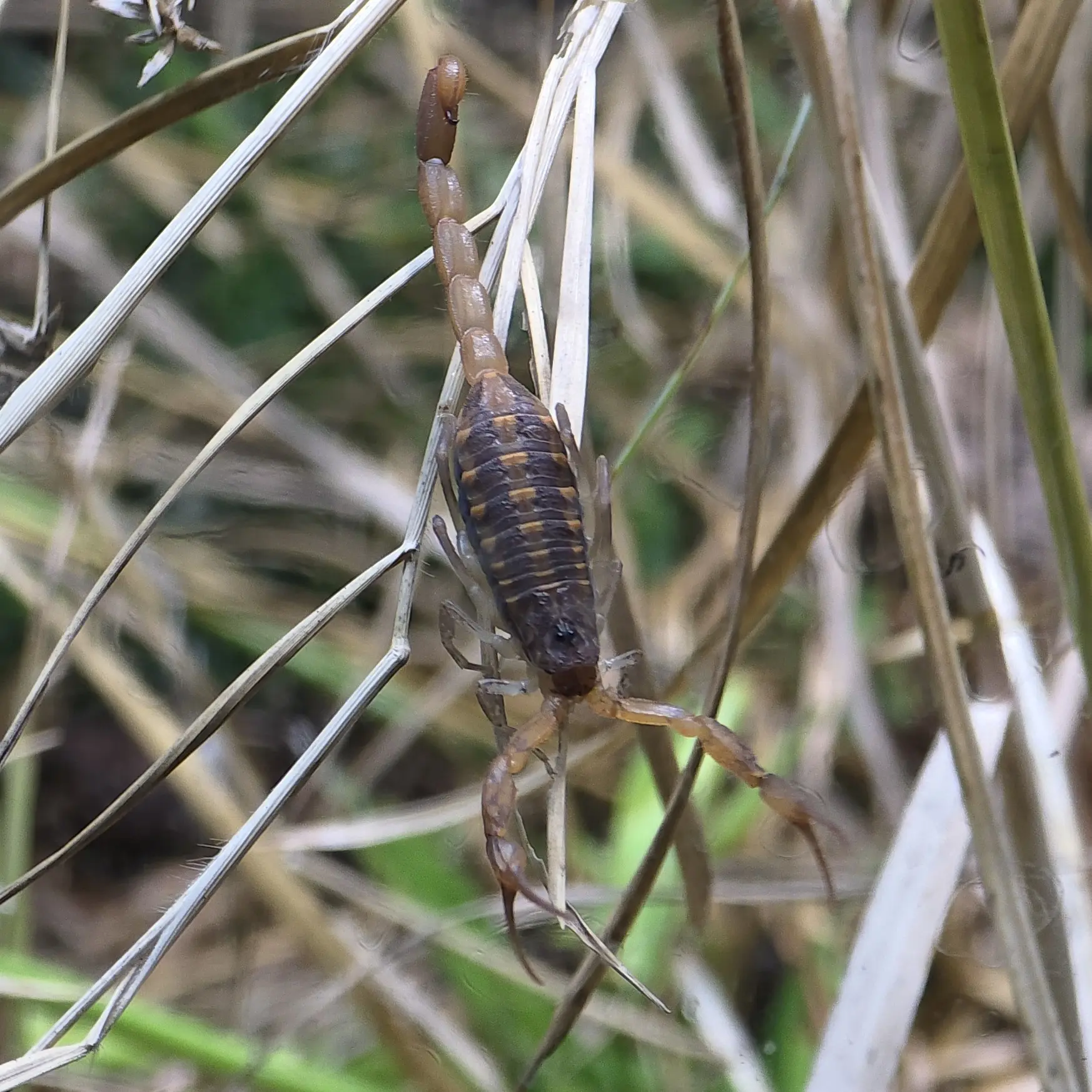
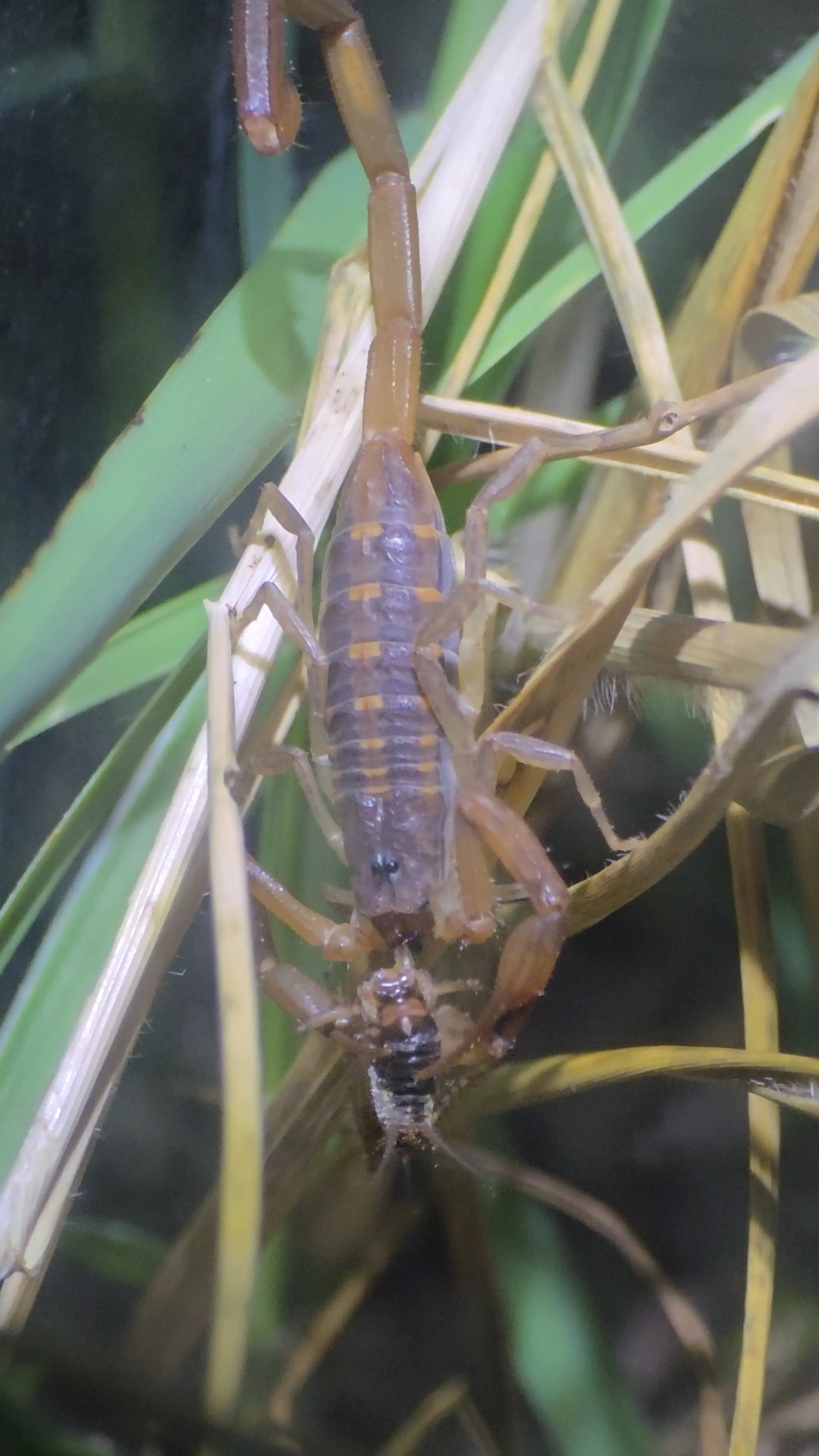
Centruroides hentzi is the most common scorpion in Florida, found statewide in hammocks, gardens, scrub, and suburban environments. It shelters beneath bark, in leaf litter, under debris piles, and in any dark, humid crevice during daylight hours, emerging after sunset to hunt. The species is an ambush and pursuit predator, feeding on crickets, roaches, spiders, isopods, and other arthropods that venture within reach. Prey is seized with the pedipalps (claws) and stung with the tail if resistance is significant; the venom immobilizes small prey quickly.
The Hentz Striped Scorpion fluoresces visibly under ultraviolet light, a trait shared with all scorpions and caused by fluorescent compounds in the cuticle. This makes targeted nighttime detection straightforward with a UV lamp. In Florida, the species is common enough to be encountered incidentally in gardens and building margins.
Reproduction is viviparous: females do not lay eggs but carry developing embryos internally and give birth to live young. Newborns are pale and soft, and they immediately climb onto the mother's back, remaining there through their first molt before dispersing as independent juveniles. Females may produce one or more broods per year under favorable conditions. Growth is slow; individuals pass through multiple molts before reaching sexual maturity. Lifespan is estimated at three to five years in wild populations.