Chilopoda sp. (unidentified)

Centipede

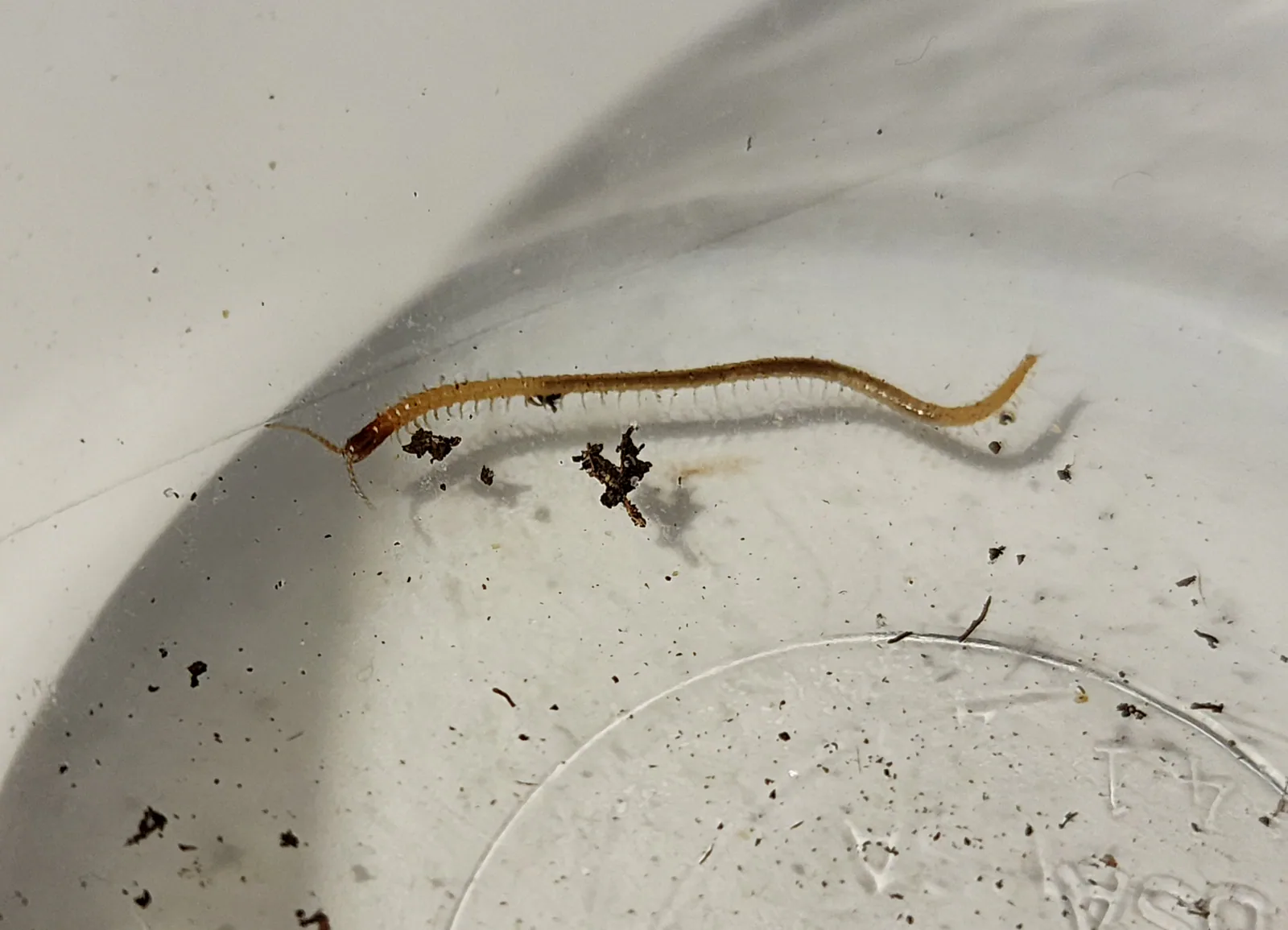
A soil centipede discovered under a wood log in the Lowland Meadow and added to the biota in September 2023, this predatory Chilopoda is tracked separately from the Garden Centipede (a Symphyla); species identity and current persistence are unresolved.

Visual Data Unavailable

Overview

A soil centipede discovered under a wood log in the Lowland Meadow and added to the biota in September 2023, this predatory Chilopoda is tracked separately from the Garden Centipede (a Symphyla); species identity and current persistence are unresolved.

Identity

  • Common name: Centipede
  • Alternate names: centipede, chilopoda, common centipede, house centipede (misidentified), garden centipede
  • Scientific name: Chilopoda sp. (unidentified)
  • Identification confidence: Class-level; species unresolved
  • Uncertainty label: Uncertain

Taxonomy

  • Kingdom: Animalia
  • Phylum: Arthropoda
  • Subphylum: Myriapoda
  • Class: Chilopoda
  • Order: Unresolved
  • Family: Unresolved
  • Genus: Unresolved
  • Species: Unresolved

Natural History

Chilopoda (true centipedes) are predatory myriapods found in soil, leaf litter, rotting wood, and moist terrestrial habitats worldwide. Unlike the Garden Centipede (Class Symphyla), which is a detritivore of plant roots and soil fungi, true centipedes are fast-moving hunters equipped with a pair of venom-injecting forcipules, modified front legs used to paralyze prey. Florida's centipede fauna includes several families; the most relevant to moist outdoor habitats are Geophilomorpha (soil centipedes: long, worm-like, many-legged, found under logs and in deep soil) and Lithobiomorpha (stone centipedes: flatter, faster, typically 15 leg pairs, found under rocks and logs).

The September 2023 observation describes the individual as a "soil centipede found under a wood log"; both the substrate (log) and the descriptor "soil centipede" are consistent with Geophilomorpha or Lithobiomorpha. True centipedes are almost entirely predatory; they feed on soil invertebrates including worms, insect larvae, isopods, springtails, and other small arthropods. In the Lowland Meadow ground layer, this puts the centipede in the role of a soil predator that regulates populations of small invertebrates in the leaf litter and moist soil.

The "house centipede" misidentification noted in the alternate names refers to Scutigera coleoptrata, a fast-moving, long-legged species common in Florida homes. A soil centipede found under a log is unlikely to be Scutigera; the correction is noted but the basis for the original call is not recorded.

Ecological Role

In the Lowland Meadow, a true centipede occupies the soil predator niche: consuming isopods, worms, insect larvae, springtails, and other small invertebrates in the leaf litter and shallow soil layer. This predation regulates the detritivore and soil fauna populations and returns nutrients to the soil through excretion and molts.

This node was introduced deliberately ("added to the biota") after being found under a nearby wood log. Whether the centipede established, reproduced, or persisted in miniBIOTA is not documented. the record population notes indicate persistence inside the system has not been confirmed.

miniBIOTA Evidence

Introduction context: A soil centipede was discovered under a wood log near the Lowland Meadow on September 3, 2023 and deliberately added to the biota. Introduction method (hand transfer from log), date (September 3, 2023), and biome (Lowland Meadow) are all established from this observation.

Observation timeline:

  • September 3, 2023: Soil centipede found under a wood log and added to the biota. Raw note: "Soil centipede discovered under a wood log and added to the biota." This is the primary evidence record for this node. Biome: Lowland Meadow.
  • March 16, 2026: Listed as last recorded date in the species record. No dedicated observation record exists for this date; the source of this entry is unclear.

Confirmed:

  • A soil centipede was found under a wood log and introduced to the Lowland Meadow on September 3, 2023
  • Class-level identification as Chilopoda

Inferred:

  • Ground and soil predation on small invertebrates consistent with Chilopoda biology
  • Geophilomorpha or Lithobiomorpha as likely order-level candidates, based on "soil centipede" and wood-log habitat
  • Prior "house centipede" call reflects a visual assessment later revised

Unknown:

  • Family, genus, and species identity
  • Whether the centipede survived, established, or reproduced after introduction
  • The source of the March 16, 2026 date_last_observed
  • Whether this centipede is still present in the Lowland Meadow