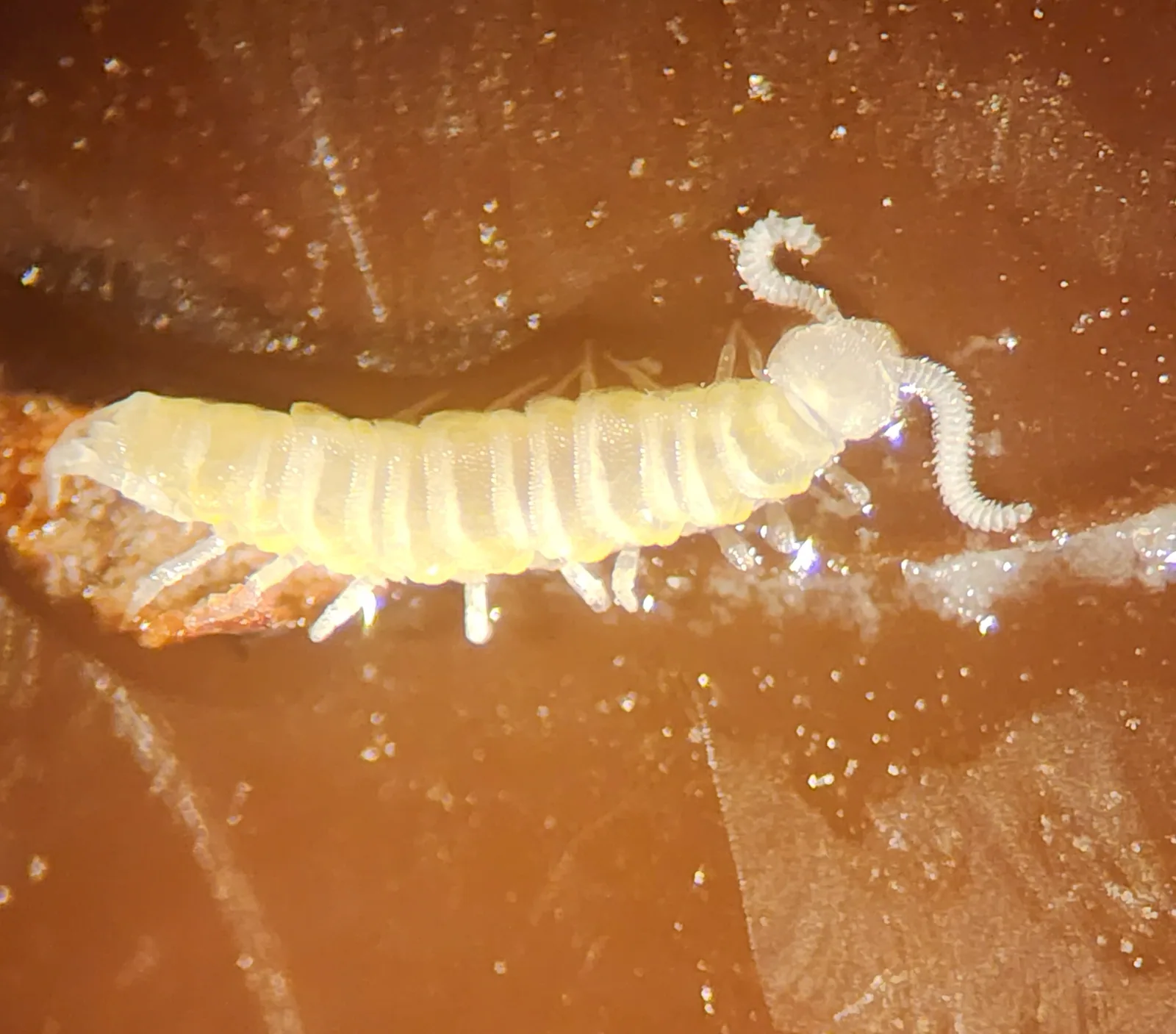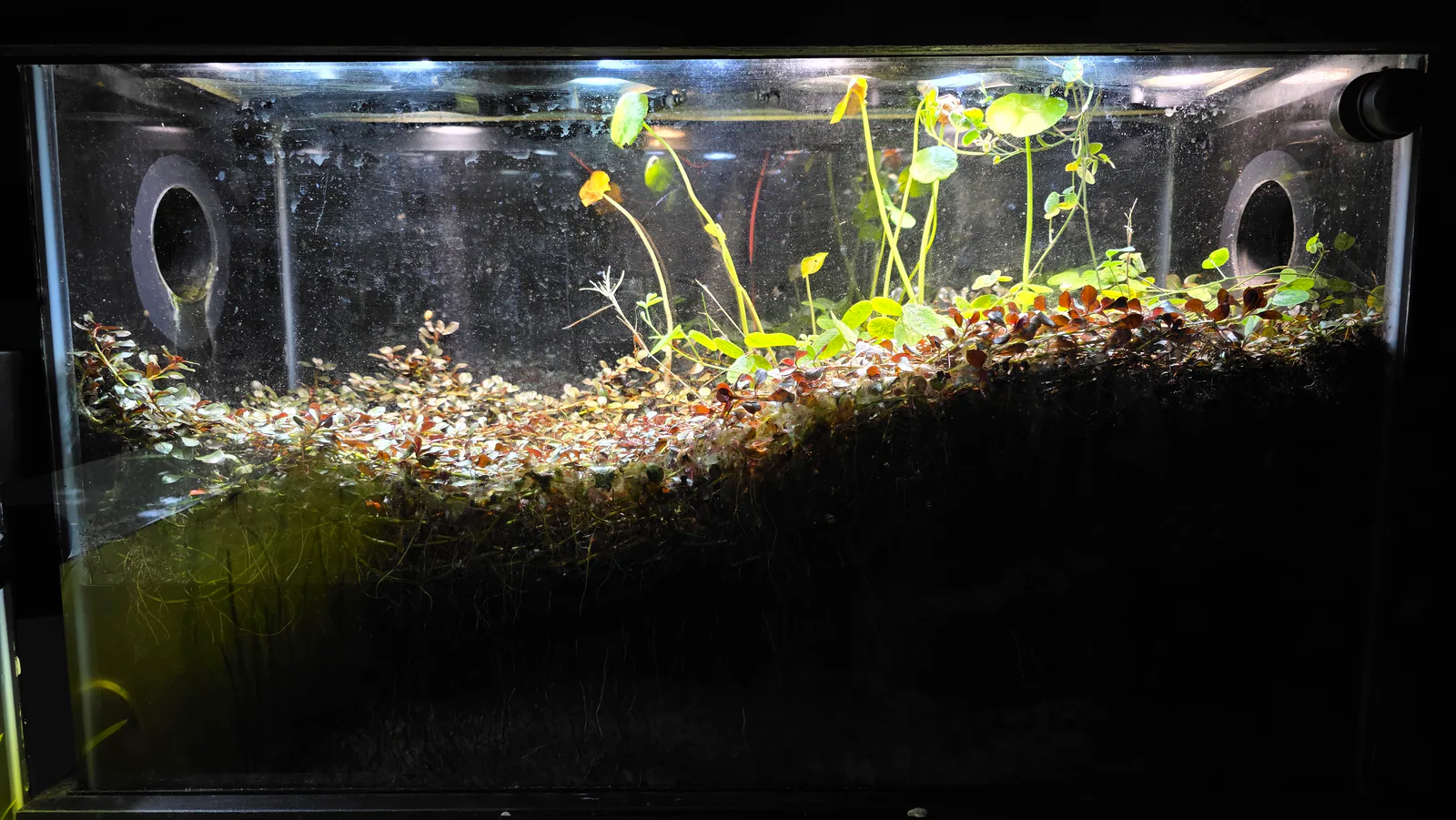
Symphyla sp. (unidentified)

Garden Centipede

A tiny pale white soil arthropod that resembles a centipede but belongs to its own myriapod class; one individual was found climbing a tall Lakeshore plant in September 2023 and was identified under microscope as a symphylan after falling into the water when the plant was disturbed.

Visual Data Unavailable

Overview

A tiny pale white soil arthropod that resembles a centipede but belongs to its own myriapod class, Symphyla. One individual was found climbing the canopy of a tall unidentified Lakeshore plant on September 3, 2023, and fell into the water when the plant was disturbed; it was identified under microscope as a symphylan. No subsequent observations have been recorded and current presence in miniBIOTA is unknown.

Identity

  • Common name: Garden Centipede
  • Alternate names: symphylan, garden symphylid, white centipede, garden scutigerella, pseudo-centipede
  • Scientific name: Symphyla sp. (unidentified)
  • Identification confidence: Class level. Identified as Symphyla by microscope examination September 3, 2023. No genus or species was determined.
  • Uncertainty label: Observed

Taxonomy

  • Kingdom: Animalia
  • Phylum: Arthropoda
  • Subphylum: Myriapoda
  • Class: Symphyla
  • Order: (unidentified)
  • Family: (unidentified)
  • Genus: (unidentified)
  • Species: (unidentified)

Natural History

Symphyla are tiny, pale, soft-bodied myriapods found in soil and leaf litter throughout the world. Adults range from approximately 2 to 10 millimeters in body length and typically carry 10 to 12 pairs of legs. They are eyeless, navigating entirely by chemoreception and touch through their long segmented antennae. A pair of distinctive cerci at the rear of the body, sometimes bearing spinning glands used in reproduction, helps distinguish them from superficially similar arthropods. The body is uniformly white to cream-colored, reflecting a life spent almost entirely below ground.

Habitat

Garden Centipedes live in the upper soil layer, litter layer, and root zone of plants. They prefer moist, organically rich substrates and avoid dry or compacted soils. They are most abundant in garden soil, compost, mulch, and the humus layer beneath leaf litter. They are found in virtually all Florida terrestrial habitats with any organic soil component.

Diet

Symphyla feed primarily on plant roots, fungal hyphae, and decaying organic matter at the root zone. In agricultural contexts, Scutigerella immaculata can be a significant pest of root crops because it feeds directly on actively growing root tissue. In natural soil communities, Symphyla consume a combination of living root tips and root hairs, fungal mycelium, and decomposing organic particles, making their role partly destructive to plants and partly detritivorous depending on context and prey availability.

Behavior

For animals that live primarily underground, Symphyla can move with surprising speed on the surface when disturbed. They are negatively phototactic and will quickly retreat downward when exposed to light. They are also capable of climbing plant stems and root systems when exploring the boundary between soil and plant. The September 2023 miniBIOTA observation found a single individual in the canopy of a tall Lakeshore plant, confirming this climbing behavior.

Reproduction

Symphyla reproduce sexually. Females lay eggs in small clusters in the soil and guard them. Some Symphyla spin silk around their egg clusters from spinning glands on the cerci. Juveniles hatch with 6 pairs of legs and add leg pairs through successive molts until reaching the adult complement of 10 to 12 pairs. Like Collembola, Symphyla continue to molt after reaching adult size, allowing continued growth throughout life.

Ecological Role

Garden Centipede functions as a root-zone consumer and soil organic-matter processor in the terrestrial biomes of miniBIOTA. By feeding on plant roots, fungal hyphae, and decomposing particles in the soil layer, it bridges the boundary between living plant biomass and the detrital food web. In miniBIOTA's Lowland Meadow and Lakeshore biomes, the species would be expected at the litter-soil interface, occupying a niche similar to Springtail and Woodlouse but operating at the root zone rather than the litter surface. Given that Symphyla are soft-bodied and cryptic, their presence in miniBIOTA across all terrestrial biomes with organic soil is plausible even without additional observation records.

miniBIOTA Evidence

Introduction

Not deliberately introduced. The September 3, 2023 observation is the first and only record. Symphyla are commonly present in garden soils and potting mix and are a plausible hitchhiker in any soil or plant introduction. No introduction date or source is documented.

Observation Timeline

  • September 3, 2023: One individual observed in the canopy of a tall unidentified plant in the Lakeshore. When the plant was disturbed, the animal fell into the water. Recovered and identified under microscope as Symphyla. Listed as a new species for the miniBIOTA biota at the time of observation. Only record in observation records.

What Is Confirmed

  • One individual present in the Lakeshore on September 3, 2023.
  • Identification as Symphyla confirmed by microscope.
  • Behavior: climbing a tall Lakeshore plant canopy; fell into water when disturbed.

What Is Inferred

  • Self-colonization via soil or plant material is the most plausible entry pathway.
  • Given the cryptic subterranean lifestyle of Symphyla, individuals are likely present in miniBIOTA's terrestrial soil layer even without additional observation records.

What Remains Unknown

  • Whether Garden Centipede is still present in miniBIOTA.
  • Which genus and species the observed individual belongs to.
  • Which terrestrial biomes are occupied.
  • Whether the canopy-climbing behavior is typical or represents an unusual event.