Physella acuta

Bladder snail

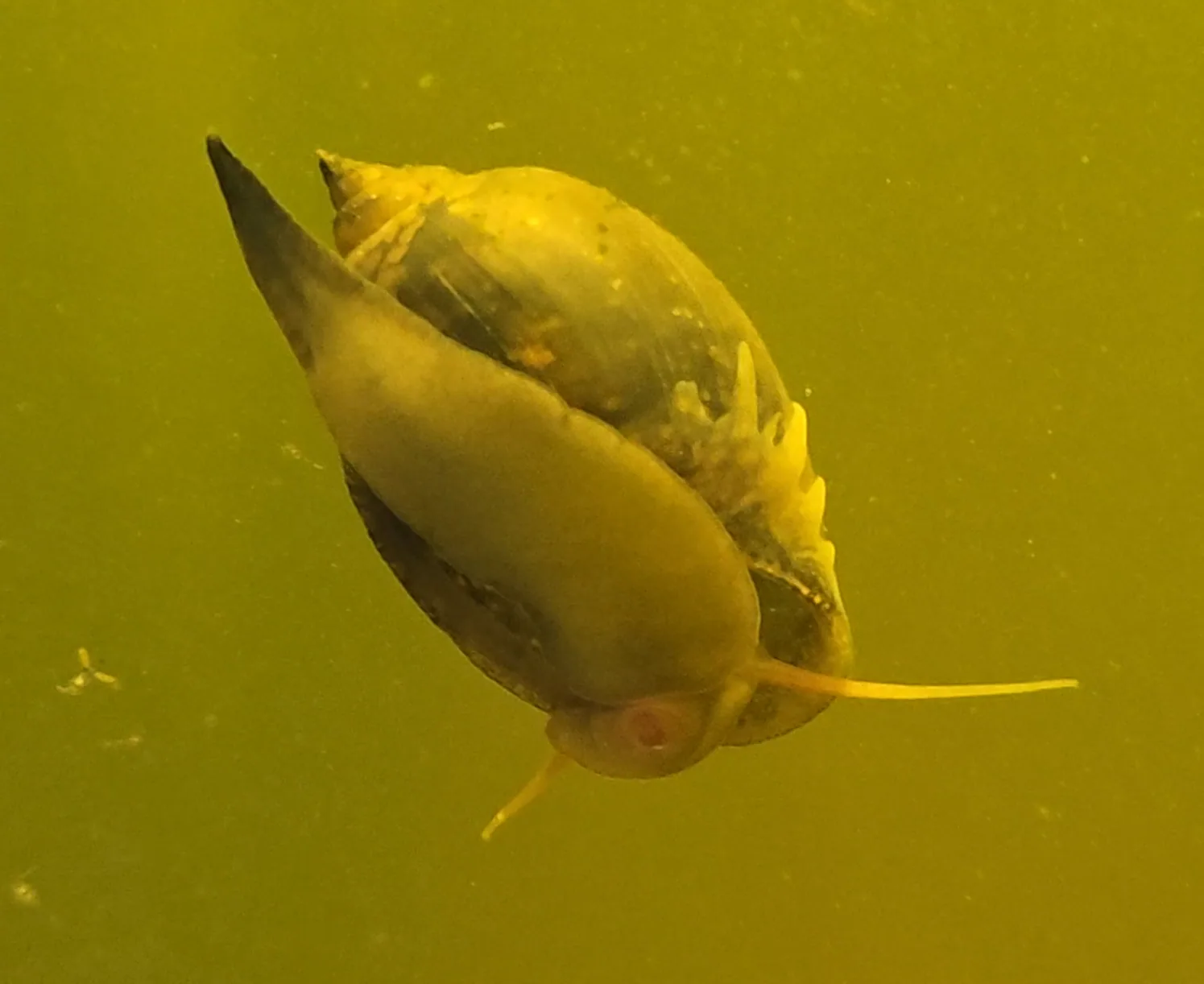
A small freshwater snail recognized by its left-coiling shell, this Lakeshore resident grazes biofilm and decaying plant material from wet plant surfaces and glass edges, gathering in visible clusters among dense aquatic vegetation.

Overview

The Bladder Snail (Physella acuta) is a small freshwater detritivore-grazer present in the miniBIOTA Lakeshore with a population history of fluctuation. Numbers were low for one to two months before a juvenile was observed in April 2025, and by May 2026 eight individuals appeared together among dense Lakeshore plant growth, the largest group documented in the current observation records. Mating behavior has been noted in the species record, but eggs and confirmed juveniles are unresolved. Population status is Uncertain; species identity is confirmed as Physella acuta.

Identity

  • Common name: Bladder Snail
  • Alternate names: pouch snail, european physa, physa, pest snail, physella, acute bladder snail
  • Scientific name: Physella acuta
  • Identification confidence: Confirmed
  • Uncertainty label: Confirmed, population uncertain

Taxonomy

  • Kingdom: Animalia
  • Phylum: Mollusca
  • Class: Gastropoda
  • Order: Hygrophila
  • Family: Physidae
  • Genus: Physella
  • Species: acuta

Natural History

Range and Florida Relevance

Physella acuta is native to North America and now found worldwide in freshwater habitats including ponds, lakes, streams, canals, and drainage ditches. It is among the most broadly distributed and ecologically tolerant freshwater snails known, thriving in warm, nutrient-rich, and even degraded water that excludes most competitors. Florida populations are widespread and the species is a common resident of still and slow-moving freshwater in the state, making it an ecologically appropriate part of the miniBIOTA freshwater zone.

Habitat

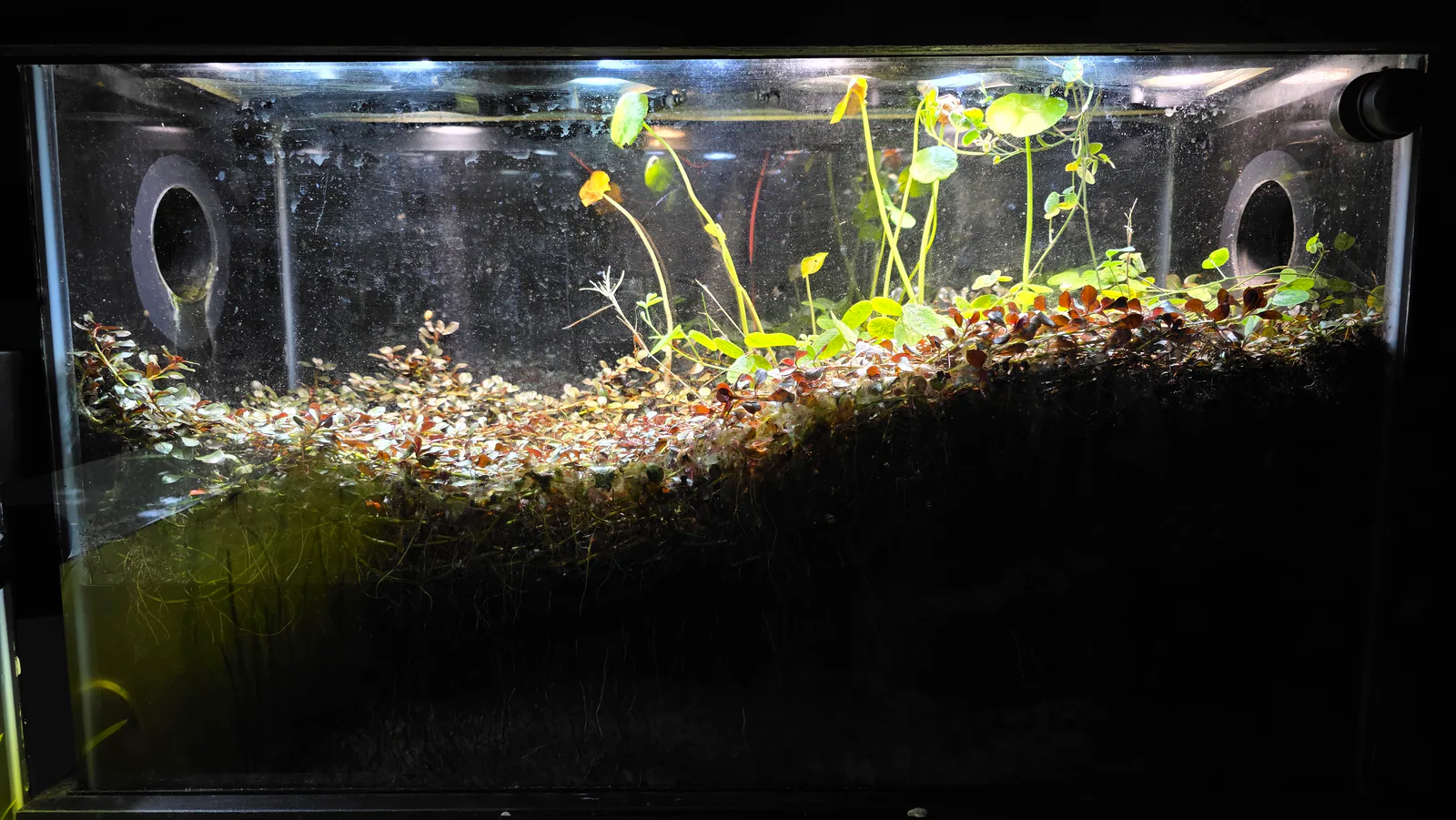
Physella acuta uses the full range of freshwater surface habitats: plant stems and leaves, submerged wood and debris, glass walls, and shoreline edges. It is particularly associated with areas where soft films, biofilm, and decaying organic material accumulate. In miniBIOTA, bladder snails have been observed most often along the wet plant edges of the Lakeshore, concentrating among dense aquatic plant biomass where grazing substrate and shelter coincide. The January 2026 observation record also lists the species as present in the Freshwater Lake, suggesting bladder snails may range between both zones.

Diet

Physella acuta is a generalist surface grazer and detritivore, feeding on biofilm, algae, microbes, and decaying plant material scraped from submerged surfaces. It uses a radula, a rasping feeding structure, to work across glass, plant tissue, and other wet surfaces. No animal prey or carrion feeding has been documented in miniBIOTA; diet is understood from species biology and the surfaces on which individuals are observed foraging.

Reproduction

Physella acuta is a simultaneous hermaphrodite: each individual possesses both male and female reproductive organs. Two individuals typically cross-fertilize during mating, though self-fertilization is also possible. Eggs are deposited in soft gelatinous capsules attached to submerged surfaces; each capsule contains multiple eggs. Hatchlings emerge as miniature snails with no larval stage. Reproduction can be rapid under warm, well-fed conditions. In miniBIOTA, mating behavior has been noted in the species record; eggs and confirmed hatchlings have not been documented in the current observation records.

Tolerance Ranges

Physella acuta is exceptionally tolerant of low oxygen, a wide pH range, warm temperatures, and disturbed conditions. It can survive in habitats where most other freshwater invertebrates cannot persist. In miniBIOTA, no formal tolerance measurements have been taken, but the species has maintained a persistent presence through varying conditions across at least 2025 and 2026.

Ecological Role

The Bladder Snail is a surface-grazing detritivore that scrapes biofilm, algae, and soft organic films from plant surfaces, glass, and shoreline edges. By converting surface growth and decaying plant material into snail biomass it makes that organic matter available to predators and keeps surfaces clear of thick film buildup. Its small size and tolerance of marginal conditions allow it to occupy microhabitats that larger grazers may not use consistently.

In miniBIOTA, the May 2026 observation noted that bladder snail presence was strongly associated with dense aquatic plant biomass in the Lakeshore, while ramshorn snails are more commonly associated with the open water of the lake. This raises the possibility that the two snail species partition their habitat by structure type, with bladder snails concentrating on thick plant surfaces and ramshorn snails using more exposed water-column surfaces. This pattern is an observer-stated interpretation from one observation and has not been confirmed through systematic comparison.

A May 2026 observation also noted that the removal of Flagfish and Least Killifish from the Freshwater Lake had allowed biofilm to accumulate at the surface, and the observer speculated that bladder snails might benefit from this shift in surface-grazing pressure. Whether the group of eight bladder snails observed three weeks later reflects that ecological opening is plausible but unconfirmed.

No symbiotic relationships have been documented in miniBIOTA. No confirmed predators are recorded, though any generalist invertebrate predator capable of taking small snails could theoretically prey on bladder snails.

miniBIOTA Evidence

Introduction Context

No introduction date or method is recorded for the Bladder Snail. The species appears to have arrived in miniBIOTA before the current observation records, possibly as a hitchhiker on plant material. As of January 2026, it was listed as one of at least five aquatic snail species in the Freshwater Lake zone.

Observation Timeline

  • April 14, 2025: Juvenile Bladder Snail observed moving through hair algae in the Lakeshore; described as the first time more than two bladder snails had been seen in one to two months. Observer noted population may be recovering. No media.
  • January 24, 2026: Bladder Snail listed as a context species when an unidentified hitchhiker snail arrived on tapegrass in the Freshwater Lake. Note identifies bladder snail as one of five aquatic snail species present in the lake biome at that time. Video of hitchhiker snail; no bladder snail footage.
  • May 2, 2026: Context only. Observer noted increased biofilm accumulation at the Freshwater Lake surface following the absence of Flagfish and Least Killifish, and speculated bladder snails may benefit from reduced surface-grazing competition. Video of surface biofilm.
  • May 22, 2026: Eight Bladder Snails observed in the Lakeshore, the largest number seen in a long time. Presence described as strongly associated with dense aquatic plant biomass. Observer noted possible habitat partitioning with ramshorn snails. No media.
  • May 26, 2026: Recorded as last observed in the species record; specific observation note not located in the observation records.

What Is Confirmed

  • Bladder Snails are present in the miniBIOTA Lakeshore, with confirmed sightings in April 2025 and May 2026.
  • Eight individuals were observed on May 22, 2026, the largest documented group on record.
  • Presence is strongly associated with dense Lakeshore aquatic plant biomass based on the May 2026 observation.
  • Species listed as present in the Freshwater Lake zone as of January 2026.
  • Mating behavior has been noted; specific observation date not identified in current observation records.
  • Species identification as Physella acuta is confirmed.

What Is Inferred

  • The April 2025 juvenile observation suggests reproduction or recruitment occurred at some point before that date.
  • The increase from near-absence in early 2025 to eight individuals in May 2026 may reflect population recovery, but the trajectory and cause are not confirmed.
  • The absence of surface-grazing fish from the Freshwater Lake may have reduced competition pressure on bladder snails, but the connection between fish removal and the May 2026 count is speculative.
  • Bladder snails may partition habitat with ramshorn snails by using dense plant structure while ramshorn snails use more open water, but this is an observer interpretation from one observation.

What Remains Unknown

  • Introduction date, method, and origin.
  • Whether eggs or confirmed hatchlings have been produced in the current system.
  • Whether the eight-snail count on May 22, 2026 represents a sustained population increase or a temporary aggregation.
  • Current exact population count.
  • Whether bladder snails occupy both the Lakeshore and Freshwater Lake biomes as active residents, or primarily the Lakeshore.
  • What happened between the April 2025 observation and the May 2026 observation that changed their numbers.