Planorbella duryi

Seminole Ramshorn Snail

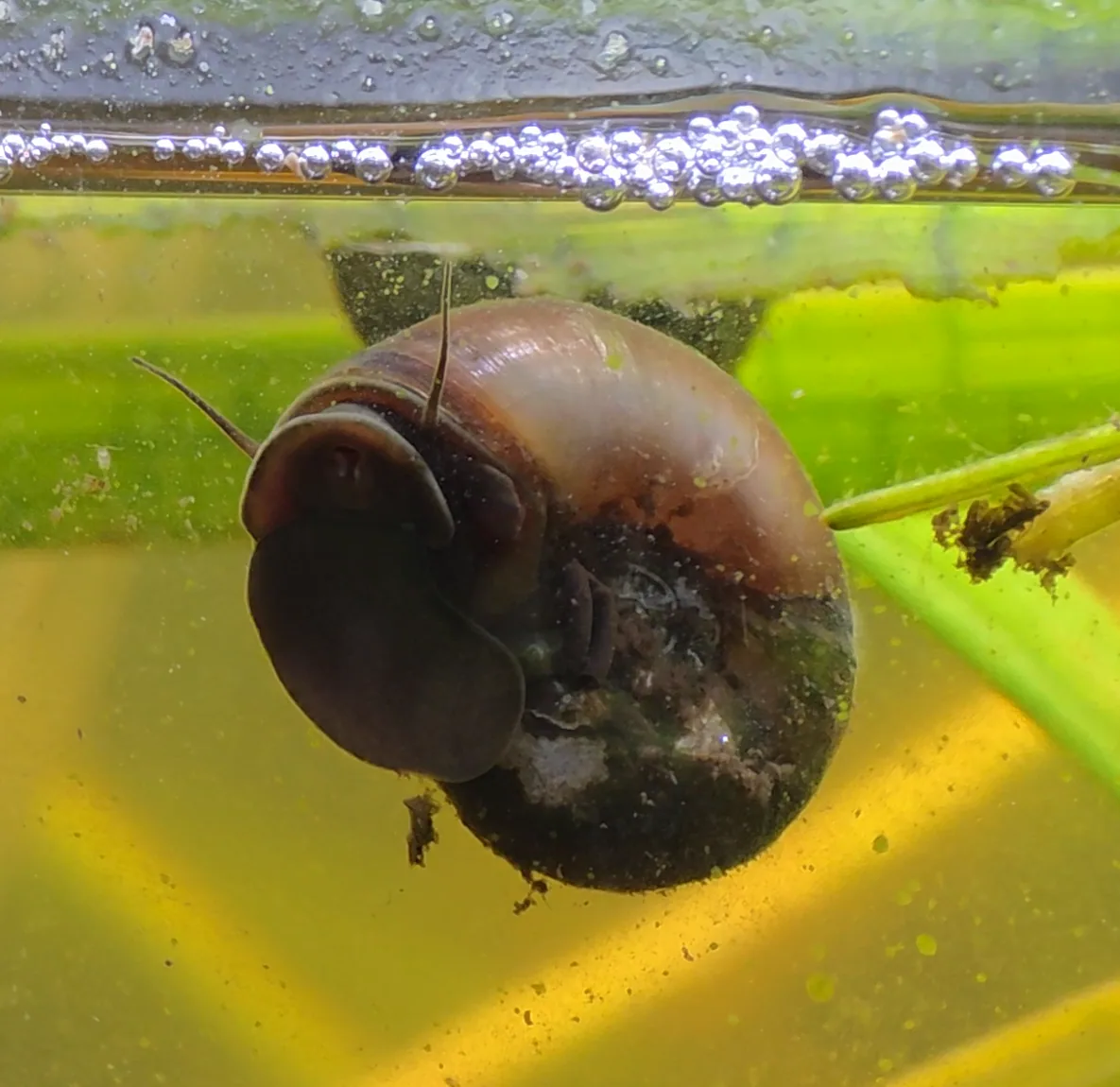
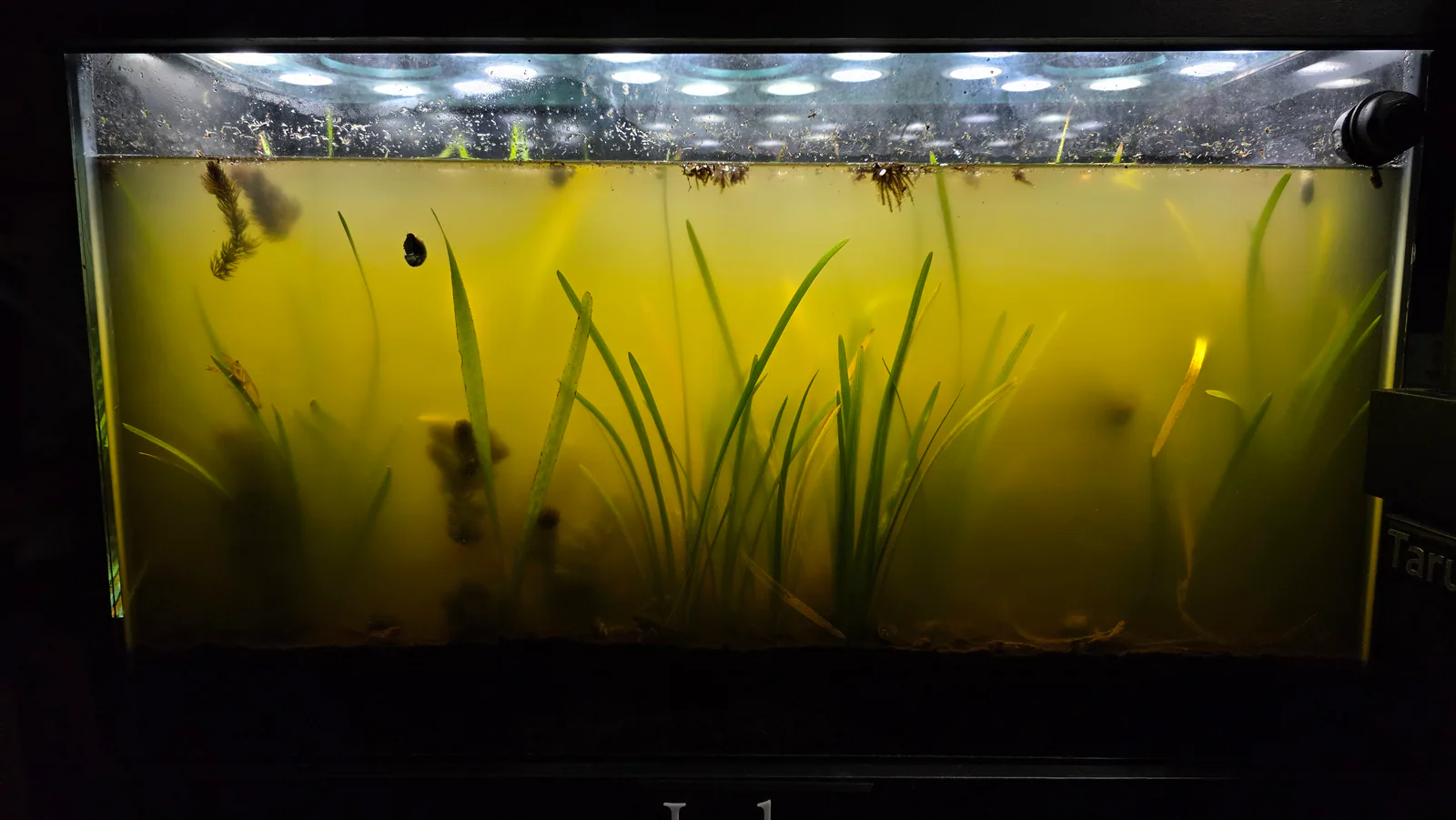
A flat-coiled native Florida freshwater snail with a clear-shell morph that makes its spotted body visible through the transparent shell, this Freshwater Lake grazer has maintained a long-established reproducing population in miniBIOTA, with hatchlings newly visible on the glass following the removal of the Flagfish.

Overview

A flat-coiled native Florida freshwater snail with a clear-shell morph that makes its spotted body visible through the transparent shell, this Freshwater Lake grazer has maintained a long-established reproducing population in miniBIOTA, with hatchlings newly visible on the glass following the removal of the Flagfish.

Identity

  • Common name: Seminole Ramshorn Snail
  • Alternate names: Leopard ramshorn snail, leopard rams horn, rams horn snail, ramshorn snail, Florida rams horn, spotted ramshorn
  • Scientific name: Planorbella duryi
  • Identification confidence: High
  • Uncertainty label: Observed

Taxonomy

  • Kingdom: Animalia
  • Phylum: Mollusca
  • Class: Gastropoda
  • Order: Pulmonata
  • Family: Planorbidae
  • Genus: Planorbella
  • Species: Planorbella duryi (Wetherby, 1879)

Natural History

Planorbella duryi, the Seminole Ramshorn Snail, is a freshwater pulmonate gastropod native to Florida and endemic to the state's spring systems, rivers, and lake edges. It is one of several ramshorn snail species (family Planorbidae) found in the southeastern United States; its flat, disc-shaped shell coiled in a single plane gives the group its common name. P. duryi exists in multiple shell forms, including a clear-shell morph in which reduced shell pigmentation makes the animal's spotted body patterning visible through the transparent shell.

Unlike many aquatic snails, ramshorns are pulmonates: they breathe atmospheric air by visiting the water surface, which allows them to survive in warm, low-oxygen conditions where gill-breathing snails struggle. The shell is sensitive to water chemistry, and low pH (acidic conditions) will dissolve the outer shell layers over time, leaving visible erosion on older whorls while newer growth reflects current conditions. This makes the shell an observable record of the lake's pH history.

P. duryi feeds by rasping algae, biofilm, and soft organic material from hard surfaces using a specialized ribbon-like feeding organ called the radula. It also processes decomposing plant tissue, converting organic debris into snail biomass and nutrient-rich waste. Like other planorbid snails, it is a simultaneous hermaphrodite capable of both cross-fertilization and self-fertilization, producing clutches of eggs in flat, jelly-like egg capsules attached to hard surfaces or plant leaves. Eggs hatch directly into miniature crawls within 10 to 14 days. Juveniles are extremely small and vulnerable to predation by fish during early life stages.

Ecological Role

The Seminole Ramshorn Snail functions as a primary consumer, grazing algae and biofilm from glass, plant surfaces, and submerged structures throughout the Freshwater Lake. In doing so it keeps surfaces clear of surface growth and returns processed organic material as waste that re-enters the detrital food web. It also consumes decomposing plant material: when sagittaria and other aquatic plants are cropped by crayfish, the dying and decaying leaves become direct food for the ramshorns, as observed April 17, 2026.

The species interacts directly with tapegrass and other submerged vascular plants in a loose cleaning relationship: by grazing epiphytic algae and biofilm from plant surfaces, it reduces the shading load on leaves without damaging live plant tissue. This relationship is inferred from the species' biology; direct observation of this behavior on miniBIOTA plant leaves has not been documented.

Within the freshwater snail guild, a possible habitat partition between the Seminole Ramshorn Snail and the Bladder Snail has been noted: ramshorns appear more associated with the open water and glass surfaces of the Freshwater Lake, while Bladder Snails concentrate in dense vegetation of the Lakeshore biome. This has not been formally studied.

miniBIOTA Evidence

Introduction context: The original introduction date for the Seminole Ramshorn Snail in miniBIOTA is not documented. By January 24, 2026, the species was already an established resident of the Freshwater Lake, listed alongside Bladder Snail, Freshwater Limpet, and Malaysian Trumpet Snail as one of the known aquatic snails in the system. The species predates the April 8, 2026 introduction event noted on record. That April 8 event describes six snails identified as "Anisus vorticulus", a different scientific name from Planorbella duryi, introduced as part of a larger species addition. Whether those six individuals were the same taxon under a misidentification, or a second snail species that was added, is unresolved.

Observation timeline:

  • Prior to January 24, 2026: Seminole Ramshorn Snail listed as an established aquatic snail species in the Freshwater Lake alongside Bladder Snail, Freshwater Limpet, and Malaysian Trumpet Snail. Specific first introduction date not documented.
  • February 4, 2026: Ramshorn snail observed grazing on the Freshwater Lake glass. Shell displays a visible contrast between an older eroded section and newer smooth growth, interpreted as a record of improving pH conditions in the lake biome. Video evidence.
  • February 7, 2026: Multiple Seminole Ramshorn Snails show the same shell contrast. Older erosion corresponds to a period of lake acidification attributed to Creeping Primrose-Willow presence; newer smooth growth confirms pH has returned to a healthier range. Video evidence.
  • April 8, 2026: Six snails described as "lesser ramshorn snails (Anisus vorticulus)" introduced to the Freshwater Lake alongside Daphnia and other species. Relationship to the established P. duryi population is unresolved.
  • April 16, 2026: Close-up video at approximately 100x magnification showing a very small ramshorn snail (Planorbella duryi, clear-shell morph, visible spotting) feeding undisturbed while ostracods swarm around it. Video evidence.
  • April 17, 2026: Ramshorn snails mentioned as consumers of decomposing sagittaria leaf material following crayfish root-cropping activity in the Freshwater Lake.
  • April 21, 2026: At least two very small, freshly hatched ramshorn snails observed grazing on the front glass of the Freshwater Lake, "the first time in a very long time." A third very small snail of a different species was also present. The note attributes newly visible hatchlings to the removal of the Flagfish (April 5, 2026), which previously consumed early life stages before they could persist. Video evidence.
  • May 22, 2026: Ramshorn snails noted as more commonly associated with open lake water, in contrast to Bladder Snails concentrated in dense Lakeshore vegetation; possible habitat partitioning observed.

Confirmed:

  • Established resident of the Freshwater Lake prior to January 24, 2026
  • Active grazing on glass and plant surfaces observed in February 2026
  • Shell condition observed as bioindicator of pH history: older erosion from acidification period; newer smooth growth from restored pH
  • Identification as Planorbella duryi, clear-shell morph, confirmed April 16, 2026 at high magnification
  • Consumption of decomposing sagittaria leaf material, April 17, 2026
  • Freshly hatched juveniles on front glass confirmed April 21, 2026; video evidence
  • Removal of Flagfish (April 5, 2026) identified as enabling hatchling survival
  • Possible habitat partitioning with Bladder Snail noted May 22, 2026

Inferred:

  • Population has been reproducing for some time prior to April 21, 2026; juveniles were likely present but consumed by Flagfish before they could be observed
  • Shell condition reflects lake water chemistry history across the population

Unknown:

  • Original introduction date and source
  • Relationship between the existing P. duryi population and the April 8, 2026 "Anisus vorticulus" introduction
  • Relationship between the established population and the separately listed "Seminole Rams-horn snail" entry in the species record
  • Current population size and distribution across biomes
  • Whether habitat partitioning with Bladder Snail is a stable pattern or variable
  • Whether the population has continued to recruit visible hatchlings since April 21, 2026