Ludwigia repens

Creeping primrose-willow

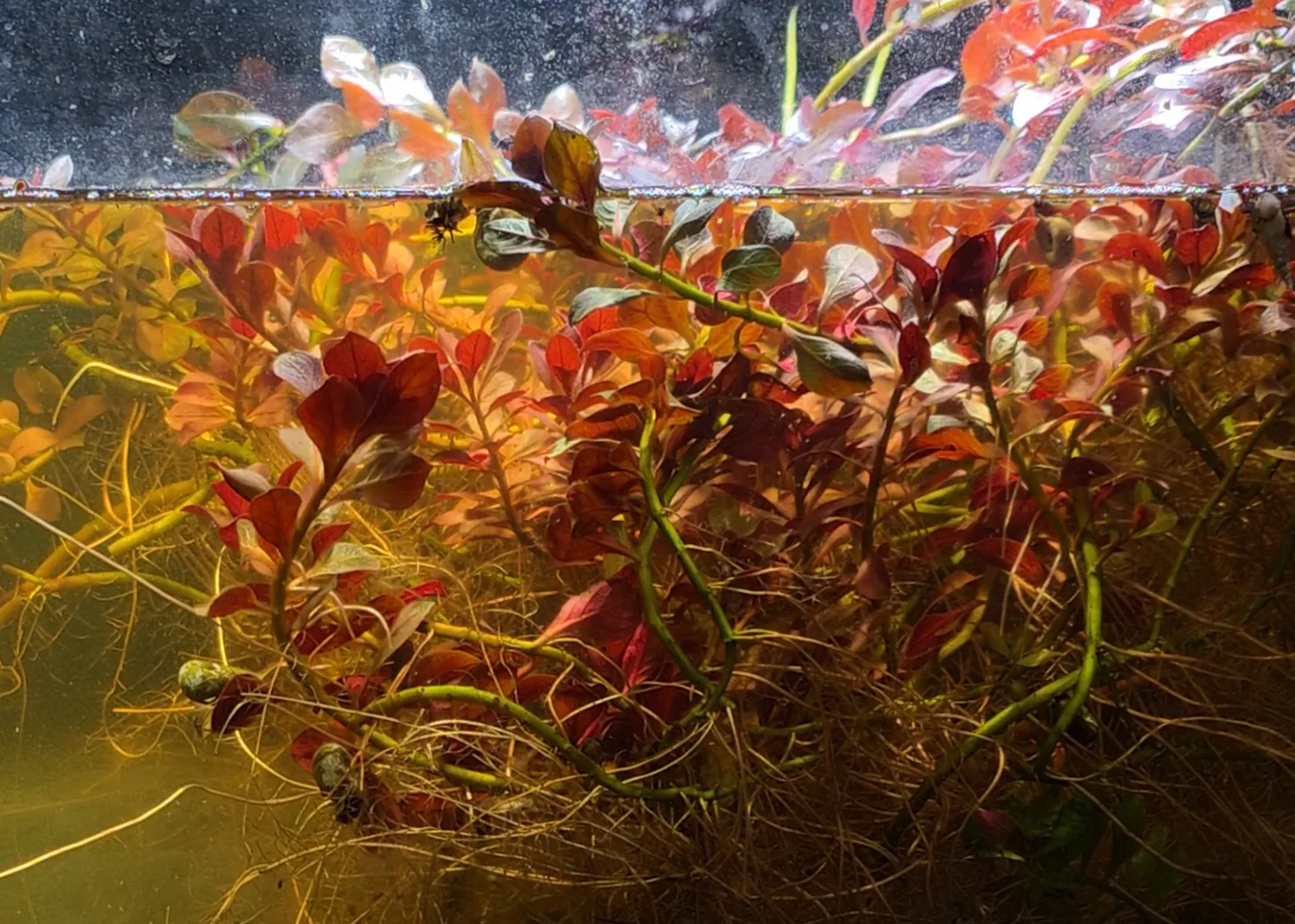
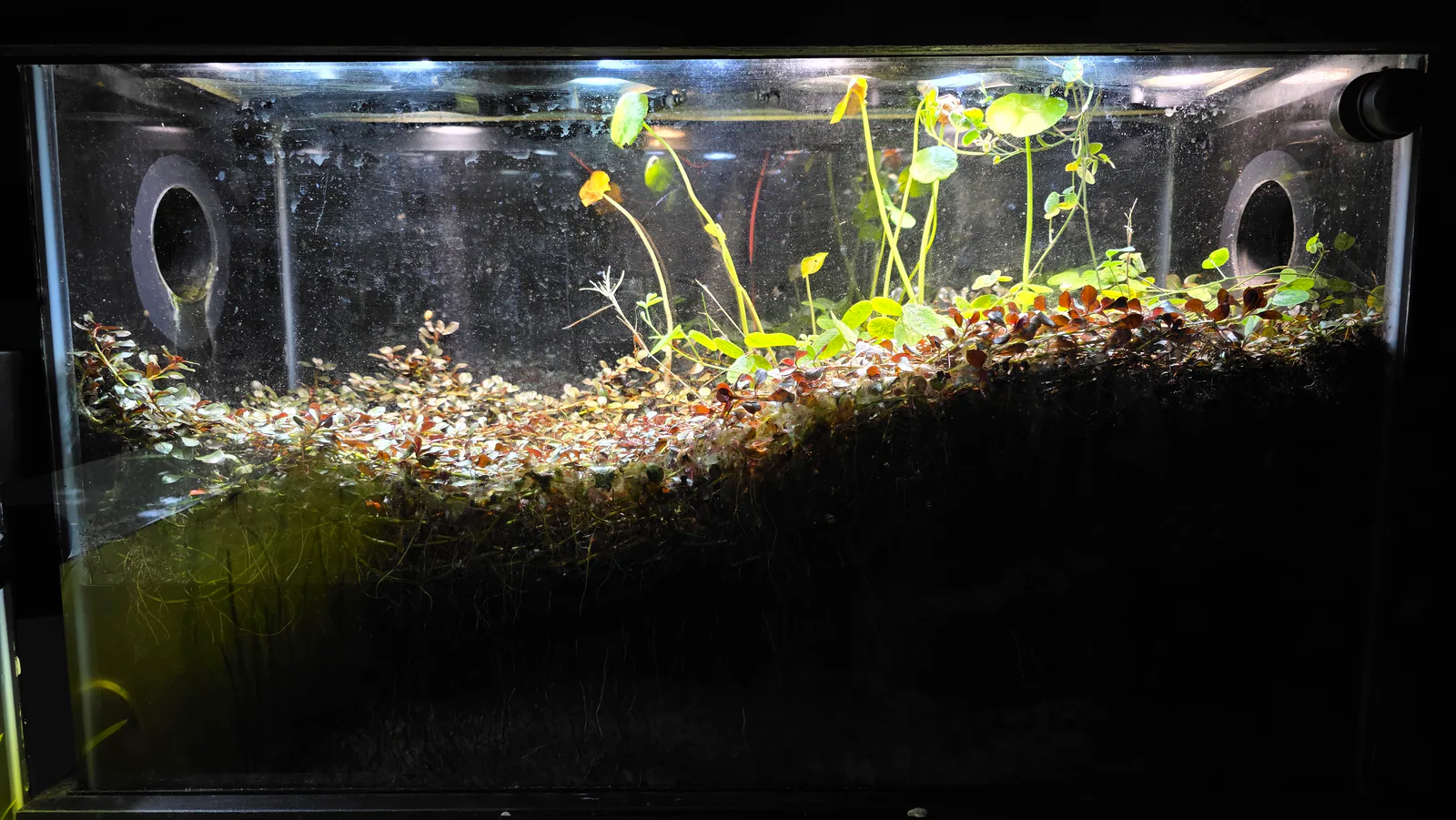
Rooted along the wet-edge margin of the Lakeshore, Creeping Primrose-Willow extends stems upward above the water surface and serves as a primary freshwater producer and a confirmed food plant for the Ridgeback Sand Grasshopper, which was observed feeding on it in April 2026.

Visual Data Unavailable

Overview

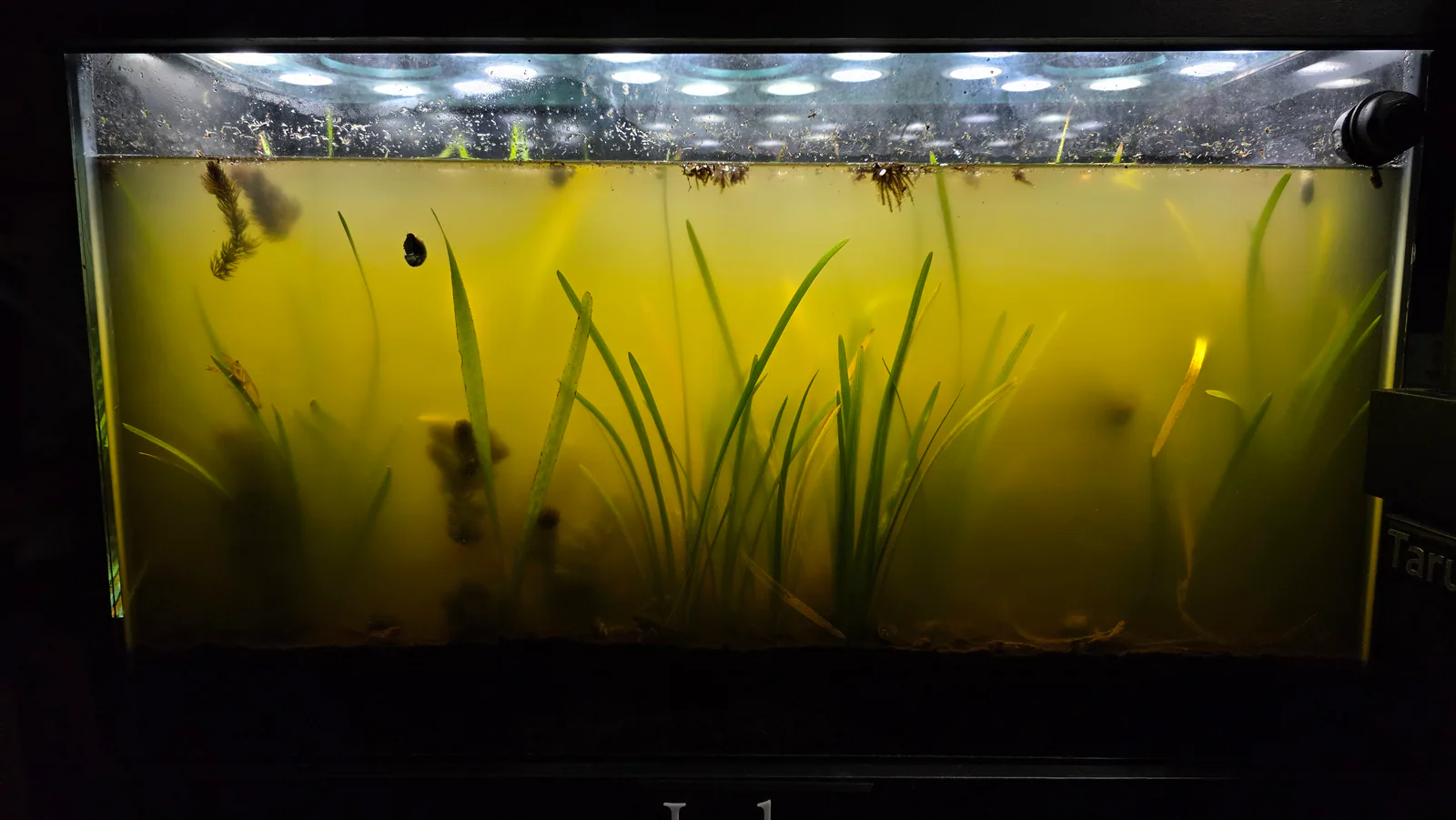
Rooted along the wet-edge margin of the Lakeshore, Creeping Primrose-Willow extends stems upward above the water surface and serves as both a primary producer in the freshwater plant layer and a confirmed food plant for the Ridgeback Sand Grasshopper. The plant was removed from the Freshwater Lake in January 2026 when Tapegrass was introduced as a submerged replacement, but has persisted in the Lakeshore. In March 2026 it was observed growing more vigorously above the water surface following warmer, more humid conditions after the system chiller failed.

Identity

  • Common name: Creeping Primrose-Willow
  • Alternate names: ludwigia, red ludwigia, creeping ludwigia, primrose willow, repens, ludwigia repens
  • Scientific name: Ludwigia repens
  • Identification confidence: Species-level ID applied; consistent with Ludwigia repens, a widespread freshwater aquatic and wet-margin herb common in Florida and widely used in the aquarium hobby
  • Uncertainty label: Confirmed

Taxonomy

  • Kingdom: Plantae
  • Phylum: Tracheophyta
  • Class: Magnoliopsida
  • Order: Myrtales
  • Family: Onagraceae
  • Genus: Ludwigia
  • Species: Ludwigia repens

Natural History

Ludwigia repens is a native North American aquatic herb found throughout the eastern United States, from Virginia south through Florida and into Central America. It grows in freshwater margins, stream edges, pond shores, wet soils, and shallow slow-moving water, rooting into the substrate and extending stems upward above the waterline. Leaves are typically oval and green to reddish-green; color intensifies under higher light. Small yellow flowers are produced when conditions are favorable.

The species is one of the most widely cultivated aquatic plants in the freshwater aquarium hobby, valued for its tolerance of a range of conditions and its ability to grow both submerged and as an emergent plant with aerial stems. Under warm, humid, well-lit conditions, growth can be rapid and stems will extend significantly above the water surface. Temperature and humidity directly influence how much aerial growth the plant produces.

Ludwigia repens does not fix nitrogen and has no obligate symbiotic relationships. It tolerates slight acidity to slight alkalinity and a broad temperature range. In Florida freshwater habitats, it is common at pond margins and slow streams.

Ecological Role

In the Lakeshore, Creeping Primrose-Willow functions as a rooted wet-edge producer: fixing energy from sunlight, building plant biomass at the water margin, and providing emergent stem structure above the water surface. It was directly confirmed as forage for the Ridgeback Sand Grasshopper in April 2026, making it a documented link between primary production in the Lakeshore and the terrestrial herbivore layer.

The plant's responsiveness to temperature and humidity was directly observed after the system chiller failed in late February 2026: stems extended upward more vigorously within about 1.5 weeks of the failure, demonstrating how aerial growth tracks ambient microclimate conditions in the enclosed system.

miniBIOTA Evidence

No introduction date is documented. Creeping Primrose-Willow was already present in the Freshwater Lake when the observation records begins; the plant was introduced at an unknown earlier date.

January 23 to 24, 2026: Tapegrass was collected from a river to replace Creeping Primrose-Willow in the Freshwater Lake biome; the Creeping Primrose-Willow was then removed from the Freshwater Lake biome. Both observations are filed under Tapegrass; the Creeping Primrose-Willow references establish the management decision. The plant was retained in or relocated to the Lakeshore biome. Video evidence for both.

March 10, 2026: Ludwigia in the Lakeshore biome was observed extending upward more confidently above the water surface, approximately 1.5 weeks after the system chiller failed. The warmer, more humid conditions following chiller loss were interpreted as allowing more vigorous plant growth, highlighting the influence of aerial humidity and temperature on plant behavior. Video evidence.

April 26, 2026: A Ridgeback Sand Grasshopper was observed in the Lakeshore feeding on Ludwigia, described as the first documented instance of this species consuming this plant within the system. The observation notes that the grasshopper may have a broader diet than previously observed, with the species ranging between the Lakeshore and Lowland Meadow. Filed under Ridgeback Sand Grasshopper. No media.

Confirmed:

  • Present in the Lakeshore biome; previously in Freshwater Lake, removed January 24, 2026
  • Upward stem extension above water surface observed and video-documented March 10, 2026
  • Stronger aerial growth linked to warmer, more humid conditions after chiller failure
  • Ridgeback Sand Grasshopper confirmed feeding on Ludwigia in Lakeshore, April 26, 2026

Inferred:

  • Ongoing photosynthetic production along the Lakeshore wet edge since January 2026
  • Growth response continues to track ambient humidity and temperature conditions in the enclosed system

Unknown:

  • Introduction date and source of the original planting
  • Current coverage, height, and health of the plant as of June 2026
  • Whether the chiller was repaired and whether growth reverted to pre-failure rates
  • Whether the Ridgeback Sand Grasshopper has continued to feed on the plant since April 2026