Unknown species
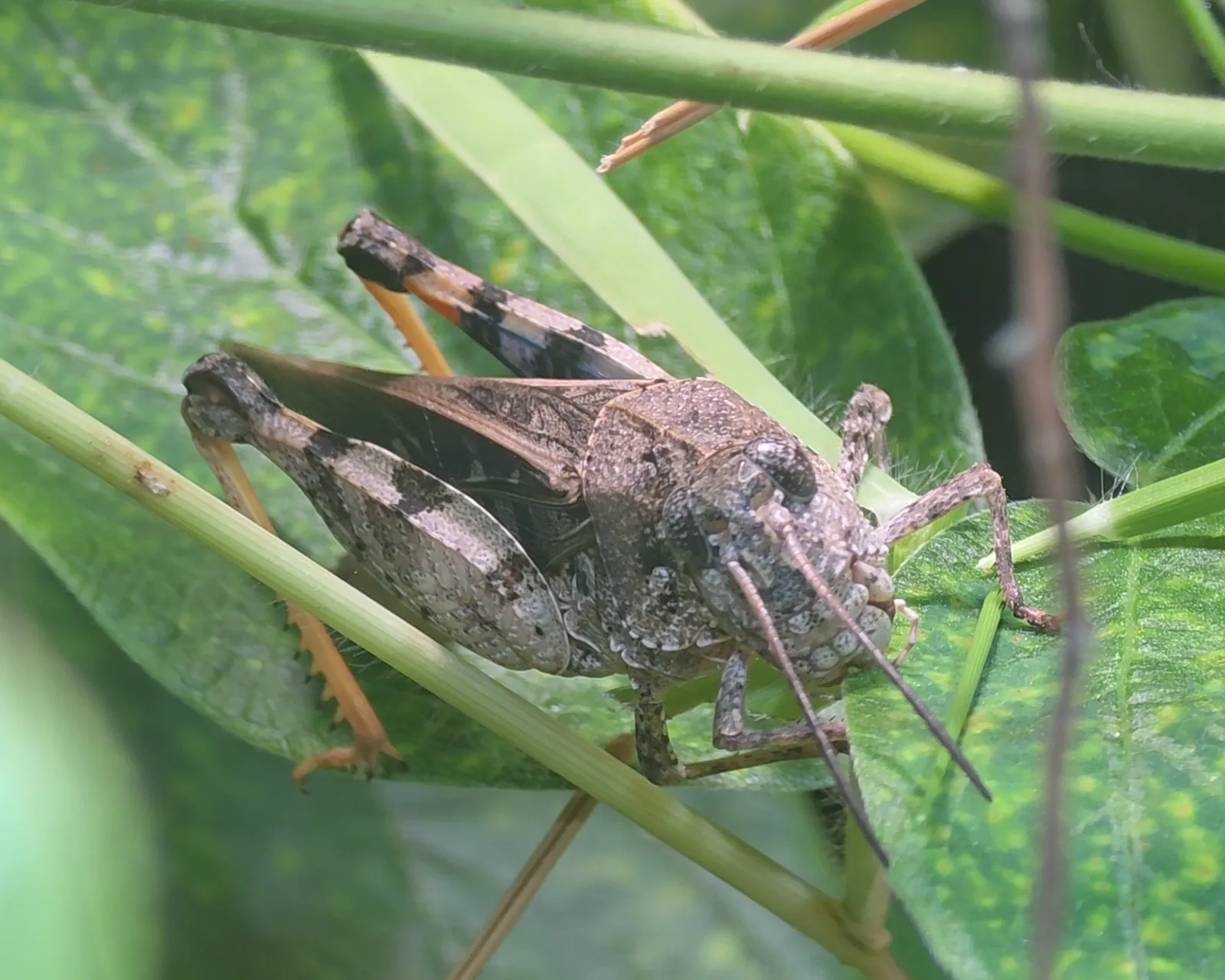
Ridgeback Sand Grasshopper
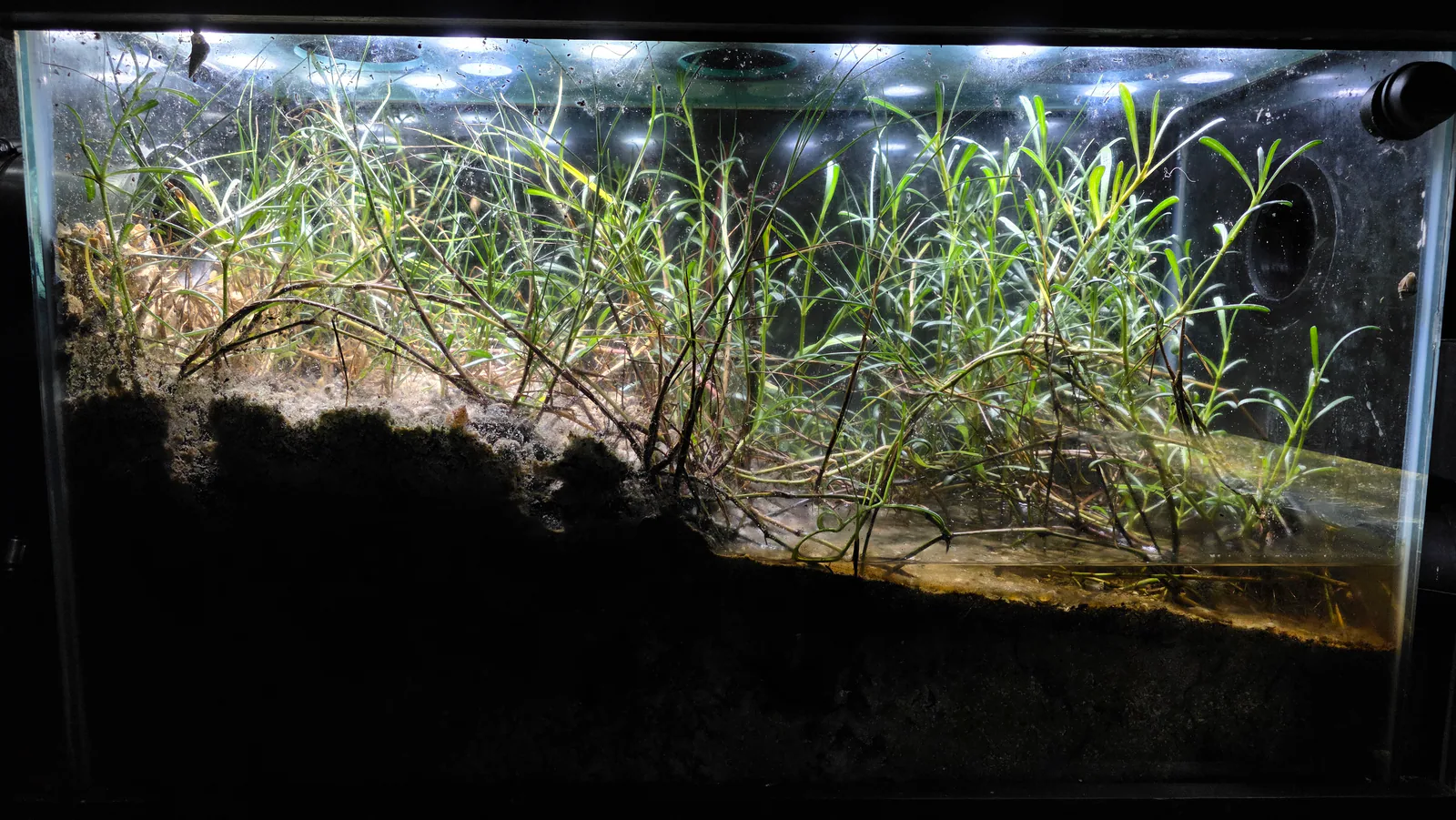
One of the more visible animals in the Lowland Meadow, this medium-sized grasshopper feeds openly on grasses and plant foliage and leaves frass across the meadow floor as evidence of steady, active grazing.
Unknown species
One of the more visible animals in the Lowland Meadow, this medium-sized grasshopper feeds openly on grasses and plant foliage and leaves frass across the meadow floor as evidence of steady, active grazing.
The Ridgeback Sand Grasshopper was a medium-sized, winged grasshopper introduced to the miniBIOTA Lowland Meadow on April 2, 2026, tentatively identified by common name at the time of introduction with no species-level taxonomy confirmed. Despite that uncertainty, this animal proved the most adaptable grasshopper maintained in miniBIOTA: feeding actively on plant foliage, producing visible droppings, ranging freely across Lowland Meadow, Mangrove Forest, Lakeshore, and Marine Shore without attempting sustained flight, and bringing a male and female into close proximity in the Marine Shore by late May 2026. The population is extirpated from miniBIOTA as of June 13, 2026: the two males were last observed before June 9, 2026 after spending time in the Marine Shore, and the female was found dead in the Lowland Meadow on June 13, 2026, being scavenged by a Caribbean Hermit Crab. No living individuals remain. Species-level identity is Unknown.
The specific range of this species is unknown because no formal species-level identification has been made. Florida supports a diverse community of acridid grasshoppers in terrestrial and coastal habitats, including species adapted to sandy shoreline edges, open meadow, and mixed scrub. The "ridgeback" element of the common name suggests a spined or ridged thorax, a feature found in several Florida grasshopper groups. Until a taxonomy review assigns a genus and species, range claims cannot be made with confidence. The miniBIOTA individual was tentatively identified after introduction and has not been cross-referenced against published Florida orthopteran records.
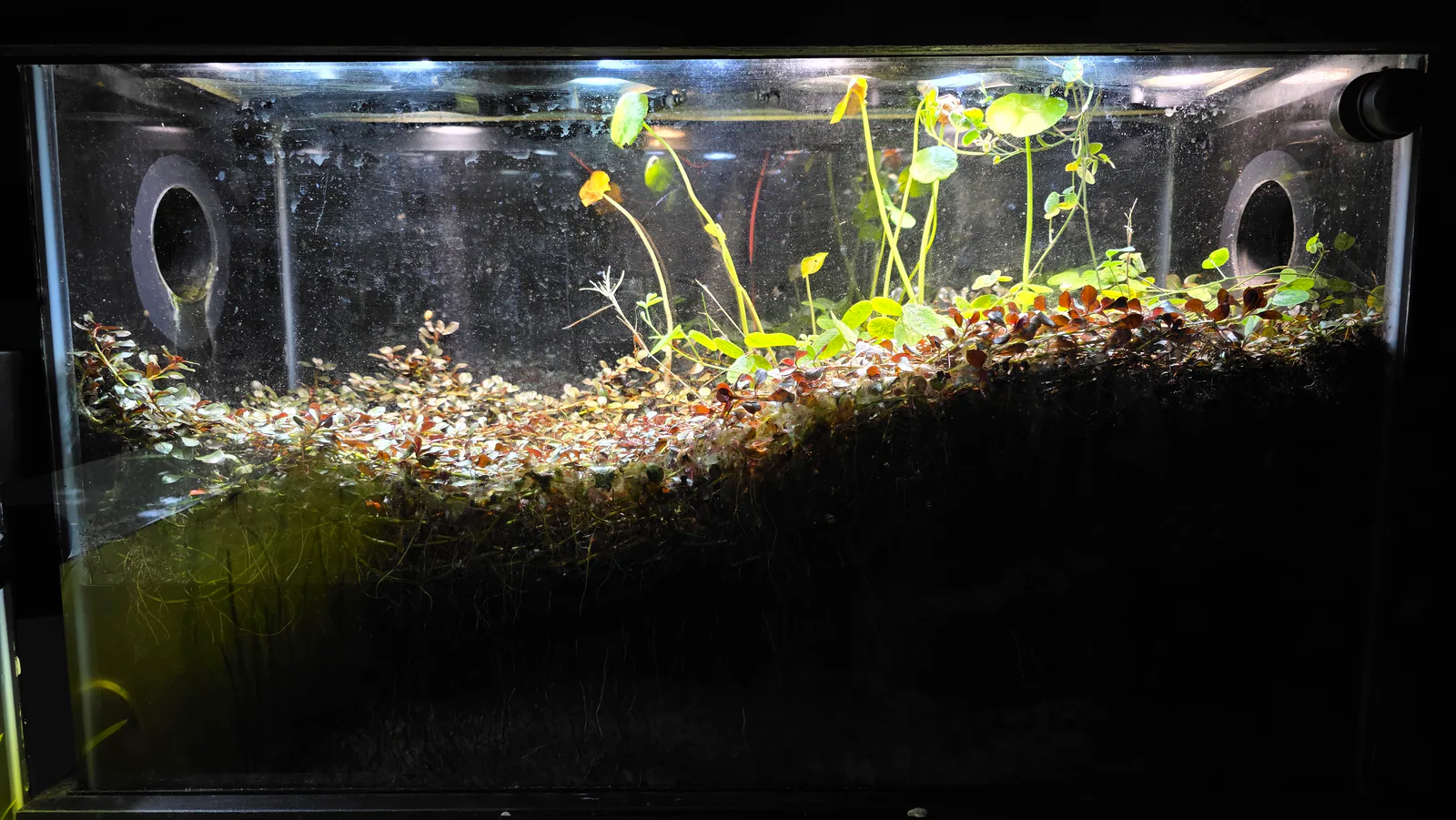
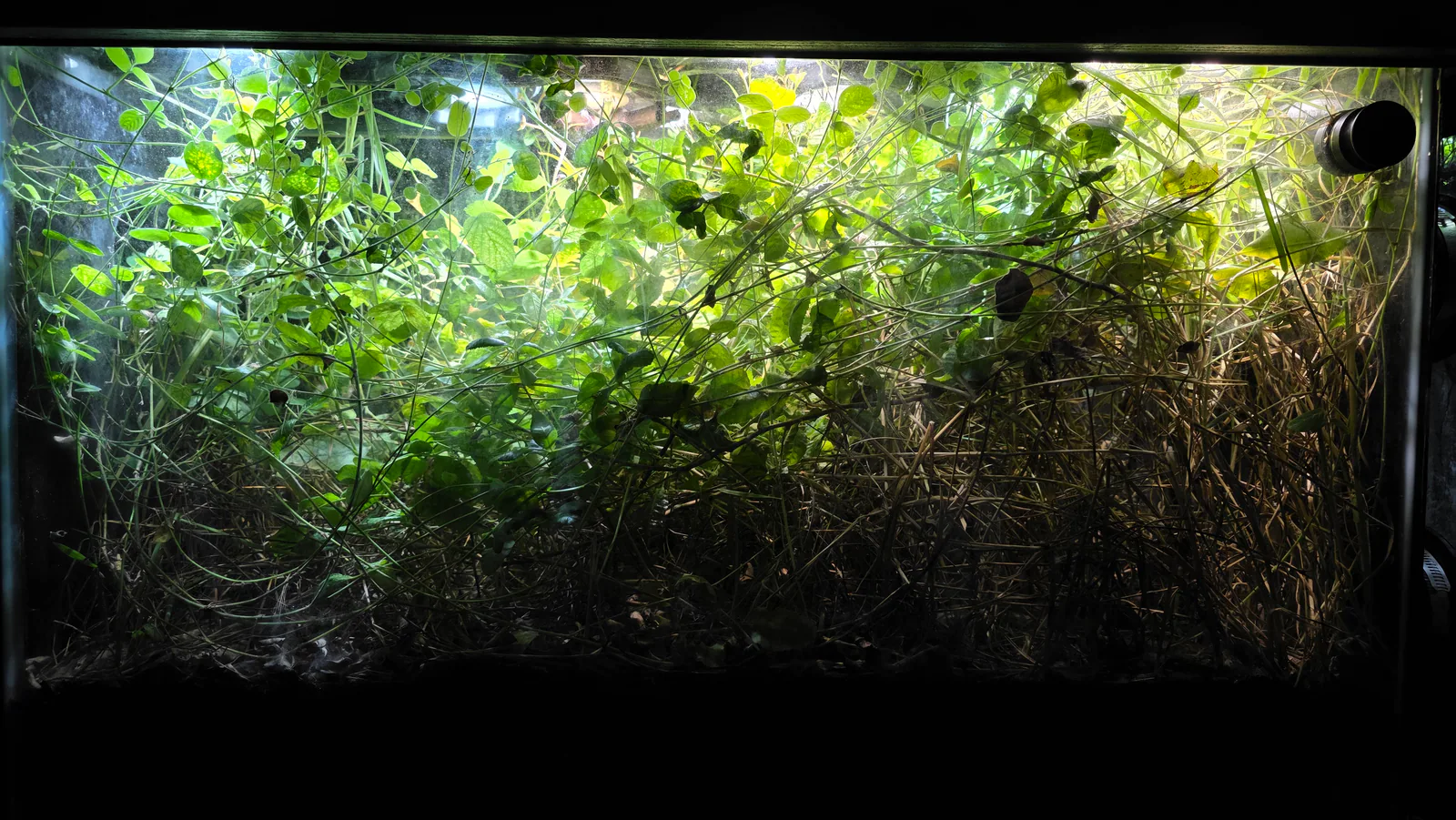
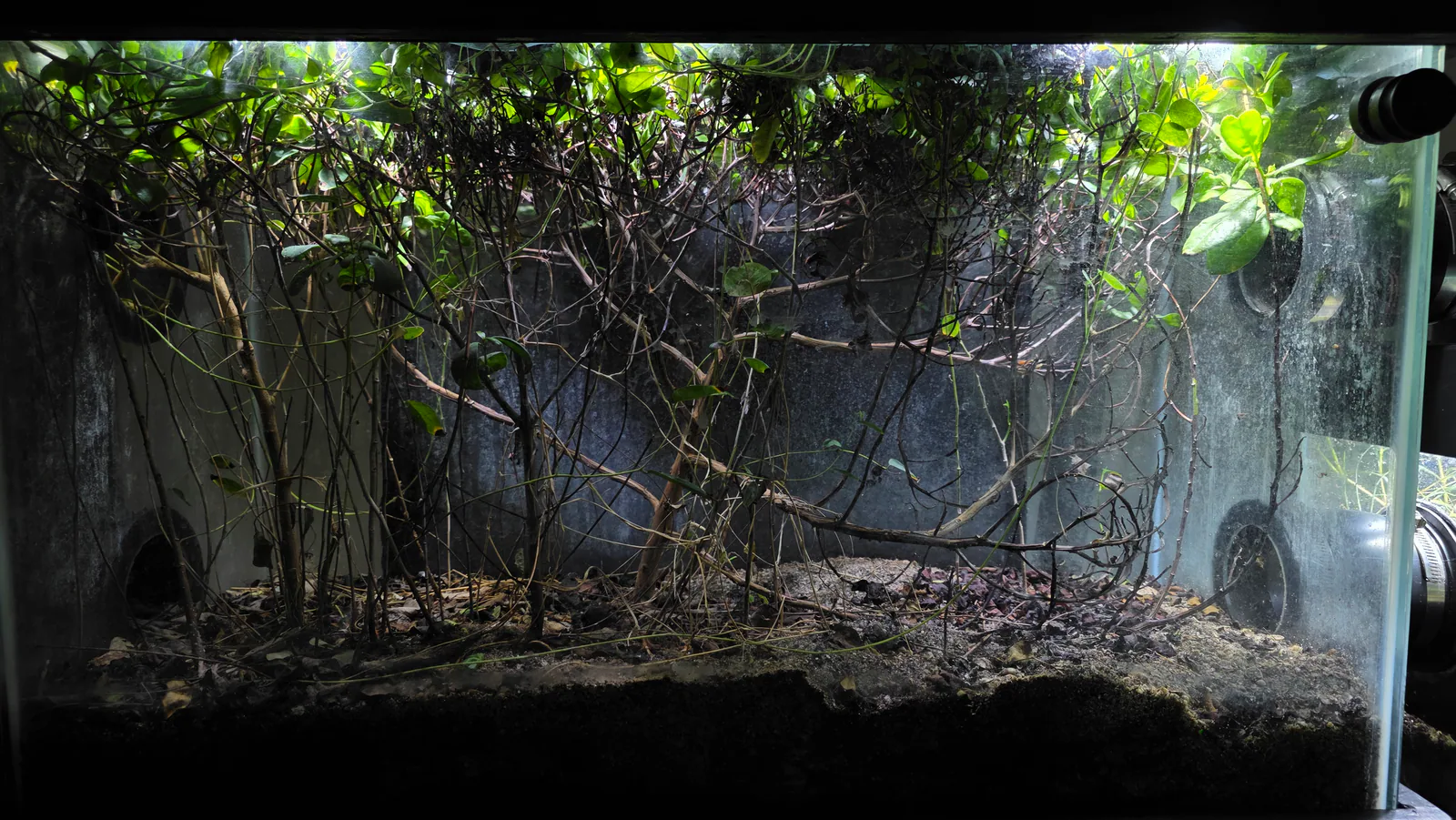
Based entirely on miniBIOTA observations, this grasshopper uses a broader habitat range than expected. Introduced to the Lowland Meadow, it has moved independently into the Lakeshore, Mangrove Forest, and Marine Shore. In the Marine Shore it showed a preference for sandy surfaces and plant cover, including Silverhead (Philoxerus vermicularis) branches as perching sites. It does not appear to use aquatic surfaces or submerge. The observer noted that it moves calmly through the biome without attempting flight or large escape jumps, behavior attributed to having been introduced as a nymph and acclimating within the system. This low-flight behavior is notable given that the species is winged and capable of sustained flight.
This grasshopper feeds on live plant tissue: grasses, leaves, stems, and seedlings. Feeding activity was inferred from plant damage in the Marine Shore on May 9, 2026, and directly supported by substantial frass (droppings) documented in the Lowland Meadow on April 19, 2026. The observer noted feeding on a variety of plant species across multiple biomes. No carrion, detritus, or animal prey consumption has been recorded.
Acridid grasshoppers in general deposit egg pods into soil using a specialized ovipositor, with each pod containing multiple eggs. Eggs hatch into nymphs that develop through a series of instars before reaching adulthood. In miniBIOTA, a male and female were observed in close proximity in the Marine Shore on May 25, 2026, described as raising the possibility of mating behavior. No mating, egg-laying, eggs, or nymphs have been confirmed in miniBIOTA. A third individual introduced May 16, 2026 was a nymph described as close to molting into adulthood, confirming that nymphal individuals can be added and acclimate successfully.
No formal tolerance measurements have been taken for this species. The cross-biome movement within miniBIOTA suggests broad tolerance of terrestrial conditions across the Lowland Meadow, Mangrove Forest, and Lakeshore. The behavior of the two males, which disappeared approximately one week after spending extended time in the Marine Shore, raises the possibility of limited tolerance to saline conditions, but the cause of their absence is unresolved. The female, which returned to the Lowland Meadow from the Marine Shore, has continued feeding normally, suggesting she tolerated marine exposure at least temporarily.
Ridgeback Sand Grasshoppers function as plant-consuming primary consumers in the Lowland Meadow food web. By grazing live vegetation they convert plant energy into animal tissue available to predators, and their frass contributes organic matter and nutrients to the soil and detrital food web. In miniBIOTA, their presence across multiple biomes means they may transfer plant-derived nutrients across the terrestrial and coastal edge during movement, though this has not been measured.
The female's missing enlarged hind leg as of June 9, 2026 suggests a predation attempt or injury event, consistent with the presence of predators capable of targeting large insects. The observer noted crabs as a possible source. No confirmed predator has been identified. No symbiotic relationships have been documented in miniBIOTA.
The first Ridgeback Sand Grasshopper was introduced to the Lowland Meadow on April 2, 2026. The species was not identified at the time of introduction and was later tentatively given the common name "Ridgeback Sand Grasshopper." A second individual was added shortly after (referenced in the April 10, 2026 observation as "both grasshoppers"), and a third, a nymph near molting, was added on May 16, 2026, bringing the population to three confirmed individuals. The observer described this species as the most successful grasshopper maintained in miniBIOTA, noting that despite being winged they did not attempt to fly or escape but moved calmly and fed on a variety of plants.
By May 2026, one or more individuals had ranged into the Lakeshore and Marine Shore. On May 25, 2026, a female was observed on Marine Shore sand with a male perched above on a Silverhead branch; their close proximity was noted as raising the possibility of mating behavior. No mating was confirmed.
By June 9, 2026, the two males had not been seen for approximately one week after spending time in the Marine Shore. The observer noted the possibility that saline conditions proved unsuitable for long-term survival, though neither male was confirmed dead. The female returned to the Lowland Meadow, where she was observed feeding actively despite the loss of one enlarged hind leg. The observer noted a possible predation attempt or injury, possibly involving a crab.
Three individuals confirmed by May 16, 2026 after a series of introductions beginning April 2, 2026. By June 9, 2026, the two males had not been observed for approximately one week after spending time in the Marine Shore and were suspected absent. By June 13, 2026, the female was found dead in the Lowland Meadow, being scavenged by a Caribbean Hermit Crab. With no living individuals remaining, the population is extirpated from miniBIOTA as of June 13, 2026. Cause of death for any individual is unconfirmed.
Feeding confirmed by substantial frass documented in the Lowland Meadow on April 19, 2026, and by evidence of grass feeding in the Marine Shore on May 9, 2026. Observer documented a variety of plant species being grazed across biomes.
Cross-biome movement documented across Lowland Meadow, Lakeshore, Mangrove Forest, and Marine Shore. The disappearance of the two males after extended Marine Shore time raises a possible saline-tolerance limit, but neither death nor cause has been confirmed. The female tolerated at least brief Marine Shore exposure before returning to the Lowland Meadow. No formal tolerance measurements have been taken.
A third individual introduced May 16, 2026 was a nymph described as close to molting into adulthood, confirming that nymphal individuals can acclimate successfully. No mating, egg-laying, or confirmed offspring have been documented as of June 2026.
Plant-feeding primary consumer in the Lowland Meadow and Marine Shore. Grazing transfers plant energy into the animal food web; frass contributes organic matter and nutrients to the soil. Cross-biome movement may move plant-derived nutrients across terrestrial and coastal edge habitats. No symbiotic relationships documented in miniBIOTA.
Follow this species across the habitats where it currently appears in the miniBIOTA biosphere.