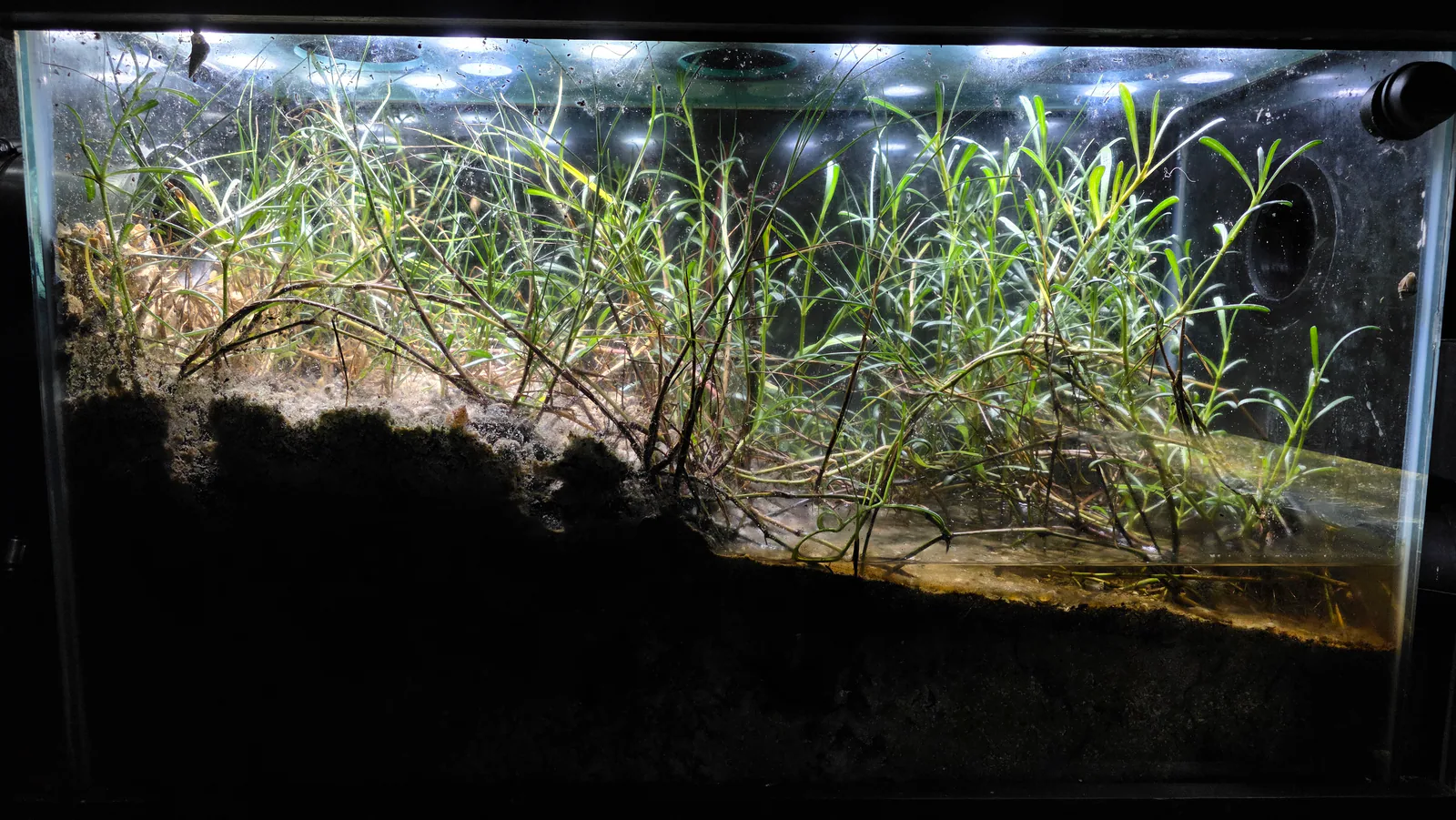
Blutaparon vermiculare

Silverhead

Growing in low mats across the Marine Shore's sandy substrate, this native coastal plant provides the primary above-ground vegetation structure in the biome, documented as perching habitat for the Ridgeback Sand Grasshopper and a dietary resource for the Gulf Marsh Crab.

Visual Data Unavailable

Overview

Growing in low mats across the Marine Shore's sandy substrate, this native coastal plant provides the primary above-ground vegetation structure in the biome, documented as perching habitat for the Ridgeback Sand Grasshopper and a dietary resource for the Gulf Marsh Crab.

Identity

  • Common name: Silverhead
  • Alternate names: Joyweed, beach joyweed, mat amaranth, silver-head
  • Scientific name: Blutaparon vermiculare
  • Identification confidence: Species-level; Blutaparon vermiculare is the only species in the genus and a well-known coastal plant of Florida and the Caribbean
  • Uncertainty label: Observed

Taxonomy

  • Kingdom: Plantae
  • Phylum: Anthophyta
  • Class: Magnoliopsida
  • Order: Caryophyllales
  • Family: Amaranthaceae
  • Genus: Blutaparon
  • Species: Blutaparon vermiculare

Natural History

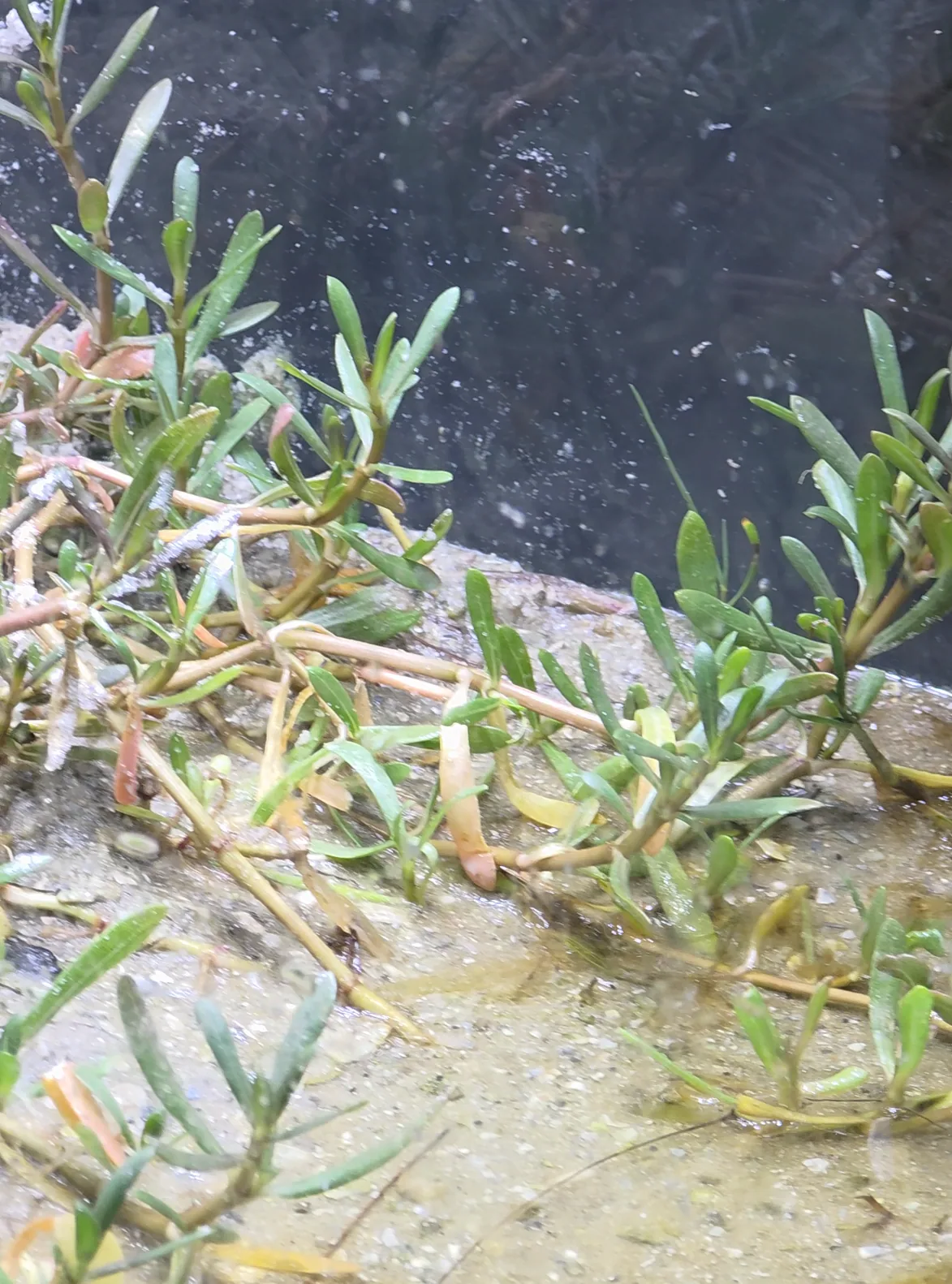
Blutaparon vermiculare is a low-growing prostrate herb native to coastal sandy habitats throughout Florida, the Gulf Coast, the Caribbean, and coastal South America. It belongs to the Amaranthaceae family and is adapted for life on open, exposed sandy soils with high salinity, strong sun, and intermittent salt spray. The plant spreads as a ground-hugging mat, with stems creeping across the substrate and small fleshy silver-green leaves covering the branches densely. The common name Silverhead refers to the silver-white coloration of the small round flowerheads that appear along the trailing stems.

In its native Florida range, Silverhead occurs on coastal beaches, maritime dunes, shell mounds, and sandy flats in the intertidal and supratidal zone. It tolerates salt spray, periodic saltwater inundation, and nutrient-poor substrate, making it one of the few vascular plants capable of persisting in these harsh open conditions. Growth is rapid under full sun, and established plants can spread into dense mats that stabilize loose sand and provide low ground-level cover. Flowers are inconspicuous and clustered; seeds are small and disperse via wind or animal contact. The plant functions as a short-lived perennial in warm subtropical conditions and can establish quickly on disturbed or bare sandy surfaces.

Several common names are used interchangeably across Florida and the Caribbean: joyweed and beach joyweed are widely applied to this and related coastal amaranths. The name mat amaranth reflects the low spreading growth form. In some contexts the plant has been used in coastal revegetation for its tolerance of harsh beach conditions.

Ecological Role

In coastal ecosystems, Blutaparon vermiculare functions as a pioneer ground-cover producer. Its dense prostrate mats stabilize sandy substrate, reduce surface erosion, and intercept organic debris settling across the beach margin. As leaves and stems senesce, they contribute detrital biomass that feeds shoreline detritivores and enters the coastal food web. The branching stems also provide above-ground physical structure, particularly perching, sheltering, and resting spots for small arthropods.

In miniBIOTA, Silverhead holds a functionally significant position as one of the few rooted vascular plants in the Marine Shore biome. It provides the primary above-ground vegetation structure in a biome that otherwise consists of open sandy substrate, saltwater, and mangrove edge habitat. A male Ridgeback Sand Grasshopper was recorded perching on a Silverhead branch in May 2026 during a courtship observation, demonstrating that the plant's physical structure is actively used by resident fauna as habitat within the biome. The Gulf Marsh Crab introduced in April 2026 was noted in its introduction record as a species that feeds on silverhead alongside cordgrass and seashore paspalum in wild coastal settings; no direct feeding event has been observed in miniBIOTA, but the dietary relationship is consistent with the crab's known coastal herbivory.

When plant material senesces, it adds detrital input to the Marine Shore substrate, available to amphipods, detritivores, and other shoreline consumers. The mat-forming growth habit also moderates surface conditions on open sandy substrate.

miniBIOTA Evidence

Silverhead was introduced to the Marine Shore on August 7, 2025. No observation record for the introduction event exists. The last formally recorded date is August 12, 2025, five days after introduction; no observation for that date exists either.

However, a May 25, 2026 observation of the Ridgeback Sand Grasshopper in the Marine Shore documents the male grasshopper "perched above on a silverhead branch," confirming that the plant was alive and structurally present nearly ten months after introduction. This observation supersedes the August 2025 date as the most recent confirmed record of Silverhead in the biome. The April 22, 2026 Gulf Marsh Crab introduction note references silverhead as a dietary resource for the crab among coastal plants, which is a contextual mention consistent with the species' biology but does not describe a feeding event.

Current estimated population is 5 individuals. No reproduction has been recorded in miniBIOTA. Introduction source and method are unrecorded.

Introduction: August 7, 2025. Source and method unknown; no archived observation file.

Observation timeline:

  • August 7, 2025: Introduced to Marine Shore (on record; no dedicated observation record)
  • August 12, 2025: Last date on record at time of original documentation (no dedicated observation record)
  • April 22, 2026: Referenced in Gulf Marsh Crab introduction note as a dietary resource in coastal settings; contextual mention only
  • May 25, 2026: Male Ridgeback Sand Grasshopper documented perching on a Silverhead branch in the Marine Shore during a courtship observation; confirms plant structural presence approximately ten months post-introduction
  • June 26, 2026: A Mangrove Tree Crab directly observed scraping and consuming tissue from silverhead leaves in the Marine Shore. First confirmed consumption of silverhead by any crab species in miniBIOTA. Observation record, June 26, 2026.

Confirmed:

  • Plant introduced to Marine Shore, August 7, 2025
  • Plant structurally present and bearing branches in the Marine Shore as of May 25, 2026
  • Used as perching structure by the male Ridgeback Sand Grasshopper
  • Mangrove Tree Crab confirmed consuming silverhead leaf tissue on June 26, 2026

Inferred:

  • Providing ongoing detrital input to the Marine Shore food web as plant material senesces
  • Gulf Marsh Crab is a plausible grazer based on the species' known diet; no feeding event observed
  • Reasonably tolerant of Marine Shore conditions given approximately ten months of persistence without a loss record

Unknown:

  • Introduction source and method
  • Current plant count, health, and distribution within the biome
  • Whether any reproduction or vegetative spread has occurred
  • Long-term population trajectory