Paspalum vaginatum

Seashore Paspalum

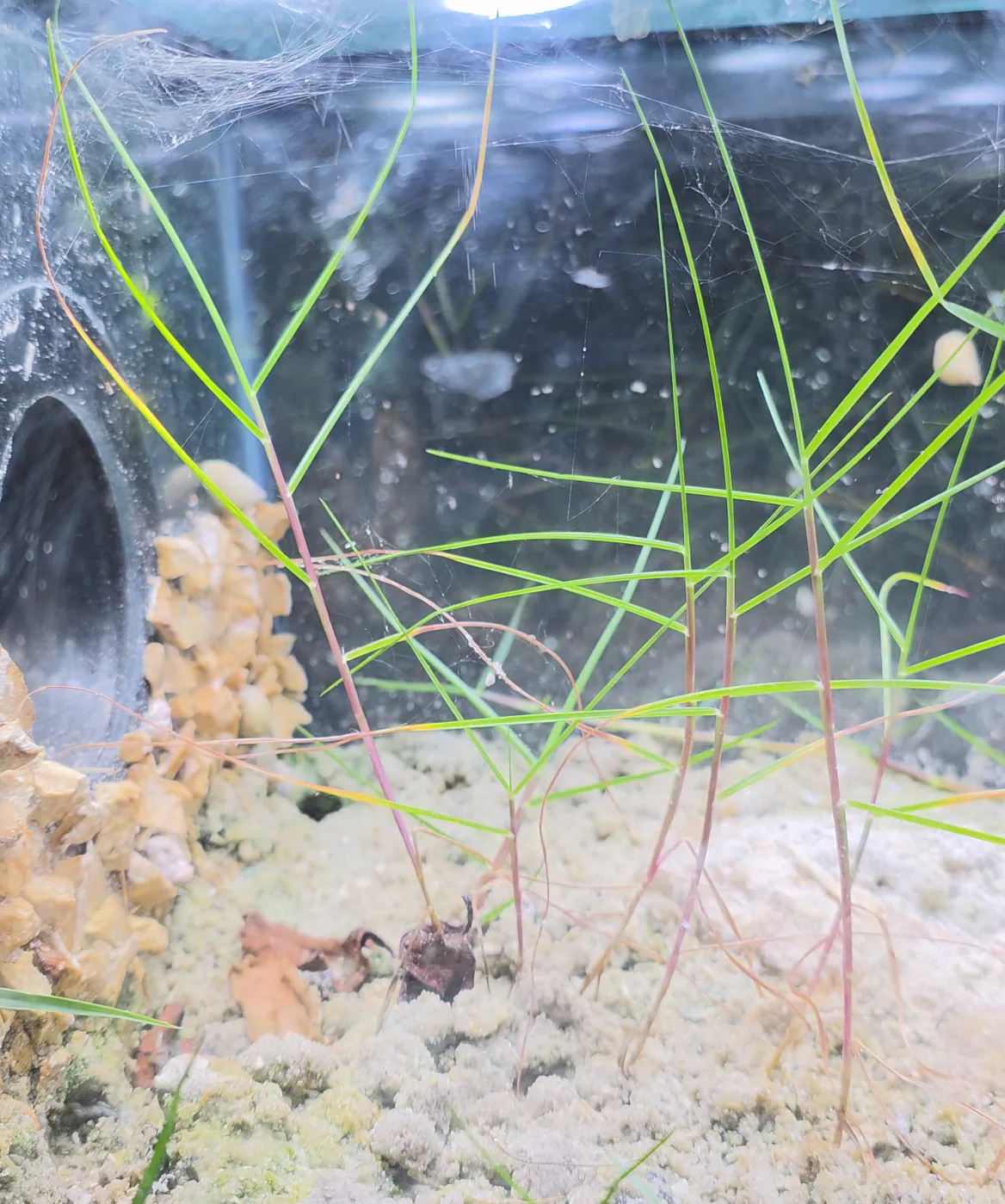
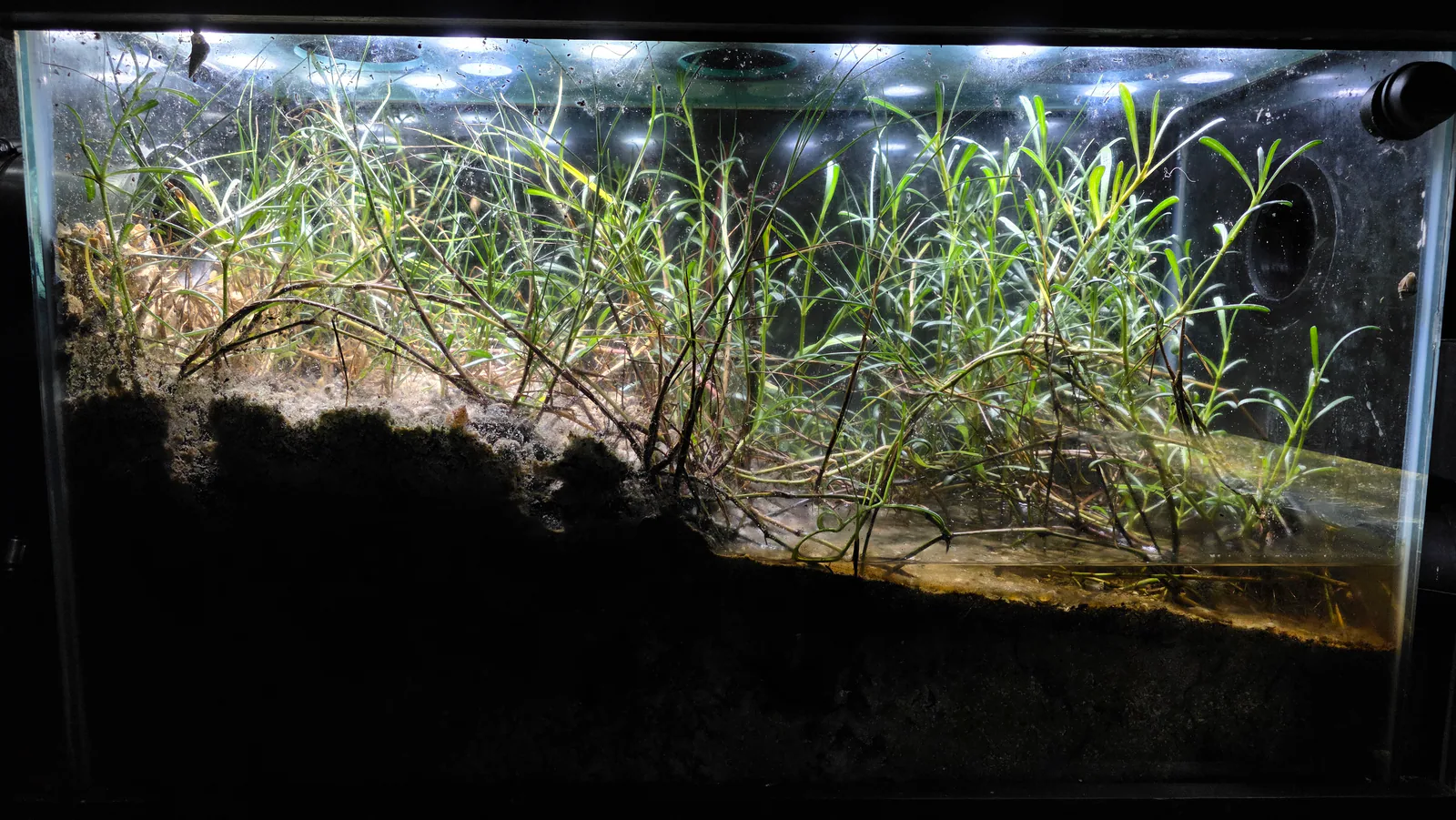
A salt-tolerant creeping grass rooted in the Marine Shore substrate, Seashore Paspalum provides the primary rooted plant structure in the coastal intertidal zone and was directly observed being consumed by a Gulf Marsh Crab in May 2026.

Visual Data Unavailable

Overview

A salt-tolerant creeping grass rooted in the Marine Shore substrate, Seashore Paspalum provides the primary rooted plant structure in the coastal intertidal zone. In May 2026, a Gulf Marsh Crab was directly observed consuming its stems, the most pronounced herbivory from any crab species noted in the system to date. Current coverage and health status following that grazing impact are unresolved.

Identity

  • Common name: Seashore Paspalum
  • Alternate names: saltwater couch, silt grass, eternity grass, marine couch, paspalum, seashore grass
  • Scientific name: Paspalum vaginatum
  • Identification confidence: Species-level ID applied; consistent with Paspalum vaginatum, a common salt-tolerant grass in Florida coastal and intertidal habitats
  • Uncertainty label: Confirmed

Taxonomy

  • Kingdom: Plantae
  • Phylum: Tracheophyta
  • Class: Liliopsida
  • Order: Poales
  • Family: Poaceae
  • Genus: Paspalum
  • Species: Paspalum vaginatum

Natural History

Paspalum vaginatum is a stoloniferous perennial grass native to tropical and subtropical coastlines worldwide, widely naturalized in Florida and other subtropical regions. It spreads via horizontal stems (stolons) that root at nodes, forming a low mat-like cover along shorelines, tidal edges, and intertidal substrate. The grass tolerates regular exposure to saltwater and brackish conditions that exclude most other grasses, making it a structural pioneer of coastal margins.

In its natural range, Seashore Paspalum grows at and just above the intertidal line, exploiting the transitional zone between open water and terrestrial habitats. It tolerates periodic submersion, salt spray, and soil salinity levels approaching seawater concentration. The species is also highly drought-tolerant once established.

Seashore Paspalum is a known food plant for a wide range of coastal herbivores, including marsh crabs, birds, and small mammals. Its creeping stolons produce abundant biomass close to the substrate surface and its root system stabilizes shoreline sediment. In closed systems and planted shoreline contexts it is used to provide intertidal plant structure where few other species can persist.

Ecological Role

In the Marine Shore, Seashore Paspalum provides the primary rooted producer layer in the intertidal zone: photosynthesizing, contributing plant biomass and cover, stabilizing the substrate margin, and serving as a direct food source for coastal herbivores.

The most directly documented ecological interaction in miniBIOTA is Gulf Marsh Crab herbivory. On May 2, 2026, a Gulf Marsh Crab was directly observed consuming the living stems of Seashore Paspalum in the Marine Shore, described as more pronounced herbivory than the observer had seen from any other crab species in the system. Whether this grazing level is sustainable or poses a risk to plant cover has not been assessed.

miniBIOTA Evidence

Seashore Paspalum was introduced on June 13, 2025. No observation file exists for the introduction event.

May 2, 2026: A Gulf Marsh Crab was directly observed consuming the stems of Seashore Paspalum in the Marine Shore. The observer described the herbivory as strong and more pronounced than observed in any other crab species in the system. The same observation also notes that a legume vine extending from the Lowland Meadow into the Mangrove Forest had been shredded, also attributed to the Gulf Marsh Crab. The primary subject of that observation is the Gulf Marsh Crab; the Seashore Paspalum reference establishes the confirmed food-plant interaction. No media.

June 26, 2026: Mangrove Tree Crabs observed grazing seashore paspalum by picking material from the stems of the grass. Seashore paspalum now has two confirmed crab grazers in the system. Observation record, June 26, 2026.

Confirmed:

  • Introduction June 13, 2025 (no dedicated observation file)
  • Rooted in the Marine Shore biome
  • Gulf Marsh Crab confirmed feeding on living stems May 2, 2026
  • Mangrove Tree Crab confirmed picking material from seashore paspalum stems June 26, 2026

Inferred:

  • Ongoing photosynthetic production in the Marine Shore intertidal zone since introduction
  • Continued grazing pressure from Gulf Marsh Crab after May 2, 2026

Unknown:

  • Current coverage and health status of the plant as of June 2026
  • Whether Gulf Marsh Crab grazing has reduced overall coverage
  • Whether the plant has spread or contracted since introduction
  • Whether any vegetative spread has occurred in the system