Range and Florida Relevance
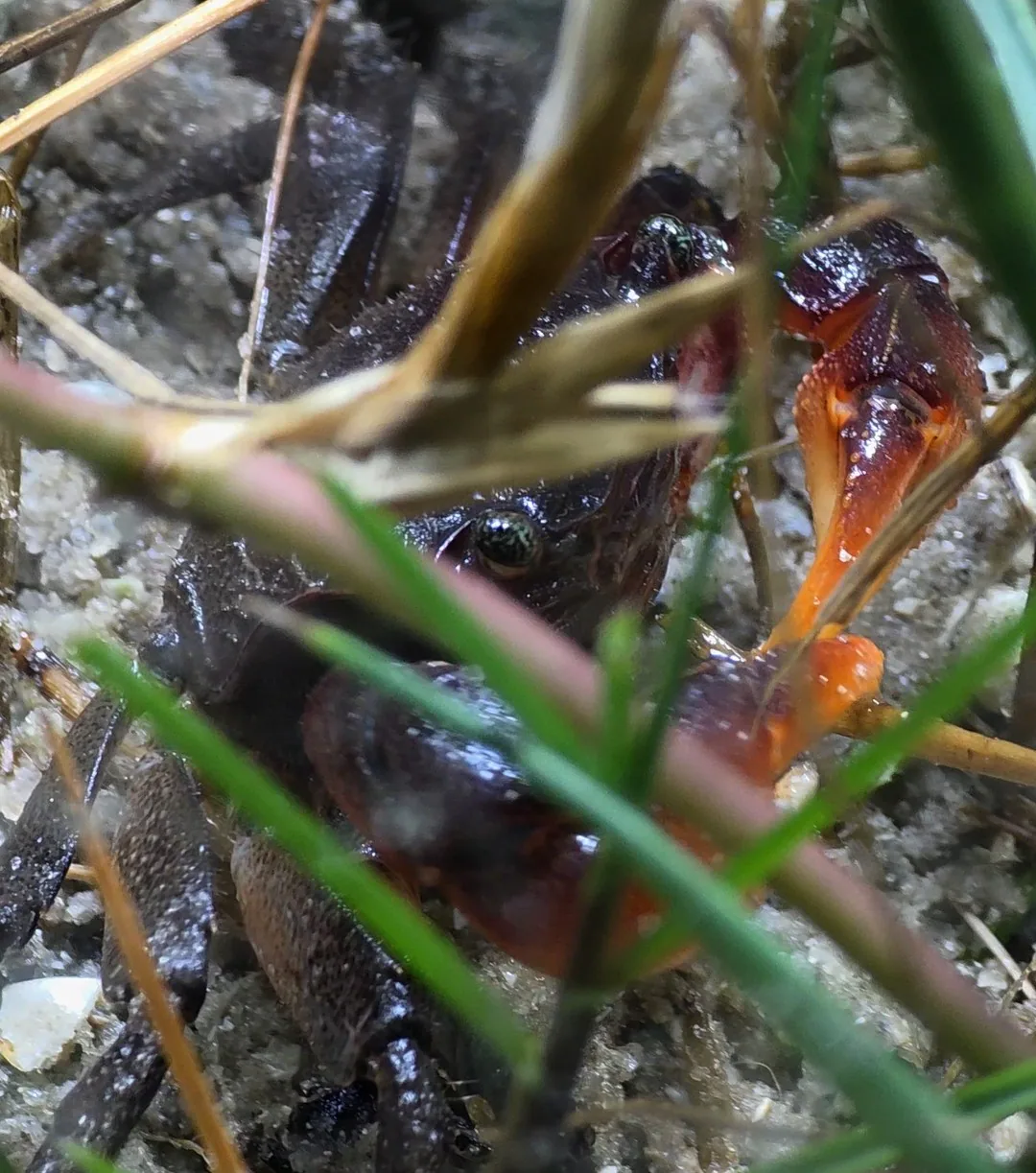
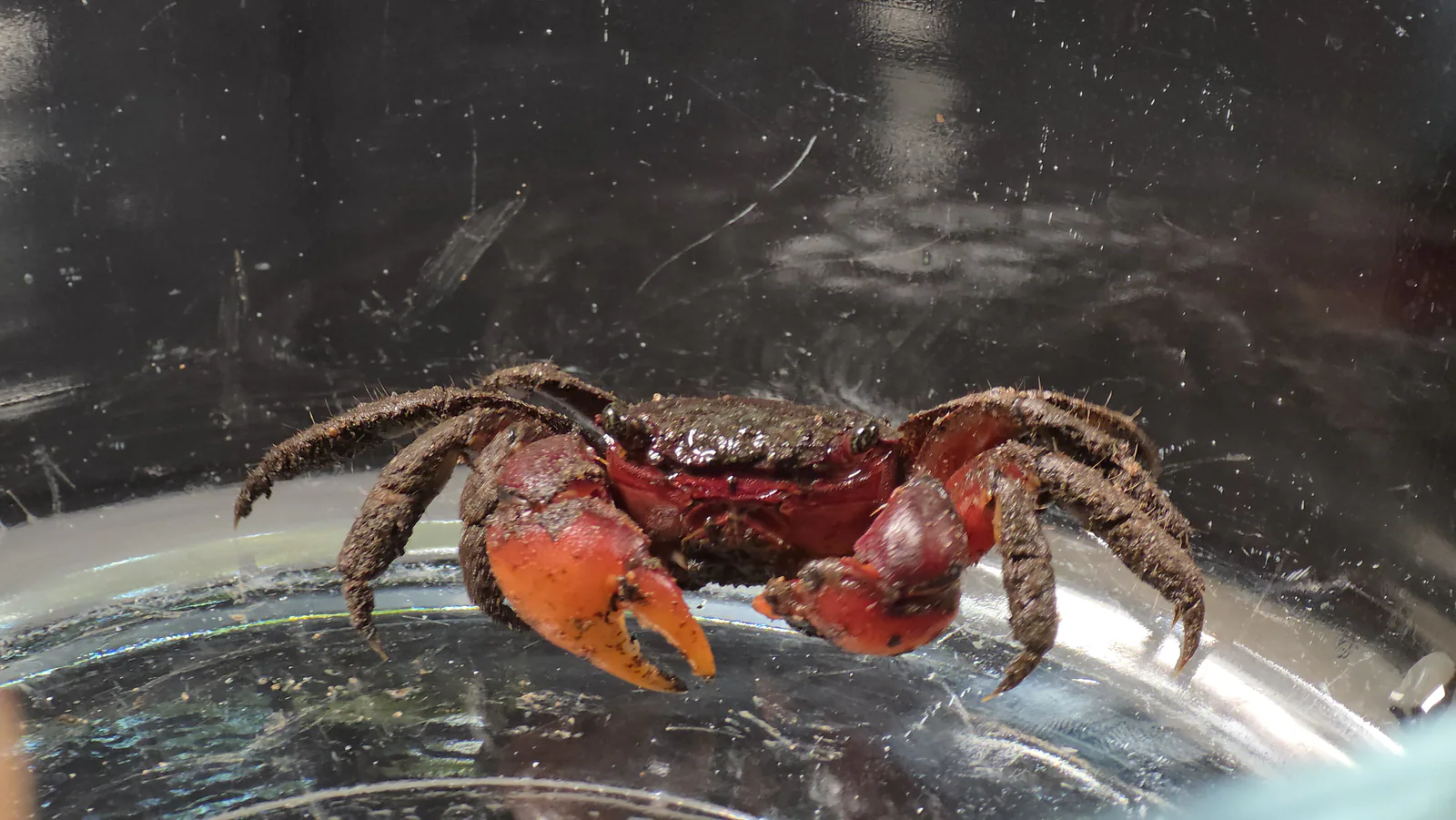
Sesarma schubarti is a Gulf of Mexico marsh crab distributed along the Gulf Coast from Florida through Texas and into Mexico. It was separated from the Atlantic marsh crab (Sesarma reticulatum) in a 2024 taxonomic treatment. In Florida, it occupies brackish tidal marshes, mangrove edges, and the margins of tidal ditches, where it grazes coastal grasses and processes plant detritus. The miniBIOTA individual was collected from a brackish tidal ditch near Spring Hill, FL, placing it squarely within its natural range and habitat type.
Habitat
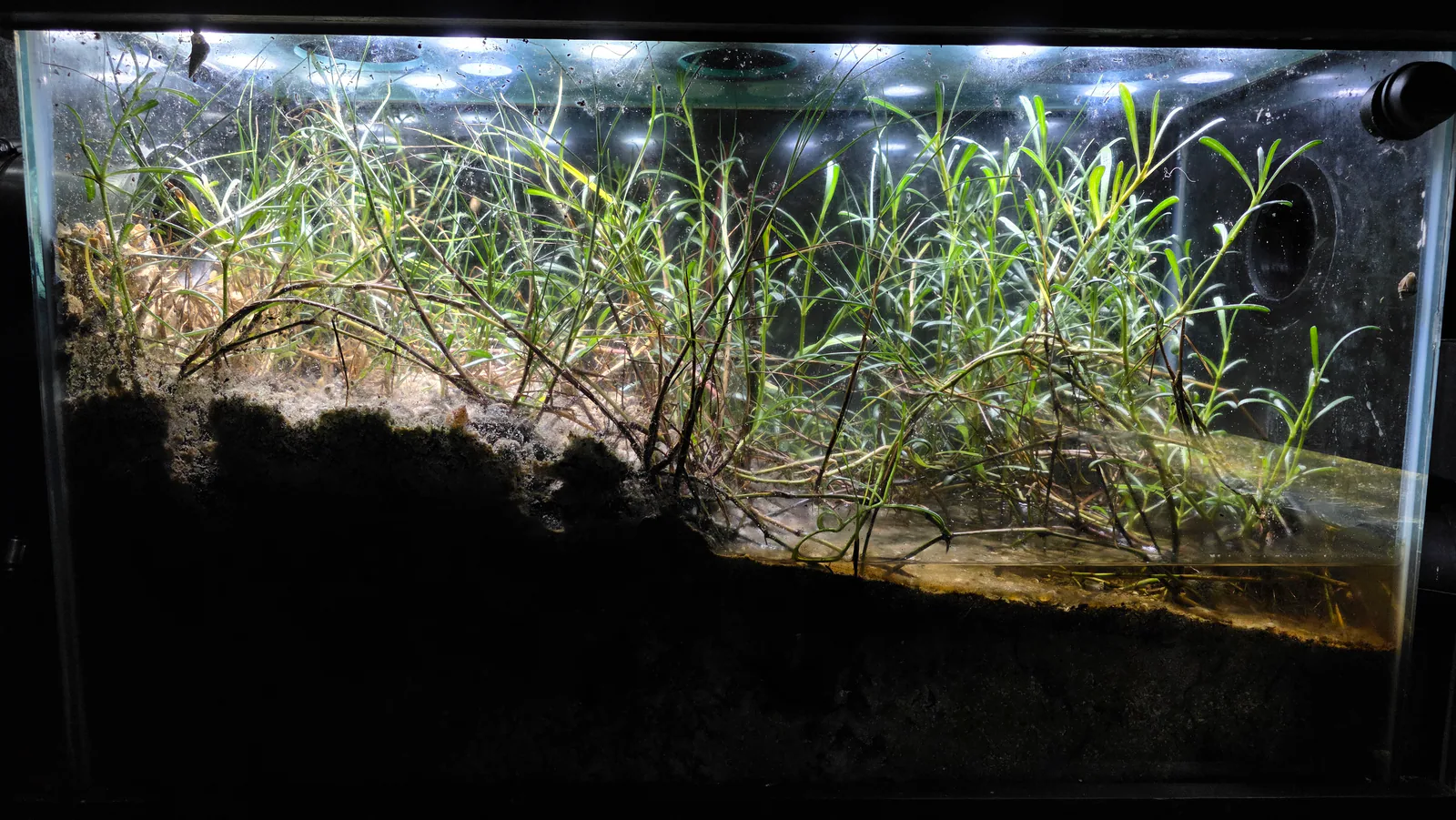
Sesarma schubarti is a semi-terrestrial crab that lives at the interface of water and land. It requires access to water to keep its gills moist but spends substantial time on substrate above the waterline, foraging through vegetation margins and sandy or muddy shoreline. It digs burrows into the substrate at or above the waterline for shelter and humidity regulation. In miniBIOTA, the crab has used the damp sandy Marine Shore substrate for burrowing and feeding, and has also ranged into adjacent vegetation zones.
Diet
Sesarma schubarti is primarily herbivorous, grazing on coastal grasses including cordgrass (Spartina spp.) and seashore paspalum (Paspalum vaginatum), and processing plant detritus including dead grass leaves and waterlogged mangrove material. It is also an opportunistic scavenger, consuming animal remains when available. In miniBIOTA, confirmed food items include live Seashore Paspalum blades (April 26, 2026), a detached fiddler crab leg (April 26), cockroach remains (April 27), Seashore Paspalum stems (May 2), and dead grass detritus (May 21). The crab's feeding method involves grasping plant material and pulling it apart, consuming finer strands created through this process.
Reproduction
Females carry fertilized eggs under the tail before releasing planktonic larvae into the water. The larvae pass through several developmental stages before settling on the shore as juvenile crabs. In miniBIOTA, no reproduction is possible from the current single confirmed male.
Tolerance Ranges
Sesarma schubarti is resilient across a wide range of brackish to marine salinity, pH from roughly 6.5 to 8.5, and warm-temperate to subtropical temperatures. The primary physical requirement is moisture: access to damp sand, burrow structures, or shallow water pools to keep gills hydrated. In miniBIOTA, the crab appears to maintain itself adequately within normal room-temperature conditions, using the Marine Shore's shallow water access and sandy substrate.