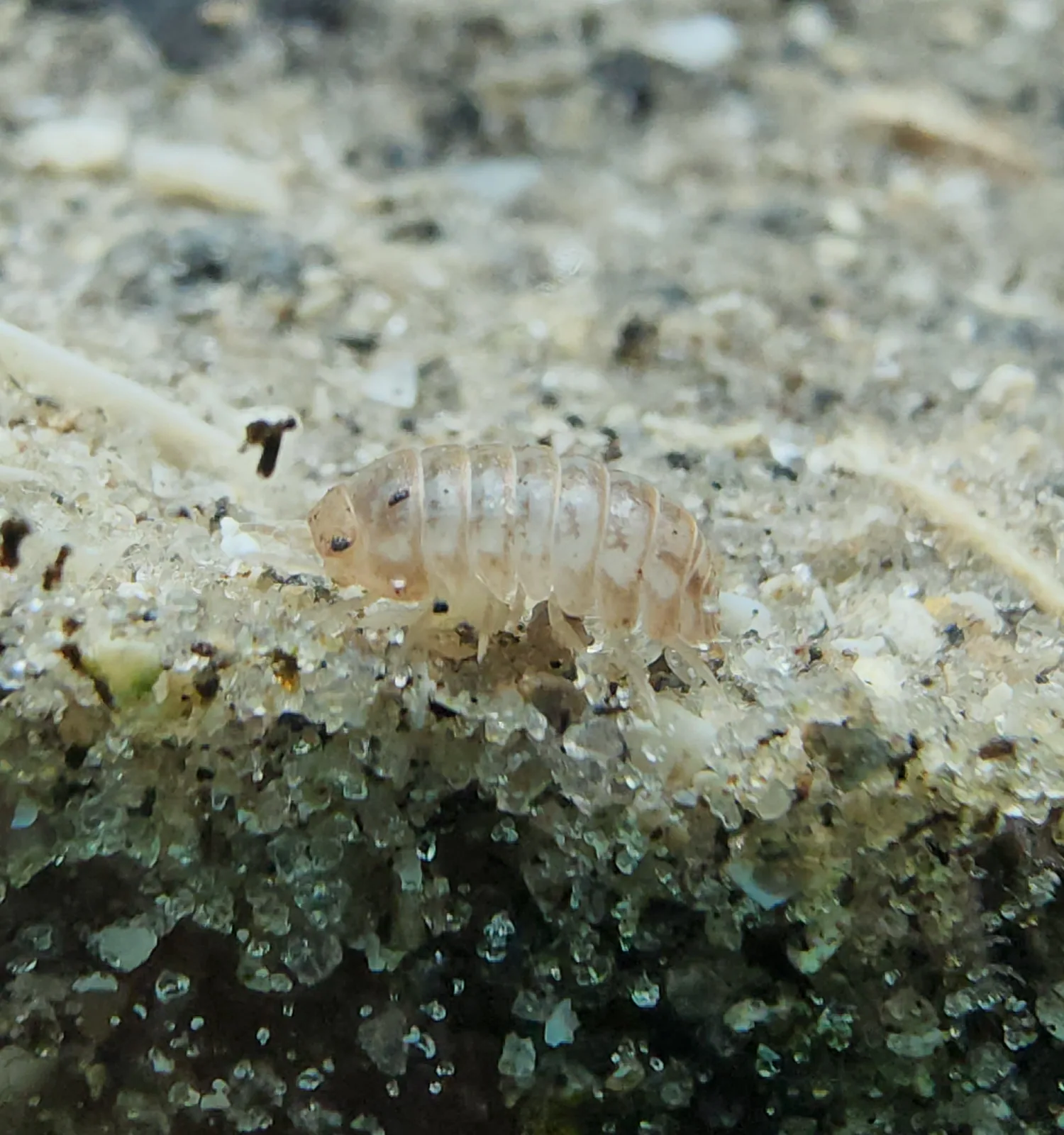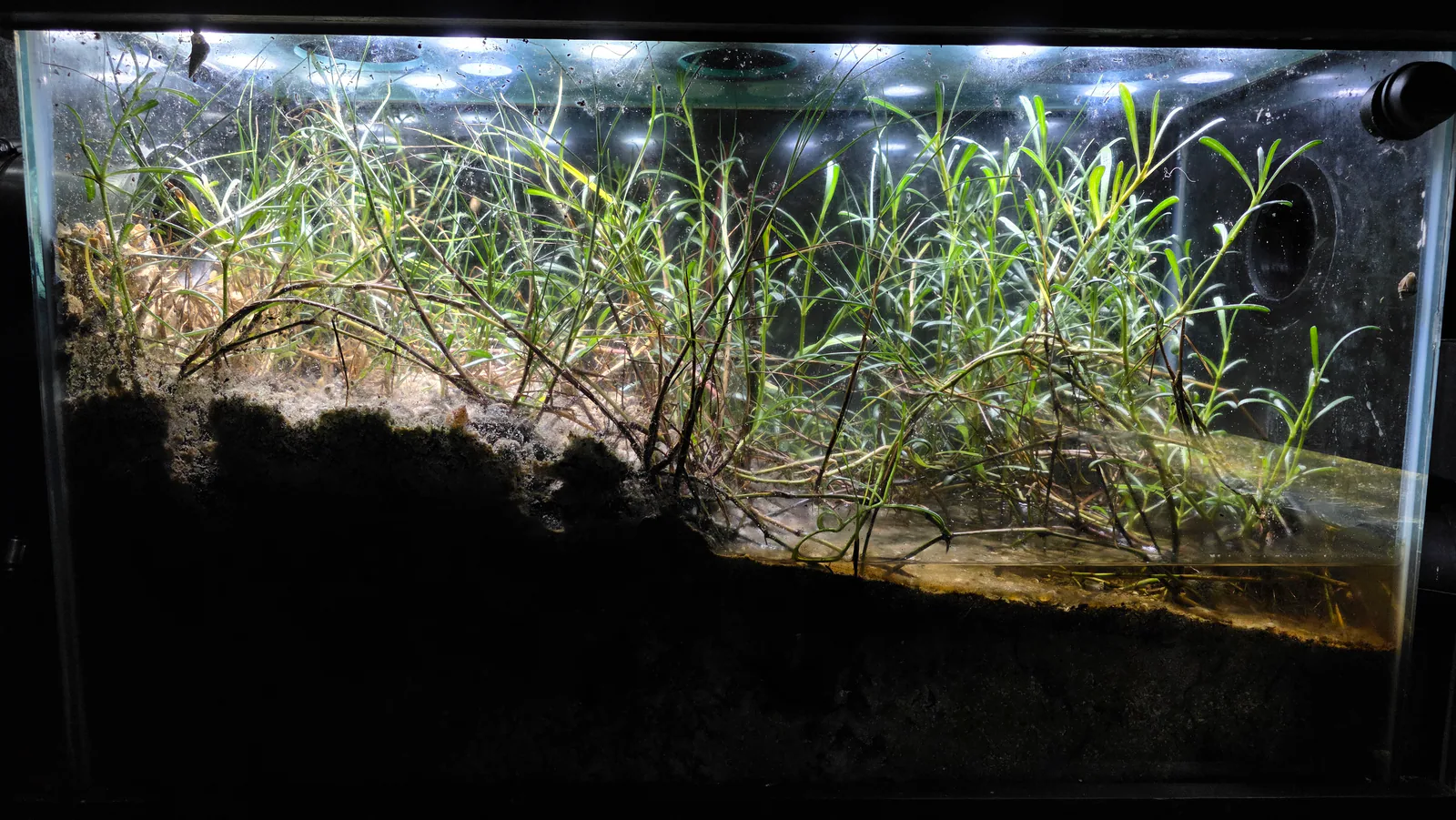
Oniscidea sp. (unidentified)

Beach Pillbug

A small armored isopod in the Marine Shore that rolls into a tight ball when disturbed; found at the high-tide line and supralittoral fringe where the saltwater and terrestrial realms meet, feeding on decaying wrack and organic debris.

Visual Data Unavailable

Overview

A small armored isopod in the Marine Shore that rolls into a tight ball when disturbed; found at the high-tide line and supralittoral fringe where the saltwater and terrestrial realms meet, feeding on decaying plant material and organic debris. Distinct from Woodlouse, which occupies the Lakeshore and does not roll into a ball. No dedicated observation record has been found in the miniBIOTA observation records.

Identity

  • Common name: Beach Pillbug
  • Alternate names: pillbug, roly poly, sow bug, slater, armadillo bug, sea louse (misidentified), potato bug (misidentified)
  • Scientific name: Oniscidea sp. (unidentified)
  • Identification confidence: Suborder-level (Oniscidea); family and genus unidentified; conglobating behavior indicates Armadillidium or related genus
  • Uncertainty label: Observed

Taxonomy

  • Kingdom: Animalia
  • Phylum: Arthropoda
  • Subphylum: Crustacea
  • Class: Malacostraca
  • Order: Isopoda
  • Suborder: Oniscidea
  • Family: Unidentified (Armadillidae most plausible from conglobating behavior)
  • Genus: Unidentified (Armadillidium most plausible in Florida context)
  • Species: Unidentified

Natural History

Oniscidea (woodlice, pill bugs, sow bugs) is a diverse suborder of terrestrial isopod crustaceans that have fully colonized land while retaining gills for gas exchange, requiring them to stay in moist environments. The suborder includes both conglobating species (those that roll into a complete sphere, commonly called pill bugs or roly polies) and non-conglobating species (those that simply flatten or run away, commonly called sow bugs or woodlice).

Conglobating behavior is the defining characteristic distinguishing pill bugs from sow bugs. When threatened, Armadillidium and related genera curl their flexible body segments into a tight sphere, protecting their vulnerable ventral surface and gill plates. This defensive sphere is remarkably effective against many invertebrate predators.

In supralittoral marine shore habitats like the Marine Shore biome, oniscidean isopods occupy the high-tide fringe: the zone above regular wave action that is moistened by splash, spray, and tide seepage but not regularly inundated. In South Florida, Armadillidium vulgare (common pill bug) is the most widespread conglobating isopod and is regularly found in coastal debris, under rocks and driftwood, and in wrack lines at the high-tide mark. Like all Oniscidea, it requires moisture to breathe through its pleopodal gills and retreats under cover in dry conditions.

Oniscidean isopods feed primarily on decaying plant material, fungi, algae, and organic debris. In the Marine Shore, wrack (accumulated seaweed, mangrove leaf litter, and organic drift material) provides the primary food resource. They also consume algae growing on rocks and hard surfaces, and scavenge animal remains. They contribute to nutrient cycling by fragmenting and processing organic material.

Reproduction in Oniscidea is direct (no free-swimming larval stage): females carry fertilized eggs in a brood pouch (marsupium) formed by overlapping plates on the ventral surface. Juveniles emerge as miniature adults and are independent from birth.

Ecological Role

In the Marine Shore, Beach Pillbug functions as a detritivore at the supralittoral zone, processing wrack and organic drift material that accumulates at the high-tide line. This material includes mangrove leaves, seagrass fragments, algae, and other organic matter deposited by tidal action. Beach Pillbug complements the detrital processing roles of Gulf Marsh Crab and Mottled Shore Crab, which are also active in Marine Shore substrate. Its role is analogous to Woodlouse at the Lakeshore, processing accumulated organic material at the land-water interface.

miniBIOTA Evidence

Introduction context: No introduction event is recorded. Armadillidium and other conglobating isopods are common self-colonizers in South Florida coastal environments. No introduction date, source, or method is on file.

Observation timeline:

  • No dedicated observation records have been found in the miniBIOTA observation records for Beach Pillbug.

Confirmed:

  • Species node exists for Beach Pillbug in the Marine Shore; suborder-level identification as Oniscidea; conglobating behavior described in the species_description

Inferred:

  • Detritivory on wrack and organic drift material at the Marine Shore high-tide line, inferred from Oniscidea biology and Marine Shore biome assignment

Unknown:

  • Family and genus within Oniscidea (Armadillidae/Armadillidium most plausible)
  • Whether Beach Pillbug is currently present in the Marine Shore
  • Whether Beach Pillbug and Woodlouse represent different species or the same species in different biome positions