Heterandria formosa

Least Killifish

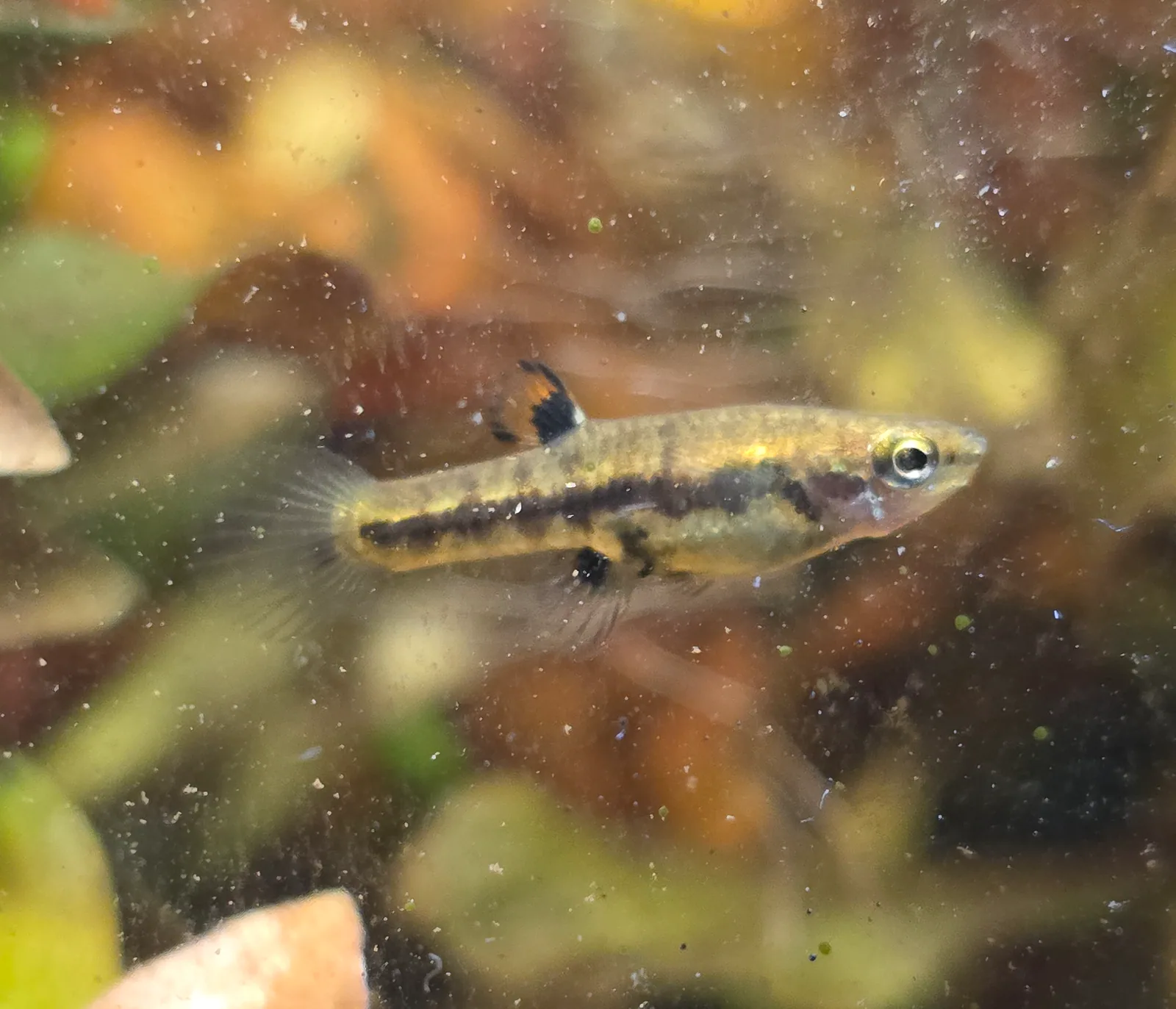
One of North America's smallest freshwater fish, this native Florida livebearer produces a few fry nearly every day and maintained a breeding population in the Freshwater Lake before the population declined to three females by 2025.

Visual Data Unavailable

Overview

One of North America's smallest freshwater fish, Heterandria formosa is a native Florida livebearer that established a reproducing second-generation population in the Freshwater Lake during the prototype era of miniBIOTA. By July 20, 2025, the population had declined to only three individuals, all female, with one juvenile and one or two appearing pregnant; the observer noted extinction risk without males and flagged possible need for male additions. No observation has been recorded since.

Identity

  • Common name: Least Killifish
  • Alternate names: Dwarf livebearer, dwarf topminnow, dwarf fish, midget livebearer, mosquitofish (misidentified)
  • Scientific name: Heterandria formosa
  • Identification confidence: Species level
  • Uncertainty label: Uncertain

Taxonomy

  • Kingdom: Animalia
  • Phylum: Chordata
  • Class: Actinopterygii
  • Order: Cyprinodontiformes
  • Family: Poeciliidae
  • Genus: Heterandria
  • Species: Heterandria formosa

Natural History

Heterandria formosa is one of the smallest vertebrates in North America, with adult males reaching only 8 to 20 millimeters and females 20 to 35 millimeters. It is native to the coastal plain of the southeastern United States from South Carolina through Florida and into Louisiana, and is particularly abundant in Florida's freshwater wetland systems: swamps, ditches, sloughs, ponds, and marshes with dense aquatic vegetation.

The species belongs to the family Poeciliidae and is a livebearer, giving birth to free-swimming fry rather than laying eggs. Uniquely among vertebrates, Heterandria formosa practices superfetation: females carry multiple litters at different developmental stages simultaneously within the reproductive tract, releasing one to five fry every one to three days over an extended period. This nearly continuous fry production is a reproductive strategy that allows the species to sustain population levels even at very small individual sizes, compensating for the high predation rates small fish typically face.

Males are distinguished by a modified anal fin, the gonopodium, used for internal fertilization. Females have a standard anal fin. Males are substantially smaller than females. The disparity in size can make sex determination difficult in the field, particularly for juveniles.

In terms of diet, Heterandria formosa is an omnivore that feeds on algae, aufwuchs (the biofilm layer of algae, bacteria, and microorganisms coating surfaces), small aquatic invertebrates, and zooplankton. Its small size makes it specialized for feeding at the microscale, grazing surfaces and picking small organisms from vegetation.

The species is tolerant of a wide range of freshwater conditions. It survives in low dissolved oxygen environments by surfacing and breathing air at the water surface, which allows it to persist in stagnant, swampy habitats that other fish cannot tolerate. It tolerates temperatures from approximately 15 to 35 degrees C and a pH range of 6.0 to 8.0. It requires dense aquatic vegetation for cover from predators; without vegetation, the species is highly vulnerable.

Expected lifespan in wild populations is typically one to two years. Under managed conditions, individuals have survived three or more years, though this is not typical.

Ecological Role

Heterandria formosa occupies a middle trophic position in freshwater food webs, consuming algae and invertebrates while being subject to predation from larger fish, crayfish, aquatic insects, and birds. In Florida's natural systems, it provides a continuous supply of small, high-turnover fish biomass to predators and helps control algae and microinvertebrate populations at the microscale.

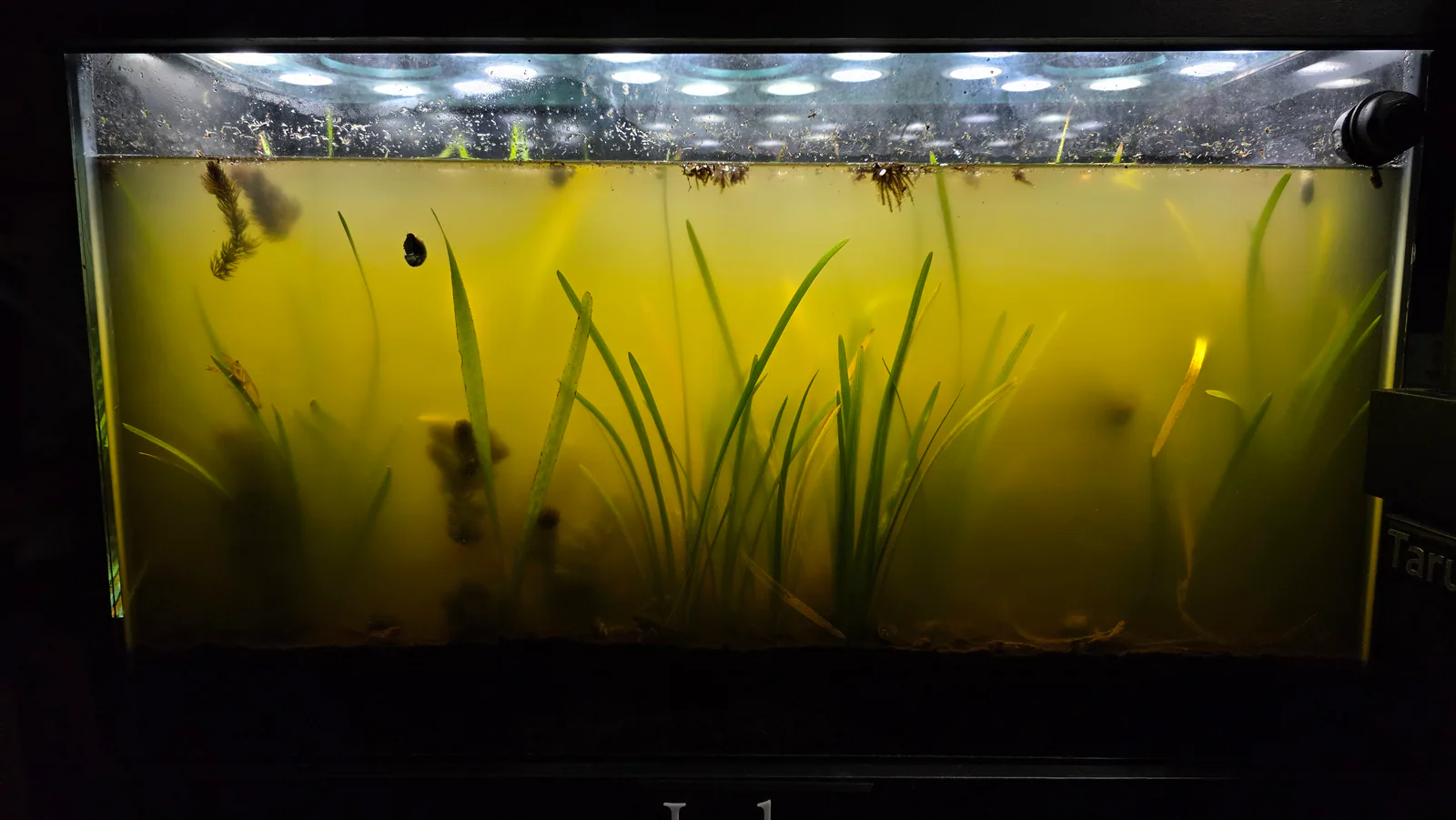
In miniBIOTA, the Least Killifish was one of the first vertebrates established in the Freshwater Lake, present during the prototype era before the current biome structure existed. The documented second-generation population in July 2022 shows that the fish reproduced in the system, confirming the lake supported conditions adequate for livebearer recruitment at that stage. Their continuous fry production via superfetation would have created a small but steady supply of very small fish fry, which could serve as prey for larger invertebrates such as Slough Crayfish.

The 2025 decline to three all-female individuals represents either a population bottleneck driven by predation, food limitation, or competitive pressure. Flagfish (Jordanella floridae) were introduced in June 2024 and were present through April 2026; their overlap with the Least Killifish during the documented decline period (June 2024 through July 2025) is notable. Flagfish are aggressive toward other small fish and consume small invertebrates; whether they predated on Least Killifish fry or adults is not confirmed from the observation record. Slough Crayfish (Procambarus fallax) would also have posed a predation risk on small fish and fry throughout the system's history.

The persistence of one or two pregnant females in July 2025 suggests stored sperm from prior male matings was still sustaining reproduction, consistent with the capacity for sperm storage in female poeciliids. The juvenile in the July 2025 observation may have been born after the males disappeared. Whether this line of reproduction continued, or whether males were successfully added, is unknown.

miniBIOTA Evidence

Introduction context: Date of introduction is unknown. The 2022 observation already documents a second-generation population, meaning the original introductions predated July 2022, likely during the prototype-system era before the current Freshwater Lake biome was formalized. Source origin and introduction method are not recorded.

Observation timeline:

  • July 22, 2022: Second-generation Least Killifish females observed with a morphed anal fin, described as a pointed tip with a black border surrounding the fin. Observer noted the morphology appeared unique compared to examples found online. This documents successful reproduction in miniBIOTA: the fish had reached at least a second generation by this date.
  • July 20, 2025: Only three Least Killifish remain in the Freshwater Lake, all female; one or two appear pregnant, one is a juvenile. Observer notes the population is at extinction risk without males, and flags the possible need to add males. This is the most recent confirmed sighting on record.

Confirmed:

  • Second-generation population established in the Freshwater Lake by July 22, 2022
  • Second-generation females exhibited an unusual anal fin morphology (pointed tip with black border) in July 2022
  • Population declined to only 3 individuals, all female, by July 20, 2025
  • One or two females pregnant as of July 20, 2025 (stored sperm or ongoing superfetation from prior male matings)
  • One juvenile present July 20, 2025, confirming very recent reproduction

Inferred:

  • Population established before July 2022, during the prototype-era of miniBIOTA (date unknown)
  • Decline occurred between July 2022 and July 2025, during a period when Slough Crayfish were present throughout; Flagfish were also present from June 2024
  • The pregnant females in July 2025 were using stored sperm from prior male matings (males had disappeared or died before July 20, 2025)
  • The unusual female anal fin morphology in 2022 may reflect a developmental response to system conditions or natural intraspecific variation; the mechanism is not known

Unknown:

  • Date of original introduction
  • Peak population size and period of population growth
  • When males disappeared from the population (sometime before July 20, 2025)
  • Whether males were added after July 2025 and whether the population recovered
  • Whether the population persisted after July 20, 2025 or became extirpated
  • What drove the decline: Flagfish predation, Slough Crayfish predation, food limitation, water quality, or a combination
  • The biological cause of the morphed female anal fin in 2022