Cerithium atratum

Dark Cerith

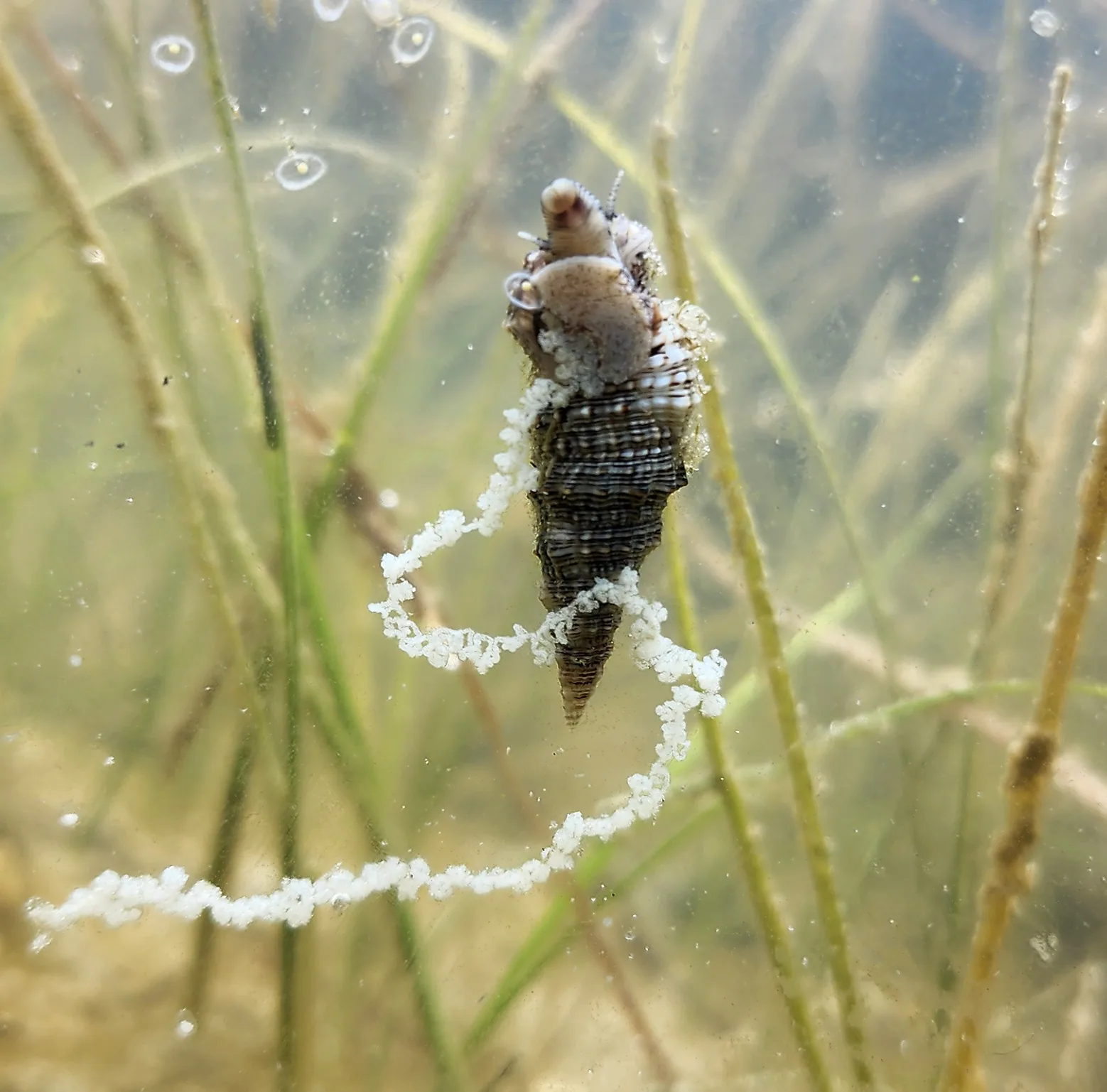
Filmed laying eggs in a semicircular dot-cluster pattern in the Seagrass Meadow in February 2026, this Dark Cerith confirmed active reproduction in the saltwater system; it grazes constantly across seagrass blades and sandy substrate, keeping epiphyte films in check.

Overview

Filmed laying eggs in a semicircular dot-cluster pattern in the Seagrass Meadow in February 2026, this cerith snail confirmed active reproduction in the saltwater system. The same event revealed a second morphologically distinct cerith species sharing the biome; that species is tracked separately as Unidentified Cerith Snail 2. Species identity was confirmed as Cerithium atratum (Dark Cerith / Florida Cerith) on June 18, 2026.

Identity

  • Common name: Dark Cerith
  • Alternate names: Florida cerith, cerith, cerith snail, dark cerith snail, Cerithium atratum
  • Scientific name: Cerithium atratum
  • Identification confidence: Confirmed. Species identity confirmed by owner, June 18, 2026.
  • Uncertainty label: Confirmed. Species ID is now resolved. Population size, current abundance, and whether the egg clutch from February 2026 hatched remain uncertain.

Taxonomy

  • Kingdom: Animalia
  • Phylum: Mollusca
  • Class: Gastropoda
  • Order: Caenogastropoda
  • Family: Cerithiidae
  • Genus: Cerithium
  • Species: C. atratum

Natural History

Cerithiidae is a family of small, elongated, spiral-shelled marine gastropods found in shallow tropical and subtropical marine habitats worldwide. In Florida, cerith snails are among the most abundant and ecologically important small grazers in seagrass beds, mangrove margins, and sandy intertidal flats.

Cerithium atratum, commonly called the Dark Cerith or Florida Cerith, is a small Florida marine snail with a dark-colored, elongated spiral shell typically 15 to 30 mm in length. It is native to the western Atlantic, ranging from Florida and the Gulf of Mexico through the Caribbean and into South America. In Florida, it is found in seagrass beds, sandy shallows, mangrove edges, and tidal flats, where it grazes constantly on biofilm, diatoms, and algae from seagrass blades and substrate surfaces. It is among the most common cerith species in Florida seagrass habitats and is widely sold as a saltwater cleaning crew species for marine aquariums.

Cerith snails use a long, file-like radula to scrape diatoms, cyanobacteria, detritus, and soft organic material from seagrass blades, sandy substrate, and hard surfaces. They move constantly across available surfaces and are effective cleaners of seagrass blade epiphytes and benthic biofilm.

Reproduction involves the laying of coiled or clustered egg masses on hard substrate. The February 11, 2026 observation documented a semicircular cluster of small dots, a characteristic cerith egg pattern, and confirmed active egg-laying in the Seagrass Meadow with video evidence. Larvae hatch as free-swimming veligers; settlement and recruitment in a closed system depend on available substrate and water conditions.

Ecological Role

In the Seagrass Meadow, Dark Cerith is a primary mobile biofilm and epiphyte grazer on grass blades and substrate. Its constant grazing removes diatom and cyanobacterial films from seagrass blades, reducing epiphyte competition that would otherwise shade and reduce photosynthesis in the seagrass. This grazing pathway converts surface microbial production into snail biomass while keeping the grass blades cleaner and more productive.

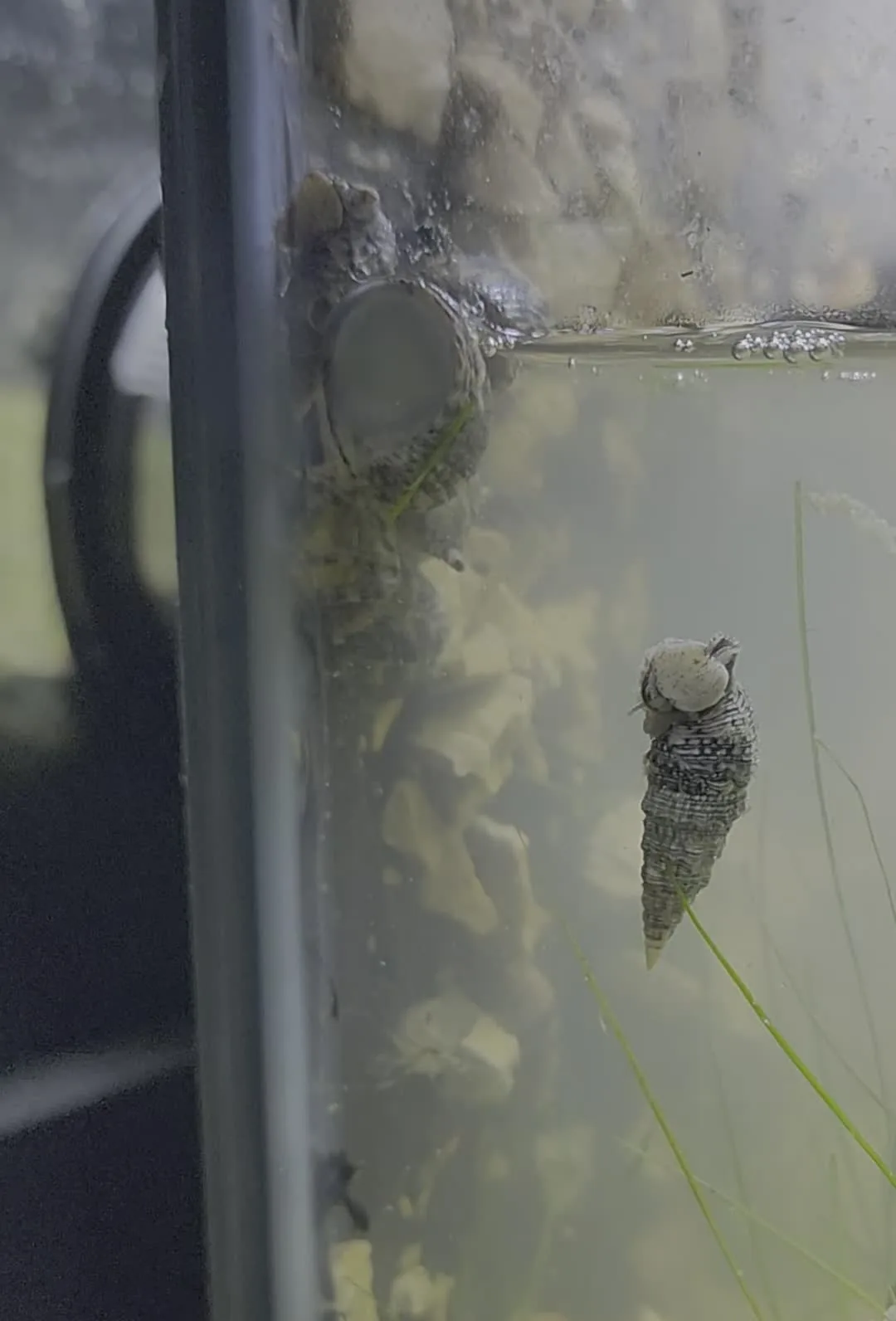
A second cerith species (Unidentified Cerith Snail 2) was also observed in the Seagrass Meadow in February 2026. The two-species co-occurrence may indicate niche differentiation between them, but this has not been confirmed.

miniBIOTA Evidence

Introduction context: No introduction event is formally recorded. Introduction method, source, and date of first introduction are all not documented. Self-arrival via live rock, seagrass material, or other marine introductions is possible; deliberate purchase and introduction as a saltwater cleaning crew member is also plausible, given how commonly cerith snails are sold for this purpose in Florida.

Observation timeline:

  • February 11, 2026: Dark Cerith observed and filmed actively laying eggs in the Seagrass Meadow. Eggs described as small dots in a semicircular cluster pattern. Raw note: "Cerith snail observed actively laying eggs in seagrass meadow, small dots in semicircular cluster pattern. First time egg source confirmed. Observation also revealed that two distinct cerith snail species are present in the biome." Video evidence on record. The egg-laying individual is now confirmed as Cerithium atratum.
  • February 17, 2026: Listed as last recorded date in the species record. No dedicated observation record exists for this date; likely a follow-up check six days after the egg-laying event.
  • June 18, 2026: Species identity confirmed as Cerithium atratum (Dark Cerith / Florida Cerith) by owner during intake of . Second cerith species from February 2026 split to Unidentified Cerith Snail 2.

Confirmed:

  • Dark Cerith (Cerithium atratum) present and actively laying eggs in the Seagrass Meadow on February 11, 2026; video on record
  • Egg clutch described as semicircular dot-cluster pattern; first time egg source confirmed in the system
  • Two distinct cerith snail species were present in the Seagrass Meadow simultaneously, per the February 2026 observation note; the second is Unidentified Cerith Snail 2
  • Species identity confirmed as Cerithium atratum on June 18, 2026

Inferred:

  • Biofilm, diatom, and epiphyte grazing on seagrass blades and substrate consistent with family biology and C. atratum natural history
  • Likely arrived via live rock, seagrass material, or deliberate introduction as a saltwater maintenance species
  • Hatching of the February 2026 egg clutch possible; recruitment and juvenile survival not confirmed

Unknown:

  • Whether the February 2026 egg clutch hatched and juveniles recruited
  • Current population size
  • Whether both cerith species remain present
  • Introduction source and date