Crepidula depressa

Depressed Slippersnail

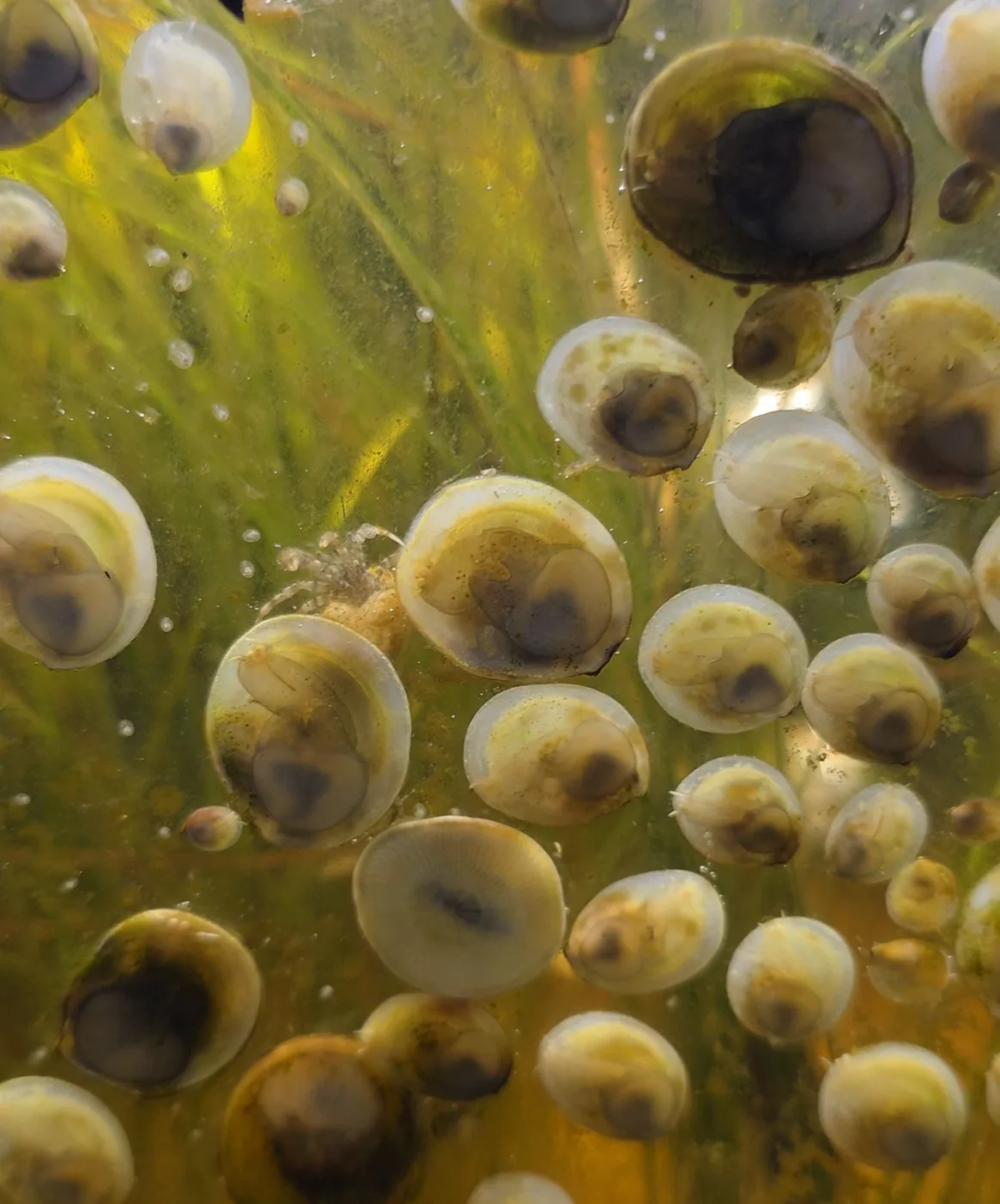
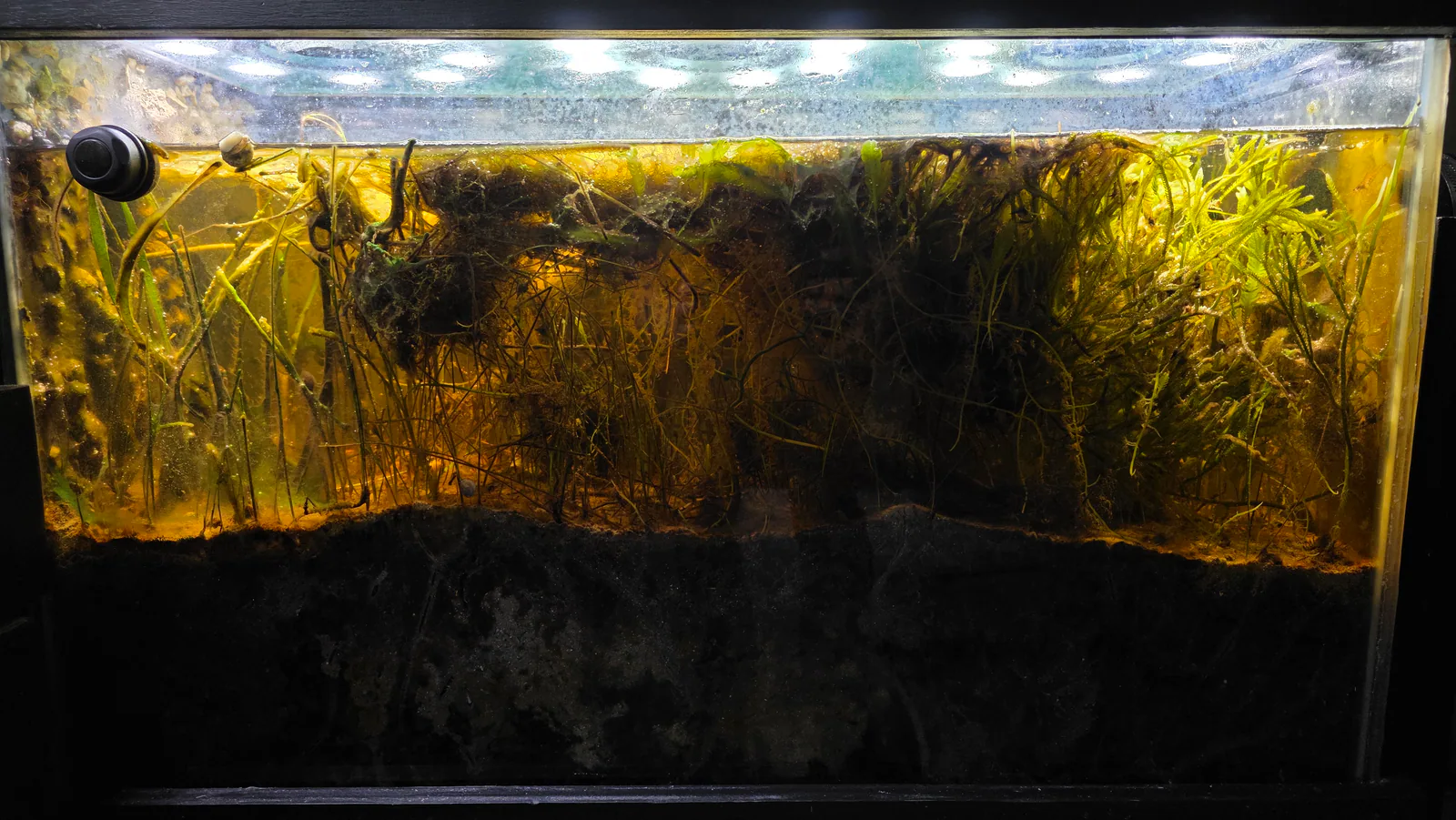
Clustering on the back glass and hard surfaces of the Seagrass Meadow, this small flattened filter feeder draws phytoplankton and suspended particles from the water column, with successive generations completing their life cycle in the system and empty shells dissolving into the sand bed as a slow-release calcium source.

Visual Data Unavailable

Overview

The Depressed Slippersnail (Crepidula depressa) is a small filter-feeding gastropod that arrived in miniBIOTA with the initial marine community seeding, introduced on seagrass blades and empty shells. It was initially misidentified as a saltwater limpet before being correctly identified. Since then it has established a self-sustaining population: baby slippersnails were observed in April 2025, the population proliferated by July 2025, and a new adolescent generation was visible in April 2026. Common Atlantic Marginella is a confirmed predator of juveniles. As of April 2026, slippersnails appear to be completing a full generational life cycle in the Seagrass Meadow, with empty shells from dead individuals accumulating on the sand bed and functioning as a calcium source and amphipod shelter.

Identity

  • Common name: Depressed Slippersnail
  • Alternate names: slipper shell, slipper snail, boat shell, crepidula, quarter-deck shell, slippershell
  • Scientific name: Crepidula depressa
  • Identification confidence: Confirmed; misidentified as saltwater limpet initially, later correctly identified as Crepidula depressa through observation review
  • Uncertainty label: Confirmed

Taxonomy

  • Kingdom: Animalia
  • Phylum: Mollusca
  • Class: Gastropoda
  • Order: Littorinimorpha
  • Family: Calyptraeidae
  • Genus: Crepidula
  • Species: depressa

Natural History

Range and Florida Relevance

Crepidula depressa is native to coastal waters of the southeastern United States, the Gulf of Mexico, and the Caribbean, including the Atlantic and Gulf coasts of Florida. It is a common species of shallow nearshore marine environments, found on hard substrate, shell, rock, oyster reef, and seagrass beds, from the intertidal zone to moderate depths. In Florida, it is a familiar component of shell-bottom and seagrass communities. The "depressed" in the common name refers to its notably flat or depressed shell profile, distinguishing it from taller-shelled Crepidula species.

Shell and Appearance

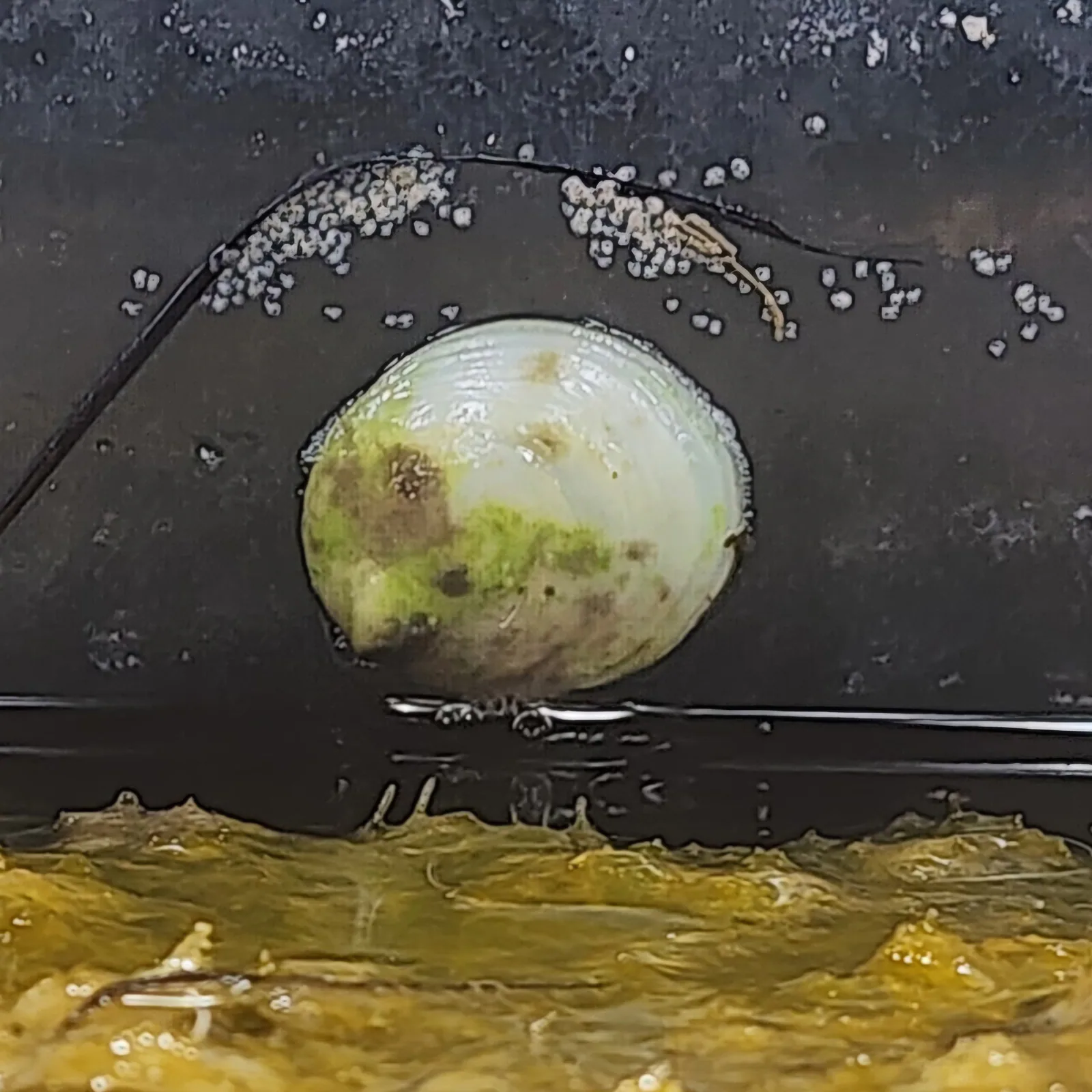
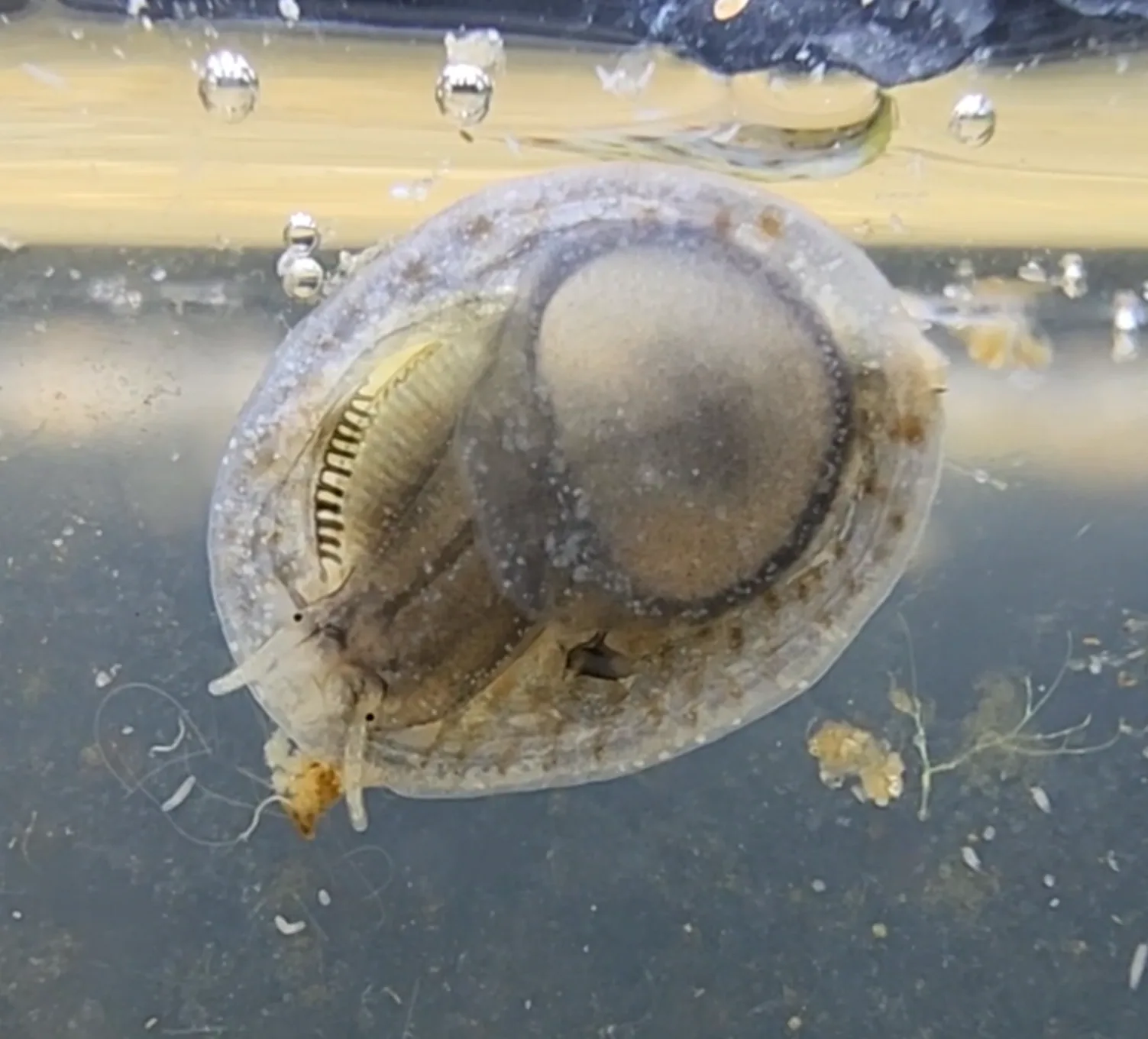
The Depressed Slippersnail has a low, oval, cap-like shell with a prominent internal shelf (the septum or deck) that extends roughly halfway across the shell opening. This shelf is the definitive feature of Calyptraeidae and the origin of common names like "slipper shell" and "boat shell." The shell surface is pale tan to gray-white, often worn or fouled with encrusting growth in natural settings. The flat shell profile is an adaptation to living on and stacking against other hard surfaces. Its initial misidentification as a limpet in miniBIOTA reflects the visual similarity of the flat, cap-like profile to true limpets.

Filter Feeding

Crepidula depressa is a suspension feeder. Adults are largely sedentary and draw water in over the gill, trapping phytoplankton, suspended microbes, bacteria, and fine organic particles on a mucous sheet that is then drawn into the mouth. Because they are sedentary once settled, they depend on water movement to deliver suspended food to them. In miniBIOTA they occupy vertical surfaces including the back glass, where water movement carries suspended material past them.

Protandrous Hermaphroditism

Crepidula species are protandrous hermaphrodites: individuals begin life as mobile males and, as they grow larger, transition to the sedentary female phase. The sex change is influenced by social context, males are more likely to transition when settled near or on females. Stacking behavior (smaller males resting on top of larger females) is directly tied to this life history. Females brood fertilized eggs in capsules beneath the shell; larvae develop as planktonic veligers before settling. Larval development is planktotrophic (larvae feed in the water column during development). Settlement is influenced by the chemical cues of adults of the same species.

The Generational Life Cycle in miniBIOTA

As of April 27, 2026, slippersnails in miniBIOTA appear to be completing a full generational cycle. Adults filter feed from the water column while colonizing the back glass, building their shells over several months. As each generation dies, shells fall to the sand bed and gradually dissolve, reintroducing calcium into the water column. Dead soft tissues become available as food for crabs and scavengers; empty shells provide hard substrate and shelter for amphipods along the sand bed. This turnover pattern has been described as a functional "calcium battery" for the substrate. A new adolescent generation was visible on the back glass in April 2026, suggesting the cycle is repeating rather than the population growing without limit.

Tolerance Ranges

Crepidula depressa is adapted to warm-temperate to subtropical coastal conditions typical of its Florida and Caribbean range. It tolerates temperatures approximately 18 to 30 degrees Celsius (65 to 85 degrees Fahrenheit). pH tolerance spans the standard marine range (approximately 7.8 to 8.4), though as a calcifying species it is sensitive to acidification, which can impair shell development and larval metamorphosis. It prefers low to moderate light and moderate water flow sufficient to deliver suspended particles for filter feeding.

Ecological Role

The Depressed Slippersnail fills a filter-feeding role in the Seagrass Meadow, drawing phytoplankton and suspended organic particles from the water column and transferring that energy into animal biomass. By filtering suspended material, the population contributes to water clarity in the immediate vicinity of the back glass.

The April 27, 2026 observation identified a broader ecological role beyond simple filter feeding: as generations cycle through the system, the accumulation and dissolution of empty shells on the sand bed functions as a slow-release calcium reservoir for the water column. Dead individuals become food for crabs and scavengers, and empty shells provide hard substrate and microhabitat for amphipods in the sand bed. Taken together, the slippersnail population acts as a recurring calcium and nutrient recycler rather than simply an accumulator.

Common Atlantic Marginella is a confirmed predator of juvenile slippersnails, documented in April 2025 using its extended proboscis to consume baby slippersnails outside the waterline. This predation provides a top-down check on juvenile survival and likely contributes to the population self-regulation pattern observed by April 2026.

As of February 2026, Scorched Mussels were observed potentially outcompeting slippersnails for substrate in the Seagrass Meadow. The competitive outcome and relative abundance of the two filter feeders remain unresolved.

miniBIOTA Evidence

Introduction

Depressed Slippersnails were introduced to miniBIOTA with the initial marine community seeding, arriving on submerged seagrass blades and empty shells. No specific introduction date is on record. The species was initially logged as a saltwater limpet; identity was later resolved to Crepidula depressa through reviewed observation context.

Observation Timeline

  • April 8, 2025: Baby slippersnails observed all over the back glass; first confirmed reproductive event. Species at this time still referred to as "saltwater limpets" in field notes. Note in observation record: potentially concerning if they cover all glass surfaces without sufficient predation; Marginella predation confirmed the following day.
  • April 9, 2025: Common Atlantic Marginella extended its tube-like proboscis to consume several baby slippersnails just outside the waterline. Marginella confirmed as a predator of juvenile slippersnails. Separately: more slippersnails than expected discovered, including several hidden inside the Orangeclaw Hermit Crab shell.
  • July 20, 2025: Depressed Slippersnail population proliferated. Bay barnacle population declined on the same date (one of two barnacles lost); possible environmental pressure shifts noted.
  • February 20, 2026: In a Scorched Mussel observation, mussels noted as appearing to outcompete slippersnails in the Seagrass Meadow. Competitive outcome unresolved.
  • April 27, 2026: Slippersnails observed appearing to complete a full generational life cycle. Adults filter feeding and colonizing the back glass; dead shells falling to sand bed and dissolving (calcium battery). Dead bodies available to crabs; empty shells providing amphipod shelter. New adolescent generation visible on back glass. Population described as "potentially a keystone recycler for the seagrass meadow biome".
  • June 10, 2026: Last observed date on record. No dedicated observation file for this date; date reflects a live record check.

What Is Confirmed

  • Depressed Slippersnails present and reproducing in the Seagrass Meadow; population status is Established.
  • First reproductive event April 8, 2025 (baby slippersnails on glass).
  • Common Atlantic Marginella is a confirmed predator of juvenile slippersnails (April 9, 2025, direct observation).
  • Population proliferated by July 20, 2025.
  • New adolescent generation visible April 27, 2026, suggesting a completed second generation.
  • Generational turnover with shell dissolution contributing calcium to substrate observed by April 2026.
  • Empty shells provide amphipod microhabitat; dead tissues available to crabs and scavengers.

What Is Inferred

  • Population appears to be self-regulating through generational turnover rather than growing without limit.
  • Marginella predation on juveniles provides a top-down check on population growth.
  • The calcium released by dissolving shells contributes to the carbonate balance of the Seagrass Meadow.

What Remains Unknown

  • Exact current population count.
  • Competitive outcome between slippersnails and Scorched Mussels for substrate.
  • Whether the population is currently growing, stable, or declining as of mid-2026.
  • Whether the self-regulation pattern observed in April 2026 is ongoing.
  • Current distribution across glass, shell, and other surfaces.