Amphibalanus improvisus

Bay barnacle

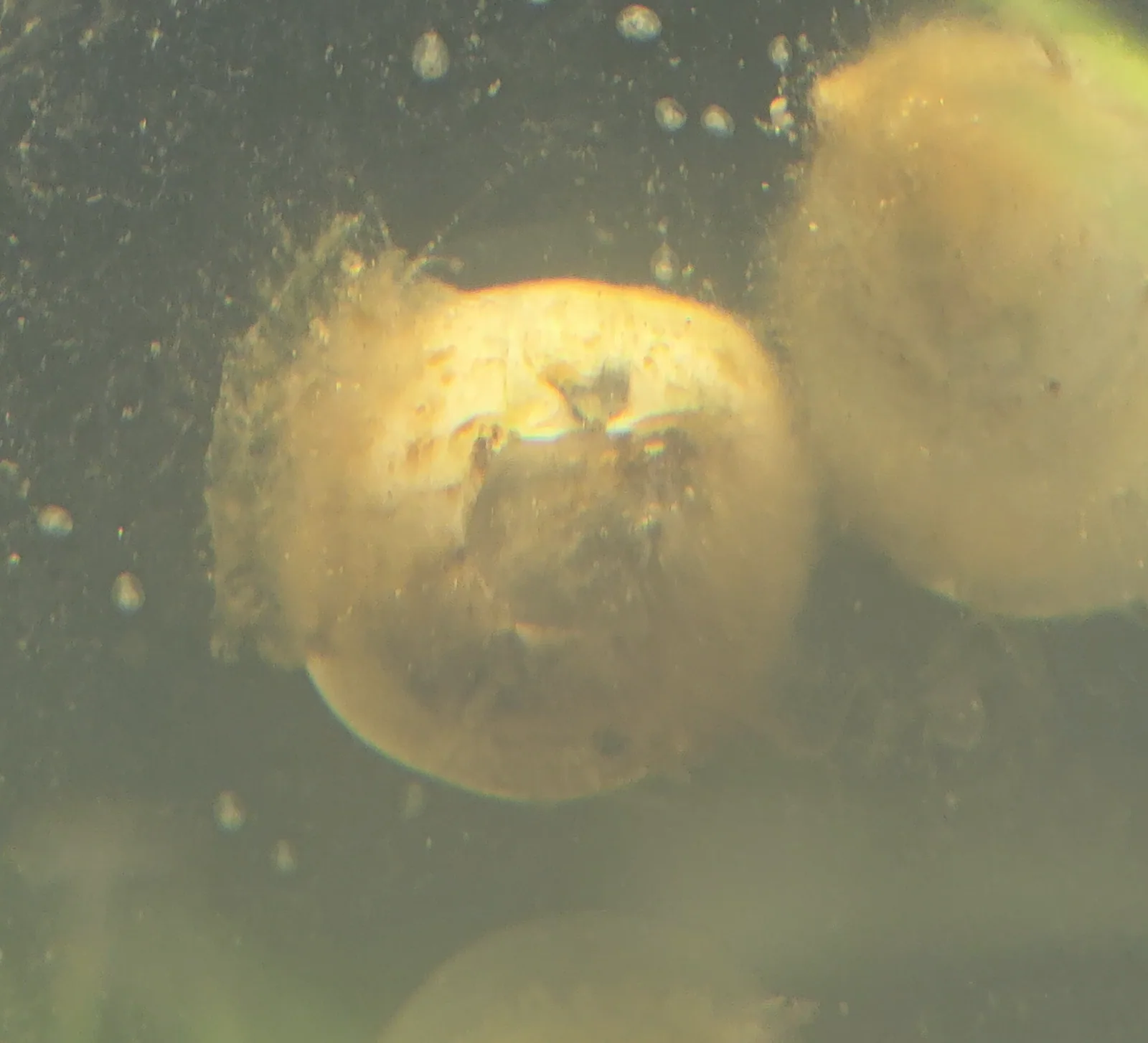
A small acorn barnacle that settled in the Seagrass Meadow without deliberate introduction, extending feathery cirri into the water to filter suspended phytoplankton and particles from the current while attached to hard surfaces.

Visual Data Unavailable

Overview

The Bay Barnacle (Amphibalanus improvisus) is a small estuarine acorn barnacle that recruited into the miniBIOTA Seagrass Meadow without deliberate introduction. A barnacle was first confirmed actively filter feeding on December 15, 2024, during an oyster cluster inspection. By May 8, 2025, at least two individuals were noted as self-established. By July 20, 2025, only one of the original two remained, coinciding with a Depressed Slippersnail population increase; the observer noted a possible shift in food sources, water quality, or environmental pressures as explanations. No subsequent population observation is on record. Population status is Uncertain.

Identity

  • Common name: Bay Barnacle
  • Alternate names: barnacle, acorn barnacle, fouling barnacle, saltwater barnacle
  • Scientific name: Amphibalanus improvisus
  • Identification confidence: Confirmed
  • Uncertainty label: Confirmed, population uncertain

Taxonomy

  • Kingdom: Animalia
  • Phylum: Arthropoda
  • Class: Thecostraca
  • Subclass: Cirripedia
  • Order: Sessilia
  • Family: Balanidae
  • Genus: Amphibalanus
  • Species: improvisus

Natural History

Range and Florida Relevance

Amphibalanus improvisus is native to the northern Atlantic coast and has been introduced worldwide through hull fouling on ships. It is now one of the most commonly encountered barnacles in estuaries and coastal bays throughout the Gulf of Mexico and Atlantic seaboard of North America, including Florida. It is particularly associated with hard substrates in estuaries and brackish-water environments, where it tolerates salinity fluctuations that would exclude most other barnacle species. Its presence in miniBIOTA is consistent with natural Florida coastal distribution and its frequent occurrence on oyster clusters and similar hard structure.

Habitat

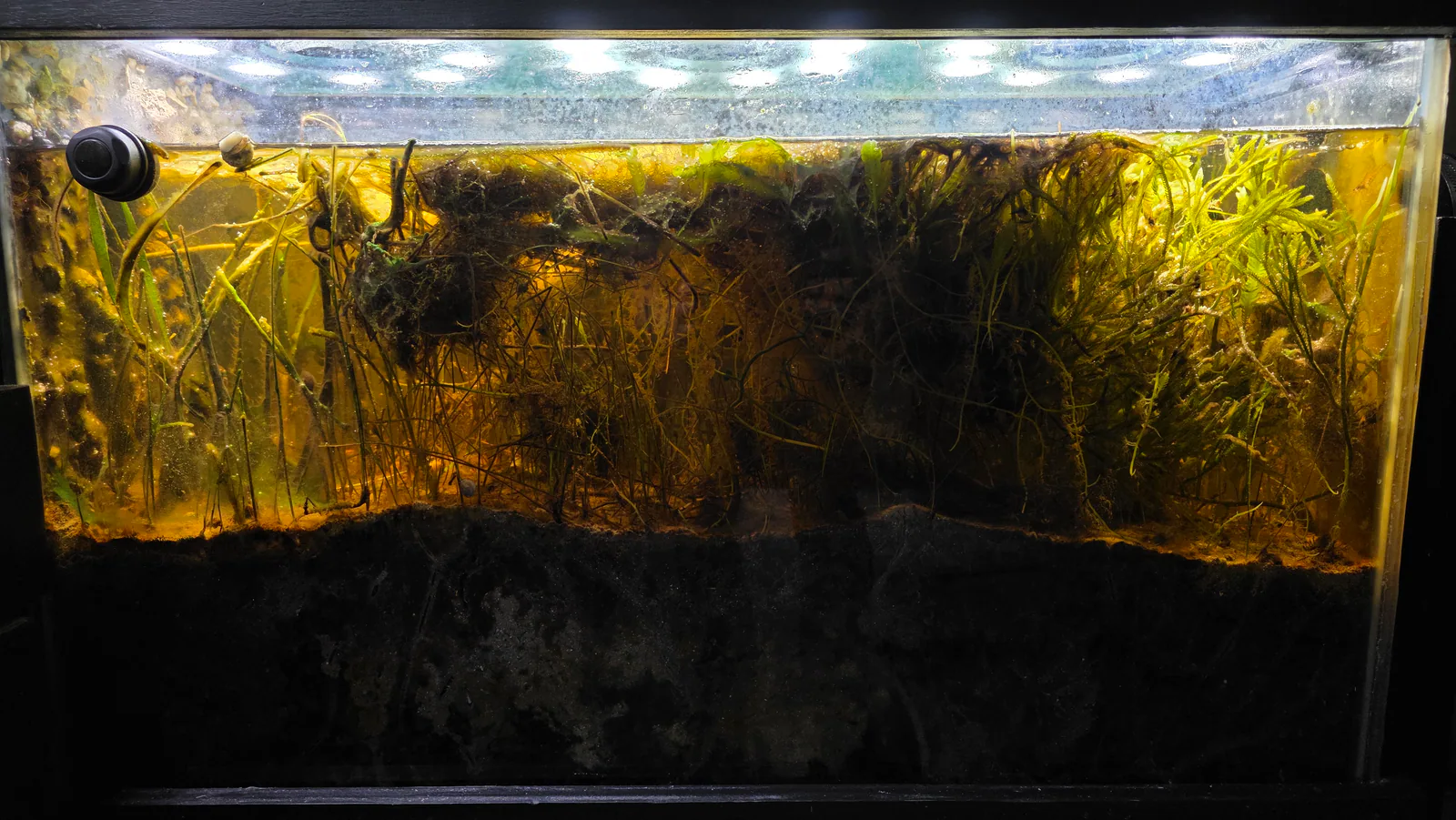
Amphibalanus improvisus is permanently sessile, attaching to hard substrate by a strong calcified cement within hours of larval settlement. It occurs on rock, shell, oyster clusters, mangrove roots, dock pilings, seawalls, and boat hulls in the intertidal to shallow subtidal zone. In miniBIOTA, the barnacles settled on or adjacent to the Seagrass Meadow oyster cluster, using its hard calcium carbonate surfaces as attachment substrate. No specific microhabitat placement within the biome beyond hard-surface attachment has been documented.

Diet

Amphibalanus improvisus is a suspension filter feeder. It extends six pairs of feathery cirri (modified legs) through the opercular plates to sweep the water column for suspended particles, capturing phytoplankton, bacteria, detritus, and fine organic matter. The cirri are retracted rapidly when disturbed. In miniBIOTA, active filter feeding was directly observed on December 15, 2024, when a barnacle was noted as "actively filter feeding" during an oyster cluster inspection. No quantitative feeding data has been collected.

Reproduction

Amphibalanus improvisus is hermaphroditic but requires cross-fertilization between adjacent individuals. Internal fertilization produces eggs that are brooded inside the mantle cavity before nauplius larvae are released into the water column. Larvae pass through several naupliar stages before metamorphosing into a cypris larva, which settles on hard substrate and cement-attaches to begin metamorphosis into the sessile adult form. Settlement is strongly gregarious: cypris larvae are chemically attracted to surfaces where conspecifics are already present. In miniBIOTA, at the peak population of two individuals cross-fertilization would have been biologically possible, but no larval release or new settlement has been observed.

Tolerance Ranges

Amphibalanus improvisus is one of the most salinity-tolerant barnacles known, capable of surviving from nearly freshwater conditions to full marine salinity. It tolerates wide temperature ranges, periodic turbidity, and reduced dissolved oxygen. These tolerances make it a successful fouling organism across a broad range of environments. Formal tolerance measurements for temperature, pH, salinity, and dissolved oxygen have not been taken in miniBIOTA; the barnacles recruited and persisted for at least several months under normal system conditions.

Ecological Role

The Bay Barnacle provides water-column filtration in the Seagrass Meadow, capturing suspended phytoplankton and fine particles and converting them into barnacle biomass attached to hard surfaces. This contributes to local particle removal from the water column and returns filtered material as feces to the substrate below.

In miniBIOTA, the barnacle occupies the same filter-feeder niche as eastern oysters and Scorched Mussels, supplementing water-column processing from a fixed hard-surface position. The July 2025 observation noted that barnacle decline coincided with Depressed Slippersnail proliferation; the observer suggested possible competition for space or a shared environmental shift, but no mechanism was confirmed. No other ecological interactions have been documented.

miniBIOTA Evidence

Introduction Context

No deliberate introduction is recorded for the Bay Barnacle. The species recruited naturally into the Seagrass Meadow, most likely from planktonic larvae in the water column. Settlement probably occurred on or adjacent to the eastern oyster cluster, which provides the type of hard calcium carbonate surface that Amphibalanus improvisus typically colonizes. The species was formally added to the miniBIOTA database on February 23, 2025; the first confirmed sighting preceded this by more than two months.

Observation Timeline

  • December 15, 2024: During oyster cluster repositioning in the Seagrass Meadow, a barnacle was described as now observable and actively filter feeding. This is the earliest confirmed barnacle record in miniBIOTA. No media.
  • May 8, 2025: Bay barnacles formally documented as self-established without deliberate introduction in the Seagrass Meadow. Observer noted the plural "barnacles," implying at least two individuals at this time. No media.
  • July 20, 2025: In a Depressed Slippersnail observation, barnacle status noted: only 1 of the original 2 barnacles remains.
  • June 12, 2026: Striped Acorn Barnacle (Amphibalanus amphitrite) arrived in miniBIOTA as a hitchhiker on the shells of introduced hermit crabs. A. amphitrite is a distinct species from Bay Barnacle (A. improvisus), distinguishable by longitudinal stripes on its shell plates. Two barnacle species are now present in the saltwater realm. No interaction between the two species has been documented. Decline attributed tentatively to a possible shift in food sources, water quality, or other environmental pressures; no specific cause confirmed. No media.

What Is Confirmed

  • At least one barnacle was present in the Seagrass Meadow by December 15, 2024, actively filter feeding on the oyster cluster.
  • By May 8, 2025, multiple barnacles were noted as self-established without deliberate introduction.
  • A peak of 2 individuals is implied by the July 20, 2025 note referring to "the original 2."
  • By July 20, 2025, only 1 individual remained.
  • The species arrived and established through natural larval recruitment, not deliberate introduction.

What Is Inferred

  • Initial larval settlement likely occurred on or adjacent to the eastern oyster cluster sometime before December 2024.
  • The barnacle decline between May and July 2025 may be related to Depressed Slippersnail proliferation, shared environmental shifts, or simple individual mortality; no mechanism is confirmed.

What Remains Unknown

  • Whether the single remaining individual as of July 20, 2025 is still alive.
  • What caused the decline from 2 to 1 individual.
  • Whether any new larval recruitment has occurred since July 2025.
  • Whether reproduction is possible with a single individual (cross-fertilization requires adjacent conspecifics).
  • The exact substrate location within the Seagrass Meadow where the barnacles settled.