Porifera sp. (unidentified)

Sponge

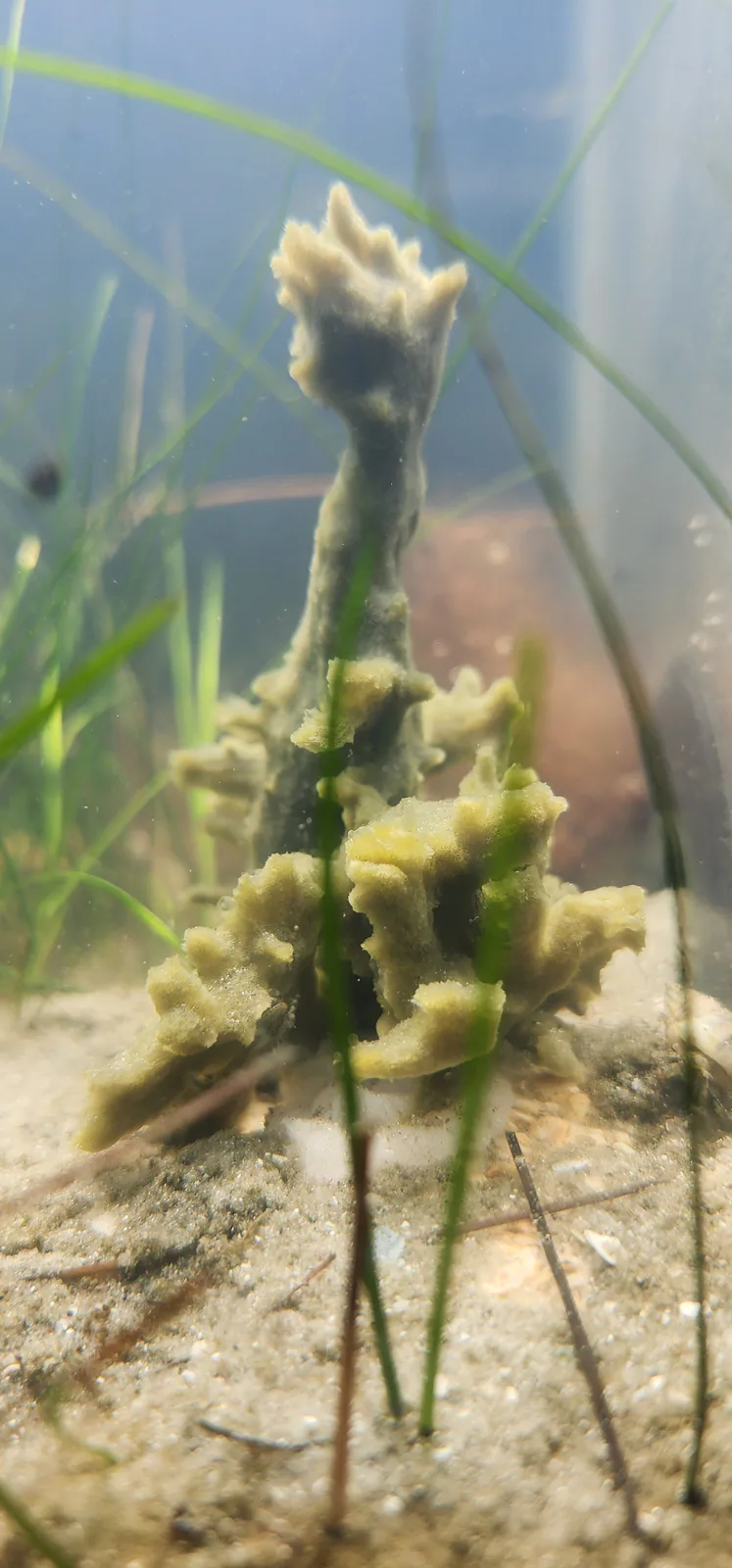
A sessile filter feeder that clears the water column by pumping seawater through its porous body, this sponge faced macroalgae overgrowth in December 2024 serious enough to require manual intervention; whether it persisted into 2025 is unresolved.

Visual Data Unavailable

Overview

A sessile filter feeder that clears the water column by pumping seawater through its porous body, this sponge faced macroalgae overgrowth in December 2024 serious enough to require manual intervention; whether it persisted into 2025 is unresolved.

Identity

  • Common name: Sponge
  • Alternate names: sea sponge, marine sponge, filter sponge, porifera
  • Scientific name: Porifera sp. (unidentified)
  • Identification confidence: Phylum-level; species unresolved
  • Uncertainty label: Uncertain

Taxonomy

  • Kingdom: Animalia
  • Phylum: Porifera
  • Class: Unresolved
  • Order: Unresolved
  • Family: Unresolved
  • Genus: Unresolved
  • Species: Unresolved

Natural History

Phylum Porifera contains approximately 9,000 described species of sponges, the vast majority marine. Marine sponges are found from the intertidal zone to the deep sea and are among the most ecologically important sessile invertebrates in tropical and subtropical benthic habitats, including seagrass beds, mangrove root systems, and reef flats throughout Florida.

Sponges have no organs, nerves, or true tissues in the conventional sense. Instead, they function as living filtration systems: water is drawn in through microscopic pores (ostia) by flagellated collar cells (choanocytes) lining internal canals, particles are captured and digested, and the filtered water exits through one or more larger openings (oscula). A single sponge can process many times its own body volume in seawater per day, extracting bacteria, microalgae, dissolved organic carbon, and fine suspended particles. In marine ecosystems, sponges channel a significant fraction of water-column microbial production into benthic biomass.

Marine sponges require consistent water flow, a reliable supply of suspended bacterioplankton and dissolved organic matter, and adequate oxygen. They are sensitive to physical smothering by macroalgae and cyanobacterial mats, and to water quality changes. In closed saltwater systems, maintaining a sponge population is challenging: mechanical filtration can remove their food before it reaches them, and algae overgrowth, which increases when nutrients are elevated, can directly overwhelm sessile filter feeders.

Ecological Role

In the Seagrass Meadow, the sponge serves as the primary water-column filtration node, processing suspended bacteria, microalgae, and dissolved organic matter that would otherwise accumulate in the water or be trapped in sediment. This filtration links the microbial loop to benthic animal biomass and keeps particulate loads lower than they would otherwise be in a closed system.

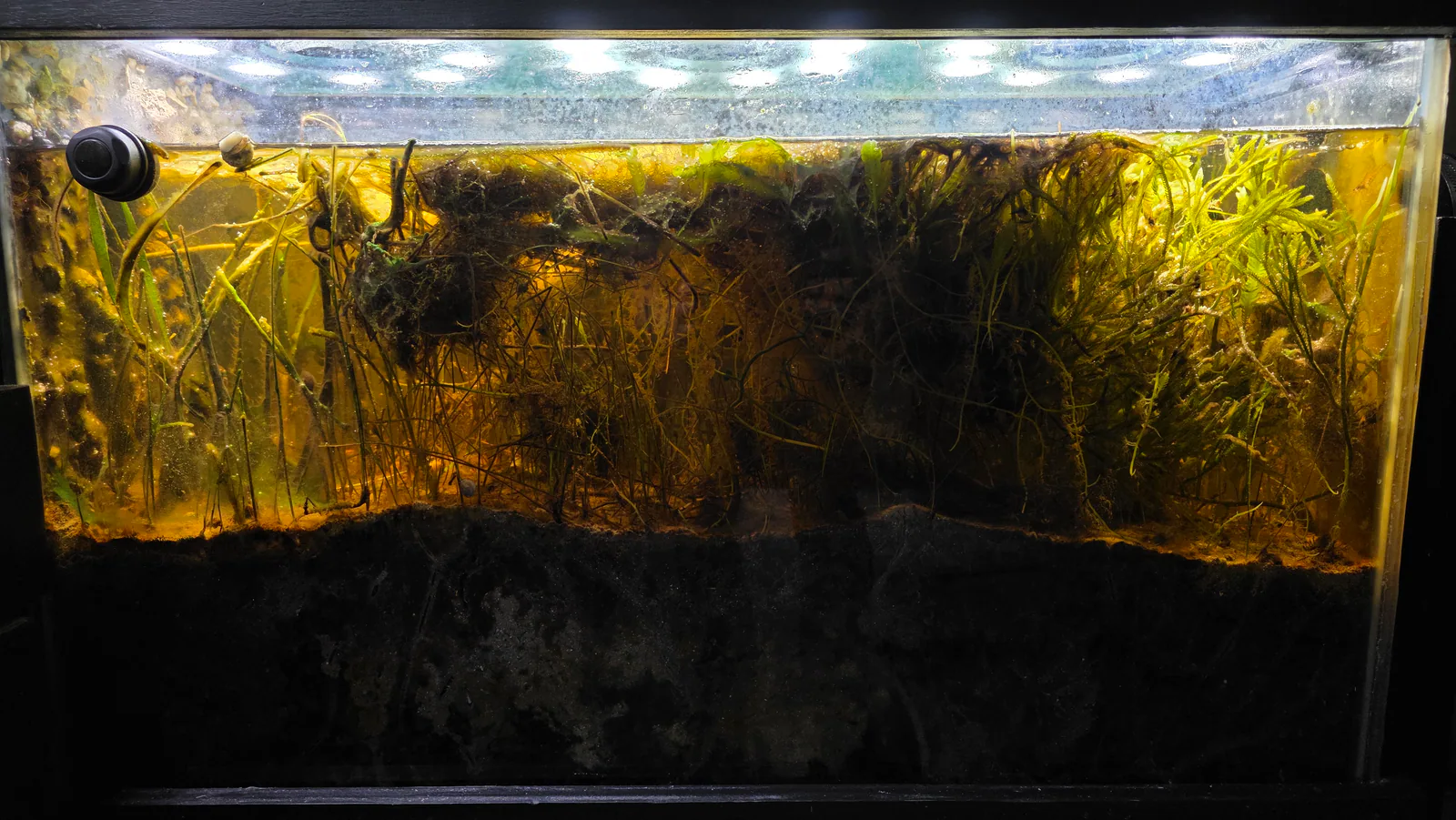
The December 23, 2024 observation documents the key tension in the sponge's ecology in miniBIOTA: macroalgae growth in the Seagrass Meadow reached a level that risked overwhelming the sponge physically, before grazing organisms could control it through natural turnover. Manual removal of macro algae was required to protect the sponge from being smothered. This intervention illustrates how in a closed system the balance between sponge persistence and algae growth depends on active management when natural herbivory is insufficient.

miniBIOTA Evidence

Introduction context: The sponge was deliberately added to the Seagrass Meadow; the population dynamics notes in the species record describe it as having been "added, acclimated, and later declined." Introduction method, source, and date of first introduction are not documented.

Observation timeline:

  • December 23, 2024: Manual intervention in the Seagrass Meadow. Observation note: "Manual intervention, removed much of the macro algae from the marine biome. Had hoped for natural turnover but algae was too abundant and risked overwhelming the sponge before organisms could compensate." This is the only dedicated sponge observation on record.
  • January 22, 2025: Listed as the most recent last recorded date in the species record. No dedicated observation record exists for this date; it likely reflects the last confirmed sighting or check after the December intervention.

Confirmed:

  • Sponge present in the Seagrass Meadow as of December 23, 2024
  • Macroalgae growth posed a documented risk to sponge persistence; manual removal was performed
  • Last recorded observation January 22, 2025

Inferred:

  • Deliberate introduction to the Seagrass Meadow; source and date unrecorded
  • Filter feeding on suspended bacteria, microalgae, and dissolved organic matter consistent with phylum biology
  • Subsequent decline consistent with the population dynamics note ("later declined under changing algae and water-column conditions")

Unknown:

  • Species identity within Phylum Porifera
  • Whether the sponge survived and persisted after January 22, 2025
  • Whether the post-intervention macroalgae balance stabilized long enough for the sponge to recover
  • Introduction source and exact date