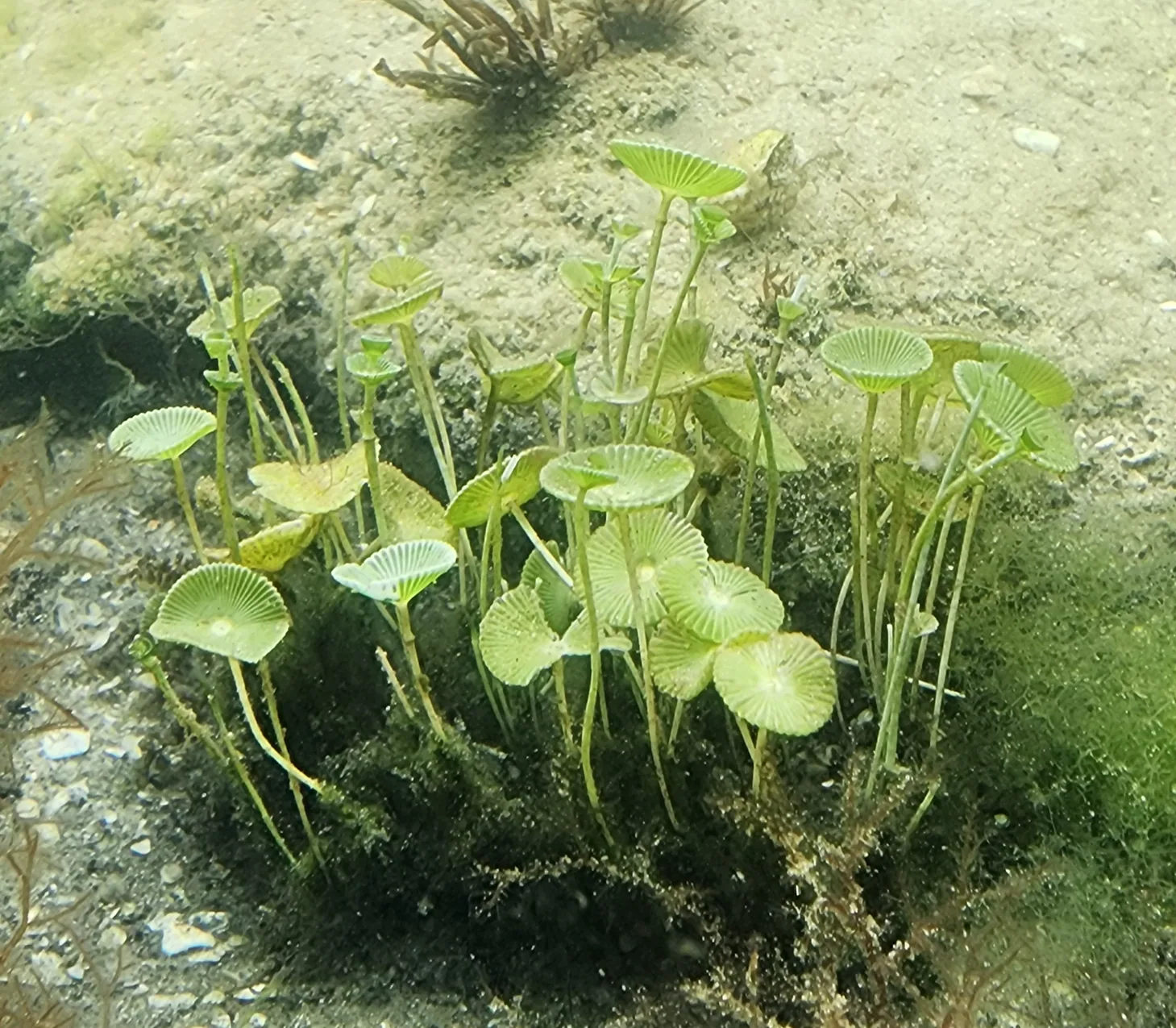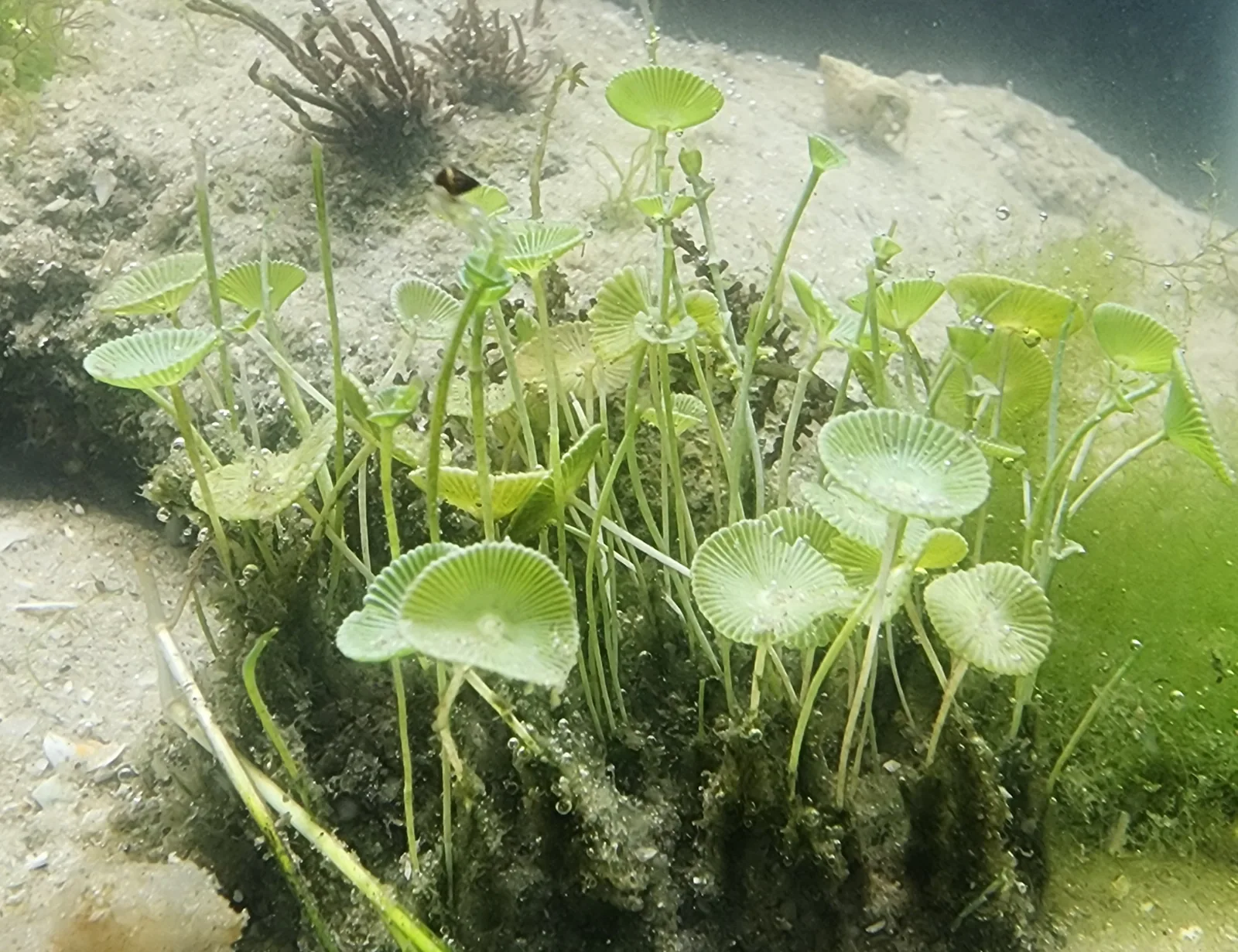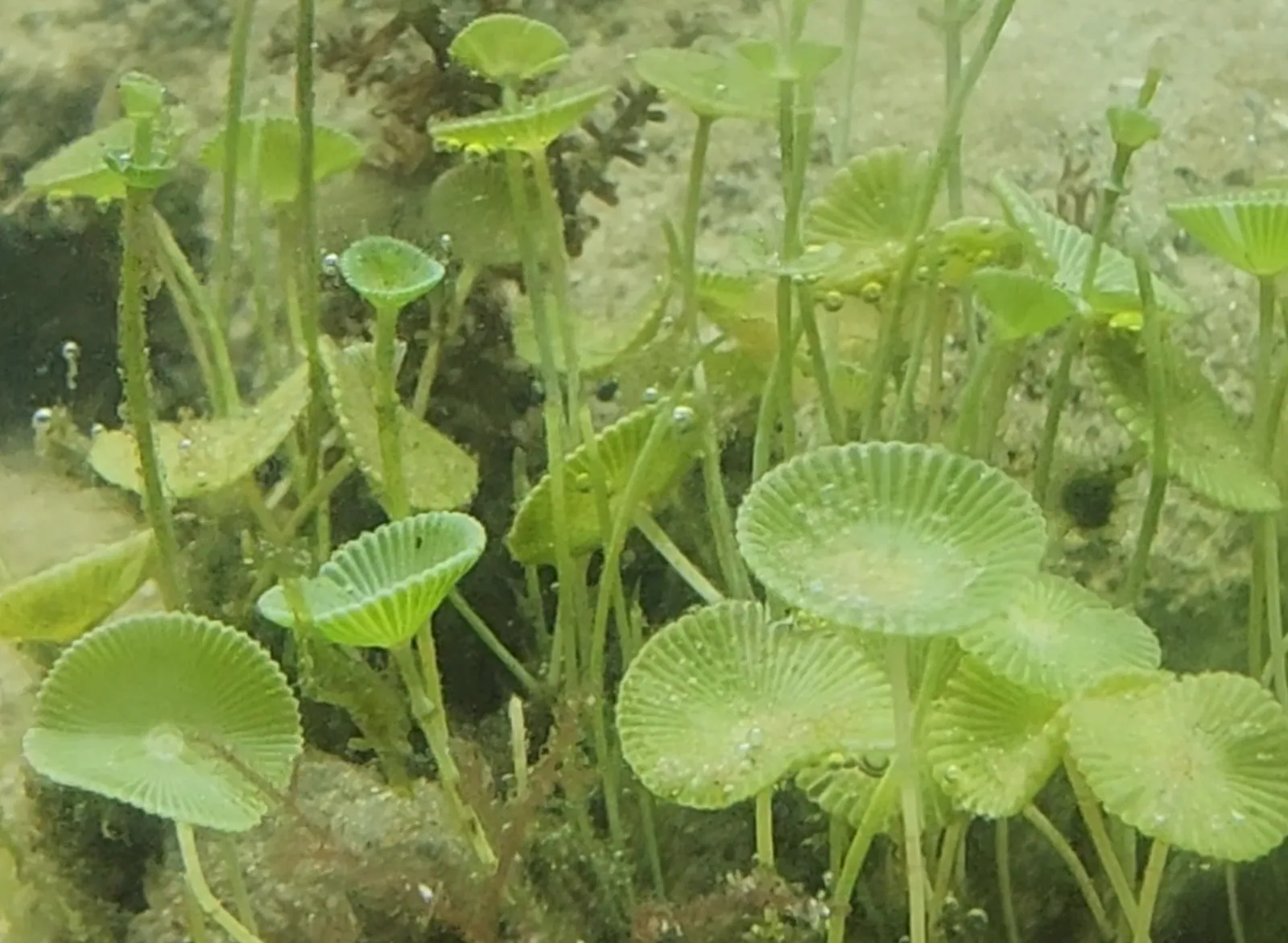
Acetabularia sp. (unidentified)

Unknown Mermaid's Winecup

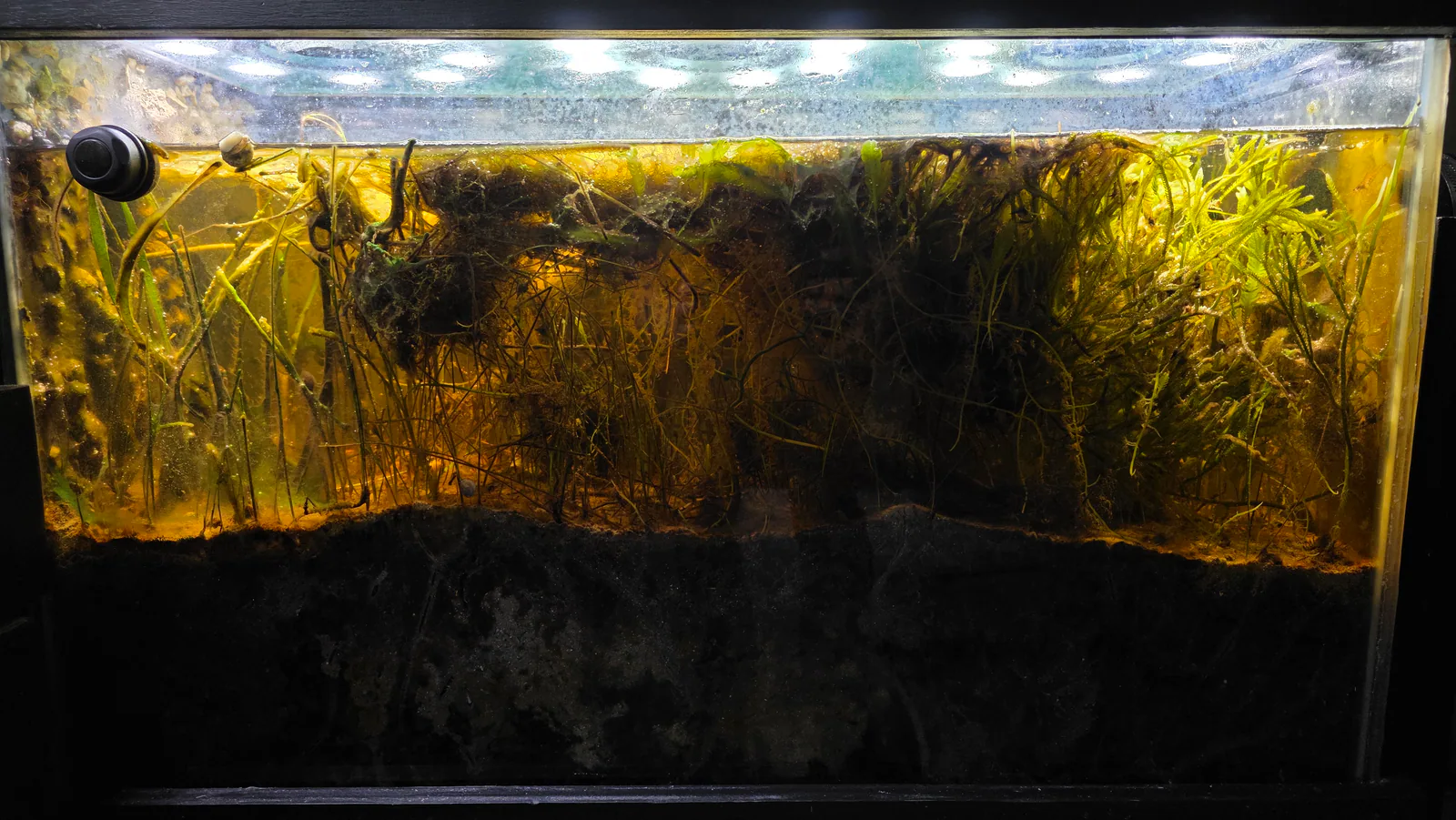
A single-celled green alga that grows as a centimeter-tall stalk topped with a distinctive wine-glass-shaped cap; each visible plant is one cell, making Acetabularia one of the largest known single cells, attached to hard substrate in the Seagrass Meadow in clear, well-lit saltwater.

Overview

A single-celled green alga that grows as a centimeter-tall stalk topped with a distinctive wine-glass-shaped cap, making it one of the largest known single cells in the animal kingdom; it attaches to hard substrate in the Seagrass Meadow and requires clear, well-lit water to form its characteristic umbrella cap. No species-level identification has been made from any archived observation.

Identity

  • Common name: Unknown Mermaid's Winecup
  • Alternate names: mermaid's wine cup, wine glass algae, wine cup algae, acetabularia
  • Scientific name: Acetabularia sp. (unidentified)
  • Identification confidence: Genus-level (Acetabularia); species unidentified
  • Uncertainty label: Observed

Taxonomy

  • Kingdom: Plantae / Viridiplantae
  • Division: Chlorophyta
  • Class: Ulvophyceae
  • Order: Dasycladales
  • Family: Polyphysaceae
  • Genus: Acetabularia
  • Species: Unidentified (A. caliculus most probable in Florida/Caribbean)

Natural History

Acetabularia is one of the most remarkable organisms in biology: each visible plant is a single cell. A mature Acetabularia individual consists of a rhizoid (anchoring base containing the nucleus), a stalk that can reach 5 to 10 centimeters in length, and a terminal cap (the "winecup") consisting of a whorl of gametangial rays arranged in an umbrella or wine-glass shape. The single nucleus resides in the rhizoid at the base; the cap and stalk are cytoplasm extending from that one cell.

Acetabularia became famous in biology through the nuclear transplant experiments of Joachim Hämmerling in the 1930s and 1940s. By grafting caps and stalks between different Acetabularia species, Hämmerling demonstrated that the nucleus controls the morphology of the cell, providing early evidence that hereditary information resides in the nucleus. These experiments in a single-celled organism preceded the discovery of DNA's structure by nearly a decade.

In Florida and Caribbean coastal waters, Acetabularia caliculus is the most commonly encountered species, growing on hard substrate (shells, rocks, rubble, coral fragments) in shallow, clear, well-lit water. The species requires good light penetration and relatively stable, clean saltwater conditions. It is sensitive to nutrient loading and does not tolerate turbid or eutrophic conditions well.

The stalked cup is the reproductive structure: at maturity, the cap rays produce cysts (gamete capsules) that are released into the water column. The cysts germinate as biflagellate gametes that fuse and develop into new individuals. The parent cell dies after reproduction.

Ecological Role

In the Seagrass Meadow, Unknown Mermaid's Winecup functions as a photosynthetic primary producer attached to hard substrate among or adjacent to the seagrass. Its stalked, upright form makes it visually distinct from the surface-adhering green algae and the flat-bladed Caulerpa species. It is grazed by sea urchins and possibly by some grazing snails and fish, though its tolerance of grazing is limited.

Acetabularia is generally regarded as an indicator of good water quality and low nutrient levels in coastal systems: its presence suggests clear, stable conditions suitable for photosensitive organisms.

miniBIOTA Evidence

Introduction context: No introduction event is recorded. Acetabularia may have arrived as a natural colonizer on shell or rock substrate, or been deliberately introduced as part of a macroalgae seeding for the Seagrass Meadow. No introduction date, source, or method is on file.

Observation timeline:

  • No dedicated observation records have been found in the miniBIOTA observation records for Unknown Mermaid's Winecup.

Confirmed:

  • Species node exists for Mermaid's Winecup in the Seagrass Meadow; genus-level identification as Acetabularia

Inferred:

  • Attachment to hard substrate (shells, rocks, rubble) in the Seagrass Meadow, based on Acetabularia biology
  • Photosynthetic production contributing to the Seagrass Meadow energy base

Unknown:

  • Species within Acetabularia (A. caliculus vs. other species)
  • Whether the species is currently present in the Seagrass Meadow
  • Whether the cap has fully formed or if only immature stalks have been observed
  • Introduction date and source