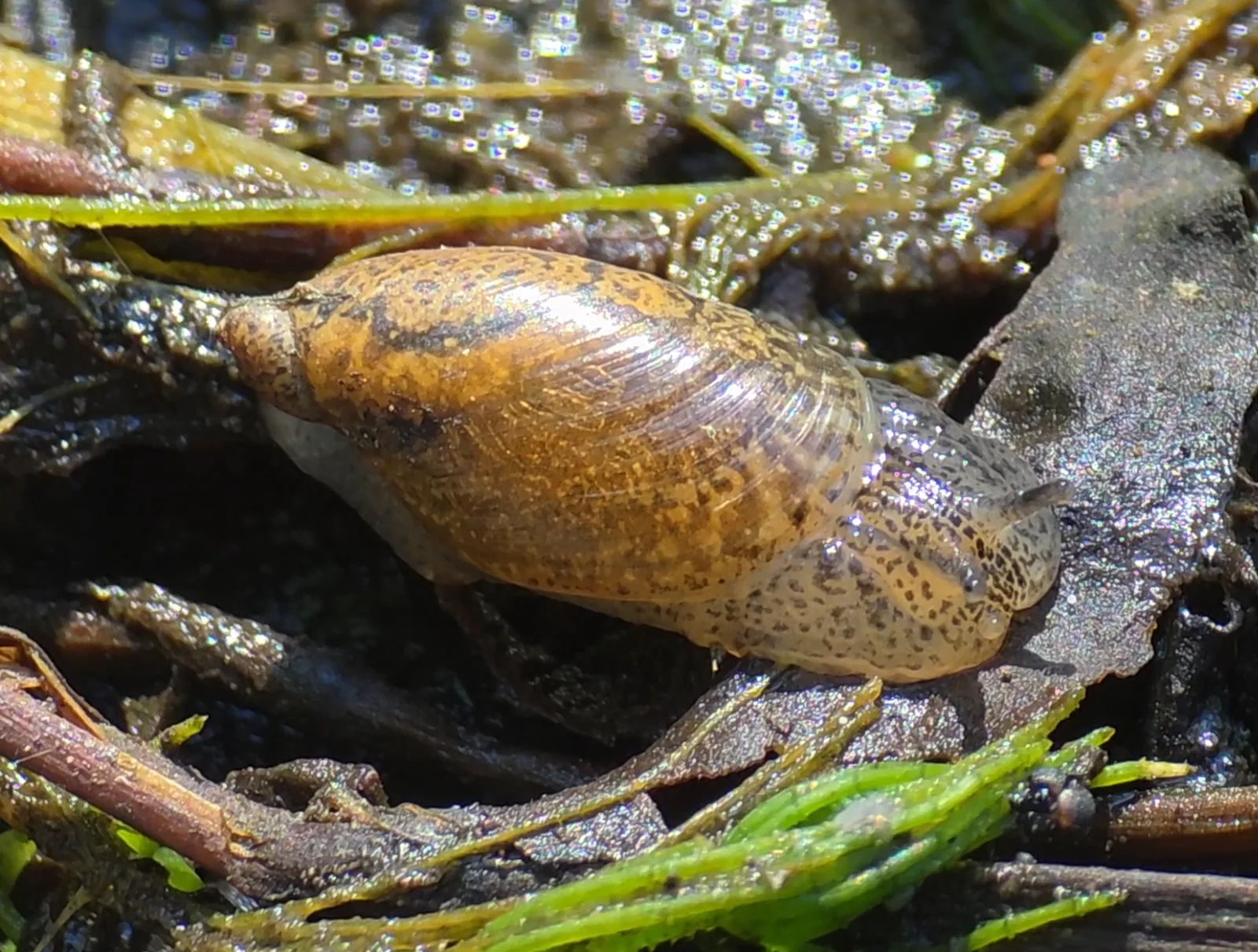
Succinea sp.

Amber Snail

Found at the waterline in the Lakeshore, this small terrestrial snail grazes algae and biofilm from surfaces and leaves mucus trails that feed bacteria and fungi along the shoreline margin.

Overview

Amber snails are small, semi-aquatic pulmonate snails that live at the margin between water and land, grazing on algae and biofilm and leaving mucus trails that seed microbial growth along the shoreline. Approximately 75 individuals were introduced to the miniBIOTA Lakeshore on April 17, 2026, collected from a nearby drying wetland. Eggs appeared within two days and hatch was confirmed within two weeks, but adult survival remains uncertain and predation pressure was evident from broken shells. Species-level identification within the genus Succinea is pending, as most traits can be confirmed at the genus level without microscopy of reproductive structures.

Identity

  • Common name: Amber Snail
  • Alternate names: Succineid snail, semi-aquatic snail
  • Scientific name: Succinea sp.
  • Identification confidence: Genus confirmed; species uncertain
  • Uncertainty label: Possible. Genus-level ID is reliable from shell morphology; species-level ID requires examination of reproductive anatomy.

Taxonomy

  • Kingdom: Animalia
  • Phylum: Mollusca
  • Class: Gastropoda
  • Order: Stylommatophora
  • Family: Succineidae
  • Genus: Succinea
  • Species: sp. (undetermined)

Natural History

Range and Florida Relevance

Succinea is a large, cosmopolitan genus of pulmonate land snails native throughout the Americas, including Florida. Multiple species occur in the state, common along the margins of freshwater ponds, lake edges, marshes, wet meadows, and canal banks. These snails are a natural part of Florida's lakeshore and wetland edge communities, not an introduced invasive. Exact species-level identification across the Florida members of this genus typically requires microscopic examination of reproductive structures.

Habitat

Amber snails live in the narrow zone where water meets land. They are semi-aquatic, requiring surface moisture to move and breathe but not being true aquatic snails. They are most active on emergent vegetation, moist soil, leaf litter, and hard surfaces along the shoreline. Desiccation is their primary physical threat; they retract and seal into their shells during dry periods but cannot survive prolonged drying.

Diet

Amber snails are grazers and detritivores. They feed on algae, biofilm, microbial films, and soft decomposing organic material on surfaces. Their broad radula scrapes thin films from glass, rock, soil, and plant surfaces. A notable byproduct of their grazing is the mucus trail left behind, which is colonized by bacteria and fungi, creating a secondary enrichment layer along the shoreline.

Reproduction

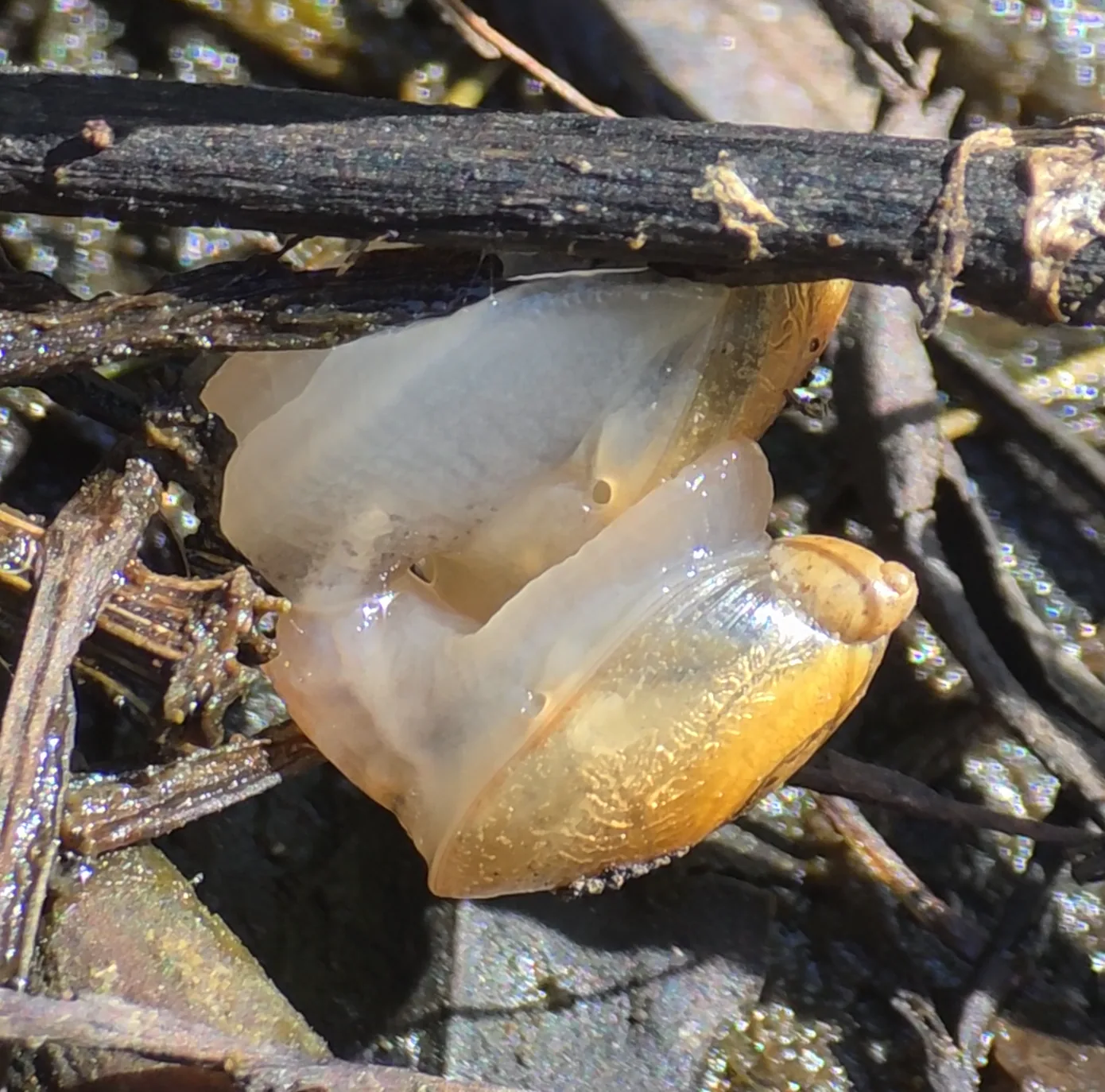
Succinea snails are simultaneous hermaphrodites, each individual carrying both male and female reproductive structures and capable of giving and receiving sperm. They lay clutches of small, round, clear-to-white eggs in moist soil or on vegetation near the water's edge. In the miniBIOTA introduction, eggs were already present within 48 hours, suggesting the founding individuals were gravid at the time of collection. Hatch interval in the miniBIOTA event was approximately 13 days. Typical lifespans in the wild are roughly one to two years, though this has not been measured for local populations.

Tolerance Ranges

Specific temperature, pH, and lighting tolerances for Florida Succinea populations are not well documented in the scientific literature. Based on their habitat, they tolerate the moderate temperature range typical of Florida freshwater edges, likely prefer neutral to slightly alkaline conditions, and do not require intense lighting. Their primary constraint is moisture availability rather than water chemistry. Tolerance data for miniBIOTA conditions has not been formally measured.

Ecological Role

Amber snails function as primary consumers at the interface between aquatic and terrestrial systems. By grazing algae and biofilm off surfaces, they help limit surface overgrowth and convert that organic matter into animal tissue available to predators. Their mucus trails are an underappreciated contribution: each trail becomes a substrate for bacterial and fungal colonization, essentially extending the detrital food web along the shoreline edge.

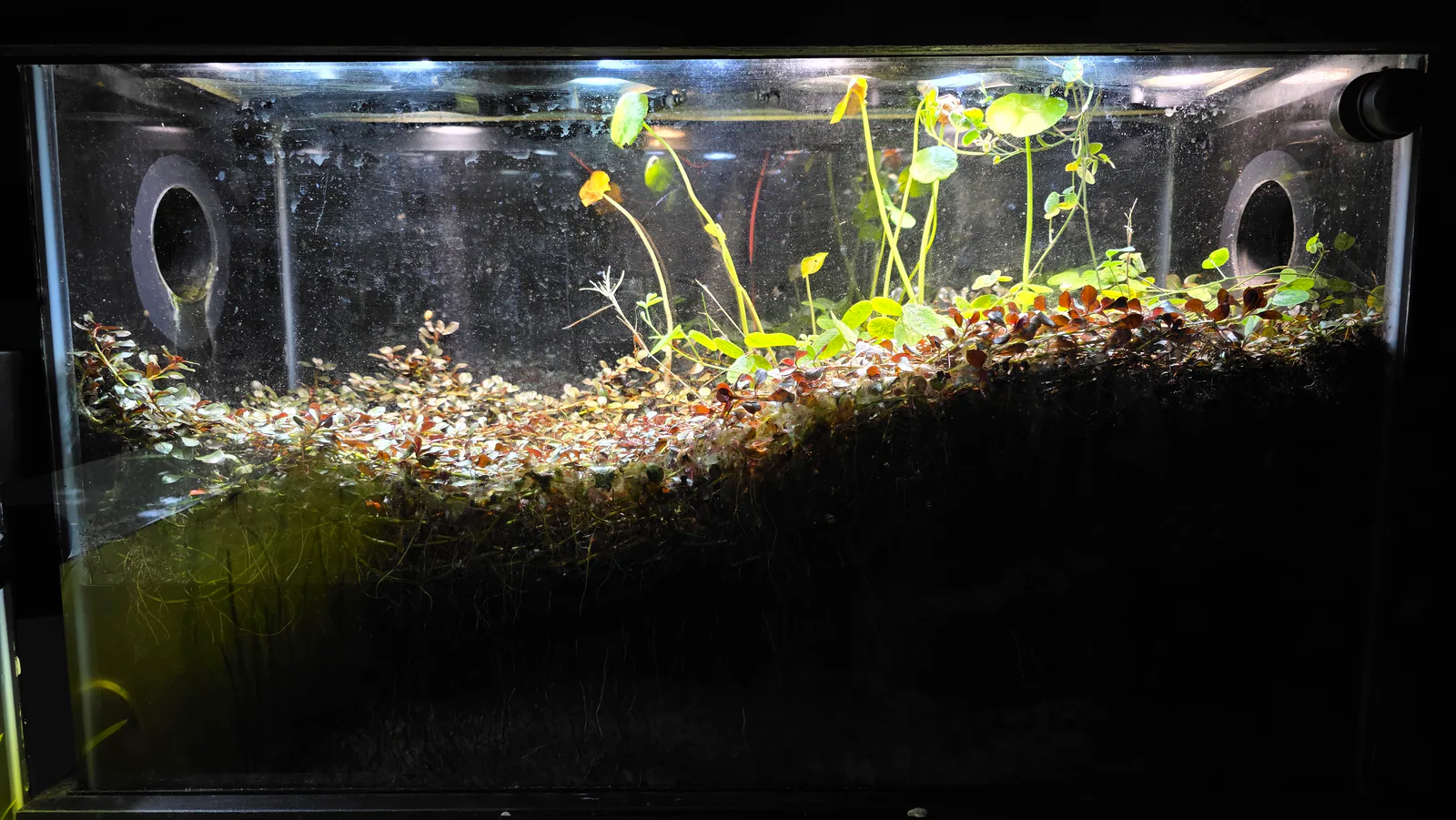
In miniBIOTA, amber snails occupy the Lakeshore interface, the transitional zone connecting the water surface to terrestrial edge habitats. Their grazing may help manage biofilm accumulation on glass and shoreline substrate, while their mucus production could support microbial diversity in the lakeshore boundary layer. At least one individual was documented moving into the Lowland Meadow, suggesting a broader edge-habitat range than the Lakeshore alone.

A known biological risk for Succinea in natural systems is their role as intermediate hosts for trematode parasites, including Leucochloridium and related genera. Whether any such parasites were present in the founding population is unknown and no signs have been noted in miniBIOTA observations.

miniBIOTA Evidence

Introduction

Approximately 75 amber snails were introduced to the Lakeshore on April 17, 2026. They were wild-collected from a nearby drying wetland, meaning the source population was under environmental stress at the time of collection.

Observation Timeline

  • April 17, 2026: Introduction to Lakeshore. Approximately 75 individuals.
  • April 19, 2026: Eggs observed. Founding individuals were likely gravid at collection.
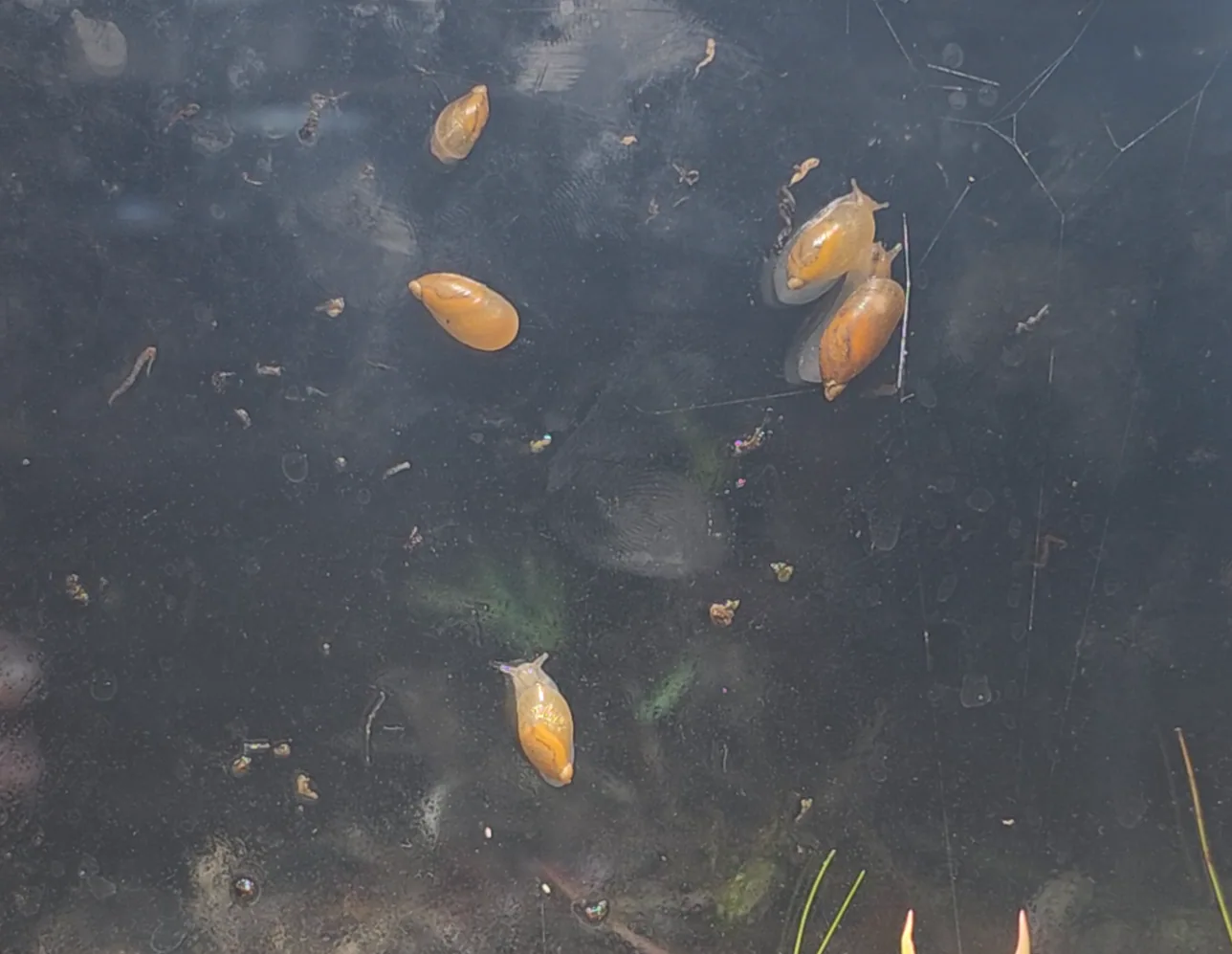
  • April 21, 2026: At least one individual observed in the Lowland Meadow, feeding on glass surface.
  • April 29, 2026: Broken shells found, suggesting predation or physical attrition. Predator identity unresolved.
  • May 2, 2026: Hatch confirmed, approximately 13 days post-egg observation.
  • May 4, 2026: Nearly all adult amber snails from the founding cohort are gone. Empty shells present, some completely undamaged. Population continuity now depends on the hatchling cohort.
  • June 14, 2026: One amber snail observed in the Lakeshore, noticeably larger than the original hatchlings from the May 2, 2026 hatch event. Confirms that at least one second-generation individual survived past the earliest life stages and has continued growing. Video documented.

What Is Confirmed

  • Introduction of approximately 75 individuals on April 17, 2026.
  • Egg deposition within 48 hours of introduction.
  • Hatch confirmed on May 2, 2026.
  • Movement into the Lowland Meadow by at least one individual.
  • Evidence of shell breakage consistent with predation or attrition (April 29, 2026).
  • Near-total loss of the founding adult cohort by May 4, 2026; empty shells present, some undamaged.
  • One second-generation individual observed June 14, 2026, noticeably larger than hatchlings; confirms at least one juvenile survived past the earliest life stages.

What Is Inferred

  • Founding individuals were gravid when collected, explaining the rapid egg deposition.
  • Mucus trails are likely supporting microbial activity along the Lakeshore shoreline, consistent with published behavior for this genus.

What Remains Unknown

  • Current adult population size and survival rate.
  • How many second-generation individuals survived the hatchling window; only one was observed June 14, 2026.
  • Whether the founding adults (introduced April 17, 2026) are still alive.
  • Identity of the predator or predators responsible for broken shells.
  • Whether the second-generation cohort will reach reproductive size and produce a third generation in miniBIOTA.
  • Whether the Lowland Meadow population persisted beyond the single April 2026 observation.
  • Species-level identity within Succinea.