Desmodium incanum

Creeping beggarweed

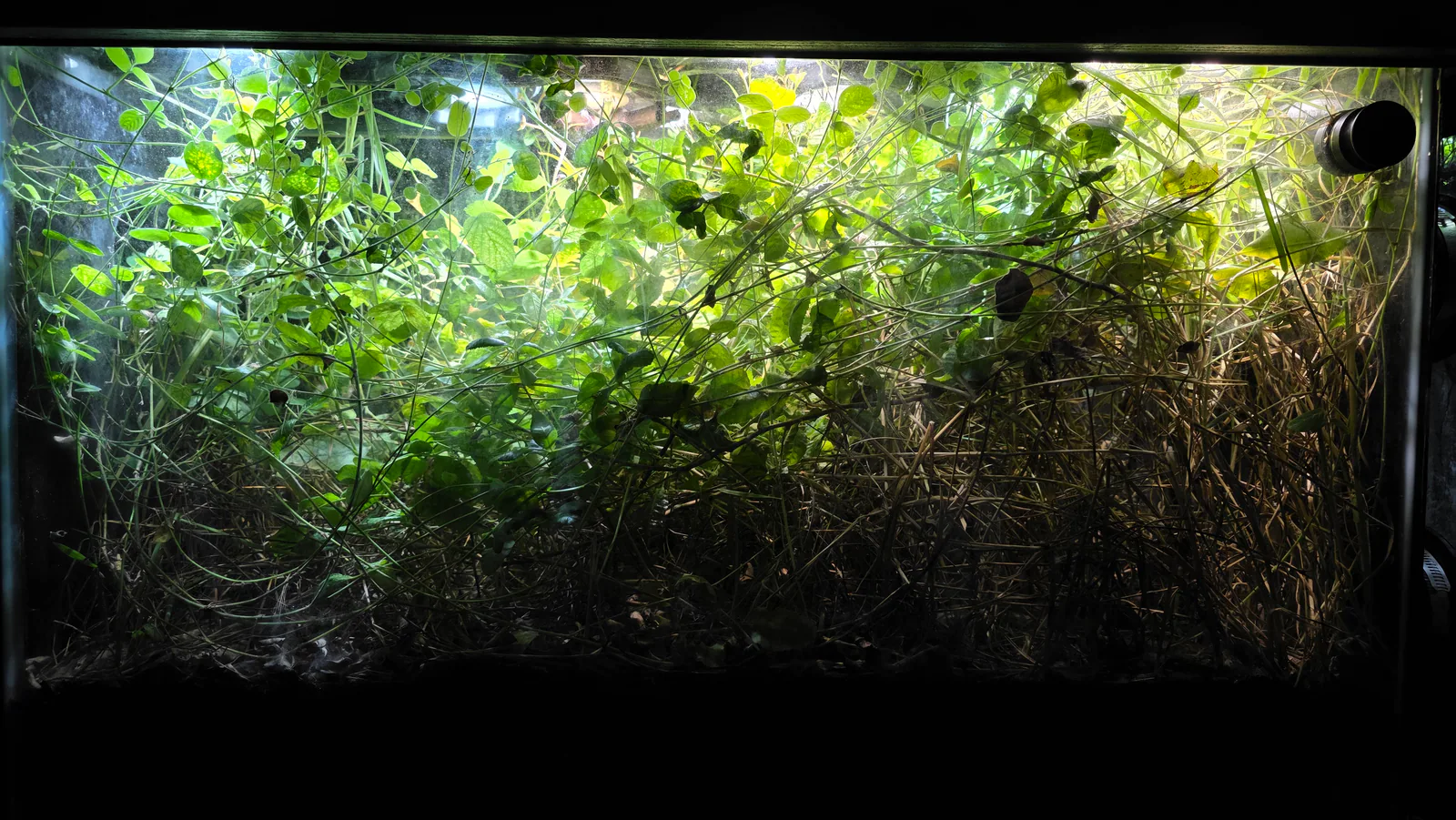
A trailing legume vine spreading through the Lowland Meadow floor, Creeping beggarweed provides primary production and nitrogen-fixing root nodules and was confirmed as a direct food source for the Ridgeback Sand Grasshopper in May 2026.

Overview

A trailing legume vine that has spread throughout the Lowland Meadow, Creeping beggarweed provides primary production, contributes nitrogen through root nodules, and serves as a confirmed food plant for the Ridgeback Sand Grasshopper, which was observed actively feeding on it in May 2026. Leaf spotting with localized color loss was noted in January 2026; the cause remains undiagnosed. The plant appears to have established spontaneously and is now considered Established in the system.

Identity

  • Common name: Creeping Beggarweed
  • Alternate names: Spanish clover, beggarweed, tick trefoil, beggar's lice, stickweed, beggar weed, ticktrefoil, desmodium
  • Scientific name: Desmodium incanum
  • Identification confidence: Species-level ID applied; confirmed by Josue as the legume vine growing in the Lowland Meadow, consistent with Desmodium incanum, a common weedy legume in Florida
  • Uncertainty label: Confirmed

Taxonomy

  • Kingdom: Plantae
  • Phylum: Tracheophyta
  • Class: Magnoliopsida
  • Order: Fabales
  • Family: Fabaceae
  • Genus: Desmodium
  • Species: Desmodium incanum

Natural History

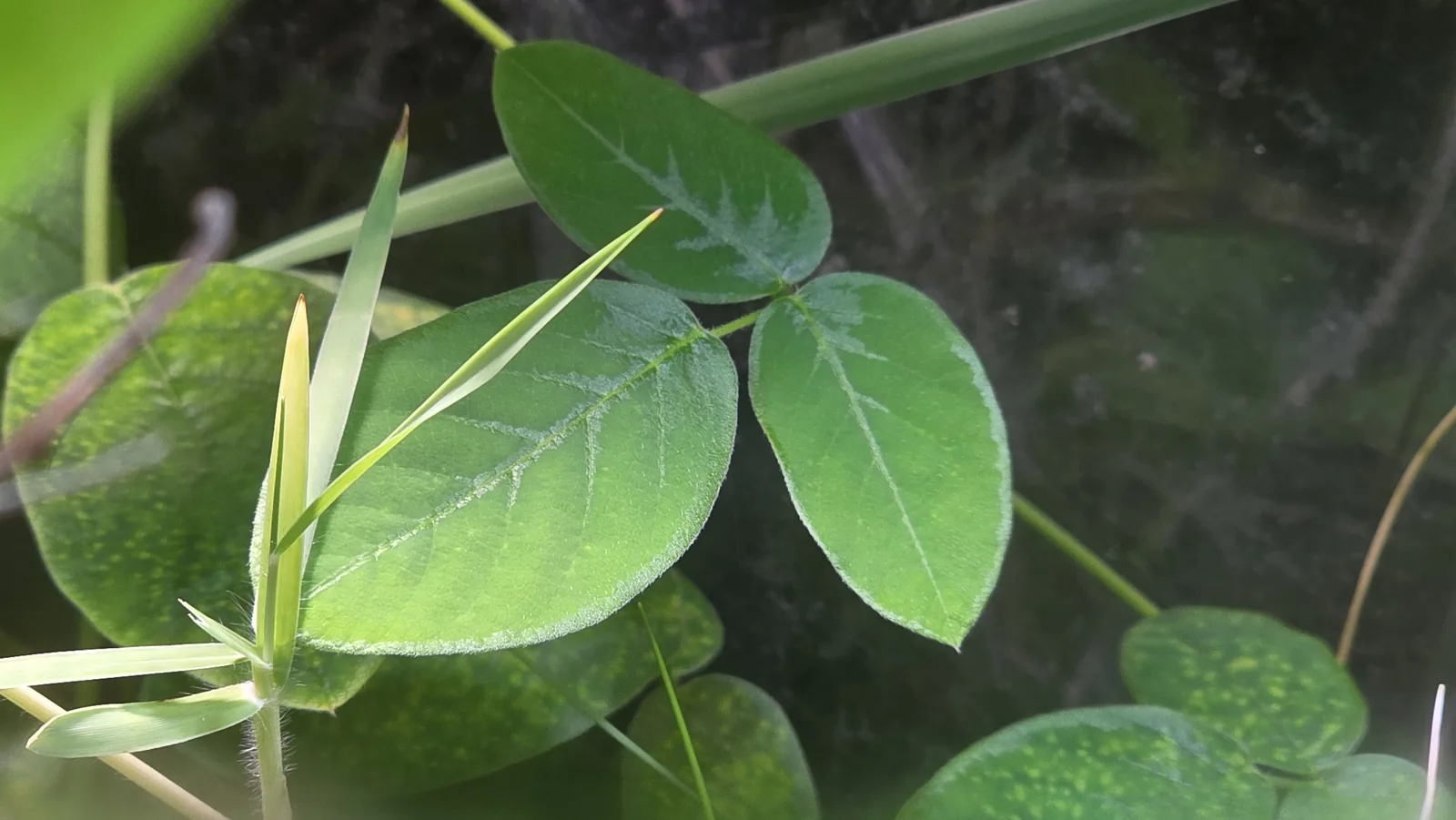
Desmodium incanum is a common weedy legume in Florida, found in lawns, roadsides, disturbed soils, garden margins, and subtropical grasslands throughout the state. It grows as a low-spreading vine with trifoliate leaves (three leaflets per leaf), creeping stems that root at nodes, and small pink to purple flowers that give rise to distinctive segmented seedpods. Each pod segment contains a seed and is coated with hooked hairs that attach to fur, feathers, and fabric, enabling dispersal by contact with passing animals.

Like all members of the Fabaceae family, Desmodium incanum forms a mutualistic association with nitrogen-fixing Rhizobium bacteria housed in root nodules. These bacteria convert atmospheric nitrogen into plant-available ammonium, enriching the soil with nitrogen and reducing the plant's dependence on soil nitrogen sources. This makes Creeping beggarweed a nitrogen fixer as well as a primary producer.

The plant is broadly tolerant of Florida's subtropical conditions and is considered an aggressive weed in disturbed habitats. It tolerates full sun to partial shade, drought, and moderately poor or sandy soils. Growth is moderate to fast under favorable conditions. Reproduction occurs both by seed and by vegetative spread through creeping stems.

Ecological Role

In the Lowland Meadow, Creeping beggarweed functions as both a primary producer and a nitrogen input source. By spreading through the meadow floor, it adds photosynthetic biomass, provides cover, and slowly enriches the soil through root-nodule nitrogen fixation. The extent of nitrogen contribution in miniBIOTA has not been measured; root-nodule activity was noted in January 2026 but its impact on the system is not quantified.

The plant's most directly documented ecological role in miniBIOTA is as a food plant for the Ridgeback Sand Grasshopper. On May 16, 2026, grasshoppers were observed actively feeding on the legume vine, and the observer noted that this was exactly the type of vegetation use he had hoped to see. Creeping beggarweed is the only plant confirmed as a Ridgeback Sand Grasshopper food source by direct observation.

The leaf spotting and localized color loss noted in January 2026 raises an unresolved question about plant health. No diagnosis has been made; possible causes include nutrient deficiency, fungal infection, insect damage, or natural senescence in older leaves.

miniBIOTA Evidence

No introduction date is recorded. The plant is believed to have arrived spontaneously, possibly through seed dispersal from the Florida environment or through substrate material introduced to the Lowland Meadow.

January 26, 2026: Creeping beggarweed was observed growing and proliferating throughout the Lowland Meadow. The observer noted nitrogen-fixing root nodules contributing nitrogen to the ecosystem. Leaf spotting and localized color loss were also present; the observer was monitoring for a possible nutrient deficiency or other stressor. Video evidence.

May 16, 2026: The Ridgeback Sand Grasshopper observation for this date confirms that the grasshoppers are "actively feeding on the legume vine growing throughout the tank." The legume vine is Creeping beggarweed. This is the most recent observation that directly references the plant and provides the date_last_observed. No media for the plant specifically in this obs; observation was filed under the grasshoppers.

Confirmed:

  • Growing and proliferating throughout the Lowland Meadow as of January 26, 2026
  • Root nodules observed; nitrogen-fixing function noted
  • Leaf spotting and localized color loss present as of January 26, 2026
  • Active grazing by Ridgeback Sand Grasshopper confirmed May 16, 2026
  • Plant described as persisting into May 2026

Inferred:

  • Spontaneous establishment in the Lowland Meadow from the Florida environment or substrate
  • Ongoing nitrogen contribution through root nodules, consistent with species biology

Unknown:

  • Current coverage and health status of the vine layer as of June 2026
  • Cause of leaf spotting observed in January 2026
  • Whether the plant is producing seeds or spreading vegetatively within the system
  • When the plant first appeared in the system