Anisomorpha buprestoides

Southern Two-Striped Walkingstick

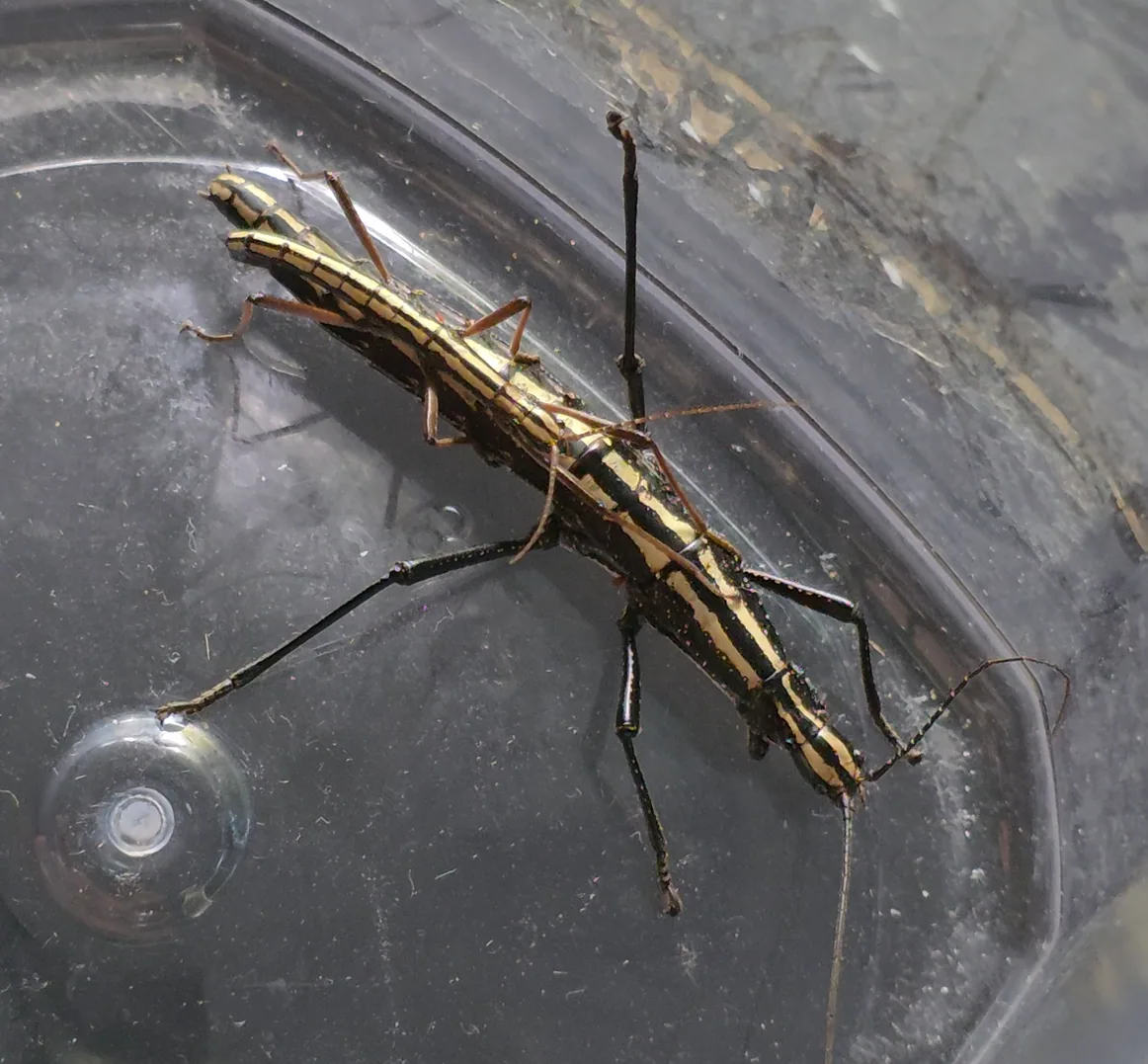
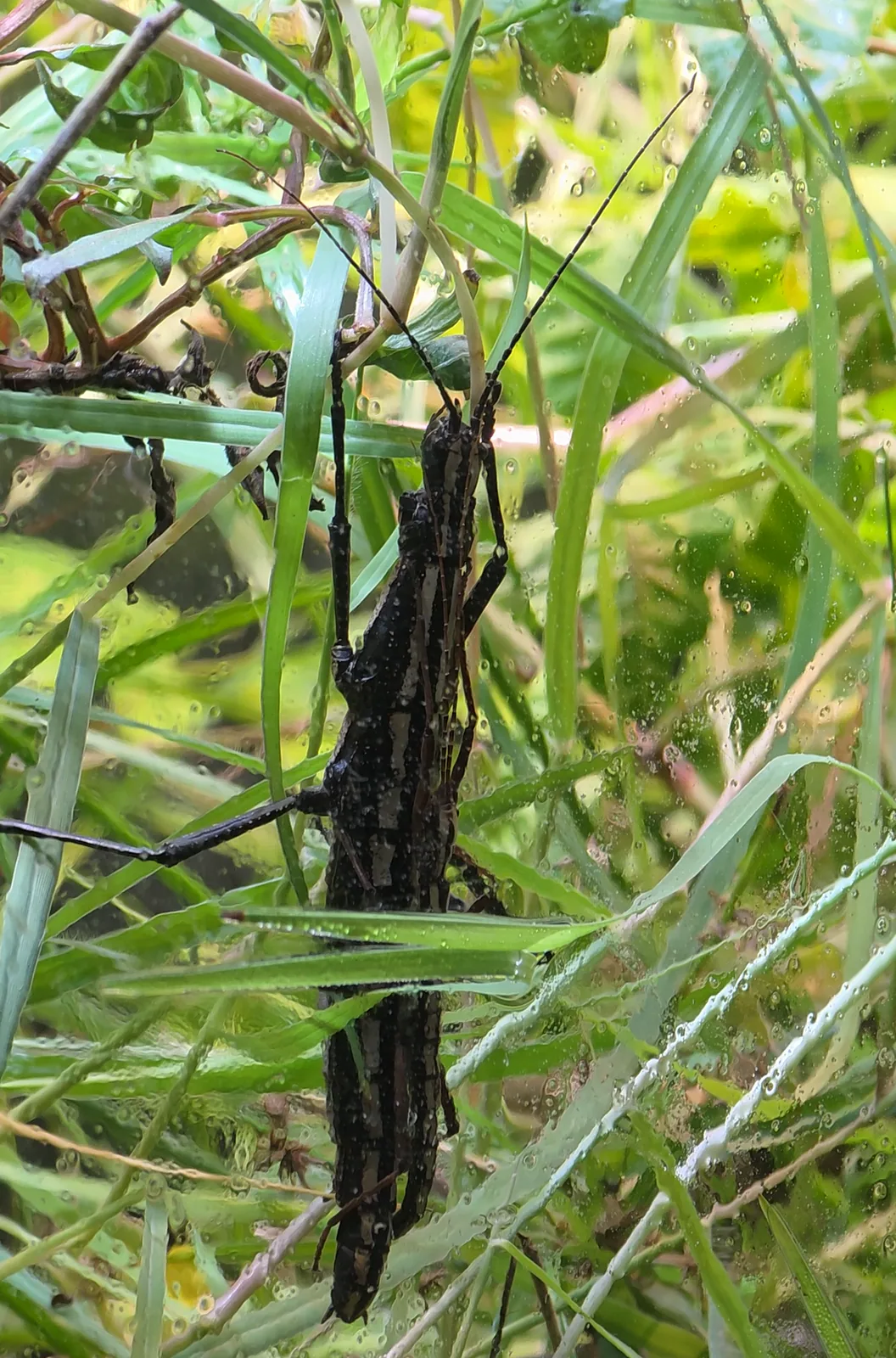
Added as a mating pair to the Lowland Meadow in November 2025, this walkingstick became the first of its species to survive past day one in miniBIOTA; the female appeared to lay eggs in the soil before dying on November 9.

Visual Data Unavailable

Overview

Added as a mating pair to the Lowland Meadow in November 2025, this walkingstick became the first of its species to survive past day one in miniBIOTA; the female appeared to lay eggs in the soil before dying on November 9.

Identity

  • Common name: Southern Two-Striped Walkingstick
  • Alternate names: two-striped walkingstick, walkingstick, stick insect, phasmid, two-striped stick insect, devil's darning needle, musk mare, anisomorpha
  • Scientific name: Anisomorpha buprestoides
  • Identification confidence: Species-level
  • Uncertainty label: Uncertain

Taxonomy

  • Kingdom: Animalia
  • Phylum: Arthropoda
  • Class: Insecta
  • Order: Phasmatodea
  • Family: Pseudophasmatidae
  • Genus: Anisomorpha
  • Species: A. buprestoides

Natural History

Anisomorpha buprestoides is the Southern Two-Striped Walkingstick, a Florida-native phasmid (stick insect) found throughout the state in forest edges, shrub habitats, scrubland, and vegetated disturbed areas. It is one of only a handful of stick insects in the world capable of chemical defense: glands on the metanotum can spray anisomorphal, a potent terpene compound, as a mist with considerable accuracy. Direct spray contact with the eyes can cause severe irritation and temporary corneal damage in humans and other mammals; the species is handled with care by those familiar with it.

Sexual dimorphism is extreme. Adult females are large (7-8 cm), slow-moving, and cryptically colored in brown, tan, or orange with two pale cream lateral stripes. Males are much smaller (3-4 cm), faster, and often ride on the female's back for extended periods, a behavior called mate-guarding. A "mating pair" in miniBIOTA observations likely refers to a female with a small male mounted on her back.

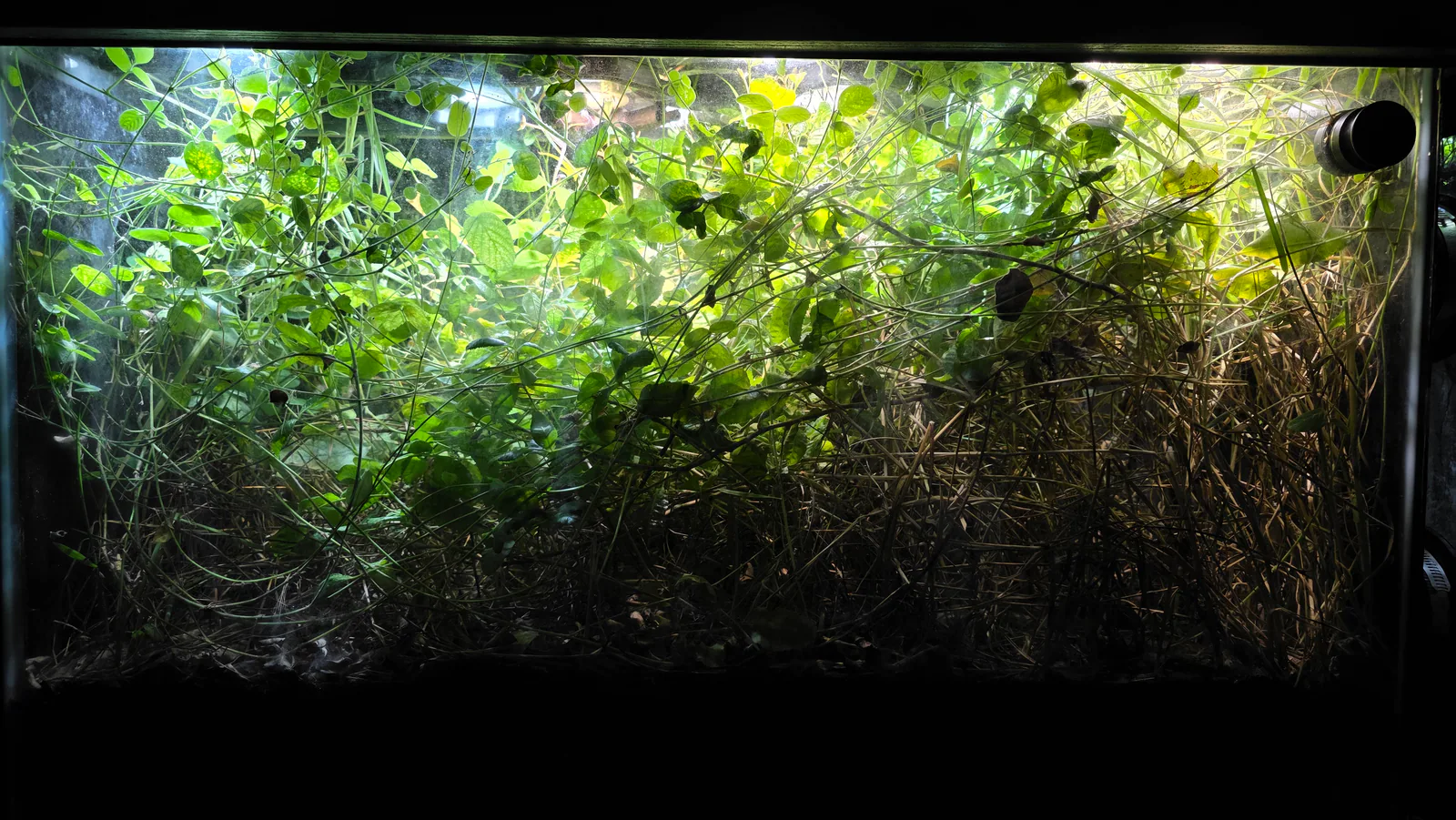
Anisomorpha buprestoides is a herbivore. In Florida habitats, it feeds primarily on oak leaves (Quercus spp.) and other broad-leaved plants. In miniBIOTA's Lowland Meadow, available food includes paspalum grass, creeping beggarweed, and other meadow vegetation; plant tissue and leaves at accessible height are the most likely dietary targets.

Reproduction is entirely female-driven: after mating, females scatter individual oval eggs one at a time onto the ground as they walk. The eggs closely resemble plant seeds and are dropped passively rather than placed. Eggs are hard-coated and can persist in the substrate for two to four months before hatching into small green nymphs. In Florida's warm climate, multiple generations per year are possible.

Ecological Role

In the Lowland Meadow, the Southern Two-Striped Walkingstick is a foliage herbivore: it feeds directly on living plant tissue and converts it into insect biomass. Because it is large relative to other meadow insects (the female can reach 7-8 cm), each individual represents a meaningful transfer of plant energy into animal form. It also functions as potential prey for the terrestrial predator guild, scorpions, spiders, and opportunistic cockroaches all share the Lowland Meadow and would be capable of taking walkingstick nymphs.

The chemical defense spray means the walkingstick is not trivially predated. A spray interaction with another terrestrial species in miniBIOTA has not been documented.

The potential presence of eggs in the Lowland Meadow substrate after the November 2025 female's death represents an open question: if eggs were deposited, they may hatch into nymphs that establish a second generation without a fresh introduction.

miniBIOTA Evidence

Introduction context: The Southern Two-Striped Walkingstick has been introduced to miniBIOTA multiple times. The species records date_first_introduced as October 8, 2025. All prior introductions, including the October 2025 attempt, failed on the first day, the November 5, 2025 observation explicitly describes the mating pair surviving overnight as "the first time this species has made it past the first day in miniBIOTA." the record identity notes use the phrase "second-chance record" to describe the species' entry into the structured database after these repeated early failures. Introduction method and source are null; the individuals were likely collected locally.

Observation timeline:

  • October 8, 2025: date of first introduction. No dedicated observation record exists for this date. This introduction failed on day one, per the November 5, 2025 observation note.
  • November 4, 2025: "Mating pair of southern two-striped stick bugs added to the grassland habitat.". A female with a male mounted on her back introduced to the Lowland Meadow; prior attempts, including October 8, had failed by the first day.
  • November 5, 2025: "Mating pair of southern two-striped stick bugs survived to the next day, first time this species has made it past the first day in miniBIOTA.". Milestone: the pair survived 24 hours, a first for this species in the system.
  • November 9, 2025: "Southern two-striped walkingstick died, appeared to have laid eggs prior to death.". One individual (most likely the female, based on behavior described) found dead; observer noted apparent egg-laying activity before death. This is the last documented observation.

Confirmed:

  • Multiple prior introductions failed on day one; October 8, 2025 is the recorded first introduction date
  • Mating pair introduced November 4, 2025 to the Lowland Meadow
  • Pair confirmed alive November 5, 2025, first survival past day one for this species in miniBIOTA
  • One individual (presumed female) found dead November 9, 2025
  • Observer noted apparent egg-laying activity prior to death

Inferred:

  • The individual that died November 9 was most likely the female, based on egg-laying behavior described
  • Eggs may have been deposited in the Lowland Meadow substrate before the female's death; walkingstick eggs resemble seeds and persist in soil
  • The male's fate after November 9 is not documented; it may have survived briefly or died unobserved
  • Prior day-one failures likely reflect predation by scorpions, spiders, or cockroaches in the Lowland Meadow

Unknown:

  • Whether any eggs were successfully laid and whether they remain viable in the Lowland Meadow substrate
  • Whether the male survived the female's death and for how long
  • What caused the female's death, predation, natural lifespan, or environmental stress
  • Whether any nymphs have hatched from eggs deposited in November 2025