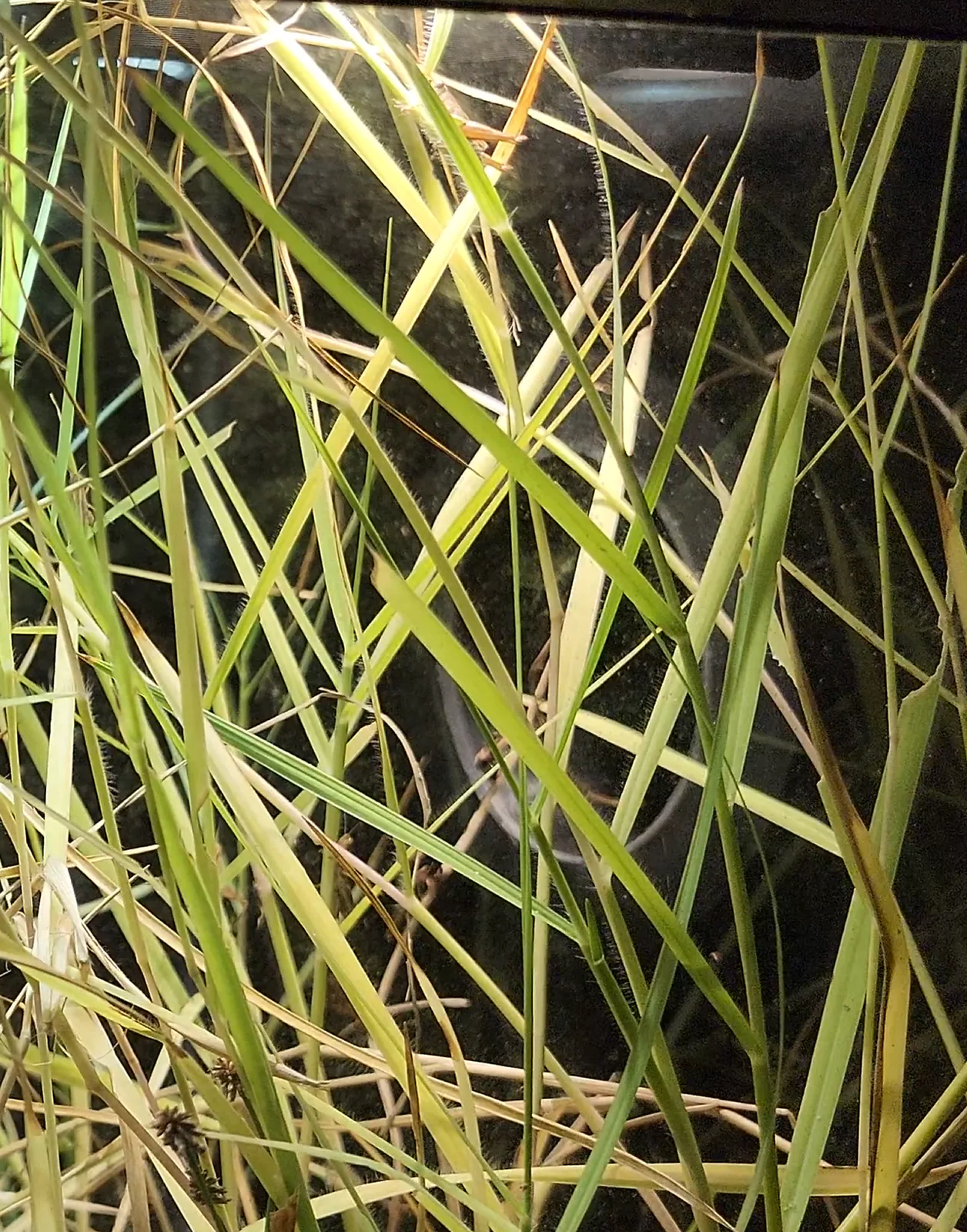
Panicum repens

Torpedo Grass

An invasive grass listed as a prohibited plant in Florida, Torpedo Grass spreads by pointed rhizomes that penetrate soil rapidly and form dense monocultures; no archived observation documents its introduction or current status in miniBIOTA.

Visual Data Unavailable

Overview

An invasive grass listed as a prohibited plant in Florida, Torpedo Grass spreads by pointed rhizomes that penetrate soil rapidly and form dense monocultures; no archived observation documents its introduction or current status in miniBIOTA.

Identity

  • Common name: Torpedo Grass
  • Alternate names: Wainaku grass, panic grass, bullet grass, creeping panic
  • Scientific name: Panicum repens
  • Identification confidence: Species-level; Panicum repens is the well-established scientific name for this taxon and an unambiguous match for the common name Torpedo Grass
  • Uncertainty label: Observed

Taxonomy

  • Kingdom: Plantae
  • Phylum: Anthophyta
  • Class: Liliopsida
  • Order: Poales
  • Family: Poaceae
  • Genus: Panicum
  • Species: Panicum repens

Natural History

Panicum repens is a perennial grass native to tropical and subtropical regions of Africa and Asia, now naturalized across warm climates worldwide including throughout Florida. It is classified as a Class I Prohibited Aquatic Plant by the Florida Fish and Wildlife Conservation Commission and as a federal noxious weed by the USDA, making it among the most regulated invasive plants in the state. Class I classification prohibits its possession, collection, transport, cultivation, and importation in Florida. The plant is considered highly undesirable ecologically because of its tendency to form dense, persistent monocultures that displace native vegetation.

The common name Torpedo Grass comes from the pointed, torpedo-shaped tips of its rhizomes, which are hardened and pointed to allow rapid penetration of dense soil and root mats. This rhizome architecture, combined with the plant's ability to regenerate from small fragments, makes it extremely difficult to eradicate once established. Rhizomes spread laterally through the soil, extending the plant's footprint with each season. Stems are compressed and flattened at the base, reaching 30 to 90 centimeters in height. Leaves are flat and slightly rough, and the inflorescence is an open panicle with small oval spikelets.

In Florida, Torpedo Grass is ubiquitous in moist to wet disturbed areas including lake shores, pond margins, ditches, roadsides, wet pastures, and grassland-edge habitats. It tolerates periodic flooding and drought once established, and grows in full sun to partial shade. It is a common dominant in disturbed wet grasslands across the state and is widely considered one of the most problematic invasive plants in Florida's freshwater and terrestrial ecosystems.

Ecological Role

In its invasive range, Panicum repens functions as a rooted photosynthetic producer but is ecologically disruptive rather than beneficial. Its aggressive clonal spread via rhizomes allows it to form single-species monocultures that crowd out native grasses, forbs, and wetland plants by competing for light, water, and soil space. Once dominant, torpedo grass mats reduce plant diversity and eliminate the structural heterogeneity that native grassland communities depend on for invertebrate and vertebrate habitat.

As a photosynthetic producer, it does contribute plant biomass to the food web through senescent material entering the detrital layer. However, the net ecological impact in invaded areas is negative, as native species diversity decreases and ecosystem function is simplified. In natural Florida grasslands, native grazing insects and herbivores may feed on torpedo grass, but it is not typically a preferred forage species compared to native grasses.

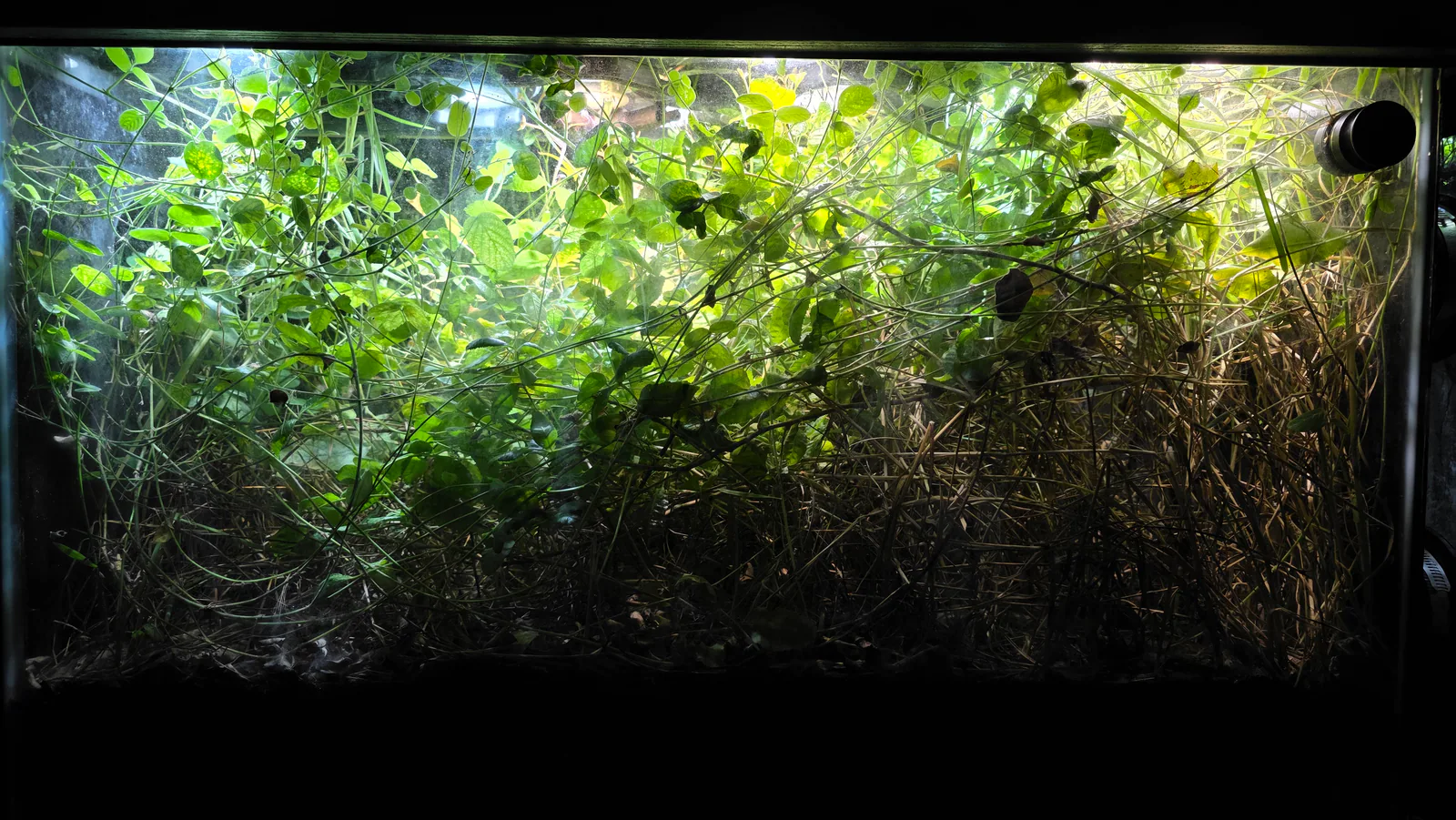
In miniBIOTA, Torpedo Grass is assigned to the Lowland Meadow biome, which is ecologically appropriate given the species' prevalence in Florida wet grassland habitats. No archived observation confirms whether the plant is physically present. If present and reproducing vegetatively, it would have the capacity to spread across the Lowland Meadow and compete with native grassland plants.

miniBIOTA Evidence

No observation files or interaction records exist for this species. No introduction date, source, or method has been recorded. The Mangrove Forest biome assignment Torpedo Grass to the Lowland Meadow biome, which is ecologically consistent with the species' natural Florida distribution. Physical presence has not been confirmed from the archived evidence.

Introduction: No record. Date, method, and source are all unknown.

Observation timeline: No archived observations.

Confirmed:

  • Species row exists in the miniBIOTA database with the name Torpedo Grass (Panicum repens) and Lowland Meadow biome assignment

Inferred:

  • If physically present in the Lowland Meadow, the plant's rhizome spread capacity would make population monitoring relevant to track potential competitive displacement of native plants

Unknown:

  • Whether the species was ever physically present in miniBIOTA
  • Introduction date, source, and method
  • Current extent, if any, in the Lowland Meadow biome
  • Whether any observation or introduction event was recorded but not archived