Arphia xanthoptera

Autumn Yellow-winged Grasshopper

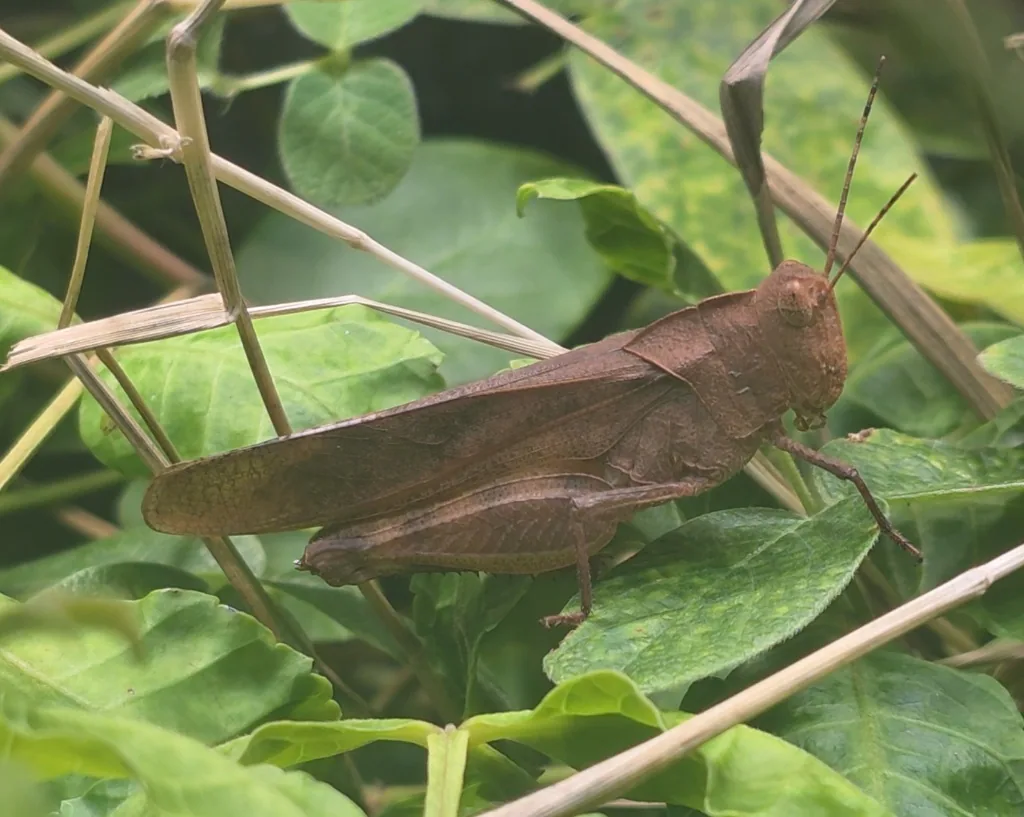
A medium-sized grasshopper with brownish-red coloration that camouflages it against dried grass and leaf litter, this Lowland Meadow resident conceals bright yellow hindwings that flash into view only in flight.

Overview

The Autumn Yellow-winged Grasshopper (Arphia xanthoptera) has been introduced to the miniBIOTA Lowland Meadow twice: one individual on May 20, 2026 (originally tracked as an unidentified brown grasshopper) and one on June 1, 2026. Identity was confirmed by Josue as Arphia xanthoptera after each introduction. Survival, feeding, habitat use, and ecological outcome in miniBIOTA are unresolved for both individuals.

Identity

  • Common name: Autumn Yellow-winged Grasshopper
  • Alternate names: yellow-winged grasshopper
  • Scientific name: Arphia xanthoptera
  • Identification confidence: Confirmed species identification
  • Uncertainty label: Confirmed identity, unresolved local outcome

Taxonomy

  • Kingdom: Animalia
  • Phylum: Arthropoda
  • Class: Insecta
  • Order: Orthoptera
  • Suborder: Caelifera (short-horned grasshoppers)
  • Family: Acrididae
  • Subfamily: Oedipodinae (band-winged grasshoppers)
  • Genus: Arphia
  • Species: xanthoptera

Natural History

Range and Florida Relevance

Arphia xanthoptera is found across much of eastern and central North America, ranging from southern Canada through the midwestern and eastern United States to the Gulf Coast. Florida populations have been documented in open terrestrial habitats including meadows, roadsides, sandy clearings, and grassland edges. The common name reflects adult season timing: peak activity in northern populations typically runs from late summer through autumn. Florida populations may be active across a broader portion of the year given the warm climate, but a June introduction in miniBIOTA falls before the typical northern peak.

Habitat

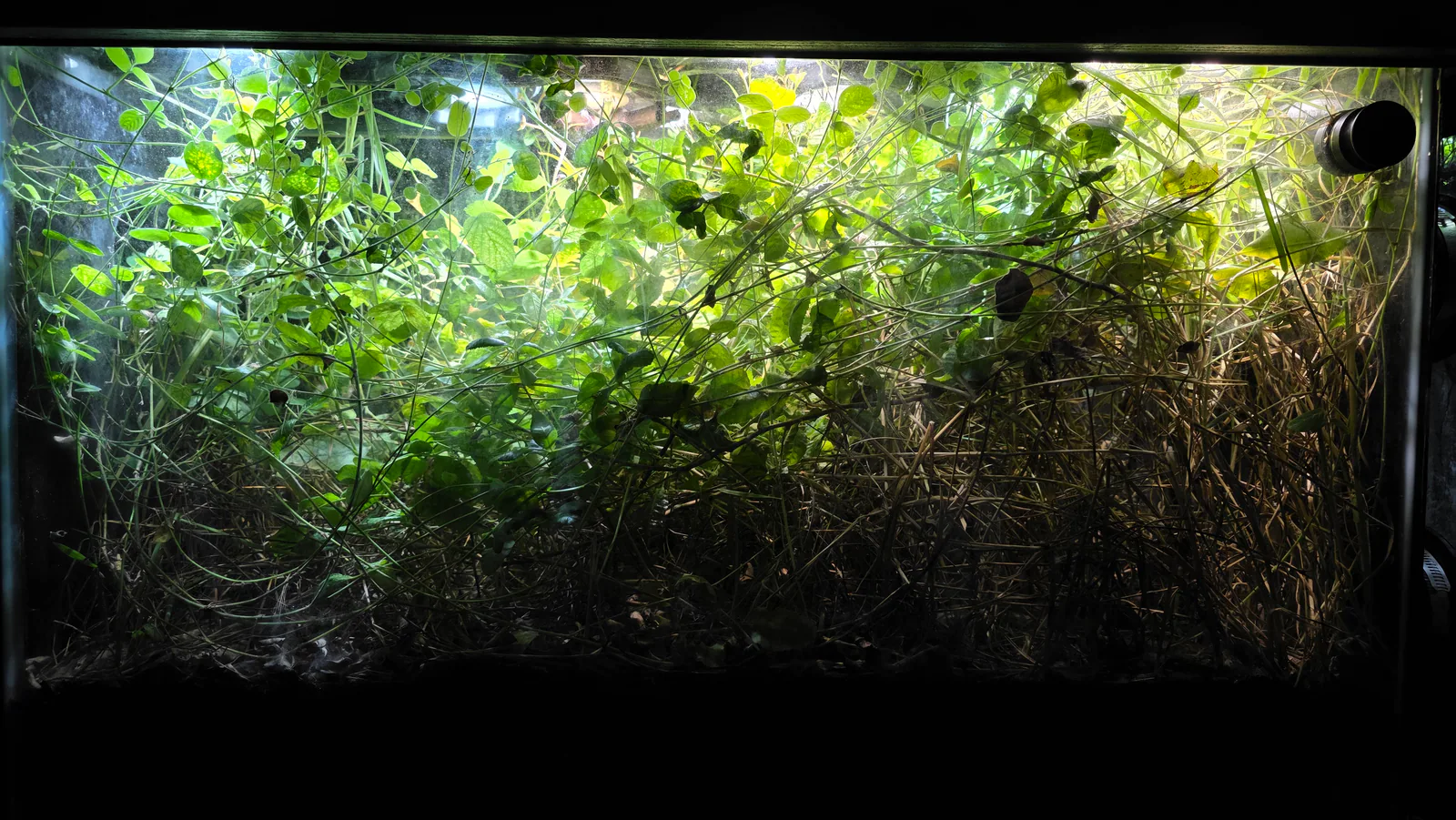
Band-winged grasshoppers in the Oedipodinae favor open, sun-exposed habitats with low or sparse vegetation and warm ground surfaces. Arphia xanthoptera is associated with dry grassland, meadow edges, and open or gravelly areas where it can bask and move across exposed ground. The miniBIOTA Lowland Meadow provides open plant cover, warm exposed surfaces, and diverse low vegetation broadly consistent with the kind of habitat this species uses in the wild. No specific microhabitat preference within the Lowland Meadow has been documented in miniBIOTA.

Diet

Arphia xanthoptera is a generalist plant feeder that grazes grasses and forbs. Like other Oedipodine grasshoppers, it feeds on a range of low-growing vegetation rather than specializing in a single plant species. In miniBIOTA, no feeding has been observed since the June 1, 2026 introduction. Plant consumption in the Lowland Meadow is inferred from species biology but has not been documented.

Reproduction

Acridid grasshoppers deposit egg pods into soil using a specialized ovipositor, with each pod containing multiple eggs. Eggs typically overwinter and hatch in spring; nymphs develop through a series of instars before reaching adulthood by late summer in northern populations. Females are larger than males, consistent with the pattern across most acridids. In miniBIOTA, reproduction has not been observed. The sex of the single introduced individual was not confirmed in the observation record.

Tolerance Ranges

No tolerance measurements have been taken for Arphia xanthoptera in miniBIOTA. The species is associated with warm, open, dry terrestrial habitats and is likely broadly tolerant of the temperature and humidity conditions in the Lowland Meadow. Published tolerance data specific to closed-system conditions is not available for this species.

Ecological Role

Arphia xanthoptera is a plant-feeding primary consumer. By grazing live vegetation it converts plant tissue into insect biomass available to predators, and its frass returns organic matter and nutrients to the soil, feeding the detrital food web. Band-winged grasshoppers are active movers across open ground and can transfer plant-derived material across a meadow area during foraging activity.

In miniBIOTA, the Lowland Meadow already supports a grasshopper community that includes the Ridgeback Sand Grasshopper and the Field Cricket. How the Autumn Yellow-winged Grasshopper partitions resources, microhabitat, or activity timing with other Lowland Meadow grazers has not been observed. No symbiotic relationships have been documented. As a newly introduced single individual with no confirmed feeding or survival beyond the introduction event, its functional role in the miniBIOTA food web remains entirely prospective.

miniBIOTA Evidence

Introduction Context

Two Autumn Yellow-winged Grasshoppers have been introduced to the Lowland Meadow. The first, on May 20, 2026, was described as small, brown, and slender-bodied; it was introduced as a trial dry-condition herbivore candidate and tracked as ID 183 until identity was confirmed on June 17, 2026. The second, on June 1, 2026, was described as medium-sized with brownish-red coloration and black-and-white banding on the inner hind legs; Josue confirmed the identification as Arphia xanthoptera after the introduction. Video and photos are available from the June 1 introduction.

Observation Timeline

  • May 20, 2026: One individual introduced to the Lowland Meadow. Described as small, brown, slender-bodied, and smaller than other grasshoppers in the system at the time. Introduced as a trial dry-condition herbivore candidate; a photo was taken but not archived. Originally tracked as ID 183 (Unidentified Brown Grasshopper); identity confirmed as Arphia xanthoptera June 17, 2026.
  • June 1, 2026: One individual introduced to the Lowland Meadow. Described as brownish-red with black-and-white banding on the inner hind legs. Follow-up identification confirmed as Arphia xanthoptera. Video and photos available.

What Is Confirmed

  • One individual introduced to the Lowland Meadow on May 20, 2026 (originally ID 183; confirmed Arphia xanthoptera June 17, 2026).
  • One individual introduced to the Lowland Meadow on June 1, 2026.
  • Species identification as Arphia xanthoptera is confirmed for both individuals.
  • Video and photo evidence exists from the June 1, 2026 introduction event.

What Is Inferred

  • The individual is a plant feeder and is likely to graze Lowland Meadow vegetation if it persists in the system.
  • The brownish-red body coloration and black-and-white hind-leg banding are consistent with published Arphia xanthoptera descriptions.

What Remains Unknown

  • Whether the individual survived beyond the introduction date.
  • Whether it has fed, moved, or produced any observable effect in the Lowland Meadow.
  • Sex of the individual: not confirmed in the observation record.
  • Whether it can persist under miniBIOTA conditions given the June timing before typical northern peak adult season.
  • How it will interact with or be distinguished from other Lowland Meadow grasshoppers in future observations.