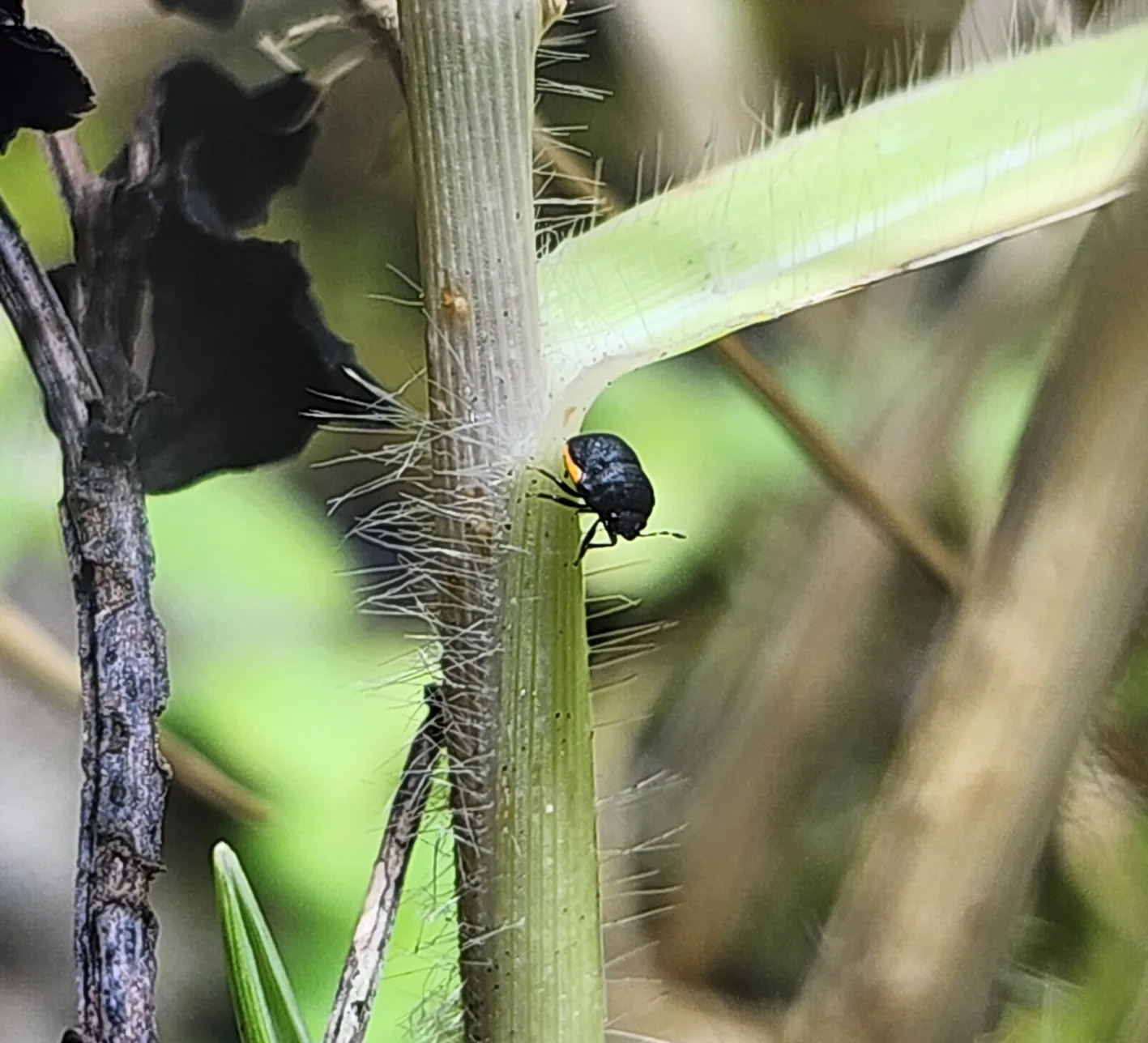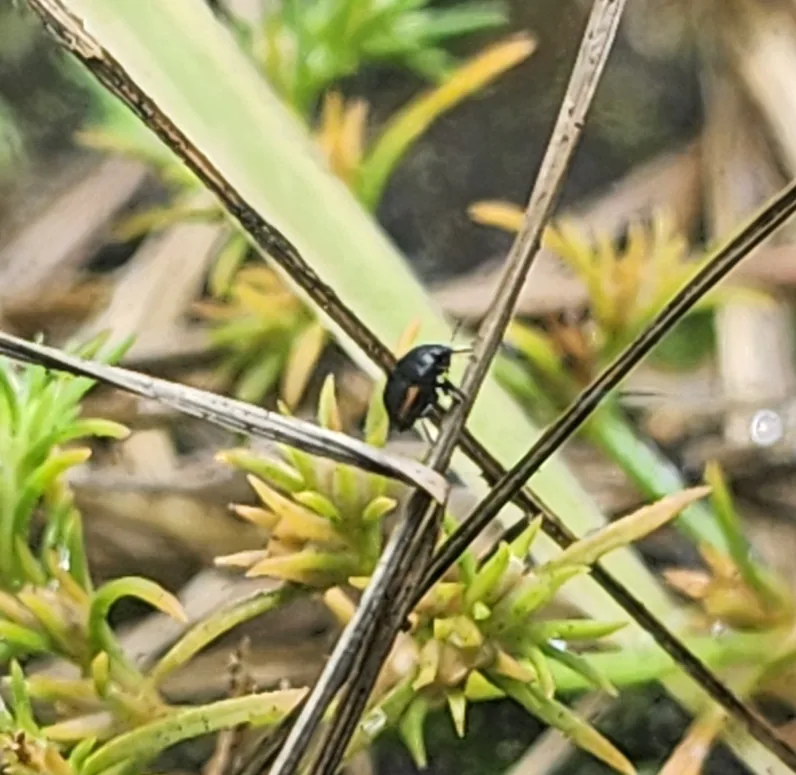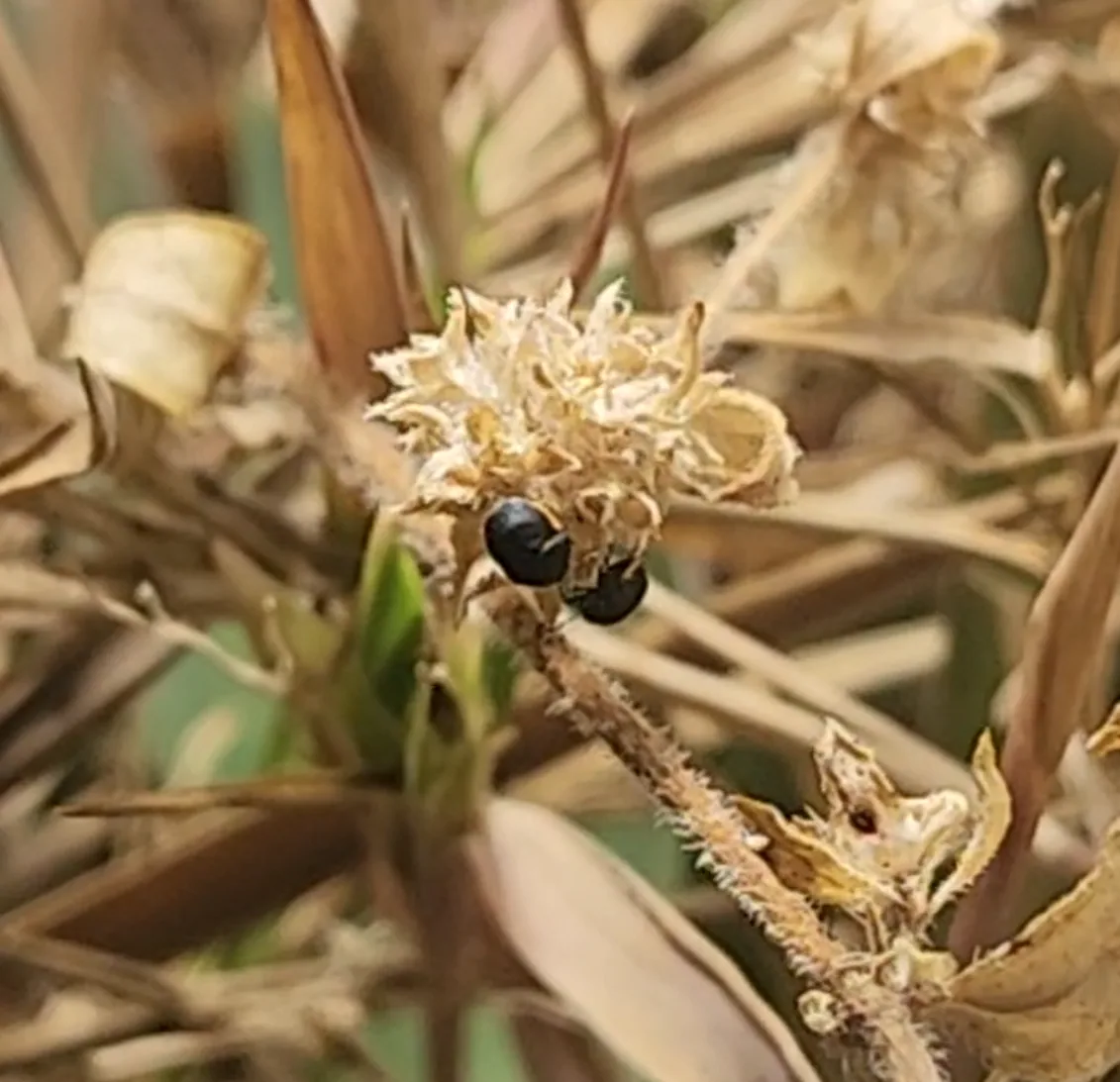
Thyreocoridae sp. (unidentified)

Ebony Bug

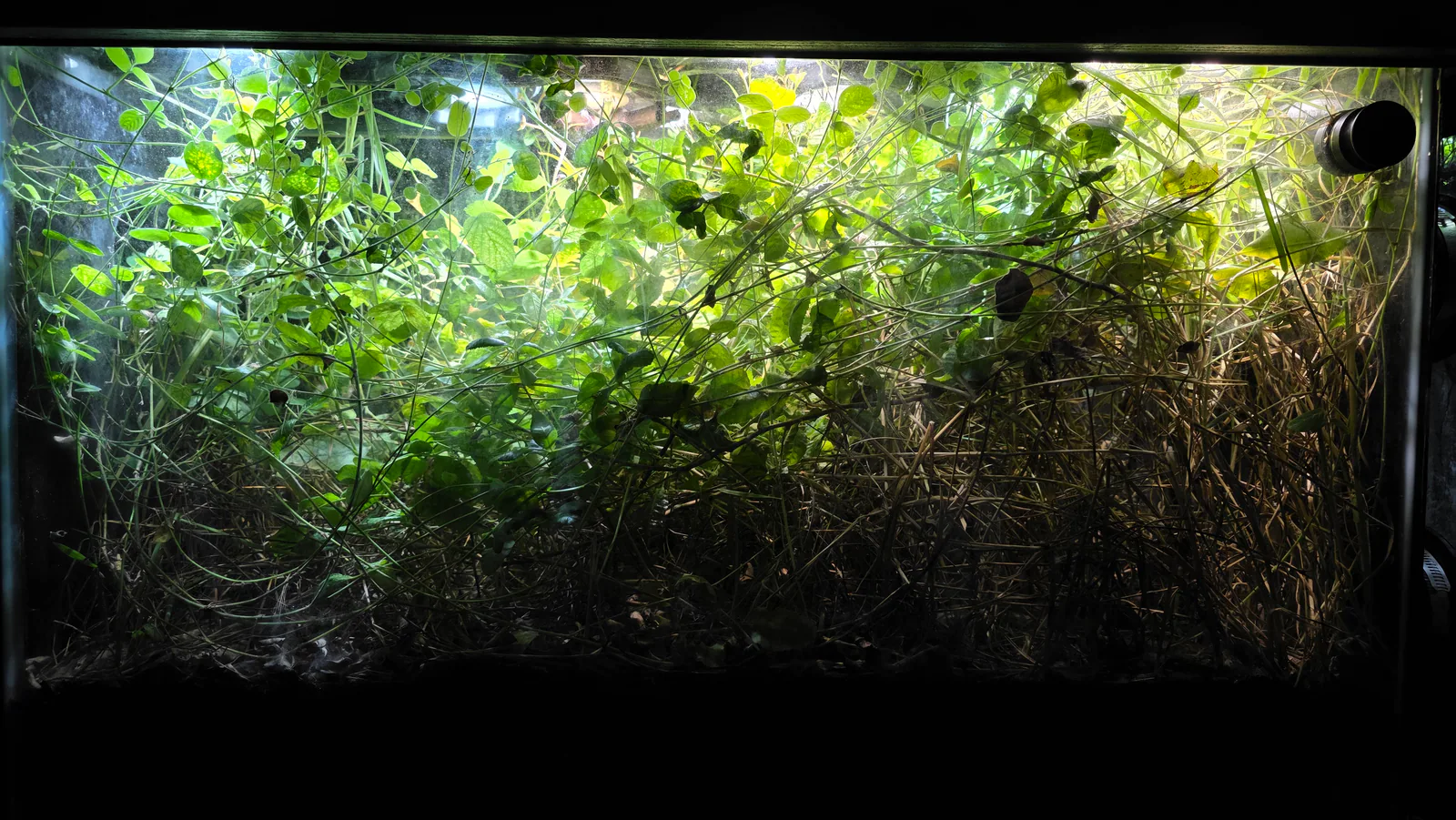
A glossy black plant-feeding bug that maintained a persistent aggregation on a broadleaf host in the Lowland Meadow for at least three years; the cluster disappeared in July 2025 following Regal Jumping Spider predation pressure, with one individual found surviving deep in the grass and current status unknown.

Visual Data Unavailable

Overview

A glossy black plant-feeding bug that maintained a persistent aggregation on a broadleaf host in the Lowland Meadow for at least three years; the cluster disappeared in July 2025 following Regal Jumping Spider predation pressure, with one individual found surviving deep in the grass and current status unknown.

Identity

  • Common name: Ebony Bug
  • Alternate names: Burrowing bug, negro bug, shield bug
  • Scientific name: Thyreocoridae sp. (unidentified)
  • Identification confidence: Family-level only; Thyreocoridae is confirmed from the common name and description (tiny, glossy black, plant-feeding true bug); genus and species unidentified
  • Uncertainty label: Observed

Taxonomy

  • Kingdom: Animalia
  • Phylum: Arthropoda
  • Class: Insecta
  • Order: Hemiptera
  • Suborder: Heteroptera
  • Family: Thyreocoridae
  • Genus: (unidentified)
  • Species: (unidentified)

Natural History

Thyreocoridae is a small family of true bugs in the order Hemiptera, related to stink bugs and shield bugs. Members are compact, oval, and heavily sclerotized, with a smooth, glossy black cuticle that gives them a superficial resemblance to small beetles. Adults are typically 1 to 4 millimeters in length. They are true bugs and thus feed by inserting a piercing beak into plant tissue; feeding is on seeds, stems, and plant sap rather than by chewing. Several genera are common in Florida grasslands and disturbed habitats, with Corimelaena and Galgupha being among the most frequently encountered.

Ebony Bugs are not colonial insects in the eusocial sense. They do not form organized colonies with queens and workers. Rather, they form loose aggregations on preferred host plants, particularly plants with seeds or soft plant tissue that the bugs feed on. These aggregations can persist on the same host plant for extended periods, particularly when the plant provides a consistent resource. In subtropical Florida, Ebony Bugs are found in grasslands, weedy margins, and disturbed terrestrial habitats year-round, though populations may be larger during warmer seasons.

Thyreocoridae historically were placed in or near Cydnidae (burrowing bugs), which accounts for the alternate common name "burrowing bug." Ebony bugs do not burrow in the same manner as true burrowing bugs, but the taxonomic association persists in some older references.

Ecological Role

Ebony Bugs are plant-feeding primary consumers. They extract nutrients from plant tissue and seeds, channeling plant energy into the arthropod food web. Their feeding is not typically devastating to host plants at low densities; they are generalist feeders rather than serious crop or garden pests. As prey, they are consumed by a range of terrestrial predators including jumping spiders, ground beetles, birds, and lizards.

In miniBIOTA, Ebony Bugs maintained a persistent aggregation on a broadleaf plant host in the Lowland Meadow for at least three years before the Regal Jumping Spider began actively hunting them in July 2025. The aggregation's sudden disappearance following predation pressure is the key ecological event documented for this species. A single individual was found surviving deep in the grass after the cluster dispersed or was eliminated. The Regal Jumping Spider was rehomed in October 2025, removing the primary predation pressure, but no follow-up observation documents whether the Ebony Bug population recovered.

miniBIOTA Evidence

No dedicated observation files for Ebony Bug exist in observation records. The primary evidence for this species comes from Regal Jumping Spider chronicles documenting predation events and aggregation loss in July 2025.

Introduction: No record. The aggregation was described as having occupied the same broadleaf plant host for approximately three years prior to July 2025, suggesting establishment by approximately July 2022. No introduction event was archived.

Observation timeline:

  • Approximately July 2022 (inferred): Ebony Bug aggregation established on broadleaf host plant in Lowland Meadow; inferred from "approximately three years" in the July 2025 chronicle records
  • July 31, 2025: Regal Jumping Spider confirmed hunting Ebony Bugs on their longtime broadleaf host; the usual cluster disappeared, leaving only one individual surviving deep in the grass (Chronicle 161)
  • October 2025: Regal Jumping Spider rehomed; primary predation pressure removed; no follow-up Ebony Bug observation

Confirmed:

  • Persistent aggregation present on a broadleaf plant host in the Lowland Meadow for at least three years prior to July 2025
  • Regal Jumping Spider confirmed hunting Ebony Bugs on July 31, 2025
  • Aggregation cluster absent from host plant after July 31, 2025; one individual found surviving in grass

Inferred:

  • Aggregation was feeding on plant tissue or seeds of the broadleaf host during the three-year occupation
  • The cluster's disappearance on July 31, 2025 is consistent with predation pressure from the Regal Jumping Spider, though dispersal cannot be excluded
  • After the spider's removal in October 2025, Ebony Bug recovery from dispersed survivors was possible but unconfirmed

Unknown:

  • Genus and species identity
  • Introduction date and source (population predates the observation record)
  • Whether the cluster fully collapsed under predation or dispersed to other plant hosts
  • Whether the population recovered after the Regal Jumping Spider was removed
  • Current distribution and status in the Lowland Meadow