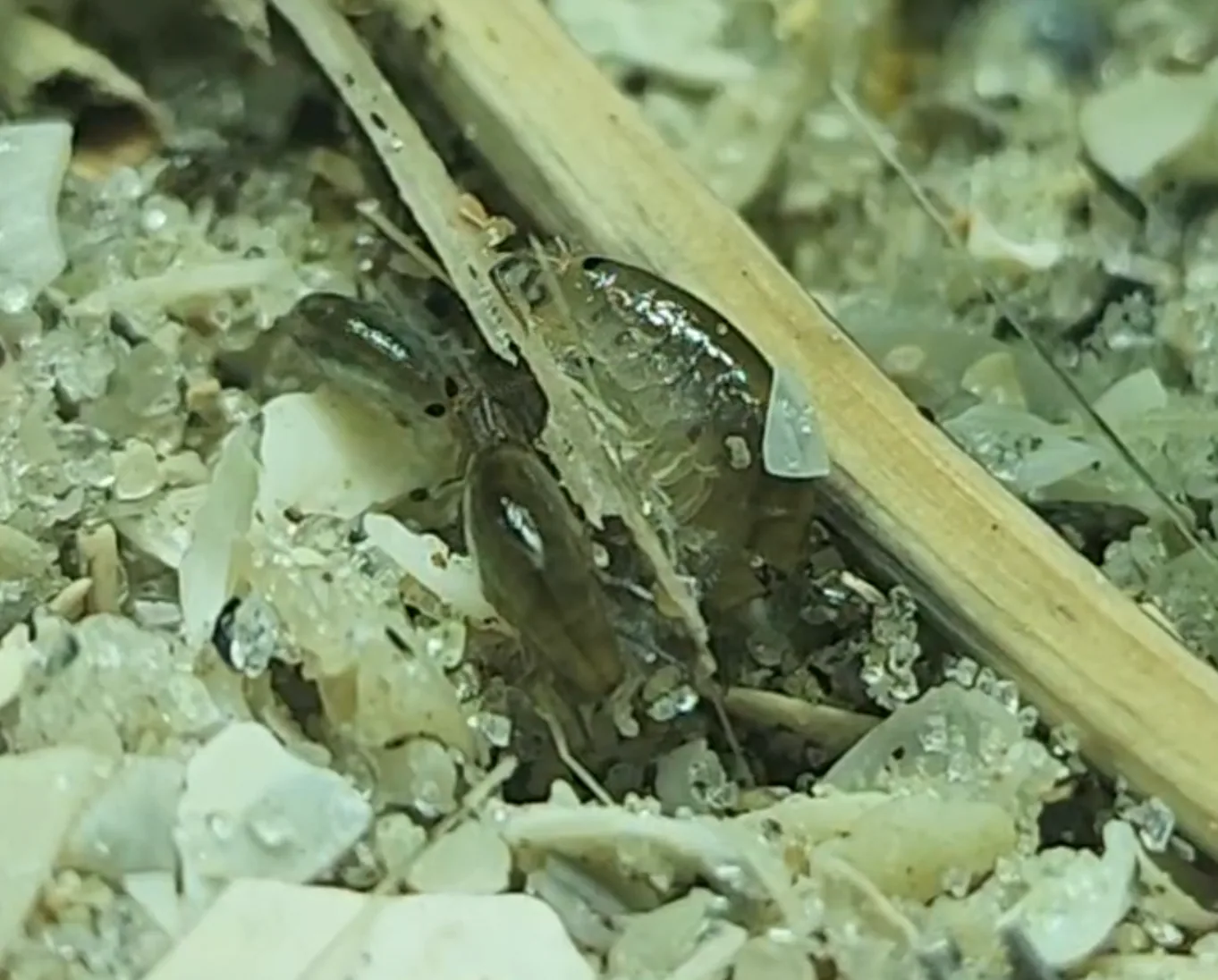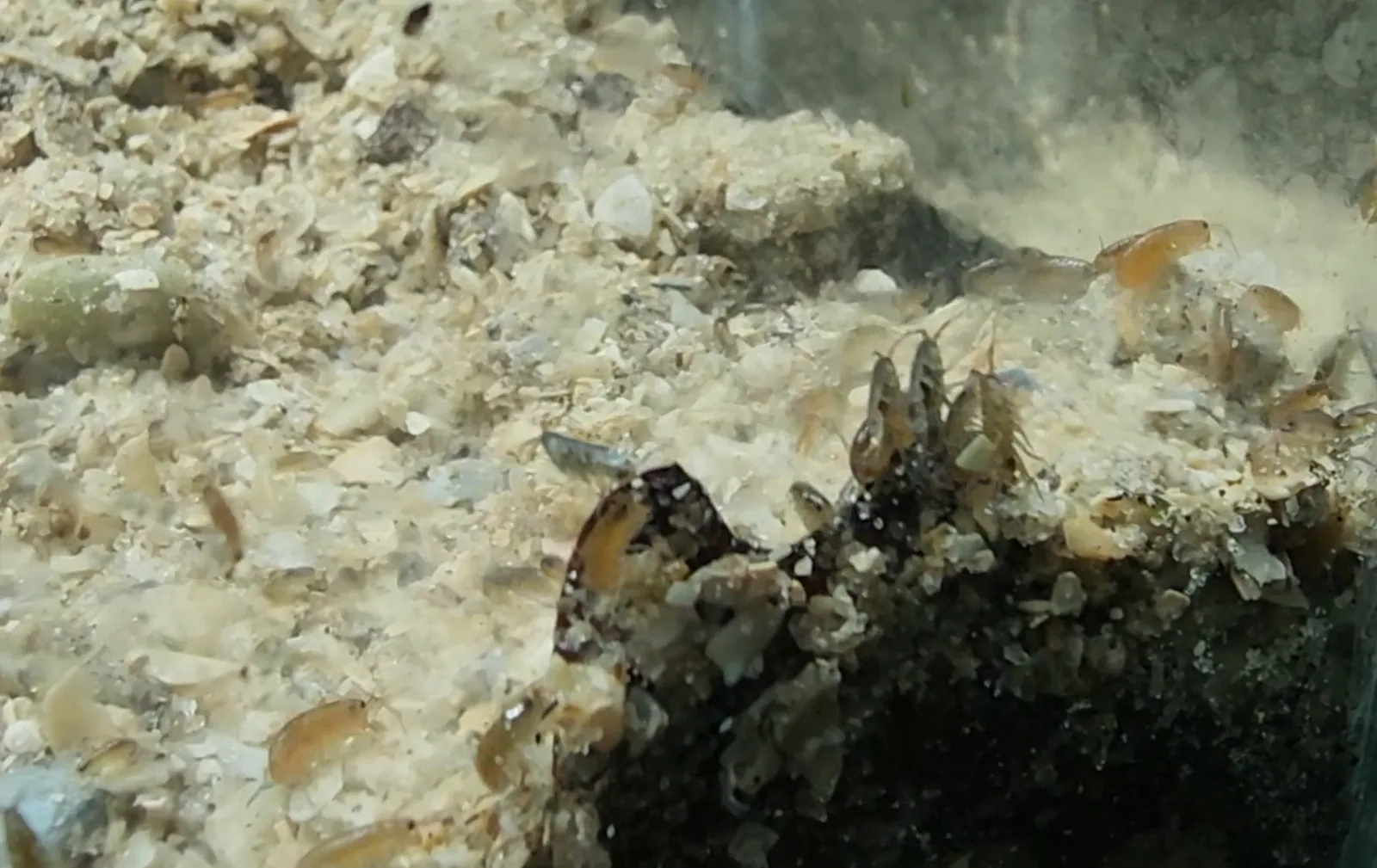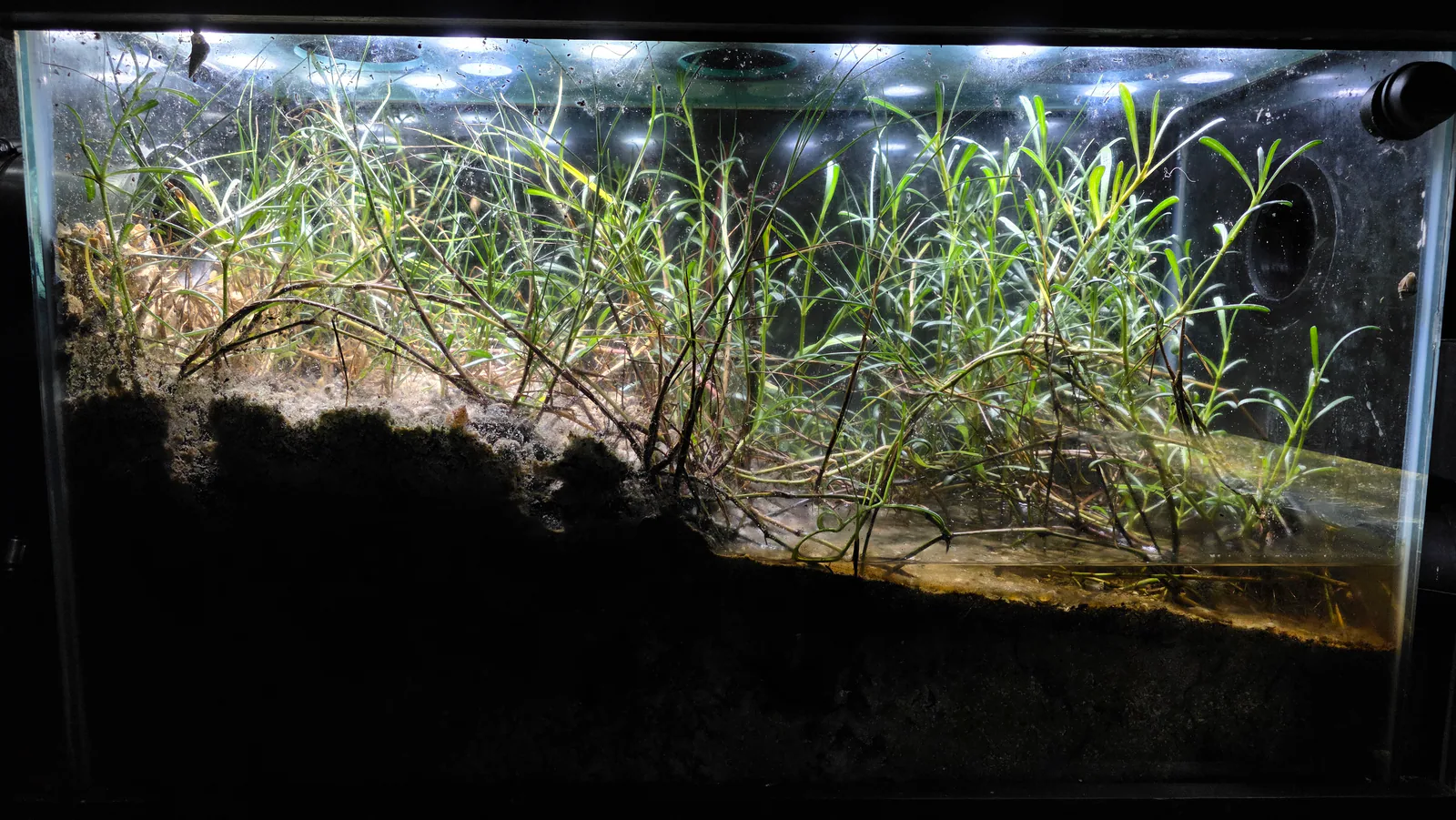
Talitridae sp. (unidentified)

Lawn shrimps

Small hopping crustaceans that live in the damp soil and leaf litter of the Marine Shore, feeding on decaying plant matter and requiring consistent moisture to survive; they desiccate within hours in dry conditions.

Visual Data Unavailable

Overview

These tiny hopping crustaceans live in damp soil and leaf litter along the Marine Shore, feeding on decaying plant matter. They require consistent moisture to stay active and desiccate quickly in dry conditions. A reintroduction on April 22, 2026 followed a failed earlier attempt; whether the current population has established is unresolved.

Identity

  • Common name: Lawn Shrimps
  • Alternate names: Lawn shrimp, land hopper, garden hopper, terrestrial amphipod, pink hopper, house hopper; "beach hopper" is a misidentification
  • Scientific name: Talitridae sp. (unidentified)
  • Identification confidence: Family-level only
  • Uncertainty label: Observed

Taxonomy

  • Kingdom: Animalia
  • Phylum: Arthropoda
  • Class: Malacostraca
  • Order: Amphipoda
  • Family: Talitridae
  • Genus: Unresolved
  • Species: Unresolved

Natural History

Lawn shrimps (Family Talitridae) are terrestrial amphipod crustaceans found in moist, organically rich habitats across warm-temperate and tropical regions, including Florida. Despite the name, they are not shrimps: they are amphipods more closely related to beach hoppers and sand hoppers than to true shrimp. The common names "lawn shrimp," "land hopper," and "garden hopper" all describe the same characteristic behavior: rapid sideways or forward jumping when disturbed, powered by the abdomen flexing against the ground.

Workers are small (typically 5 to 15 mm), laterally flattened, and range from pinkish to gray in color. They are nocturnal and spend most daylight hours hidden under leaf litter, bark, logs, or moist soil. Moisture is the critical limiting factor: lawn shrimps desiccate within hours if exposed to dry conditions and may mass-migrate toward structures or pools during unusually dry periods, which is how they are often first noticed by people.

In Florida, Talitridae species are common in gardens, forest edges, and moist coastal habitats wherever organic litter accumulates. They feed primarily on decaying leaf litter, fungi, and other organic debris. They are not associated with any particular plant species but are concentrated wherever moisture and detritus are both available. Terrestrial talitrids generally have direct development with no free-swimming larval stage, and populations can increase quickly when conditions are suitable.

Ecological Role

In general terrestrial and shoreline ecosystems, lawn shrimps function as detritivores: they fragment and consume decaying leaf litter and plant material, accelerating decomposition and returning nutrients to the soil. They also provide prey-sized biomass for ground-level predators such as spiders, beetles, and centipedes. In a closed system like miniBIOTA, a resident population in the Marine Shore would represent a small but steady leaf-litter processing link.

The first introduction to the Marine Shore failed due to insufficient detritus. The reintroduction on April 22, 2026 was timed deliberately to coincide with increased leaf litter and organic material now available in the biome. No behavioral or feeding observations have been recorded since the reintroduction; whether the current population has found stable refuge and food in the Marine Shore remains unresolved.

miniBIOTA Evidence

Introduction context: An earlier introduction (date not recorded) failed due to insufficient detritus in the Marine Shore. On April 22, 2026, a reintroduction was made with the note that increased organic material now available in the biome may support establishment. The date_first_introduced field reflects the reintroduction date; the original introduction date is not documented.

Observation timeline:

  • April 22, 2026: Reintroduced terrestrial amphipods (lawn shrimp, Family Talitridae) to the Marine Shore biome. Note cites previous introduction failure due to insufficient detritus. Current increase in leaf litter and organic material may now support establishment. Expected role as detritivores in nutrient cycling. Video evidence of introduction.

Confirmed:

  • Reintroduction to Marine Shore on April 22, 2026
  • Previous introduction attempted and failed (date unrecorded) due to insufficient detritus
  • Reintroduction timed to increased organic material availability in the biome
  • Video evidence of introduction event

Inferred:

  • Detritivore function in the Marine Shore leaf-litter layer, consistent with Talitridae family biology
  • Moisture dependence: population persistence is tied to damp conditions in the Marine Shore

Unknown:

  • Whether the April 22, 2026 reintroduction has established a persistent population
  • Species-level identity within Family Talitridae
  • Current population size and distribution within the Marine Shore
  • Whether the species has reproduced in miniBIOTA
  • Date and details of the original (failed) introduction