Achurum carinatum

Long-headed Toothpick Grasshopper

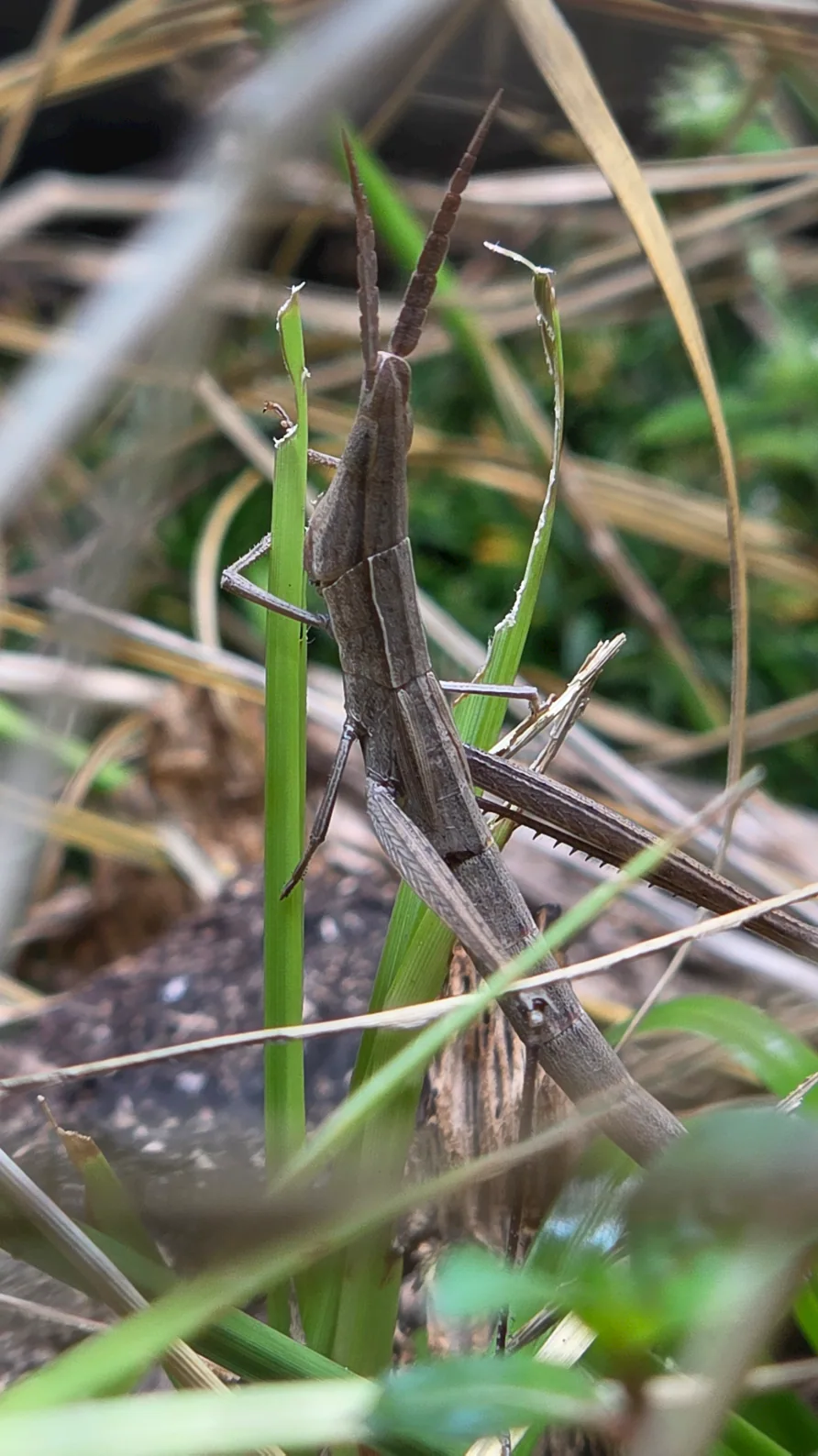
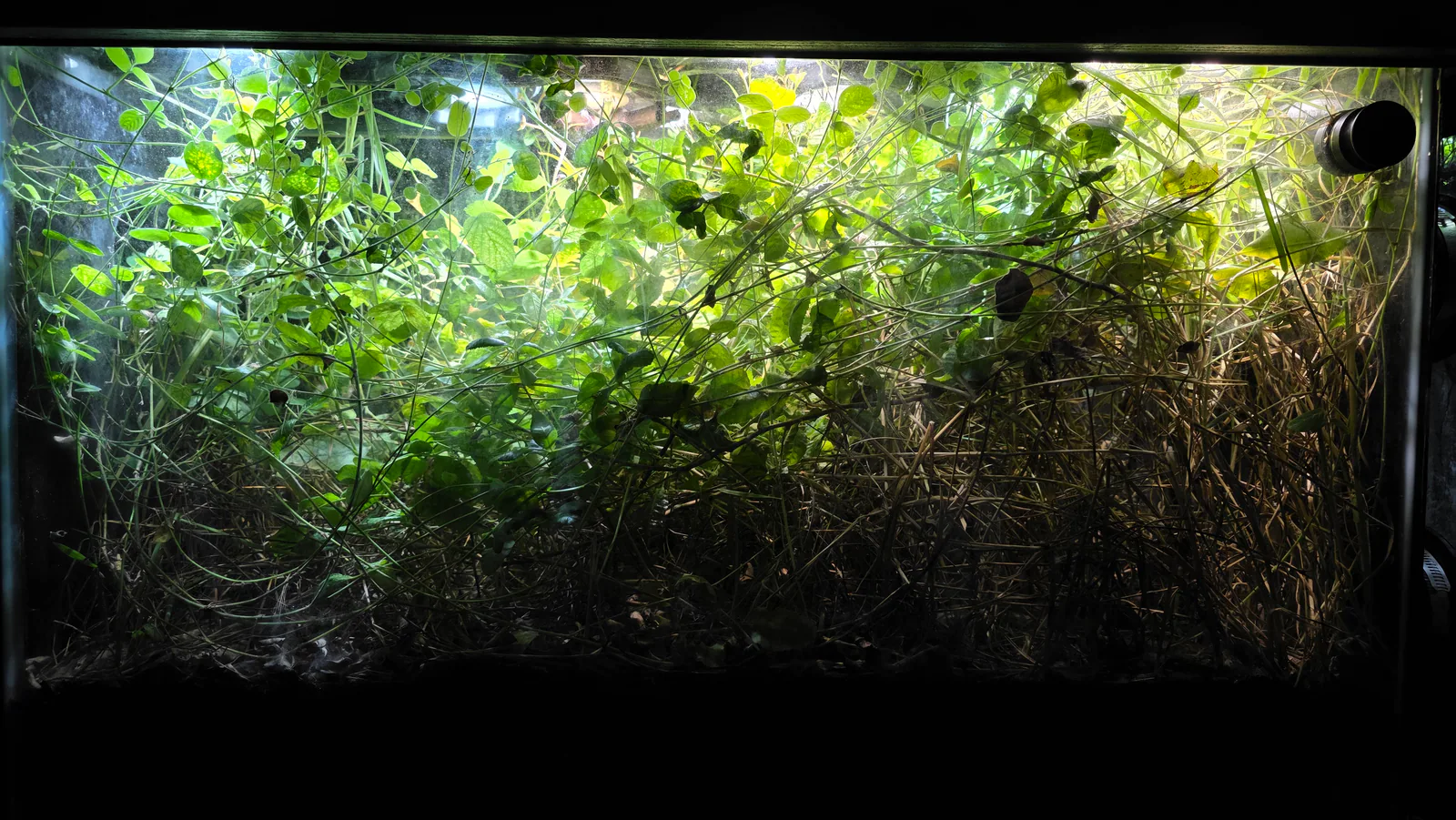
Exceptionally slender and cryptic, the Long-headed Toothpick Grasshopper blends into grass stems so completely that it is nearly invisible at rest, feeding on the fine-leaved grasses of the Lowland Meadow.

Visual Data Unavailable

Overview

The Long-headed Toothpick Grasshopper (Achurum carinatum) is one of Florida's most cryptic grasshoppers, with a body so narrow and elongated that it is nearly indistinguishable from the grass stems it rests on. One individual was present in the Lowland Meadow; introduction date is unknown and no observation file was created for this species. The individual was last recorded June 5, 2025. Population status is Uncertain; no sighting has been recorded in over a year.

Identity

  • Common name: Long-headed Toothpick Grasshopper
  • Alternate names: Toothpick grasshopper, stick grasshopper, longheaded grasshopper, slender grasshopper, achurum
  • Scientific name: Achurum carinatum (Burmeister, 1838)
  • Identification confidence: Species-level. Achurum carinatum is recognizable in Florida; its extreme slenderness and elongated narrow head distinguish it from all other Florida grasshoppers. No voucher documentation is recorded for the miniBIOTA individual.
  • Uncertainty label: Observed

Taxonomy

  • Kingdom: Animalia
  • Phylum: Arthropoda
  • Class: Insecta
  • Order: Orthoptera
  • Suborder: Caelifera
  • Family: Acrididae
  • Subfamily: Gomphocerinae
  • Genus: Achurum
  • Species: A. carinatum (Burmeister, 1838)

Natural History

Range and Florida Relevance

Achurum carinatum is distributed across the eastern United States from the mid-Atlantic states through the Southeast and into Florida. In Florida, it is found in dry grasslands, coastal prairies, pine flatwoods edges, and open sandy or grassy habitats throughout the peninsula. It is not a habitat specialist but shows a strong association with dry, fine-leaved grass communities. Its presence in miniBIOTA's Lowland Meadow is ecologically consistent with this habitat preference.

Habitat

The Long-headed Toothpick Grasshopper is a grass-stem specialist. It rests along grass blades and stems parallel to the plant, using its slender body and green or tan-brown coloration to become nearly invisible against the surrounding vegetation. It is rarely seen except when flushed into flight, at which point it drops back into cover within seconds. It favors fine-textured grasses and open ground-level vegetation where it can exploit its camouflage most effectively.

Diet

Achurum carinatum is a grass specialist: it feeds primarily on the stems and blades of thin-leaved grasses, cutting and chewing plant tissue with its mandibles. Forb and broadleaf plant material may be taken occasionally, but grasses are the primary food source. It is not a heavy or rapid feeder relative to larger grasshopper species; its small body size limits the per-individual herbivory load.

Reproduction

Females deposit eggs in soil pods, ovipositing into the ground substrate. Eggs overwinter and hatch in spring or early summer. Nymphs develop through several instars before reaching adulthood, typically by mid to late summer. The species is monovoltine in temperate and subtropical climates. Adult females are noticeably larger than males. Males stridulate, though the song is quiet compared to larger orthopterans.

Tolerance Ranges

Achurum carinatum is a warm-season, dry-habitat-associated species. It tolerates a wide range of Florida's subtropical temperatures and performs best in warm, dry conditions with minimal surface moisture. No miniBIOTA-specific measurements have been taken; the species was present for too brief a period without generating environmental records.

Ecological Role

The Long-headed Toothpick Grasshopper functions as a primary consumer of fine-leaved grasses in the Lowland Meadow, transferring grass-blade biomass into insect tissue available to predators and scavengers. As a single individual and a relatively small-bodied grasshopper, its per-individual herbivory impact on the Lowland Meadow plant community was likely low. No ecological interactions were observed during its presence. As a slender, grass-mimicking insect, it is prey for visually hunting spiders, mantids, and insectivorous vertebrates, though no predation was documented in miniBIOTA. Its cryptic strategy depends entirely on its camouflage posture; if flushed from cover in a small closed system it would have limited escape options compared to open-field conditions.

miniBIOTA Evidence

Introduction and History

The Long-headed Toothpick Grasshopper was present in the Lowland Meadow at some point before June 5, 2025. No introduction date, introduction method, or source origin is recorded, and no dedicated observation file was created for this species. The population_dynamics_notes reference a "Lowland Meadow addition," suggesting deliberate introduction by the owner, but no specific date or chronicle reference is preserved. The individual was last recorded June 5, 2025. As of June 18, 2026, no further sighting has been recorded for over a year.

Observation Timeline

  • (Unknown date, before June 5, 2025): Long-headed Toothpick Grasshopper present in the Lowland Meadow. Introduction details unrecorded.
  • June 5, 2025: Last recorded date (DB last recorded date). No dedicated observation file.

What Is Confirmed

  • One Long-headed Toothpick Grasshopper present in the Lowland Meadow; last recorded June 5, 2025.
  • Species identity assigned as A. carinatum; no voucher.
  • No sighting recorded for over a year as of June 2026.

What Is Inferred

  • The species was deliberately introduced based on the "Lowland Meadow addition" context on record, but this is not confirmed with a date or chronicle reference.
  • Given the lack of any sighting since June 2025, the individual has likely died, escaped, or is simply undetected.

What Remains Unknown

  • Introduction date, source, and number of individuals originally introduced.
  • Whether the individual is still present but hidden (the species' extreme crypticity makes it easy to miss).
  • Whether reproduction occurred at any point.
  • What happened after June 5, 2025.