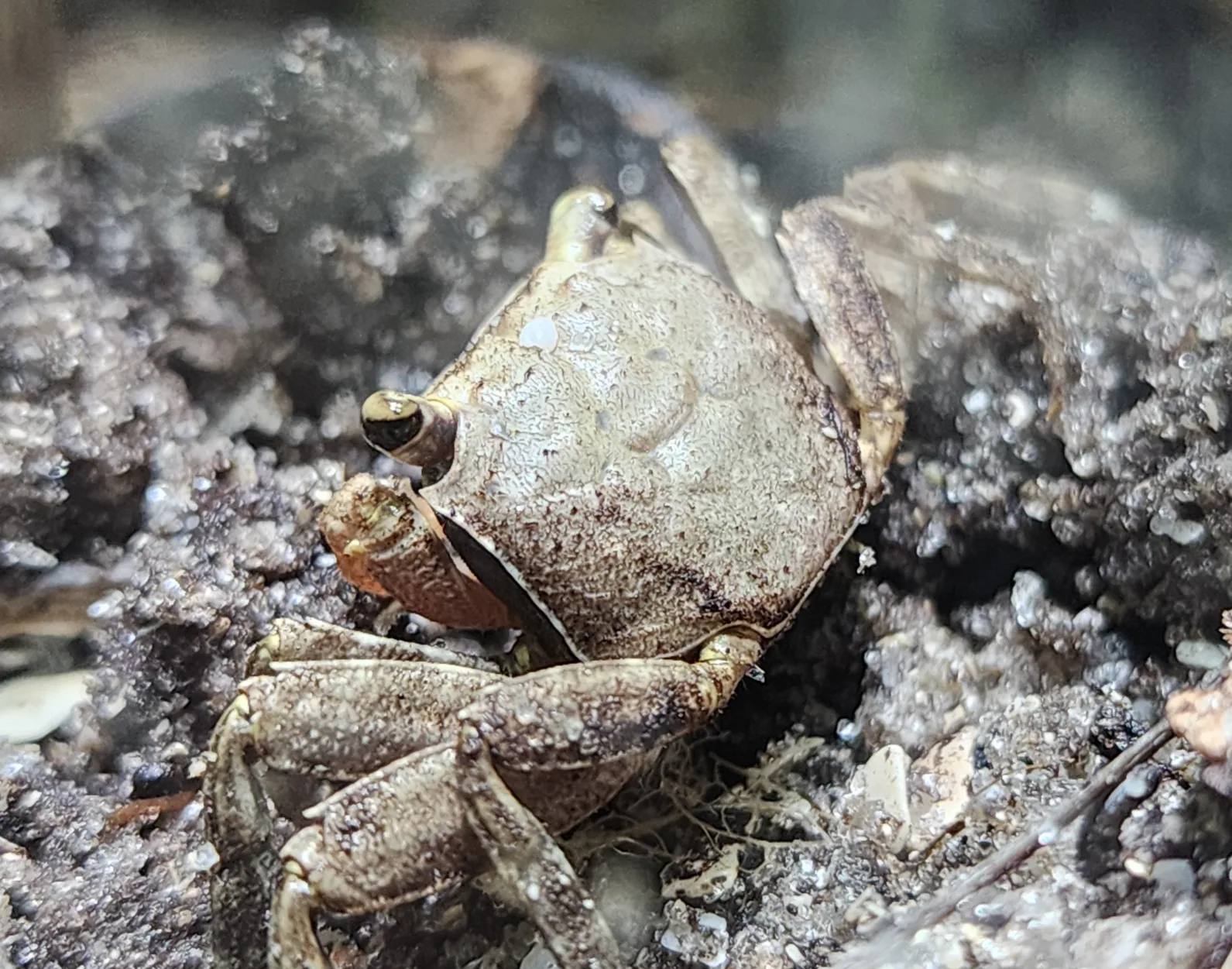
Armases cinereum is a small, flattened sesarmid crab native to the Atlantic and Gulf coasts of North America, from Virginia to Texas, including throughout Florida. It is one of the most common semi-terrestrial crabs in Florida's coastal habitats: mangrove prop roots, saltwater marsh edges (Spartina, Juncus, and Salicornia stands), dock pilings, and rocky or shell-rubble shores all provide characteristic habitat. The carapace is notably squarish or rectangular, broader than it is deep, giving the species both its common name and its distinctive silhouette.
Squareback Marsh Crabs are semi-terrestrial omnivores. They spend much of their time above the waterline, climbing mangrove roots, marsh stems, and intertidal structures, but they require proximity to water for osmoregulation and reproduction. Their diet is broad: algae, leaf litter, detritus, fungus, carrion, small invertebrates, and organic scraps are all consumed opportunistically. This opportunistic omnivory makes them effective links between the detrital pathway and the crab biomass layer in coastal ecosystems.
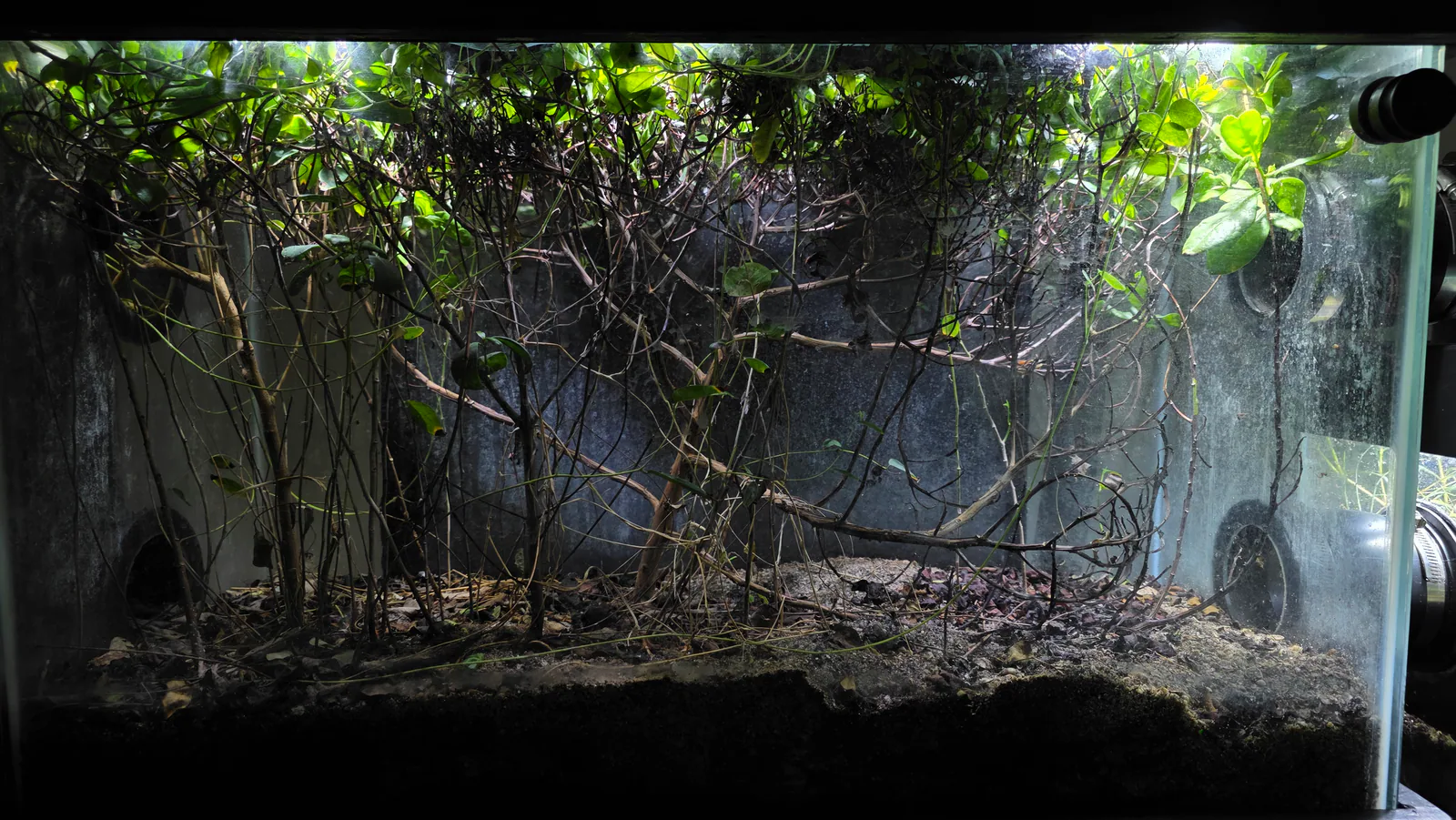
Armases cinereum is closely related to Armases ricordi (Humic Marsh Crab), which occupies an overlapping range and similar habitat, particularly in Caribbean and Florida mangrove systems. In miniBIOTA, the two Armases species are tracked as separate nodes; the Humic Marsh Crab is the established resident of the Mangrove Forest, while the Squareback Marsh Crab represents a distinct individual recorded in the Marine Shore context.