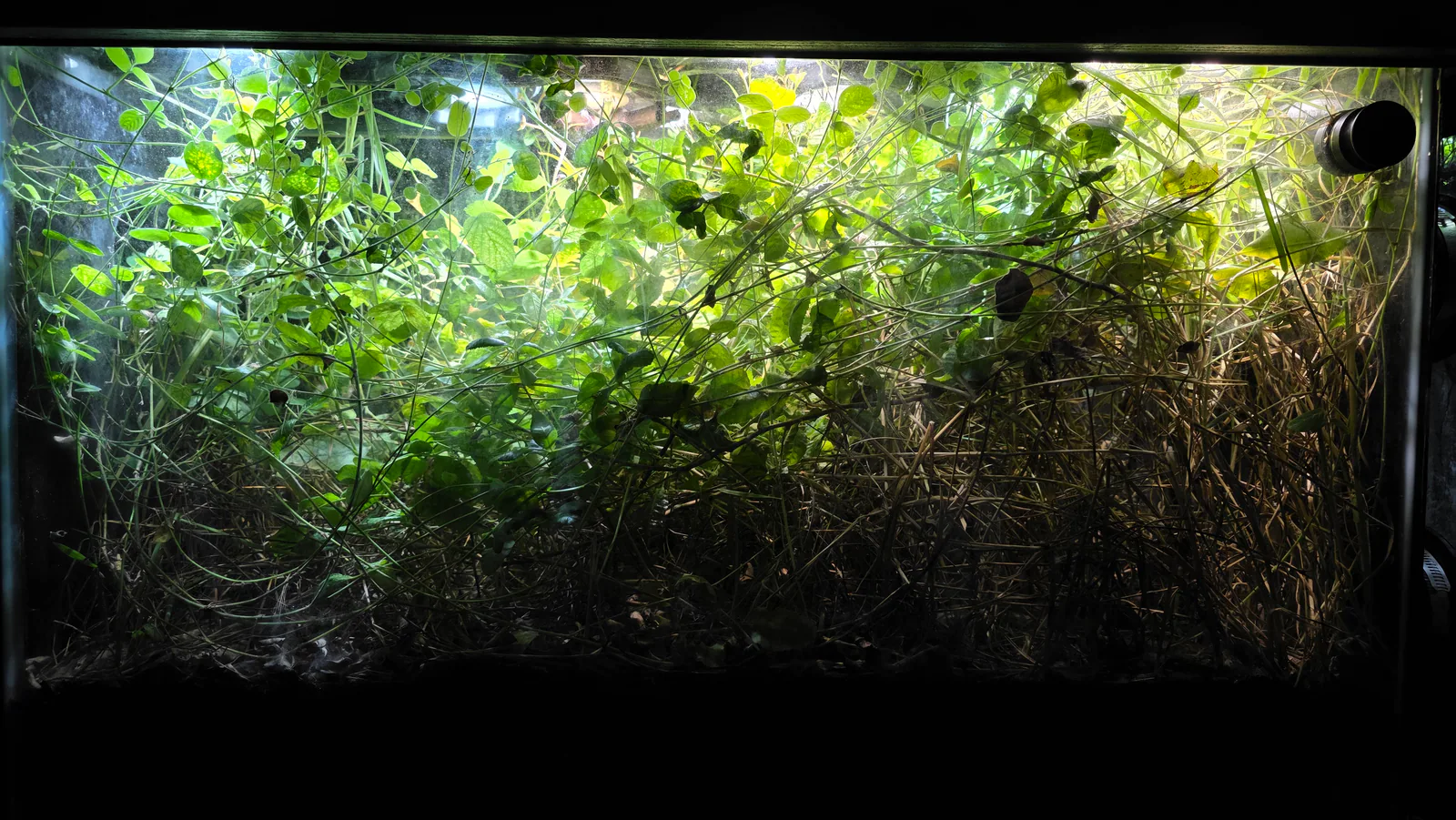
Lithobates sphenocephalus

Southern Leopard Frog

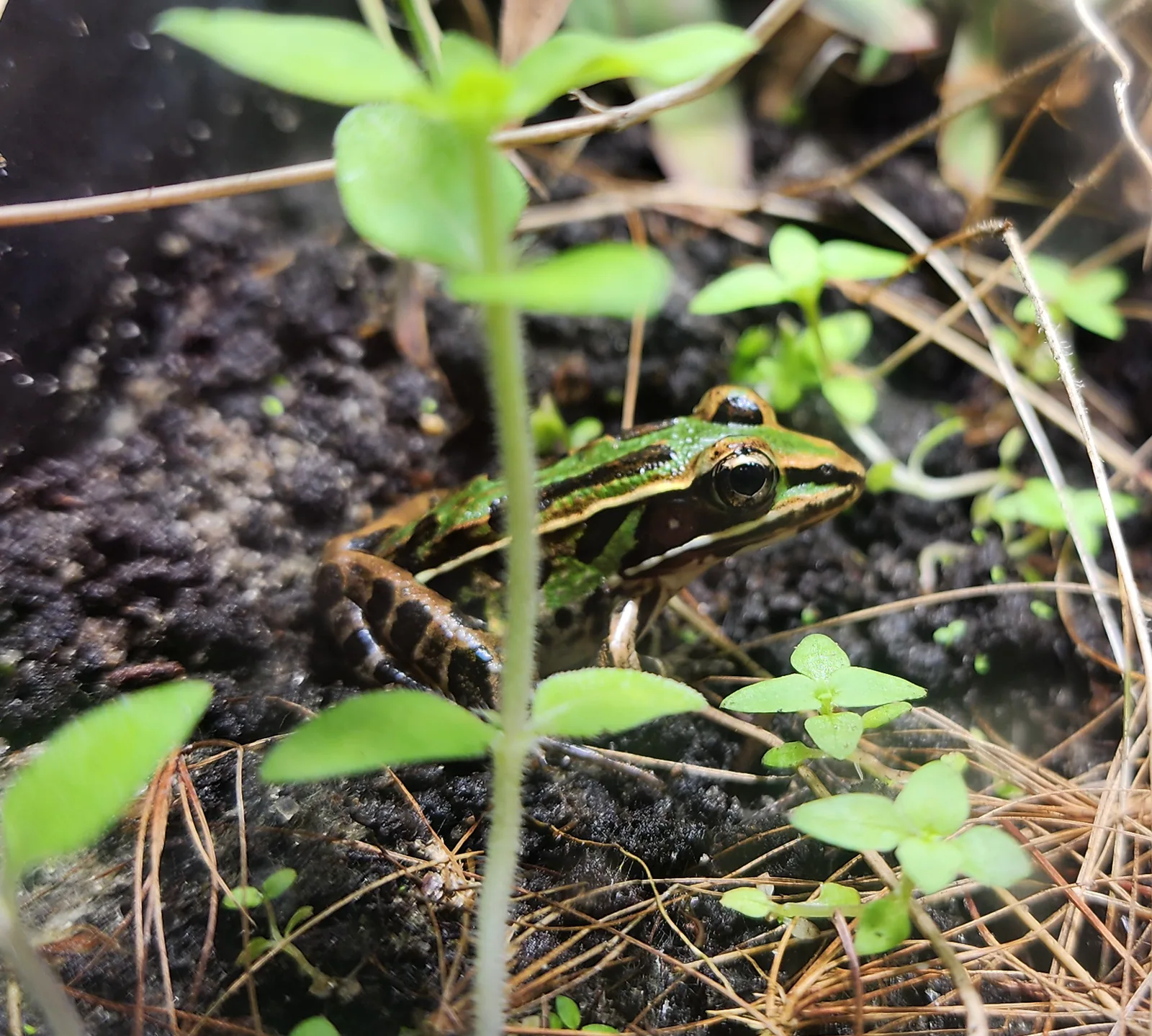
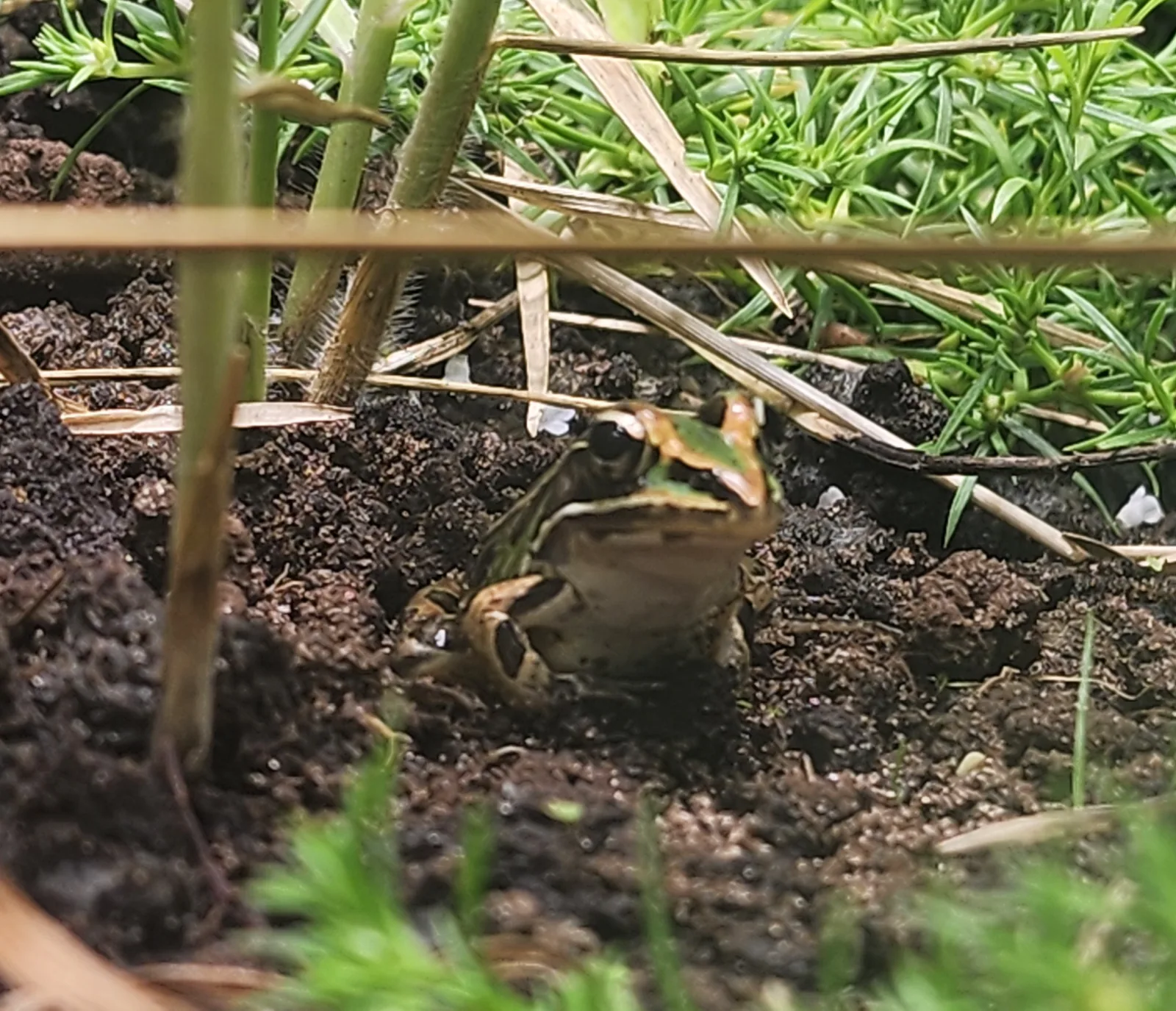
A spotted native Florida frog that ranges freely across freshwater margins, lakeshore edges, and moist meadows, hunting insects and invertebrates at the water's edge and on moist ground, and returning to still water to breed in spring.

Visual Data Unavailable

Overview

A spotted native Florida frog that ranges freely across freshwater margins, lakeshore edges, and moist meadows, hunting insects and invertebrates at the water's edge and on moist ground, and returning to still water to breed in spring. It is native to Florida and the southeastern United States, commonly self-colonizes outdoor enclosures and gardens, and is the most likely amphibian visitor to miniBIOTA's multi-biome terrestrial and aquatic zones. No dedicated observation records have been found in the miniBIOTA observation records.

Identity

  • Common name: Southern Leopard Frog
  • Alternate names: leopard frog, meadow frog, grass frog
  • Scientific name: Lithobates sphenocephalus
  • Identification confidence: Species-level
  • Uncertainty label: Observed

Taxonomy

  • Kingdom: Animalia
  • Phylum: Chordata
  • Class: Amphibia
  • Order: Anura
  • Family: Ranidae
  • Genus: Lithobates
  • Species: L. sphenocephalus

Natural History

Lithobates sphenocephalus is distributed across the southeastern United States from New Jersey south through Florida and west to Texas and Kansas. It is one of the most common and widely encountered frogs in Florida, found in virtually every freshwater habitat including marshes, ponds, lakes, ditches, wet meadows, and the vegetated margins of slow-moving rivers.

The Southern Leopard Frog is a medium-sized true frog (Ranidae), reaching 5 to 9 centimeters in body length. The characteristic leopard spot pattern on a green or brownish background is shared with the Pickerel Frog (Lithobates palustris), but the Pickerel Frog is not reliably found in Florida. The Southern Leopard Frog has pointed snout, long muscular hind legs, and is an agile jumper and strong swimmer.

Unlike purely aquatic frogs, Southern Leopard Frogs are highly mobile on land and regularly travel significant distances from water bodies across moist terrestrial habitat. Adults are primarily nocturnal and crepuscular, hunting insects, spiders, worms, and other invertebrates on and near moist ground. They use a combination of active pursuit and ambush, striking prey with a sticky tongue.

Breeding occurs in late winter through spring (February through April in Florida); males call from the water's edge with a distinctive chuckling call. Eggs are laid in communal masses attached to aquatic vegetation. Tadpoles are aquatic and metamorphose in 6 to 12 weeks depending on temperature. Juveniles disperse into terrestrial habitat after metamorphosis.

Ecological Role

In a system like miniBIOTA, Southern Leopard Frog would function as an active predator across the Lakeshore and Lowland Meadow, targeting insects including grasshoppers, crickets, beetles, and moths, as well as spiders, worms, and smaller invertebrates. It is the only amphibian in the miniBIOTA species record and would represent the sole dedicated vertebrate predator of terrestrial invertebrates if present and established.

The frog's three-biome assignment (Freshwater Lake, Lakeshore, Lowland Meadow) reflects its natural movement pattern: resting and foraging in the terrestrial zones while staying within range of the Freshwater Lake for thermoregulation and breeding. In natural Florida habitats, Southern Leopard Frogs are prey for herons, larger snakes, raccoons, and larger fish; no known predators of this species are currently present in miniBIOTA.

The presence of an amphibian predator at this trophic level would have a measurable effect on the grasshopper and cricket populations in the Lowland Meadow. Whether this species is currently present and actively foraging is unresolved.

miniBIOTA Evidence

Introduction context: No introduction event is on record. Southern Leopard Frogs are native to Florida and are common self-colonizers of outdoor aquatic and semi-aquatic enclosures; they readily enter gardens, containers, and ponds that provide suitable water and cover. Self-colonization is the most probable arrival route.

Observation timeline:

  • No dedicated observation records have been found in the miniBIOTA observation records for Southern Leopard Frog.

Confirmed:

  • Species record exists in the miniBIOTA database with Freshwater Lake, Lakeshore, and Lowland Meadow biome assignments

Inferred:

  • Active invertebrate predation across Lakeshore and Lowland Meadow if present
  • Aquatic breeding requiring still freshwater access

Unknown:

  • Whether Southern Leopard Frog is currently present or has been present in miniBIOTA
  • Whether any breeding, egg mass, or tadpole has been observed
  • Whether the individual is a resident or transient visitor