Panchlora nivea
Cuban Cockroach
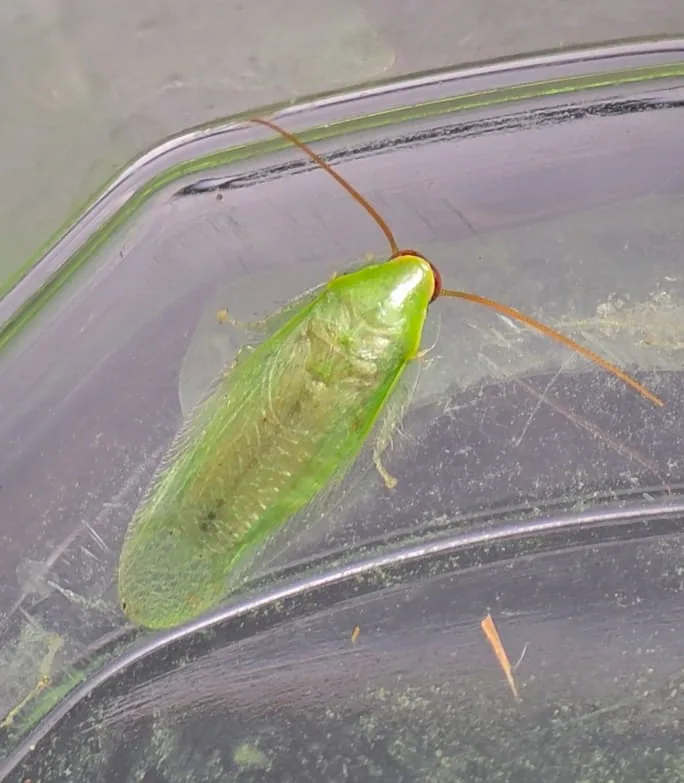
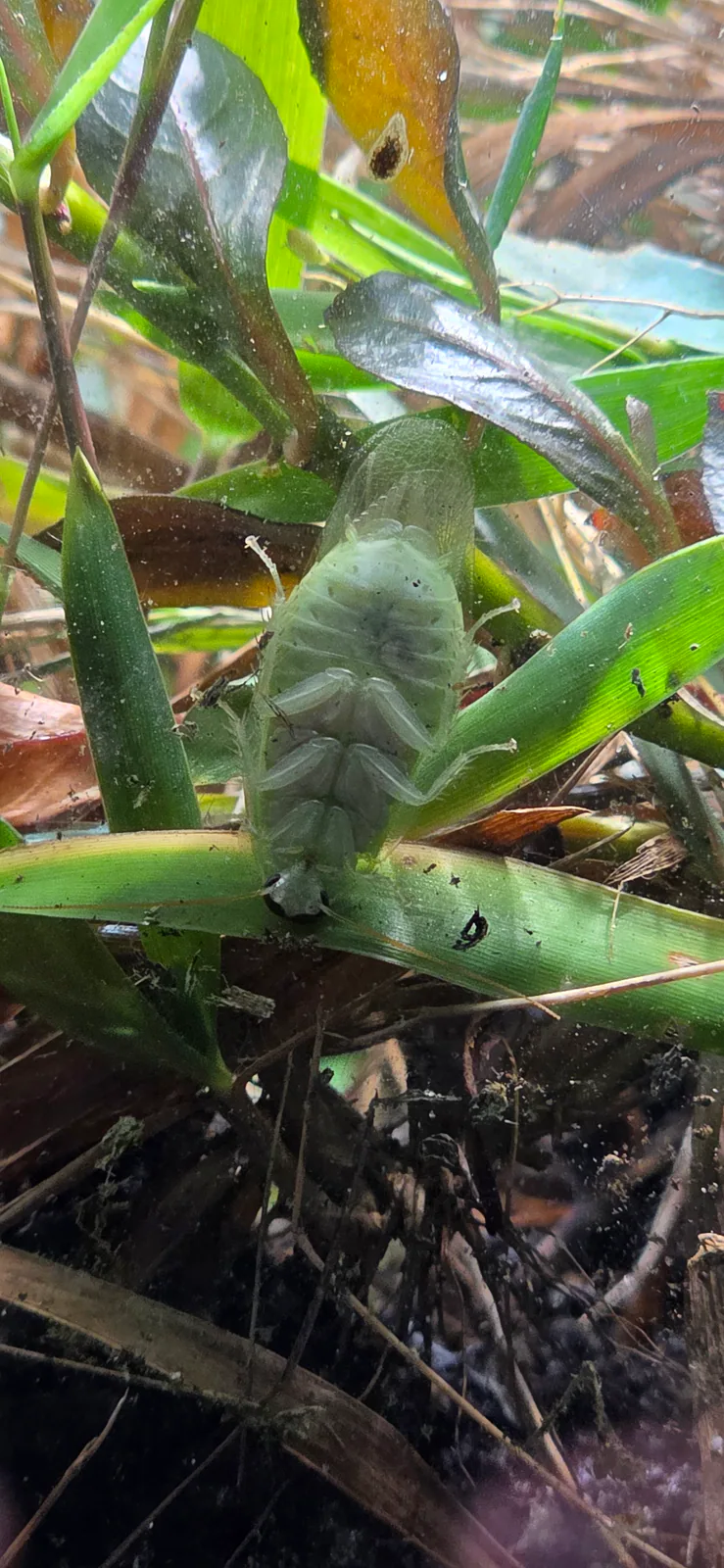
Lime-green and slender, the Cuban cockroach is a Caribbean native found in the leaf litter and plant debris of the Lowland Meadow, feeding on decaying plant material and helping return organic matter to the soil.
Panchlora nivea
Lime-green and slender, the Cuban cockroach is a Caribbean native found in the leaf litter and plant debris of the Lowland Meadow, feeding on decaying plant material and helping return organic matter to the soil.
The Cuban cockroach (Panchlora nivea) is a small, pale-green cockroach native to Cuba and the Caribbean, widely established in Florida as a naturalized outdoor species. Unlike household pest cockroaches, it lives in vegetation, leaf litter, and plant debris, feeding on plant material and organic matter rather than infesting structures. It was first introduced to miniBIOTA on June 11, 2026, added to the Lowland Meadow as part of the ongoing effort to diversify the terrestrial invertebrate community. Its integration, behavior, and suitability within the system are under observation.
Panchlora nivea is native to Cuba and the wider Caribbean region, with its range extending through parts of Central America. It has been established in Florida for many decades as an introduced species and is commonly encountered in the state's gardens, parks, and natural edges. It is not considered an invasive pest; it occupies outdoor niches and does not infest structures the way American, German, or Florida woods cockroaches do. Within Florida, it is a familiar component of the warm, humid terrestrial insect community. Its presence in miniBIOTA is consistent with the Lowland Meadow's Florida terrestrial character.
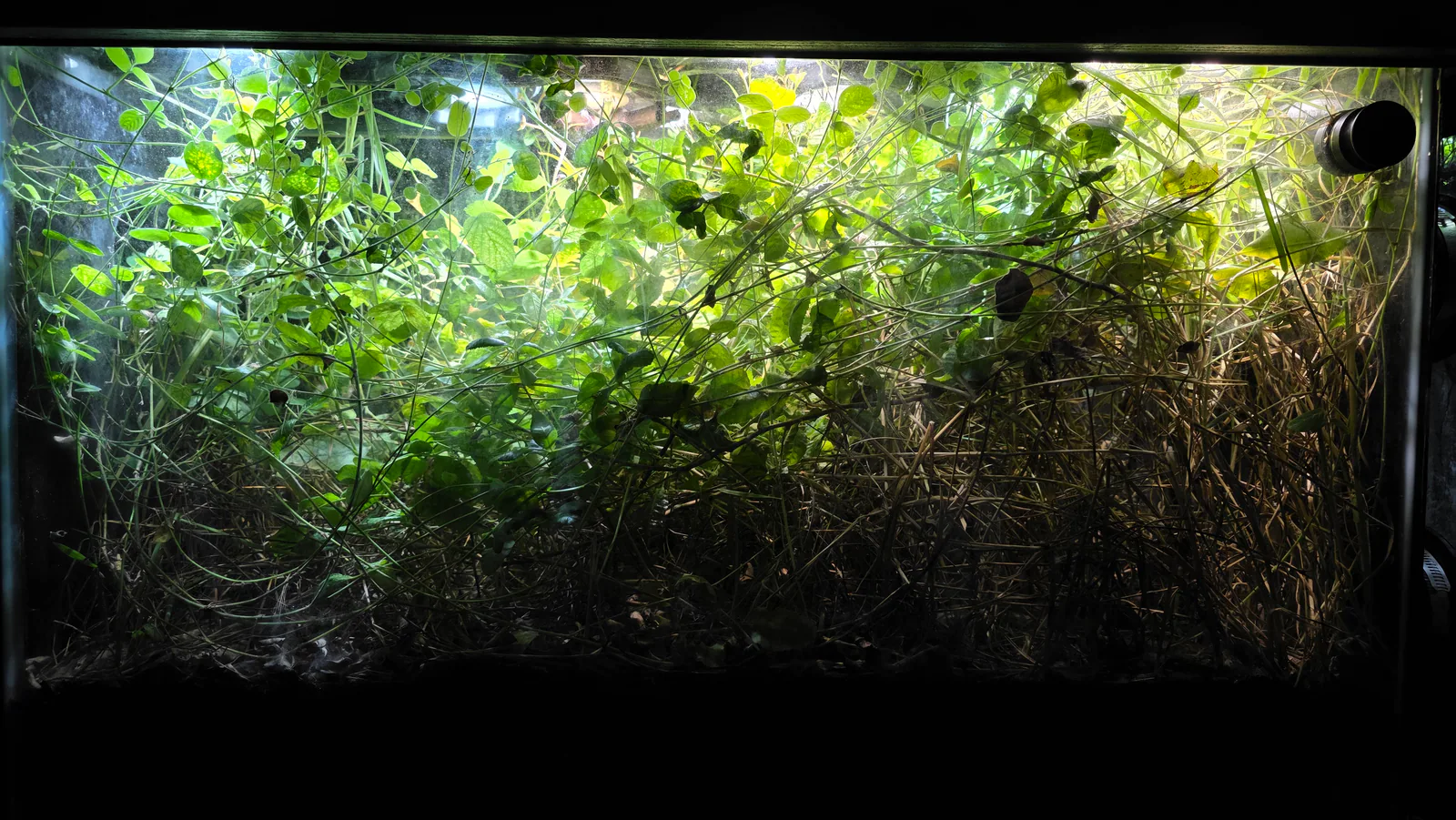
Cuban cockroaches are outdoor, vegetation-associated insects. They prefer humid, plant-dense environments and are most commonly found in leaf litter, low-growing shrubs, tree bark, and dense grass. They are nocturnal and are frequently attracted to artificial lights at night, which is how they often come to the attention of observers. In their daytime resting phase they shelter in plant matter, bark crevices, or moist ground-level debris. The Lowland Meadow's organic-rich soil, plant litter, and grass cover are broadly consistent with the habitat types this species prefers in Florida.
Cuban cockroaches are primarily phytophagous, feeding on plant material, decaying leaves, and organic debris. They also consume fungi and other soft organic matter. They are not predatory and are not known to prey on other invertebrates. Their feeding habits make them effective contributors to the detritivore layer of a terrestrial system, processing plant litter and returning organic material to the soil.
Panchlora nivea is ovoviviparous: females carry eggs internally and give birth to live nymphs rather than depositing an ootheca. This is a characteristic of many Blaberidae species. Nymphs are brown at early instars and become progressively greener as they molt through successive stages, reaching full adult coloration at maturity. Adults of both sexes are winged and capable of flight. Lifespan data for this species in captivity varies; wild lifespans have not been well-characterized in published literature.
Panchlora nivea is a warm-climate species adapted to Florida's subtropical conditions. It tolerates the temperature range, humidity variation, and rain-driven moisture cycles typical of the Lowland Meadow biome. No miniBIOTA-specific measurements have been taken.

In a terrestrial system like the Lowland Meadow, the Cuban cockroach fills a detritivore and plant-litter-processor niche. By consuming decaying plant material, leaf litter, and organic debris, it contributes to the decomposition cycle and nutrient return to the soil. It is not a significant predator and is not expected to exert direct pressure on other invertebrate species. As a soft-bodied, mobile insect, it also functions as potential prey for predatory arthropods present in the terrestrial realm. Its ovoviviparous reproduction means that if it breeds in the Lowland Meadow, nymphs would appear in the substrate without an exposed ootheca. No ecological interactions in miniBIOTA have been documented yet.
The Cuban cockroach was introduced to the Lowland Meadow on June 11, 2026, as a single individual. It was described as unidentified at the time of introduction; the species identity was confirmed during the observation intake session on June 18, 2026. No prior record of Panchlora nivea exists in the miniBIOTA observation records. This introduction is the founding record for the species in miniBIOTA.
Single individual introduced June 11, 2026. No subsequent observation. Breeding potential exists if the individual survives; ovoviviparity means nymphs would appear in substrate without an exposed ootheca.
Primarily phytophagous; not predatory. Contributes to the detritivore layer of the Lowland Meadow alongside isopods, millipedes, springtails, and worms.
Warm subtropical species adapted to Florida's humidity range. No miniBIOTA-specific measurements taken.
Ovoviviparity distinguishes P. nivea from ootheca-depositing cockroach species; any future nymphs would appear directly in the substrate.
Role in miniBIOTA is inferred from published species biology. No direct ecological interaction has been observed in the system yet.
Follow this species across the habitats where it currently appears in the miniBIOTA biosphere.